
Christian Cameron
Author of The Red Knight
About the Author
Disambiguation Notice:
Christian Cameron also uses the pen name Miles Cameron. However, because there is another author who is also named Miles Cameron, the two pages should not be combined; the books written as "Miles Cameron" have been aliased to this page. Gordon Kent is the joint pseudonym of Kenneth M. Cameron and Christian Cameron.
Series
Works by Christian Cameron
No title 4 copies
Gifts of the Magi 2 copies
Tom Swan and the Siege of Belgrade: Part Seven (Tom Swan and the Siege of Belgrade, #7) (2015) 1 copy
3 Stories 1 copy
The Traitor Son Cycle 1 copy
Leon's story 1 copy
Associated Works
Songs of Blood and Gold — Contributor — 4 copies
Tagged
Common Knowledge
- Legal name
- Cameron, Christian Gordon
- Other names
- Cameron, Miles
Kent, Gorden - Birthdate
- 1962-08-16
- Gender
- male
- Education
- McQuaid Jesuit High School, Rochester, New York, USA
University of Rochester (Bx|History)
University of Toronto - Occupations
- intelligence officer
historical novelist - Organizations
- United States Navy
- Relationships
- Cameron, Kenneth (father)
Cameron, Sarah (wife)
Cameron, Beatrice (daughter) - Short biography
- Christian Gordon Cameron (born August 16, 1962) is a Canadian novelist, who was educated and trained as both an historian and a former career officer in the US Navy. His best-known work is the ongoing historical fiction series Tyrant, which by 2009 had sold over 100,000 copies.
- Nationality
- USA
- Birthplace
- Pittsburgh, Pennsylvania, USA
- Places of residence
- Toronto, Ontario, Canada
Rockport, Massachusetts, USA
Iowa City, Iowa, USA
Rochester, New York, USA
Pittsburgh, Pennsylvania, USA - Disambiguation notice
- Christian Cameron also uses the pen name Miles Cameron. However, because there is another author who is also named Miles Cameron, the two pages should not be combined; the books written as "Miles Cameron" have been aliased to this page. Gordon Kent is the joint pseudonym of Kenneth M. Cameron and Christian Cameron.
- Associated Place (for map)
- USA
Members
Reviews
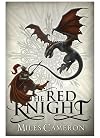
The Red Knight is an often brilliant, often frustrating fantasy debut. The titular character is leader of a mercenary band with a contract to protect an isolated fortress-nunnery. The Captain and his merry band of sell-swords find that they've bitten off more than they can chew when a tide of monsters from the Wild washes over their stronghold, leaving them to face a perilous siege.
So the brilliant part first. Cameron is a giant historical re-enactment nerd, and he's done everything in this show more novel short of killing a man with a sword. The personal knowledge of medieval clothing, arms, and sleeping rough shine through in the little details. Where other fantasy writers are working from the literature, he's working from the stuff, and this book has the bronze glow of authenticity about it. Getting the little details right mean that the big stuff, armored knights fighting monsters, absolutely works. You get how utterly dangerous a trained and armored man on a warhorse is.
But there's also a lot of aggravating stuff. The point of view jumps around between characters because that's what Epic Fantasy does, and like constant jump cuts in a movie, this interrupts the flow of the story. There's a lot of minor skirmishes and side stories that don't pay off nearly enough to justify the investment in pages or emotional energy. I kept thinking that Poul Anderson would have written an absolutely crackerjack version of the same basic story that came in at half the word count and hit all the themes better. And while it's a little unfair to compare a first novel to the skill of a master craftsman like Anderson, it's more a matter of the form, the idea that epic fantasy should be 600+ pages a book, rather than the proper length of enough story to cover everything that needs covering while being short enough to be interesting.
The setting and characterization is erratic. I enjoyed the Captain and his mercenaries, and the slave turned Wildling warrior Peter, but the voices of many of the other secondary characters were false or redundant or both. The story is set in an England-expy, with a France-expy and Holy Roman Empire-expy nearby, though the religion is literally Christianity and not Christianity-shaped polytheism. Part of this worked, because even if it's not my religion there's enough culture Christianity around that its notions of holiness had power, where invoking St. Cuthbert would be LARP nonsense, but the mix of real and fictional elements was a little jarring. But finally, if there is a real conflict in this book, it's between the works of Man and the Powers of the Wild, and neither side is drawn particularly clearly. The world of knights lacks the layers of personal relationships, histories, and betrayals that made say, A Song of Ice and Fire so good when it was good. The forces of the Wild are hostile and dangerous, but not as malevolent as a true Dark Lord would be.
I did enjoy this book, and anything to do with swordfights was amazing, but I'm looking at the next four with aprehnsion rather than joy, and that's not true of a five-star book. This review is more hostile than the book really deserves, but that's because this book is almost great, and that's more frustrating than just being mediocre. show less
So the brilliant part first. Cameron is a giant historical re-enactment nerd, and he's done everything in this show more novel short of killing a man with a sword. The personal knowledge of medieval clothing, arms, and sleeping rough shine through in the little details. Where other fantasy writers are working from the literature, he's working from the stuff, and this book has the bronze glow of authenticity about it. Getting the little details right mean that the big stuff, armored knights fighting monsters, absolutely works. You get how utterly dangerous a trained and armored man on a warhorse is.
But there's also a lot of aggravating stuff. The point of view jumps around between characters because that's what Epic Fantasy does, and like constant jump cuts in a movie, this interrupts the flow of the story. There's a lot of minor skirmishes and side stories that don't pay off nearly enough to justify the investment in pages or emotional energy. I kept thinking that Poul Anderson would have written an absolutely crackerjack version of the same basic story that came in at half the word count and hit all the themes better. And while it's a little unfair to compare a first novel to the skill of a master craftsman like Anderson, it's more a matter of the form, the idea that epic fantasy should be 600+ pages a book, rather than the proper length of enough story to cover everything that needs covering while being short enough to be interesting.
The setting and characterization is erratic. I enjoyed the Captain and his mercenaries, and the slave turned Wildling warrior Peter, but the voices of many of the other secondary characters were false or redundant or both. The story is set in an England-expy, with a France-expy and Holy Roman Empire-expy nearby, though the religion is literally Christianity and not Christianity-shaped polytheism. Part of this worked, because even if it's not my religion there's enough culture Christianity around that its notions of holiness had power, where invoking St. Cuthbert would be LARP nonsense, but the mix of real and fictional elements was a little jarring. But finally, if there is a real conflict in this book, it's between the works of Man and the Powers of the Wild, and neither side is drawn particularly clearly. The world of knights lacks the layers of personal relationships, histories, and betrayals that made say, A Song of Ice and Fire so good when it was good. The forces of the Wild are hostile and dangerous, but not as malevolent as a true Dark Lord would be.
I did enjoy this book, and anything to do with swordfights was amazing, but I'm looking at the next four with aprehnsion rather than joy, and that's not true of a five-star book. This review is more hostile than the book really deserves, but that's because this book is almost great, and that's more frustrating than just being mediocre. show less
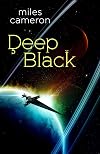
So this was fun. Just outright fun, except for the headache I was left with at the end, for reading six hours straight. Marca Nbaro is continuing to serve on the giant trading ship Athens. This goes beyond the original Mary Sue, find-my-destiny story into a flat out adventure. She grows into it, the disillusionment as one discovers their heroes are human (more or less), and has some flat out adventures. Not everyone welcomes the traders, and at the back of their minds is the mysterious show more disappearance of the last two greatships. There's no end to the external conflicts (it would probably be spoilery if I said more), so suffice it to say that it is not all space-battles, and there are challenges with the aliens that trade them the coveted space-glass (okay, Cameron calls it something else, but that's what it was in my mind).
"'We’re lucky we didn’t take losses, but I’m getting ready to get hammered in the next exchange. Life goes on.’ What he meant was, Death goes on."
Tempering that are a few moments of inner conflict, self-doubt, and self-effacement that are appropriate for that transition into leadership. I rather liked those moments, particularly Cameron's ability to recognize we might have conflicting emotional parts, mostly because they both humanize Marca and throw some emotional tension into those moments between external conflict.
As an aside (some days I feel like everything I say is an aside), I'll probably have to add Cameron to the shortlist of non-female authors who can convincingly write women as humans.
"Nbaro knew, without feeling around inside her head, that she wasn’t actually all right with it: that some part of her had expected this and saw it as rejection; that another part had never believed that he loved her; a third part – a deeply injured part – had never expected any other outcome."
The last book ended rather abruptly, and this picks up where it left off. I'll be honest--Cameron writes rather more battle details than I am able to pay attention to, so on the whole, I just continued applying the gloss of my usual experience and it went just fine. Others' mileage may vary. Also, while there were hints of a greater arc in the first book, this one does more than hint. Alas, that we might have to wait another year for the next chapter. This, I think, should appeal to sci-fi classic lovers (without the -isms, thankfully) as well as the next generation. Think Star Wars, that transcends generations and without the ridiculous pandering the marketers, despite the fact that we have a fleet of capitalist soldiers.
Four and a half Greatships. show less
"'We’re lucky we didn’t take losses, but I’m getting ready to get hammered in the next exchange. Life goes on.’ What he meant was, Death goes on."
Tempering that are a few moments of inner conflict, self-doubt, and self-effacement that are appropriate for that transition into leadership. I rather liked those moments, particularly Cameron's ability to recognize we might have conflicting emotional parts, mostly because they both humanize Marca and throw some emotional tension into those moments between external conflict.
As an aside (some days I feel like everything I say is an aside), I'll probably have to add Cameron to the shortlist of non-female authors who can convincingly write women as humans.
"Nbaro knew, without feeling around inside her head, that she wasn’t actually all right with it: that some part of her had expected this and saw it as rejection; that another part had never believed that he loved her; a third part – a deeply injured part – had never expected any other outcome."
The last book ended rather abruptly, and this picks up where it left off. I'll be honest--Cameron writes rather more battle details than I am able to pay attention to, so on the whole, I just continued applying the gloss of my usual experience and it went just fine. Others' mileage may vary. Also, while there were hints of a greater arc in the first book, this one does more than hint. Alas, that we might have to wait another year for the next chapter. This, I think, should appeal to sci-fi classic lovers (without the -isms, thankfully) as well as the next generation. Think Star Wars, that transcends generations and without the ridiculous pandering the marketers, despite the fact that we have a fleet of capitalist soldiers.
Four and a half Greatships. show less
Thoroughly enjoyed and I'll be reading the rest of the series.
The Red Knight, known more casually as Captain of a mercenary troop (much more substantial than you imagine, not just knights, but their men at arms, archers, and camp followers), has some secret connection to the royal court, but none of the company care. They just want to be paid, which means a commission. The company has been hired out to defend an Abby towards the borders of the kingdom. The Wild is encroaching after decades show more of peace. Non-human creatures of various intelligence and sometimes speech normally live beyond the Wall, but have occasionally been sighted inside 'civilisation'. Now it seems something has stirred them up. the Captain quickly realises this isn't just hunting a few boglins, but potentially a full scale invasion.
The Abby is well fortified, but there is only so long a small force can hold out, even if everyone is a hero. Help might be coming, including from unexpected sources, but meanwhile there are farmers and traders to protect. The nuns are not without resources of their own, and the Captain quickly realises he may have to accept some intrusions into his secrets if he's to preserve as many as he can from a force that doesn't think like he does.
There's a neat set-up for the 2nd book introduced much earlier into the plot than you might expect. Again very much in the style I prefer, authors who are thinking ahead of a series as a whole.
The setting was just my kind of thing - a duality of magic, but not as obviously divided into good and evil as some of the practitioners believe. It's unclear how significant religion actually is in the division. The court settings and historical fantasy tropes are well described - occasionally a little too much, the author is an avowed re-enactment hobbyist - but generally as things the characters would mentally note, rather than pure exposition. I also loved that everybody who is supposed to be intelligent actually acts that way. Feelings are real, but the 'bad guys' are acting for real reasons too. show less
The Red Knight, known more casually as Captain of a mercenary troop (much more substantial than you imagine, not just knights, but their men at arms, archers, and camp followers), has some secret connection to the royal court, but none of the company care. They just want to be paid, which means a commission. The company has been hired out to defend an Abby towards the borders of the kingdom. The Wild is encroaching after decades show more of peace. Non-human creatures of various intelligence and sometimes speech normally live beyond the Wall, but have occasionally been sighted inside 'civilisation'. Now it seems something has stirred them up. the Captain quickly realises this isn't just hunting a few boglins, but potentially a full scale invasion.
The Abby is well fortified, but there is only so long a small force can hold out, even if everyone is a hero. Help might be coming, including from unexpected sources, but meanwhile there are farmers and traders to protect. The nuns are not without resources of their own, and the Captain quickly realises he may have to accept some intrusions into his secrets if he's to preserve as many as he can from a force that doesn't think like he does.
There's a neat set-up for the 2nd book introduced much earlier into the plot than you might expect. Again very much in the style I prefer, authors who are thinking ahead of a series as a whole.
The setting was just my kind of thing - a duality of magic, but not as obviously divided into good and evil as some of the practitioners believe. It's unclear how significant religion actually is in the division. The court settings and historical fantasy tropes are well described - occasionally a little too much, the author is an avowed re-enactment hobbyist - but generally as things the characters would mentally note, rather than pure exposition. I also loved that everybody who is supposed to be intelligent actually acts that way. Feelings are real, but the 'bad guys' are acting for real reasons too. show less
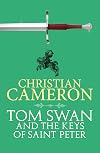
Tom Swan and the Keys of Saint Peter is Christian Cameron's first novel-length Tom Swan adventure, the former all being serialized novels realized in parts. It loses nothing as it gains length, in fact, Saint Peter might be the strongest entry yet.
Cameron weaves a fantastic tapestry of 15th century Europe, with Swan going on a whirlwind tour of Venice, Florence, Albania, London, Bruges, and more. The pace moves at breakneck speed, action and plots twist and turn with almost every page.
The show more writing is sharp and no-nonsense, with an undercurrent of humor beneath the swordplay and intrigue. I admit I got a little lost in the layers of conspiracy on display here; the Italian names and the intricacy of the scheme were tough to decipher, and I'm still not sure I completely understand the plot Swan uncovered. That didn't take away any of my enjoyment of the book, though, and I hope Cameron revisits Swan in the future. show less
Cameron weaves a fantastic tapestry of 15th century Europe, with Swan going on a whirlwind tour of Venice, Florence, Albania, London, Bruges, and more. The pace moves at breakneck speed, action and plots twist and turn with almost every page.
The show more writing is sharp and no-nonsense, with an undercurrent of humor beneath the swordplay and intrigue. I admit I got a little lost in the layers of conspiracy on display here; the Italian names and the intricacy of the scheme were tough to decipher, and I'm still not sure I completely understand the plot Swan uncovered. That didn't take away any of my enjoyment of the book, though, and I hope Cameron revisits Swan in the future. show less
Lists
Awards


You May Also Like


Associated Authors
Statistics
- Works
- 72
- Also by
- 3
- Members
- 5,089
- Popularity
- #4,915
- Rating
- 4.0
- Reviews
- 141
- ISBNs
- 284
- Languages
- 5
- Favorited
- 8
