
Joe Abercrombie
Author of The Blade Itself
About the Author
Joe Abercrombie is a freelance film editor, working mostly on documentaries and live music events. He lives and works in London. The First Law is his debut series. He won a Locus Award 2015 for science-fiction in the Young Adult Book Category with his title Half a King. (Bowker Author Biography)
Series
Works by Joe Abercrombie
The Age of Madness Series, Set of 3 Books. A Little Hatred, The Trouble with Peace and The Wisdom of Crowds Paperback – August 2, 2022 (2022) 3 copies
Diabły (Diabły, #1) 2 copies
Half a King: free sampler 2 copies
Joe Abercrombie The Age Of Madness 2 Books Collection Set (A Little Hatred, The Trouble With Peace) (2020) 1 copy
Полмира (Море осколков, #2) 1 copy
First Law 02 1 copy
First Law 03 1 copy
Skipping Town 1 copy
Первый закон. Трилогия: Кровь и железо. Прежде чем их повесят. Последний довод королей (Гиганты… 1 copy
Terres de sang - L'Intégrale 1 copy
Půl světa (Moře střepů, #2) 1 copy
Ostré konce 1 copy
Last Argument of Kings 1 copy
Los heróes 1 copy
Associated Works
The Best Science Fiction and Fantasy of the Year, Volume 5 (2011) — Contributor — 166 copies, 4 reviews
The Best Science Fiction and Fantasy of the Year, Volume 8 (2014) — Contributor — 116 copies, 6 reviews
The Best Science Fiction and Fantasy of the Year, Volume 9 (2015) — Contributor — 73 copies, 3 reviews
Speculative Fiction 2012: The best online reviews, essays and commentary (Volume 1) (2013) — Contributor — 41 copies, 3 reviews
Tagged
Common Knowledge
- Legal name
- Abercrombie, Joseph Edward
- Birthdate
- 1974-12-31
- Gender
- male
- Education
- University of Manchester (Psychology)
- Occupations
- editor
novelist
short story writer - Short biography
- Joe Abercrombie is a British fantasy writer and film editor. He is the author of The First Law trilogy, as well as other fantasy books in the same setting and a trilogy of young adult novels. His novel Half a King won the 2015 Locus Award for best Young Adult book.
Joe Abercrombie was born in Lancaster, Lancashire, England. He was educated at Lancaster Royal Grammar School and Manchester University, where he studied psychology.
Abercrombie had a job making tea at a television production company before taking up a career as a freelance film editor. As a freelance film editor, Abercrombie found himself with more free time than he previously had. With this time, he decided to reconsider a story plot he conceived while attending University.
Abercrombie began writing The Blade Itself in 2002, completing it in 2004. It took a year of rejection by publishing agencies before Gillian Redfearn of Gollancz accepted the book for a five-figure deal in 2005 ("a seven-figure deal if you count the pence columns"). It was published by Gollancz in 2006 and was followed in the succeeding two years by two other books in the trilogy, by the titles of Before They Are Hanged and Last Argument of Kings, respectively. In 2008, Joe Abercrombie was a finalist for the John W. Campbell award for Best New Writer. That same year Abercrombie was one of the contributors to the BBC Worlds of Fantasy series, alongside other contributors such as Michael Moorcock, Terry Pratchett and China Miéville. In 2009, Abercrombie released the novel Best Served Cold. It is set in the same world as The First Law Trilogy but is a stand-alone novel. He followed with The Heroes (2011) and Red Country (2012), both again set in the world of the First Law Trilogy. The three standalone novels were later collected into an omnibus edition under the name The Great Leveller.
In 2011, Abercrombie signed a deal with Gollancz for four more books set in the First Law world. In 2013, HarperCollins' fantasy and children's imprints acquired the rights to three books by Abercrombie, aimed at younger readers. The three standalone but interconnected novels were released as the Shattered Sea trilogy. - Nationality
- UK
- Birthplace
- Lancaster, Lancashire, England, UK
- Places of residence
- London, Middlesex, England, UK
Bath, Somerset, England, UK - Map Location
- England, UK
Members
Discussions
The Devils - The Broken Binding - A Pictorial Review in The Broken Binding (October 2025)
Reviews
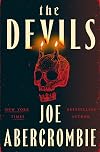
THE DEVILS is as if Joe Abercrombie sat down one day, took scraps of paper, each with a different plot point, character, or myth, put them in a bowl, and randomly chose several of them. Then he saw what he had and decided to use those chosen elements in one novel. How else can you conceive of a story that includes a werewolf, a vampire, a thief, several different types of sorcerers, a jack of all trades, a priest, and a man cursed to live forever? That is in addition to the inclusion of show more historical events, but altered so that the Great Schism that occurred within the Holy Roman Empire happened between two sects, one of which was patriarchal and the other matriarchal? Don't forget the witchcraft, zombies, chimera, mobsters, kings and queens, rights of inheritance, extended family issues, librarians, and a teenage Pope who has magical abilities!
Then there is the issue with determining what genre of novel THE DEVILS is. I initially thought it was horror because the eldritch terrors he dredges up to challenge the heroes are beyond description. Between them and the gory fight scenes, it very much fits that bill. Obviously, with the inclusion of various mythical figures, it is also a fantasy novel. What I did not expect to discover, however, was how funny the story is. I imagine Mr. Abercrombie laughing to himself as he was writing this. Not a maniacal laugh because he anticipates his readers' pain, but because his characters are so delightfully funny. The entire novel is SO absurd, and some of the characters are such exaggerated cliches that you cannot help but laugh. So, we have a horror fantasy comedy. Oh, with a little historical fiction thrown in to "spice things up" a little more.
Yet, somehow, Mr. Abercrombie makes it work. More importantly, he makes it work so well that you care about all of these random characters. The real historical setting establishes the characters' backstories and lets us know with very little description needed just how financially desperate some of the characters are. Their travels across medieval Italy provide the framework for understanding the importance of monks and priests at the time. Their journey also allows us to discover just how tragic these characters are. In many ways, they are who they are because they are lost and yearn for what we all want - love and belonging. As crazy as it sounds, they find it among each other and do so in a way that tugs at your heart.
It looks like The Devils is the first book in a series, which is a good thing because I feel Mr. Abercrombie has only scratched the surface of this weird and wonderful world of his. THE DEVILS is my first experience reading something by Joe Abercrombie, and I am here to say that if all his books are as banana-pants crazy as this one, then I need to read more of his books. show less
Then there is the issue with determining what genre of novel THE DEVILS is. I initially thought it was horror because the eldritch terrors he dredges up to challenge the heroes are beyond description. Between them and the gory fight scenes, it very much fits that bill. Obviously, with the inclusion of various mythical figures, it is also a fantasy novel. What I did not expect to discover, however, was how funny the story is. I imagine Mr. Abercrombie laughing to himself as he was writing this. Not a maniacal laugh because he anticipates his readers' pain, but because his characters are so delightfully funny. The entire novel is SO absurd, and some of the characters are such exaggerated cliches that you cannot help but laugh. So, we have a horror fantasy comedy. Oh, with a little historical fiction thrown in to "spice things up" a little more.
Yet, somehow, Mr. Abercrombie makes it work. More importantly, he makes it work so well that you care about all of these random characters. The real historical setting establishes the characters' backstories and lets us know with very little description needed just how financially desperate some of the characters are. Their travels across medieval Italy provide the framework for understanding the importance of monks and priests at the time. Their journey also allows us to discover just how tragic these characters are. In many ways, they are who they are because they are lost and yearn for what we all want - love and belonging. As crazy as it sounds, they find it among each other and do so in a way that tugs at your heart.
It looks like The Devils is the first book in a series, which is a good thing because I feel Mr. Abercrombie has only scratched the surface of this weird and wonderful world of his. THE DEVILS is my first experience reading something by Joe Abercrombie, and I am here to say that if all his books are as banana-pants crazy as this one, then I need to read more of his books. show less
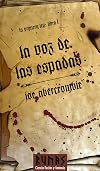
Cuando he empezado a leer ’La voz de las espadas’, el primer libro de la trilogía La Primera Ley, he pensado que me encontraba con la típica historia de fantasía heroico-medieval, esa que incluye los clichés más manidos del género: bárbaro brutal, diestro luchador, que perdió a su familia y que desde entonces vive inmerso en un mundo de violencia y batallas sin fin, aunque está intentado darle un cambio a su vida; el aprendiz de mago, joven e inexperto, que tiene una misión; el show more mago plácido, con ese aire de aparente bondad e ineptitud, pero que oculta más secretos de lo que parece, experto en un arte que está desapareciendo del mundo; el soldado, joven y de buena cuna, arrogante y ególatra, cuya única preocupación es su porvenir; el grupo heterogéneo de luchadores que deambulan y batallan sin parar; o ese personaje lisiado que vive bajo una tortura constante debido a las heridas de su pasado; etc. Nada nuevo bajo el sol, vamos. Pero donde Joe Abercrombie brilla con luz propia en este género, es cuando empieza a construir su historia con todo este material. Y convierte esta novela en algo extraordinario.
Con una habilidad envidiable, Abercrombie consigue que, sin saber cómo cuando llevas varios capítulos leídos, te resulte imposible dejar de leer su historia. Esta se va filtrando poco a poco, a través de sus protagonistas, de sus ingeniosas conversaciones, de ese humor negro que lo impregna todo, la ciudad donde transcurre la trama, así como por los detalles que adornan la misma, todo ello con una pátina de verosimilitud muy bien conseguida. Y es que la fantasía de Abercrombie respira realismo por los cuatro costados. Parece que transcurre en una época medieval de nuestro mundo, exceptuando los toques mágicos, por supuesto, pero por lo demás las batallas, las peleas, la violencia, los sablazos, los hachazos, las heridas, casi los sientes en tu piel.
La historia transita entre varios personajes, saltando de uno a otro indistintamente. Logen Nuevededos, un bárbaro norteño, superviviente nato, que ha sido dado por muerto por sus compañeros, y que está siendo buscado por Bayaz, el Primero de los Magos. El Inquisidor Glokta, que en su día fue un experto espadachín, y que ahora se ha convertido en un hábil torturador, cínico como pocos. Vive inmerso en un dolor constante debido a las secuelas que le dejó su captura y tortura durante la guerra contra los gurkos. Sin duda un personaje memorable, este Glokta. Jezal dan Luthar, de sangre noble, un joven mimado y arrogante y engreído, que mira por encima del hombro a las clases menos privilegiadas, que se está entrenando para el próximo Certamen de esgrima. El comandante West, amigo de Jezal, que le ayuda con su entrenamiento, y que está totalmente comprometido con la guerra que se avecina. Ferro Maljinn, sureña de nacimiento, que fue esclavizada y que ahora únicamente vive para vengarse. Todos ellos y algunos más, componen el elenco de protagonistas de la novela. Y como ha dejado claro para las nuevas generaciones el gran George R.R. Martin, estos personajes son de carne y hueso, con sus defectos y sus virtudes, lo cual hace que empatices con ellos y te interese lo que les pase.
'La voz de las espadas' es fantasía de primera, oscura y violenta, dinámica como pocas, con batallas, peleas, política, intriga, amor, humor, donde los personajes son el plato principal, todo ello tan bien ambientado, que hace irresistible su lectura. El segundo libro no tardará en caer. show less
Con una habilidad envidiable, Abercrombie consigue que, sin saber cómo cuando llevas varios capítulos leídos, te resulte imposible dejar de leer su historia. Esta se va filtrando poco a poco, a través de sus protagonistas, de sus ingeniosas conversaciones, de ese humor negro que lo impregna todo, la ciudad donde transcurre la trama, así como por los detalles que adornan la misma, todo ello con una pátina de verosimilitud muy bien conseguida. Y es que la fantasía de Abercrombie respira realismo por los cuatro costados. Parece que transcurre en una época medieval de nuestro mundo, exceptuando los toques mágicos, por supuesto, pero por lo demás las batallas, las peleas, la violencia, los sablazos, los hachazos, las heridas, casi los sientes en tu piel.
La historia transita entre varios personajes, saltando de uno a otro indistintamente. Logen Nuevededos, un bárbaro norteño, superviviente nato, que ha sido dado por muerto por sus compañeros, y que está siendo buscado por Bayaz, el Primero de los Magos. El Inquisidor Glokta, que en su día fue un experto espadachín, y que ahora se ha convertido en un hábil torturador, cínico como pocos. Vive inmerso en un dolor constante debido a las secuelas que le dejó su captura y tortura durante la guerra contra los gurkos. Sin duda un personaje memorable, este Glokta. Jezal dan Luthar, de sangre noble, un joven mimado y arrogante y engreído, que mira por encima del hombro a las clases menos privilegiadas, que se está entrenando para el próximo Certamen de esgrima. El comandante West, amigo de Jezal, que le ayuda con su entrenamiento, y que está totalmente comprometido con la guerra que se avecina. Ferro Maljinn, sureña de nacimiento, que fue esclavizada y que ahora únicamente vive para vengarse. Todos ellos y algunos más, componen el elenco de protagonistas de la novela. Y como ha dejado claro para las nuevas generaciones el gran George R.R. Martin, estos personajes son de carne y hueso, con sus defectos y sus virtudes, lo cual hace que empatices con ellos y te interese lo que les pase.
'La voz de las espadas' es fantasía de primera, oscura y violenta, dinámica como pocas, con batallas, peleas, política, intriga, amor, humor, donde los personajes son el plato principal, todo ello tan bien ambientado, que hace irresistible su lectura. El segundo libro no tardará en caer. show less
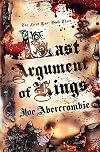
While the title doesn't demand attention to the same degree as [b:Before They Are Hanged|902715|Before They Are Hanged (The First Law, #2)|Joe Abercrombie|https://i.gr-assets.com/images/S/compressed.photo.goodreads.com/books/1179318094l/902715._SY75_.jpg|2116927], it's certainly the most accurate. With the journey to the Edge of the World having ended in failure, Bayaz' company parts ways; Logen returns to the North to aid the Union army and whatever old friends he's yet to alienate in the show more effort against Bethod. Bayaz exerts and expands his hold on the Closed Council, and begins to show more interest in the career of Jezal dan Luthar than ever before. Also in Adua is Inquisitor Glokta, whose loyalties become increasingly conflicted while trying to curry favour for the Arch Lector, and whose subplot continues to function like a crime fiction novel that somehow got caught up in an epic fantasy series.
The characters remain as antiheroic as ever, but with the benefit of hindsight and rereading Jezal stands out more than ever because he undergoes the most change out of every character, beginning as a classist, egotistical twat, and becoming a slightly less classist, egotistical twat, though that isn't to sell everyone else short. Glokta remains the most enjoyable POV character to read; no one is spared from his dry humour, and I especially enjoy his interactions with Ardee; every conversation they have is a highlight. They really seem to be meant for each other; they work off each other well, and they both provide astute observations of Union politics. They also have different but oddly similar backgrounds that parallel each other, on reflection, both of them being pariahs for different reasons; Glokta being a veteran who's been rejected by the "polite" society that once gave him nothing but the utmost respect, and Ardee being a commoner who got left behind by her social climber of a brother and lives in a city that cares nothing for people of her standing.
Logen's also equally compelling, albeit for slightly different reasons than before. Returning to the North changes him a great deal, although it's not really a change so much as a reversion; he seems to be a significantly better person whenever he puts as much difference between himself and the North as possible (though [b:Red Country|13521459|Red Country (First Law World, #6)|Joe Abercrombie|https://i.gr-assets.com/images/S/compressed.photo.goodreads.com/books/1333663008l/13521459._SY75_.jpg|19082135] throws some doubt on this). As soon as he reunites with his old allies in the North, however, he more or less reverts to the barbarian with flexible morals that he's always been storied to be, if only out of a believed obligation to uphold his reputation as the Bloody-Nine. It's especially obvious during that chapter where Bethod rightly takes Logen to task for his many transgressions, a chapter which gutted me the first time and somehow had the same effect the second. Which is why I've always found it strange that some people apparently consider Logen a sweetheart who just happens to have a possible split personality that brings violence and death with him wherever he treads, to which I say... well, he's not necessarily without good qualities, but I take issue with that description because of that chapter where he kills some allies and fails to admit guilt and assume responsibility for it. With that in mind, I strongly encourage such people to carefully reread the chapter "Leaves on the Water", or failing that, read the short story "Made a Monster" from [b:Sharp Ends|26030742|Sharp Ends (First Law World, #7)|Joe Abercrombie|https://i.gr-assets.com/images/S/compressed.photo.goodreads.com/books/1456696097l/26030742._SY75_.jpg|45956909], which outlines in detail how and why Logen deserves every bit of his reputation as a capricious, homicidal, indiscriminate, and elemental force that regards his fellow man as target practice.
While [b:Best Served Cold|2315892|Best Served Cold|Joe Abercrombie|https://i.gr-assets.com/images/S/compressed.photo.goodreads.com/books/1347732723l/2315892._SY75_.jpg|2322406] might have a bit of an edge over this book in this regard, [b:The Last Argument of Kings|944076|Last Argument of Kings (The First Law, #3)|Joe Abercrombie|https://i.gr-assets.com/images/S/compressed.photo.goodreads.com/books/1302062699l/944076._SY75_.jpg|929012] has easily the best action in the entire trilogy (yes, I know that's not technically its real title, but sod off, it doesn't feel complete without a definite article). The violence can be over the top, but it also feels oddly downplayed because as chaotic as battles can get, the book never loses sight of whatever character we're seeing through the eyes of at the time.
For me it reaches its peak with the siege of the High Places; it's kind of like Helm's Deep from Lord of the Rings, in that Logen, Black Dow, Harding Grim, and the Dogman are four of a pitifully small army that's vastly outnumbered by a far better organized and nourished belligerent, holding out for several days waiting for reinforcements that might never arrive. There are a couple of key differences, though; the fortress is in severe disrepair, and where Helm's Deep lasted only for one chapter, the siege takes up approximately a third of the entire book, and it's significantly bloodier because... dark fantasy, I guess. Sure, it doesn't hold a candle to the almost apocalyptic scale of the climax, but I find it far more tense because of the steadily depleting supplies and mounting opposition. Of course, there is also the small matter of the Bloody-Nine.
Then there's the ending, which features several injustices and recursive arcs. As far as I can tell, this is easily the most divisive aspect of the entire trilogy, if only because everyone's favourite characters get fucked over, and they get fucked over hard. And look, I get it, it is anticlimactic; purposefully so, and it's the most oddly conclusive (and also the most weirdly rewarding) anticlimax I've yet read, but it's still anticlimactic. You don't have to like it, but it is the right ending for the story Abercrombie tells. Yeah, I hate Bayaz as much as the next guy, and I wish upon him the worst possible setbacks in the Age of Madness trilogy, but it makes sense for him to get what he wants, because why would anyone in their right mind try to spar with someone who can blow someone up and burn down entire forests with a single thought?
Having finished rereading the trilogy as a whole, the ending has also taken on some new context; at first I thought the point of the First Law was to ask "what if a typical high fantasy world was full of realistically flawed people?", but now I've realized I was probably asking the wrong question. It's not that so much as "what might happen if the world was inhabited by realistically flawed and hubristic people like Bayaz and Khalul who see the world not as the place they both live in, but a life-size chessboard that us peasants are just living in?" Keeping that question in mind, this trilogy has taken on far more fridge horror now than it did the first time I read it, but it's a hypothetical scenario that Abercrombie explores to its fullest.
While the recursion of the character arcs seems like something I'd probably take any other book to task for, it's executed in such a way that it makes what should be static characters not feel static in the least. Not only is this because the casual dialogue is decently written and half the fun is just watching everyone work off each other, but it also ties into the larger point [a:Joe Abercrombie|276660|Joe Abercrombie|https://images.gr-assets.com/authors/1421267339p2/276660.jpg] tries to make, which is, "they are what they are, and that's most likely all they ever will be." Of course, this does bring up the question of why I'm so invested in these books when I know full well that Abercrombie's crushed my hopes and dreams again, and that's something I often ask myself. But then it occurred to me that I was probably so immersed because it felt like a real journey; it's a journey that ends in disappointment, true, but it actually seemed to matter at the time, and I guess that's what really matters.
Having said that, don't let that dissuade you from seeing the trilogy to its completion; it has all the same strengths as its predecessors, and hones in on everything that was good about them, to the point where I think I can safely say Abercrombie's truly mastered his craft. This is something I've said for every book, but the only problem I have with these books is that I wish they did more to differentiate each POV. That's not to say it doesn't do that, there are several subtle differences between them all, but Glokta's written in such a strikingly different way from everyone else that not awarding everyone else the same attention to detail strikes me as a missed opportunity. Other than that, I feel perfectly justified in considering the First Law trilogy second only to Discworld. If you want closure, then do check out the standalones; none of them are necessarily sequels in the most literal sense of the word, and I find them more variable in quality, but they pick up some (though not all) plot threads this book left dangling, and they do much to explore the world beyond the Union. The Age of Madness is also off to a strong start with [b:A Little Hatred|35606041|A Little Hatred (The Age of Madness, #1)|Joe Abercrombie|https://i.gr-assets.com/images/S/compressed.photo.goodreads.com/books/1558367199l/35606041._SY75_.jpg|57338685], and I look forward to the release of The Trouble With Peace this September. show less
The characters remain as antiheroic as ever, but with the benefit of hindsight and rereading Jezal stands out more than ever because he undergoes the most change out of every character, beginning as a classist, egotistical twat, and becoming a slightly less classist, egotistical twat, though that isn't to sell everyone else short. Glokta remains the most enjoyable POV character to read; no one is spared from his dry humour, and I especially enjoy his interactions with Ardee; every conversation they have is a highlight. They really seem to be meant for each other; they work off each other well, and they both provide astute observations of Union politics. They also have different but oddly similar backgrounds that parallel each other, on reflection, both of them being pariahs for different reasons; Glokta being a veteran who's been rejected by the "polite" society that once gave him nothing but the utmost respect, and Ardee being a commoner who got left behind by her social climber of a brother and lives in a city that cares nothing for people of her standing.
Logen's also equally compelling, albeit for slightly different reasons than before. Returning to the North changes him a great deal, although it's not really a change so much as a reversion; he seems to be a significantly better person whenever he puts as much difference between himself and the North as possible (though [b:Red Country|13521459|Red Country (First Law World, #6)|Joe Abercrombie|https://i.gr-assets.com/images/S/compressed.photo.goodreads.com/books/1333663008l/13521459._SY75_.jpg|19082135] throws some doubt on this). As soon as he reunites with his old allies in the North, however, he more or less reverts to the barbarian with flexible morals that he's always been storied to be, if only out of a believed obligation to uphold his reputation as the Bloody-Nine. It's especially obvious during that chapter where Bethod rightly takes Logen to task for his many transgressions, a chapter which gutted me the first time and somehow had the same effect the second. Which is why I've always found it strange that some people apparently consider Logen a sweetheart who just happens to have a possible split personality that brings violence and death with him wherever he treads, to which I say... well, he's not necessarily without good qualities, but I take issue with that description because of that chapter where he kills some allies and fails to admit guilt and assume responsibility for it. With that in mind, I strongly encourage such people to carefully reread the chapter "Leaves on the Water", or failing that, read the short story "Made a Monster" from [b:Sharp Ends|26030742|Sharp Ends (First Law World, #7)|Joe Abercrombie|https://i.gr-assets.com/images/S/compressed.photo.goodreads.com/books/1456696097l/26030742._SY75_.jpg|45956909], which outlines in detail how and why Logen deserves every bit of his reputation as a capricious, homicidal, indiscriminate, and elemental force that regards his fellow man as target practice.
While [b:Best Served Cold|2315892|Best Served Cold|Joe Abercrombie|https://i.gr-assets.com/images/S/compressed.photo.goodreads.com/books/1347732723l/2315892._SY75_.jpg|2322406] might have a bit of an edge over this book in this regard, [b:The Last Argument of Kings|944076|Last Argument of Kings (The First Law, #3)|Joe Abercrombie|https://i.gr-assets.com/images/S/compressed.photo.goodreads.com/books/1302062699l/944076._SY75_.jpg|929012] has easily the best action in the entire trilogy (yes, I know that's not technically its real title, but sod off, it doesn't feel complete without a definite article). The violence can be over the top, but it also feels oddly downplayed because as chaotic as battles can get, the book never loses sight of whatever character we're seeing through the eyes of at the time.
For me it reaches its peak with the siege of the High Places; it's kind of like Helm's Deep from Lord of the Rings, in that Logen, Black Dow, Harding Grim, and the Dogman are four of a pitifully small army that's vastly outnumbered by a far better organized and nourished belligerent, holding out for several days waiting for reinforcements that might never arrive. There are a couple of key differences, though; the fortress is in severe disrepair, and where Helm's Deep lasted only for one chapter, the siege takes up approximately a third of the entire book, and it's significantly bloodier because... dark fantasy, I guess. Sure, it doesn't hold a candle to the almost apocalyptic scale of the climax, but I find it far more tense because of the steadily depleting supplies and mounting opposition. Of course, there is also the small matter of the Bloody-Nine.
Then there's the ending, which features several injustices and recursive arcs. As far as I can tell, this is easily the most divisive aspect of the entire trilogy, if only because everyone's favourite characters get fucked over, and they get fucked over hard. And look, I get it, it is anticlimactic; purposefully so, and it's the most oddly conclusive (and also the most weirdly rewarding) anticlimax I've yet read, but it's still anticlimactic. You don't have to like it, but it is the right ending for the story Abercrombie tells. Yeah, I hate Bayaz as much as the next guy, and I wish upon him the worst possible setbacks in the Age of Madness trilogy, but it makes sense for him to get what he wants, because why would anyone in their right mind try to spar with someone who can blow someone up and burn down entire forests with a single thought?
Having finished rereading the trilogy as a whole, the ending has also taken on some new context; at first I thought the point of the First Law was to ask "what if a typical high fantasy world was full of realistically flawed people?", but now I've realized I was probably asking the wrong question. It's not that so much as "what might happen if the world was inhabited by realistically flawed and hubristic people like Bayaz and Khalul who see the world not as the place they both live in, but a life-size chessboard that us peasants are just living in?" Keeping that question in mind, this trilogy has taken on far more fridge horror now than it did the first time I read it, but it's a hypothetical scenario that Abercrombie explores to its fullest.
While the recursion of the character arcs seems like something I'd probably take any other book to task for, it's executed in such a way that it makes what should be static characters not feel static in the least. Not only is this because the casual dialogue is decently written and half the fun is just watching everyone work off each other, but it also ties into the larger point [a:Joe Abercrombie|276660|Joe Abercrombie|https://images.gr-assets.com/authors/1421267339p2/276660.jpg] tries to make, which is, "they are what they are, and that's most likely all they ever will be." Of course, this does bring up the question of why I'm so invested in these books when I know full well that Abercrombie's crushed my hopes and dreams again, and that's something I often ask myself. But then it occurred to me that I was probably so immersed because it felt like a real journey; it's a journey that ends in disappointment, true, but it actually seemed to matter at the time, and I guess that's what really matters.
Having said that, don't let that dissuade you from seeing the trilogy to its completion; it has all the same strengths as its predecessors, and hones in on everything that was good about them, to the point where I think I can safely say Abercrombie's truly mastered his craft. This is something I've said for every book, but the only problem I have with these books is that I wish they did more to differentiate each POV. That's not to say it doesn't do that, there are several subtle differences between them all, but Glokta's written in such a strikingly different way from everyone else that not awarding everyone else the same attention to detail strikes me as a missed opportunity. Other than that, I feel perfectly justified in considering the First Law trilogy second only to Discworld. If you want closure, then do check out the standalones; none of them are necessarily sequels in the most literal sense of the word, and I find them more variable in quality, but they pick up some (though not all) plot threads this book left dangling, and they do much to explore the world beyond the Union. The Age of Madness is also off to a strong start with [b:A Little Hatred|35606041|A Little Hatred (The Age of Madness, #1)|Joe Abercrombie|https://i.gr-assets.com/images/S/compressed.photo.goodreads.com/books/1558367199l/35606041._SY75_.jpg|57338685], and I look forward to the release of The Trouble With Peace this September. show less
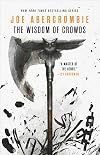
For years, I think I had an overly simplistic, slippery-slope-relativism view of post-modernism in SF (meaning almost anything can be justified). Over the years, I've come to understand it's much more nuanced than that (Abercrombie and K. J. Parker made me realise that). I especially see the value in the "critique" part. Abercrombie and to some extent Parker construct their narratives with some semblance of a structure in order to be deconstructed. In this second volume there is an show more overarching theme of compassion, and Abercrombie achieves this without any hand-holding or plot? Ambitious! I love post-modernism/deconstruction (and in this case meta-modernism) and being explored in a fantasy series. I am personally fascinated by why a book resonates or doesn't resonate with an individual. As much as the author can try to control the narrative, individual readers bring their own background experiences and beliefs into the equation, which ultimately determines how the book is received. There is so much we can learn about ourselves and others through that process. I personally love it when an author like Abercrombie challenges my beliefs and attachment to certain paradigms.
I feel that Abercrombie's writing have a lot of postmodern influences, which he of course has acknowledged on several occasions. But I also feel like his works aren't postmodern per se, there are plenty of meta-modern aspect to the writing. In general I feel like the works are continuously in a dialogue between the modern and postmodern. I have often discussed this elsewhere but the best manner in which you can present themes of empowering issues around society, rights and justice is by taking the meta-modern approach this trilogy took. To my knowledge there are fewer writers or artists who take this approach, Hayao Miyazaki’s works come to mind and I think the Souls games from Hidetaka Miyazaki are also very good examples of a similar approach. Because this approach first shows social orders as they stand and by pure luck of which character you interact with, you are led to believe in the goodness or the evilness of the said social order. This is wonderfully highlighted in the series as our understanding of structures is made, then broken down and then remade in a different light. This trilogy as a whole is a very subtle commentary on how we as children become so easily socialised to believing into an inherent good of the society we have been born in. That the only reason we see structure A) as good and B) as bad, is purely because of the lottery of birth. The fact that “The Age of Madness” novels force us to take views from other vantage points makes us wrestle with contradictions of the same structures. And I love how one of the characters in the series essentially even motivates us to try and resolve these contradictions, calling consistent certainty of belief as abetting tyranny. I can write about this series forever.
SF = Speculative Fiction. show less
I feel that Abercrombie's writing have a lot of postmodern influences, which he of course has acknowledged on several occasions. But I also feel like his works aren't postmodern per se, there are plenty of meta-modern aspect to the writing. In general I feel like the works are continuously in a dialogue between the modern and postmodern. I have often discussed this elsewhere but the best manner in which you can present themes of empowering issues around society, rights and justice is by taking the meta-modern approach this trilogy took. To my knowledge there are fewer writers or artists who take this approach, Hayao Miyazaki’s works come to mind and I think the Souls games from Hidetaka Miyazaki are also very good examples of a similar approach. Because this approach first shows social orders as they stand and by pure luck of which character you interact with, you are led to believe in the goodness or the evilness of the said social order. This is wonderfully highlighted in the series as our understanding of structures is made, then broken down and then remade in a different light. This trilogy as a whole is a very subtle commentary on how we as children become so easily socialised to believing into an inherent good of the society we have been born in. That the only reason we see structure A) as good and B) as bad, is purely because of the lottery of birth. The fact that “The Age of Madness” novels force us to take views from other vantage points makes us wrestle with contradictions of the same structures. And I love how one of the characters in the series essentially even motivates us to try and resolve these contradictions, calling consistent certainty of belief as abetting tyranny. I can write about this series forever.
SF = Speculative Fiction. show less
Lists
Awards


You May Also Like


Associated Authors
Statistics
- Works
- 91
- Also by
- 16
- Members
- 40,624
- Popularity
- #433
- Rating
- 4.2
- Reviews
- 1,269
- ISBNs
- 605
- Languages
- 23
- Favorited
- 150

