So Many Books
by Gabriel Zaid
On This Page
Description
So Many Books is not so much a book as a conversation: about books, about reading, about the mad business of how a book is born every 30 seconds. It is a book of proposals and arguments and debate about books, from the age of Socrates to our own. Join the conversation.Tags
Recommendations

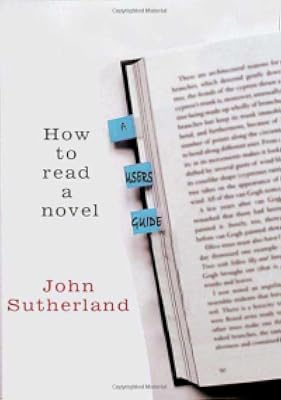
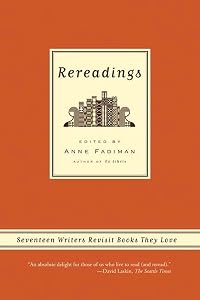
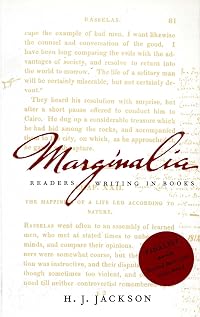
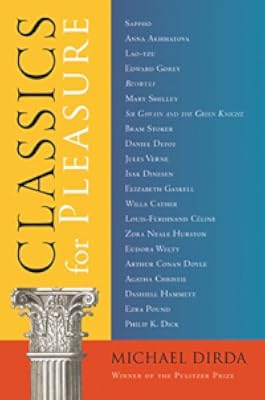


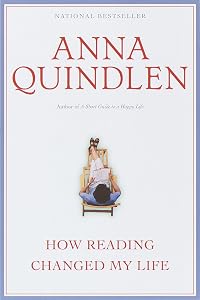
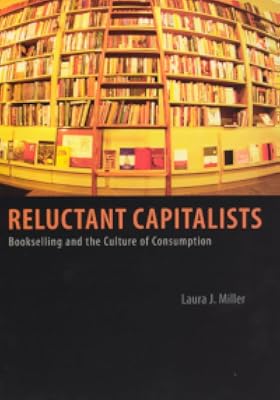
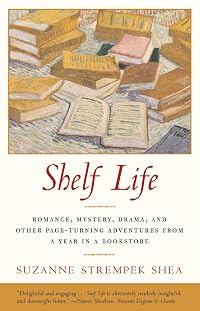
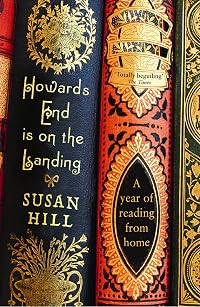

Member Recommendations

Member Reviews
Gabriel Zaid’s slim book on the status of reading and publishing is as pertinent, if not even more pertinent, today as when it was published in 2003. Much of what the author predicted, particularly in regard to e-books and the evolution of the publishing business model, is now coming to pass. His thoughts make me realize how oblivious I was nine years ago to most of what was just around the corner for publishers – and how the changes would affect me, a dedicated reader, personally.
The aptly titled essays collected in So Many Books cover a variety of book-related topics, everything from the overwhelming number of titles published each year, to the search for each book’s specific/perfect readers, to why a book can sell relatively show more few copies but still turn a nice profit…and many others.
For instance, in “Some Questions about the Circulation of Books,” a piece I found particularly interesting, Zaid argues that it is not necessary or even desirable for all books to sell a million copies. What is important, he says, is that books find their “natural readership – the readership they might have in a perfect world where distribution was flawless and price not an issue, giving every interested reader the opportunity to read them.” Ironically, he points out, that a big problem in finding that readership is that “college graduates are more interested in publishing books than reading them.” I suspect this observation is truer today than ever before.
Gabriel Zaid is, if anything, very quotable. While reading So Many Books, I found myself marking sentence after sentence as something I wanted to revisit later.
Consider here a few of the ones I believe give an accurate feel for the book’s tone:
“…it isn’t easy to reach thirty thousand readers. Not because the lower price is still too high, but for a reason we prefer to ignore: the majority of titles published are of no interest to thirty thousand people – you couldn’t give away that many copies.” –“Complaining about Babel”
“Every private library is a reading plan…Having unread books on display is like writing checks when you have no money in the bank – a way of deceiving your guests.” –“An Embarrassment of Books”
“…the truly cultured are capable of owning thousands of unread books without losing their composure or their desire for more.” –“An Embarrassment of Books”
“Given the rapid changes in hardware and software, digital texts from just a few years ago may be harder to preserve and read than books printed centuries ago, or thousand-year-old manuscripts.” –“In Search of the Reader”
“…there are many practical ways in which the traditional book is superior. On the most basic level, there is no need to have a machine running in front of you, with the text up on the screen. This practical advantage, and many others (portability, the lesser likelihood of theft, the impossibility of lending a book to a friend without the proper reading device, author’s rights) tend to be ignored in futuristic fantasies, but they influence the decisions readers make.” – “In Search of the Reader”
These are representative of the thoughts and arguments Zaid presents in So Many Books – only a few of which have become even a tiny bit dated during the last nine years. Gabriel Zaid is passionate about books and the people who read them – and he will find his “natural readership” in the thousands of avid readers who always manage to find and devour books about books. show less
The aptly titled essays collected in So Many Books cover a variety of book-related topics, everything from the overwhelming number of titles published each year, to the search for each book’s specific/perfect readers, to why a book can sell relatively show more few copies but still turn a nice profit…and many others.
For instance, in “Some Questions about the Circulation of Books,” a piece I found particularly interesting, Zaid argues that it is not necessary or even desirable for all books to sell a million copies. What is important, he says, is that books find their “natural readership – the readership they might have in a perfect world where distribution was flawless and price not an issue, giving every interested reader the opportunity to read them.” Ironically, he points out, that a big problem in finding that readership is that “college graduates are more interested in publishing books than reading them.” I suspect this observation is truer today than ever before.
Gabriel Zaid is, if anything, very quotable. While reading So Many Books, I found myself marking sentence after sentence as something I wanted to revisit later.
Consider here a few of the ones I believe give an accurate feel for the book’s tone:
“…it isn’t easy to reach thirty thousand readers. Not because the lower price is still too high, but for a reason we prefer to ignore: the majority of titles published are of no interest to thirty thousand people – you couldn’t give away that many copies.” –“Complaining about Babel”
“Every private library is a reading plan…Having unread books on display is like writing checks when you have no money in the bank – a way of deceiving your guests.” –“An Embarrassment of Books”
“…the truly cultured are capable of owning thousands of unread books without losing their composure or their desire for more.” –“An Embarrassment of Books”
“Given the rapid changes in hardware and software, digital texts from just a few years ago may be harder to preserve and read than books printed centuries ago, or thousand-year-old manuscripts.” –“In Search of the Reader”
“…there are many practical ways in which the traditional book is superior. On the most basic level, there is no need to have a machine running in front of you, with the text up on the screen. This practical advantage, and many others (portability, the lesser likelihood of theft, the impossibility of lending a book to a friend without the proper reading device, author’s rights) tend to be ignored in futuristic fantasies, but they influence the decisions readers make.” – “In Search of the Reader”
These are representative of the thoughts and arguments Zaid presents in So Many Books – only a few of which have become even a tiny bit dated during the last nine years. Gabriel Zaid is passionate about books and the people who read them – and he will find his “natural readership” in the thousands of avid readers who always manage to find and devour books about books. show less
I read this book back in 2005. Here is what I wrote in my journal about it at the time:
>>Finished reading Gabriel Zaid's So Many Books, a short 144 pg. set of essays on books and reading. The author looks at readers, the publishing industry, and why e-books do not mean the end of printed books among other topics. It was a light, quick, and pleasant read; the book was engaging and relaxing. Highly recommended for those who love books about books and reading. I think the best comment or observation from the book is the notion of constellations of books. One of the points the author makes is that so many books are published that there are now more books than readers. But even though not every book reaches everyone, books still initiate or show more serve to foster conversations with the readers they do find. Books are as numerous as the stars, and those who distribute them, sellers, libraries, publishers, arrange them in particular constellations for potential readers. So it becomes a matter for readers to find their constellation or constellations. The author writes that "there are more books to contemplate than stars in a night on the high seas. In this immensity, how is a reader to find his personal constellation, those books that will put his life in communication with the universe?" (98). He views the moment when a reader finds his books as a miracle, and I have to say it is a miracle in a most wonderful way when a bit of exploring leads to a wonderful find, and this little book for me was my latest little miracle. What I wonder is what our personal constellations of books say about us? It has been said, in one fomr or another, that we are what we read. But what if others saw your constellations, your stars of reading? And what if you took a moment to look at yours? What could you learn about yourself? About others? And what new, and possibly exciting, conversations would come up as a result? Sounds like a question worth exploring. show less
>>Finished reading Gabriel Zaid's So Many Books, a short 144 pg. set of essays on books and reading. The author looks at readers, the publishing industry, and why e-books do not mean the end of printed books among other topics. It was a light, quick, and pleasant read; the book was engaging and relaxing. Highly recommended for those who love books about books and reading. I think the best comment or observation from the book is the notion of constellations of books. One of the points the author makes is that so many books are published that there are now more books than readers. But even though not every book reaches everyone, books still initiate or show more serve to foster conversations with the readers they do find. Books are as numerous as the stars, and those who distribute them, sellers, libraries, publishers, arrange them in particular constellations for potential readers. So it becomes a matter for readers to find their constellation or constellations. The author writes that "there are more books to contemplate than stars in a night on the high seas. In this immensity, how is a reader to find his personal constellation, those books that will put his life in communication with the universe?" (98). He views the moment when a reader finds his books as a miracle, and I have to say it is a miracle in a most wonderful way when a bit of exploring leads to a wonderful find, and this little book for me was my latest little miracle. What I wonder is what our personal constellations of books say about us? It has been said, in one fomr or another, that we are what we read. But what if others saw your constellations, your stars of reading? And what if you took a moment to look at yours? What could you learn about yourself? About others? And what new, and possibly exciting, conversations would come up as a result? Sounds like a question worth exploring. show less
Se m'han fet curts aquests assaigs amb cert to irònic sobre el llibre, el món editorial, els costums entorn de la lectura, les llibreries... Eliminaria la part més tècnica del llibre, penso que hi ha un excés d'estadístiques, sobretot al darrer assaig "Precio y tiraje óptimo de libros". L'interès que em desperten alguns articles és inversament proporcional a la resta (de fet la meitat m'agraden molt i l'altra meitat els eliminaria del llibre). "La medida de la lectura no debe ser el número de libros leídos, sino el estado en que nos dejan. ¿Qué demonios importa si uno es culto, está al día o ha leído todos los libros? Lo que importa es cómo se anda, cómo se ve, cómo se actúa, después de leer. Si la calle y las nubes show more y la existencia de los otros tienen algo que decirnos. Si leer nos hace, físicamente, más reales." show less
This is an important book that examines how extremely large-scale publishing is destroying the publishing industry in the developed world and harming the literary culture of the developing world. It's a small book and quirkily written, but it speaks with great insight about the collision between print culture and the excesses of capitalism.
An interesting take (this is more a large essay rather than a true full piece of work) on books, the publishing industry, and their future. Specifically in regards to over-publishing, over-production, and slightly touching on the future insofar as technology is involved (eBooks, Kindles, etc.).
A bit dated but not too much (read: 2002), it does figure and factor in Amazon, eBooks, internet, etc. The hypertextual ideas it talks about at the end is basically Wikipedia which is what it never really touches upon.
The work does touch upon the pure avalanche of novels being published each year and our inability to read even 1/5000th of it all. I often think about that now; where if I was born say 50 years ago, I'd never have gotten to read show more 99.9% of what I've read now (sure, some of the classics like Plato, Aristotle, Nietzsche, Walt Whitman, etc, I could; but the point stands).
And to think 100 years from now, just how many MORE pieces of work there will be; and this can then even be expanded to include all media (ie. TV, Movies, artwork, even YouTube channels, etc.). Each successive generation will have more and more pieces of work to read/watch/review etc than the generation before it. Exponentially. I often think about all of the books I won't be able to read because they'll be written AFTER my death, and even the books already written DURING my lifetime that I'll never get the time to read.
Who knows, maybe someday there will be a way to read it all? One can only hope. show less
A bit dated but not too much (read: 2002), it does figure and factor in Amazon, eBooks, internet, etc. The hypertextual ideas it talks about at the end is basically Wikipedia which is what it never really touches upon.
The work does touch upon the pure avalanche of novels being published each year and our inability to read even 1/5000th of it all. I often think about that now; where if I was born say 50 years ago, I'd never have gotten to read show more 99.9% of what I've read now (sure, some of the classics like Plato, Aristotle, Nietzsche, Walt Whitman, etc, I could; but the point stands).
And to think 100 years from now, just how many MORE pieces of work there will be; and this can then even be expanded to include all media (ie. TV, Movies, artwork, even YouTube channels, etc.). Each successive generation will have more and more pieces of work to read/watch/review etc than the generation before it. Exponentially. I often think about all of the books I won't be able to read because they'll be written AFTER my death, and even the books already written DURING my lifetime that I'll never get the time to read.
Who knows, maybe someday there will be a way to read it all? One can only hope. show less
In So Many Books…, Zaid takes the reader on a lyrical and informative journey into the world of reading. While so much of the world’s information, entertainment, and business has become homogenized and produced for the mass-market, the world of books continues to be an oasis for the individual reader. A book is published every thirty seconds…which one of the millions should I read? It can be overwhelming and awe-inspiring to the browser. This is an excellent, quick read for those who are involved in the book industry: librarians, publishers, and casual readers. So Many Books…instead of a lament, is an exclamation of wonder and excitement at the variety and sheer amount of reading that is at our fingertips.
I had a hard time show more deciding whether or not to include this on my list, because it borders textbook. Upon further thought, I decided to include it because although we used it as a text in class, it wasn't meant for that purpose, and I'd suggest it to anyone who is into genre fiction. Booksellers, librarians, readers, whatever. It's a little book about the history of genre fiction and how the publishing industry works, how to choose books, etc. it really set my mind at ease and helped relieve me of the guilt I sometimes feel when i pick up two Victoria Holt romance novels in a row. show less
I had a hard time show more deciding whether or not to include this on my list, because it borders textbook. Upon further thought, I decided to include it because although we used it as a text in class, it wasn't meant for that purpose, and I'd suggest it to anyone who is into genre fiction. Booksellers, librarians, readers, whatever. It's a little book about the history of genre fiction and how the publishing industry works, how to choose books, etc. it really set my mind at ease and helped relieve me of the guilt I sometimes feel when i pick up two Victoria Holt romance novels in a row. show less
A slim volume whose existence is ironic. Yes, there are too many books, though I'll never tire of reading them, or reading about them if my purchase of this text is anything to go by.
Members
- Recently Added By
Lists

Best books about books
209 works; 106 members
Author Information

35+ Works 863 Members
Gabriel Zaid is a poet and essayist, and the founder and manager of a consulting firm in Mexico City. His literary work, social and cultural criticism, and business writings have been widely published throughout the Spanish-speaking world. He is a member of El Colegio Nacional and the Mexican Academy of Spanish Language.
Some Editions
Series
Belongs to Publisher Series
Common Knowledge
- Canonical title
- So Many Books
- Original title
- Los demasiados libros
- Alternate titles*
- Los demasiados libros; Zo veel boeken
- Original publication date
- 2003 (1e édition originale) (1e édition originale); 2005-10 (1e traduction de l'anglais et édition française, Les Belles lettres (1e traduction de l'anglais et édition française, Les Belles lettres)
- First words
- The reading of books is growing arithmetically; the writing of books is growing exponentially.
- Last words
- (Click to show. Warning: May contain spoilers.)So long as these traditions are alive, we may be confident that rich and nourishing diversity will prevail.
- Blurbers
- Fadiman, Anne; Berman, Paul; Schwartz, Lynne Sharon; Krauze, Enrique; Dutton, Doug
- Original language
- Spanish
*Some information comes from Common Knowledge in other languages. Click "Edit" for more information.
Classifications
- Genres
- Nonfiction, General Nonfiction, Literature Studies and Criticism
- DDC/MDS
- 028.9 — Computer science, information & general works Library & information sciences Reading and use of other information media Character of reading in libraries
- LCC
- Z1003 — Bibliography, Library Science and Information Resources General bibliography Biography of bibliographers
- BISAC
Statistics
- Members
- 640
- Popularity
- 45,400
- Reviews
- 16
- Rating
- (3.45)
- Languages
- 9 — Dutch, English, Estonian, French, German, Italian, Portuguese, Croatian, Spanish
- Media
- Paper, Ebook
- ISBNs
- 19
- ASINs
- 5