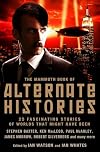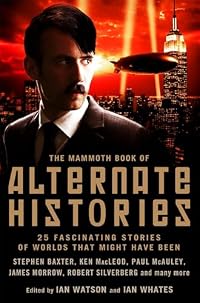
The Mammoth Book of Alternate Histories
by Ian Watson (Editor), Ian Whates (Editor)
There is 1 current discussion about this work.
On This Page
Description
Every short story in this wonderfully varied collection has one thing in common: each features some alteration in history, some divergence from historical reality, which results in a world very different from the one we know today. As well as original stories specially commissioned from bestselling writers such as James Morrow, Stephen Baxter and Ken MacLeod, there are genre classics such as Kim Stanley Robinson's story of how World War II atomic bomber the Enola Gay, having crashed on a show more training flight, is replaced by the Lucky Strike with profoundly different consequences.Praise for the editors:'Mr Watson wreaks havoc with what is accepted - and acceptable.' The Times'One of Britain's consistently finest science fiction writers.' New Scientist show lessTags
Recommendations











Member Reviews
Fjöldi smásagna þar sem höfundar leika sér mannkynssöguna. Hvernig múhameðstrúin gæti breiðst yfir Evrópu, Kínverjar stofnuðu nýlendur í Ameríku á undan Spánverjum, Jesús væri ekki dæmdur til dauða, Rómaveldi héldi velli o.s.frv. Sumar sögurnar voru ansi áhugaverðar pælingar en aðrar því miður ákaflega ótrúverðugar.
I've always been fascinated by alternative history stories, the 'what if's' of history. What if Churchill had been hit by a car before the Second World War? What if Roosevelt hadn't had polio, what if Henry IV hadn't gone to Canossa? So I couldn't help but pick up this collection of stories and novella's of Alternate Histories.
The collection was pretty good. There were some good stories in here, like one about the Roman Empire lasting to the year two thousand (having a serious effect by cancelling out the industrial revolution it seems), or the one about the crew of the Enola Gay dying before dropping the bomb and the replacement bomber refusing to drop the bomb on Hiroshima.
However, reading alternate history requires knowledge about show more the pivotal change in the story. If I don't know the effects of the bomb on Hiroshima, or the shooting of Franz Ferdinand, it isn't interesting at all from an alternate history point of view to read about a change in this history. Then it is just a story, pretty nice, but it loses its power. This was a problem for me in several of the stories. It was still a fun collection to read, with some nice classics. Four out of five stars. show less
The collection was pretty good. There were some good stories in here, like one about the Roman Empire lasting to the year two thousand (having a serious effect by cancelling out the industrial revolution it seems), or the one about the crew of the Enola Gay dying before dropping the bomb and the replacement bomber refusing to drop the bomb on Hiroshima.
However, reading alternate history requires knowledge about show more the pivotal change in the story. If I don't know the effects of the bomb on Hiroshima, or the shooting of Franz Ferdinand, it isn't interesting at all from an alternate history point of view to read about a change in this history. Then it is just a story, pretty nice, but it loses its power. This was a problem for me in several of the stories. It was still a fun collection to read, with some nice classics. Four out of five stars. show less
A mixed section of stories, but overall I found this disappointing. I think alternate history generally does not flourish within the short story format as it needs more room to breath and create its alternative version of history in a way that explains itself in sufficient detail to convince.
My favourite stories in this collection were the four below, three of which are by legends in the SF/alternate history fields. The rest were a mixed collection of tales, some reasonable, others dull and unengaging.
The Lucky Strike (Kim Stanley Robinson)
The pilot due to drop the atomic bomb on Japan dies in an air accident and his place is taken by another who has doubts about his mission and deliberately drops the bomb on uninhabited land away from show more Hiroshima. He is court marshalled and shot but the Japanese surrender due to the power of the demonstration and the post-War world is largely non-atomic. Powerful stuff though not sure it is too realistic in terms of the Japanese surrender.
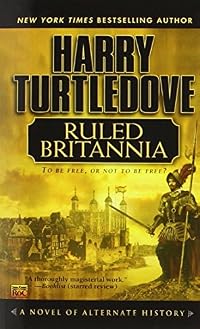
Islands in the Sea (Harry Turtledove)
A fascinating exploration of the clash of religions. Constantinople has fallen to Islam in the 8th century of the Christian era instead of the 15th. The Khan of the Bulgars summons Islamic and Chistian thinkers to present to him the arguments for their respective religions and he will make his choice, affecting the future development of history. As this is alternate history, he chooses Islam and Christianity is restricted to western Europe, with the momentum in Islam's favour.
The Einstein Gun (Pierre Gevart)
The assassination of Franz Ferdinand fails and WWI never happens. As Emperor he appoints Hitler as Chancellor in 1934 and repression against the Jews begins and world war looms in 1945. A Jewish university lecturer, dismissed from his job, is friends with Einstein, in exile in socialist France. Einstein has invented a primitive time machine,which the ex-lecturer hopes touse to assassinate Franz Ferdinand in Sarajevoin 1914 and thereby prevent this repression and drive to war....
Tales from the Venia Woods (Robert Silverberg)
The Roman Empire lasted 2000 years and was then overthrown by the Second Republic. The last survivor of the imperial family is an old man hiding deep in the woods. This is one of a series of stories set in this alternate universe created by Robert Silverberg. show less
My favourite stories in this collection were the four below, three of which are by legends in the SF/alternate history fields. The rest were a mixed collection of tales, some reasonable, others dull and unengaging.
The Lucky Strike (Kim Stanley Robinson)
The pilot due to drop the atomic bomb on Japan dies in an air accident and his place is taken by another who has doubts about his mission and deliberately drops the bomb on uninhabited land away from show more Hiroshima. He is court marshalled and shot but the Japanese surrender due to the power of the demonstration and the post-War world is largely non-atomic. Powerful stuff though not sure it is too realistic in terms of the Japanese surrender.
Islands in the Sea (Harry Turtledove)
A fascinating exploration of the clash of religions. Constantinople has fallen to Islam in the 8th century of the Christian era instead of the 15th. The Khan of the Bulgars summons Islamic and Chistian thinkers to present to him the arguments for their respective religions and he will make his choice, affecting the future development of history. As this is alternate history, he chooses Islam and Christianity is restricted to western Europe, with the momentum in Islam's favour.
The Einstein Gun (Pierre Gevart)
The assassination of Franz Ferdinand fails and WWI never happens. As Emperor he appoints Hitler as Chancellor in 1934 and repression against the Jews begins and world war looms in 1945. A Jewish university lecturer, dismissed from his job, is friends with Einstein, in exile in socialist France. Einstein has invented a primitive time machine,which the ex-lecturer hopes touse to assassinate Franz Ferdinand in Sarajevoin 1914 and thereby prevent this repression and drive to war....
Tales from the Venia Woods (Robert Silverberg)
The Roman Empire lasted 2000 years and was then overthrown by the Second Republic. The last survivor of the imperial family is an old man hiding deep in the woods. This is one of a series of stories set in this alternate universe created by Robert Silverberg. show less
As almost all anthologies this book is a mixed bag as well. But as alternative history is my favourite subgenre, I can`t really say anything bad about it. What if the Chinese conquer America? Or if the Roman Empire not falling apart? Or the Enlightement doesn`t happen in Europe?
A mix of different alterante histories from different authors and periods. A few of them were really interesting and made me research new periods. A couple were more of a what would have happened if this impossible invention had happened, but it was ok overall.
The Raft of the Titanic (2010) by James Morrow - delightful and slightly whimsical.
Sidewinders (2010) by Ken MacLeod - imaginative and humorous.
The Wandering Christian (1991) by Kim Newmanand Eugene Byrne - long-winded, dull, unimaginative.
Hush My Mouth (1986) by Suzette Haden Elgin - found the premise implausible.
A Letter from the Pope (1990) by Harry Harrison and Tom Shippey - excellent
Such a Deal (2010) by Esther M. Friesner - enjoyable with a black humour ending
Ink from the New Moon (1992) by A. A. Attanasio - dull
Dispatches from the Revolution (1991) by Pat Cadigan - chilling and plausible
Catch That Zeppelin! (1975) by Fritz Leiber - enjoyable
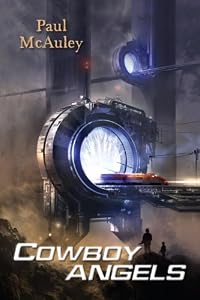
A Very British History (2000) by Paul J. McAuley - dull
The Imitation Game (2008) by show more Rudy Rucker - unmemorable
Weihnachtabend (1972) by Keith Roberts - unmemorable
The Lucky Strike (1984) by Kim Stanley Robinson
His Powder'd Wig, His Crown of Thornes (1989) by Marc Laidlaw - ok
Roncesvalles (1990) by Judith Tarr - dull
The English Mutiny (2008) by Ian R. MacLeod - good
O One [Celestial Empire] (2003) by Chris Roberson - good
Islands in the Sea (1989) by Harry Turtledove - ok
Lenin in Odessa (1990) by George Zebrowski - dull, didn't finish
The Einstein Gun (2010) by Pierre Gévart - ok
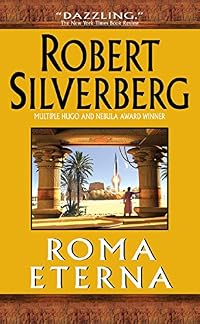
Tales from the Venia Woods [Roma Eterna] (1989) by Robert Silverberg - excellent
Manassas, Again (1991) by Gregory Benford - dull
The Sleeping Serpent (1992) by Pamela Sargent - ok
Waiting for the Olympians (1988) by Frederik Pohl - excellent
Darwin Anathema (2010) by Stephen Baxter - ok show less
Sidewinders (2010) by Ken MacLeod - imaginative and humorous.
The Wandering Christian (1991) by Kim Newmanand Eugene Byrne - long-winded, dull, unimaginative.
Hush My Mouth (1986) by Suzette Haden Elgin - found the premise implausible.
A Letter from the Pope (1990) by Harry Harrison and Tom Shippey - excellent
Such a Deal (2010) by Esther M. Friesner - enjoyable with a black humour ending
Ink from the New Moon (1992) by A. A. Attanasio - dull
Dispatches from the Revolution (1991) by Pat Cadigan - chilling and plausible
Catch That Zeppelin! (1975) by Fritz Leiber - enjoyable
A Very British History (2000) by Paul J. McAuley - dull
The Imitation Game (2008) by show more Rudy Rucker - unmemorable
Weihnachtabend (1972) by Keith Roberts - unmemorable
The Lucky Strike (1984) by Kim Stanley Robinson
His Powder'd Wig, His Crown of Thornes (1989) by Marc Laidlaw - ok
Roncesvalles (1990) by Judith Tarr - dull
The English Mutiny (2008) by Ian R. MacLeod - good
O One [Celestial Empire] (2003) by Chris Roberson - good
Islands in the Sea (1989) by Harry Turtledove - ok
Lenin in Odessa (1990) by George Zebrowski - dull, didn't finish
The Einstein Gun (2010) by Pierre Gévart - ok
Tales from the Venia Woods [Roma Eterna] (1989) by Robert Silverberg - excellent
Manassas, Again (1991) by Gregory Benford - dull
The Sleeping Serpent (1992) by Pamela Sargent - ok
Waiting for the Olympians (1988) by Frederik Pohl - excellent
Darwin Anathema (2010) by Stephen Baxter - ok show less
Rather disappointing on the whole, because the editors’ taste in fiction differs from mine. Some of the stories are OK, but the only one I really value is “Sidewinders”, by Ken MacLeod. I’m glad to have found that, at least.
Mar 31, 2025English (UK)
Members
- Recently Added By
Talk Discussions
Current Discussions
26Shorts2026: ShortsRead --- Anisha's 2026 log in 26 Short Stories for 2026 (Today 1:07pm)
Author Information

British science fiction author Ian Watson was born in 1943. He received a first class Honors degree in English Literature in 1963 and a research degree in English and French 19th Century literature in 1965 from Balliol College, Oxford. After lecturing in literature and Futures Studies, he became a full-time author in 1976. His first novel, The show more Embedding, won the John W. Campbell Memorial Award and the French Prix Apollo. His novel The Jonah Kit won the British Science Fiction Association Award and the Orbit Award. He worked with Stanley Kubrick on story development for the movie A.I. Artificial Intelligence from 1990 to 1991. His poem True Love won the 2002 Rhysling Award from the Science Fiction Poetry Association. (Bowker Author Biography) show less

All Editions
Some Editions
Series
Belongs to Publisher Series
Mammoth Books (Mammoth Books 470)
Work Relationships
Contains
Common Knowledge
- Original publication date
- 2010
- First words
- “There is an infinitude of Pasts, all equally valid,” wrote André Maurois, the French novelist and biographer.
- Last words
- (Click to show. Warning: May contain spoilers.)Talking quietly, following Xavier through the warren under St Paul’s, Mary led Alicia steadily towards the light of day.
Classifications
- Genres
- Fiction and Literature, Science Fiction
- DDC/MDS
- 808.83876 — Literature & rhetoric Literature, rhetoric & criticism Composition Literature Collections Collections of fiction Genre fiction Adventure fiction Science and Fantasy Fiction
- LCC
- PS648 .F3 .M326 — Language and Literature American literature American literature Collections of American literature Prose (General)
- BISAC
Statistics
- Members
- 221
- Popularity
- 147,026
- Reviews
- 7
- Rating
- (3.34)
- Languages
- English
- Media
- Paper, Ebook
- ISBNs
- 3
- ASINs
- 5