On This Page
Description
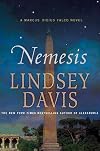
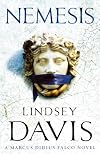
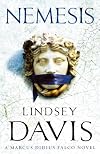
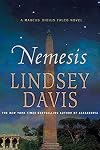
When a pair of his father's associates disappear under suspicious circumstances, informer Marcus Didius Falco of A.D. 77 Rome investigates allegations of a feud involving a group of notorious freedmen, who are receiving high-level protection from corruptrulers.Tags
Recommendations





















Member Recommendations
Member Reviews
Lindsey Davis writes like an American. I hope that isn’t taken as a horrible insult, but it’s just difficult to imagine a proper English lady – Jane Austen, say - coming up with the line “He’ll extract your testicles, roll them up in an old wool sock, whirl it around his head and beat you up with your own magic machinery”. Even in Northanger Abbey. Davis’s hero, Marcus Didius Falco, is a plebian Roman from the Aventine, veteran of the unlucky Legio II Augusta, and now working as a private informer. He’s come a long way in 19 novels: married well above his station to the lovely and intelligent Helena Justina, father of two obstreperous but cute daughters plus the adopted Albia, and, in Nemesis, unexpectedly wealthy thanks show more to the unexpected death of his antique-dealer father. You can do interesting things with series novels; develop back stories, watch characters evolve, leave loose ends apparently untied only to be knitted up two books down the road. (Nemesis does just that with Falco’s erstwhile antagonist Anacrites the Spy). As far as Roman history goes, Davis’s Falco covers much less ground than Steven Saylor’s Gordianus the Finder series, and she’s more tolerant of anachronism, but she’s also more fun to read. (Sample anachronisms include Falco’s authorship of a play, The Spook Who Spoke, about a ghost who gives his son information about his murder by his own brother, and a group of Jewish slaves who try to talk Falco into finding their lost Ark). Davis sidesteps one of the basic problems of classical history. Rome is the source of a lot of our traditions of government and our ideas on personal responsibility and honor. For thousands of years schoolchildren learned of Marcus Aurelius and Horatius at the Bridge and Cincinnatus called from his plow; even the Communists taught about the Gracchi. Yet Rome was a place where you could buy twelve year old girl at the slave market, take her home, and teach her biology; where you could take your family to the games to watch gladiators die (with perhaps some criminals eaten by lions during intermission) and where the virtues of the Republic collapsed into the vices of the Empire. Falco never knew the Republic, is deservedly skeptical of the supposed virtues of his ancestors, and has just acquired a houseful of slaves on the death of his father. He’s portrayed as being just a tiny bit uncomfortable about them but not enough to manumit them (well, there’s a tax on that and Falco is used to being frugal).
Fun reads, perhaps because of rather than despite the dark undercurrent. You need to start at the beginning (Silver Pigs). show less
Fun reads, perhaps because of rather than despite the dark undercurrent. You need to start at the beginning (Silver Pigs). show less
I like the Falco books. I like his anti-noir and his realistic grit. I like the pithy style and the sense of humour. I like Helena, and all the ways in which Marcus is extremely human. I like the darkness that comes along with the seedy underside and being this close to it. In all of this I am well-served once again by this book, the twentieth (and last?) in the series.
I have a problem, though, and that's that I have never quite bought into Anacrites as the villain of the piece. I don't like it as a narrative choice (too easy when Marcus could have had to just plain be wrong about disliking him) and I don't like it given that he is a servant of the Emperor (which Marcus dislikes) and a freedman (which Marcus has attitude about) and thus show more he is delivered as constantly slightly off, when Marcus has been displayed as a slanted and occasionally unreliable narrator. I resisted believing it was true (that Anacrites was off) for all those reasons for a very long time, and for longer still because it just became habit. So I was never going to be satisfied with the way things end up in this book.
Further adventures about Albia would be awesome, though. It would be awesome to get a different viewpoint - a woman's, and a foreigner's - on Rome. show less
I have a problem, though, and that's that I have never quite bought into Anacrites as the villain of the piece. I don't like it as a narrative choice (too easy when Marcus could have had to just plain be wrong about disliking him) and I don't like it given that he is a servant of the Emperor (which Marcus dislikes) and a freedman (which Marcus has attitude about) and thus show more he is delivered as constantly slightly off, when Marcus has been displayed as a slanted and occasionally unreliable narrator. I resisted believing it was true (that Anacrites was off) for all those reasons for a very long time, and for longer still because it just became habit. So I was never going to be satisfied with the way things end up in this book.
Further adventures about Albia would be awesome, though. It would be awesome to get a different viewpoint - a woman's, and a foreigner's - on Rome. show less
In AD 77 on a hot summer day in Rome, informer Marcus Didius Falco has twin tragedies strike him almost simultaneously. His newborn son dies just hours after being born and when he takes his baby to be buried on his father's property, he learns his father has also died. As the heir, Marcus must make quick business decisions. He has a contract to deliver over a hundred statues to the amphitheater, but when he arrives to pay his father's supplier for them and pick them up, Julius Modestus and his wife Livia Primilla are nowhere to be found.
The nephew of the missing couple informs Marcus that his Uncle Julius complained about Nobilis of the Claudii family who reside in the desolate Pontine Marshes. Marcus soon learns that the mutilated show more body of Modesto has been found. Falco and his friend Petronius investigate. They visit the Pontine Marshes and see how trashy the Claudii live and how everyone fears them. As they make progress on the case, their enemy Chief Spy Anacrites takes over the inquiry. Falco realizes someone high up in the government is protecting the Claudii, so he and his partner continue their probe.
Once again, Lindsey Davis brings to life ancient Rome. This marks a major transition for Falco. His legal status has changed, he has lost and gained (although not all his gains are remotely welcome ones), and he is forced to resort to questionable and sometimes brutal tactics in his efforts to keep his family safe and solve the murder mystery de jour. This is a darker Falco than we've seen before, but he's still perfectly recognizable as the M Didius fans have come to know and love (after all, this is a guy who participated in the murder of his C.O. after the Boudica rebellion).
This is a terrific Ancient Rome whodunit with surprising twists.
This is probably her best in the Falco series yet. Yes, it is one of her darkest novels and it does delve into the harder realities of Roman life unflinchingly. However, Lindsey writes with humanity and wisdom, so even while exploring the worst sides of human existance she gives us hope. show less
The nephew of the missing couple informs Marcus that his Uncle Julius complained about Nobilis of the Claudii family who reside in the desolate Pontine Marshes. Marcus soon learns that the mutilated show more body of Modesto has been found. Falco and his friend Petronius investigate. They visit the Pontine Marshes and see how trashy the Claudii live and how everyone fears them. As they make progress on the case, their enemy Chief Spy Anacrites takes over the inquiry. Falco realizes someone high up in the government is protecting the Claudii, so he and his partner continue their probe.
Once again, Lindsey Davis brings to life ancient Rome. This marks a major transition for Falco. His legal status has changed, he has lost and gained (although not all his gains are remotely welcome ones), and he is forced to resort to questionable and sometimes brutal tactics in his efforts to keep his family safe and solve the murder mystery de jour. This is a darker Falco than we've seen before, but he's still perfectly recognizable as the M Didius fans have come to know and love (after all, this is a guy who participated in the murder of his C.O. after the Boudica rebellion).
This is a terrific Ancient Rome whodunit with surprising twists.
This is probably her best in the Falco series yet. Yes, it is one of her darkest novels and it does delve into the harder realities of Roman life unflinchingly. However, Lindsey writes with humanity and wisdom, so even while exploring the worst sides of human existance she gives us hope. show less
Lindsey Davis’ Falco series of Imperial Rome-based murder mysteries has been around for a long time - this latest novel, Nemesis, is the 20th installment. I have read most of them and enjoyed all I have read. Davis knows her stuff historically and writes with real affection for Falco and his extended family. Her books are always threaded through with humour, domestic chaos and conflict, plus the unfolding of the central crime.
Nemesis is a very different book and, I think, marks a major turning point in the Falco series. This is a much darker, more sombre, novel where the few turns at humour seem to fall flat. The novel starts and ends with shocking deaths and the whole bedrock of the continuing characters is torn away. It is as if all show more the possible ways the course of the series could have been changed over the years have all been crammed into this one book.
Falco loses three family members - two die and one moves on. His fortunes change and he becomes rich. We think an enemy is murdered execution-style, but we do not know who actually dies on the final page.
Maybe this is a good thing, to make sweeping changes to keep the series alive. I think it smacks of the ‘Only Fools & Horses’ aberration where the struggling brothers become millionaires, only to have this treated as a forgotten dream in later episodes as the humour in the new situation dries up.
This is a good book from an established author, just darker. show less
Nemesis is a very different book and, I think, marks a major turning point in the Falco series. This is a much darker, more sombre, novel where the few turns at humour seem to fall flat. The novel starts and ends with shocking deaths and the whole bedrock of the continuing characters is torn away. It is as if all show more the possible ways the course of the series could have been changed over the years have all been crammed into this one book.
Falco loses three family members - two die and one moves on. His fortunes change and he becomes rich. We think an enemy is murdered execution-style, but we do not know who actually dies on the final page.
Maybe this is a good thing, to make sweeping changes to keep the series alive. I think it smacks of the ‘Only Fools & Horses’ aberration where the struggling brothers become millionaires, only to have this treated as a forgotten dream in later episodes as the humour in the new situation dries up.
This is a good book from an established author, just darker. show less
All of the Falco books are at heart about family, his complex family, the Senatorial family that he married into and the families of those that he is constantly trying to help. Nemesis takes this looking at family to another level by bringing into play Anacrites, Falco's rival and colleague for Imperial jobs. The plot begins with two deaths in Falco's family and spins out into the Pontine swamps with the bodies of strangers and the complex web of what family duty truly means. This is one of my favorite Falco books as it has all of the elements that make the Falco novels not only great mystery reads but good historical novels; well drawn characters, a Rome that feels true and a plot that leaves you reading to the last page. As a show more Classicist myself, Davis impresses me with her gift for bringing both to the street level of Rome and into the palaces and showing the dance of hierarchy and money in play. show less
Not for nothing is Lindsay Davis one of my favourite authors and her Marcus Didius Falco one of my very favourite detectives. This long-running series is excellent. The mystery is always tricky and Ms. Davis has a wicked sense of humour and that makes the reading of these books so much fun. Ancient Rome comes to life with her pen. In this book Falco and his friend Petronius are chasing a particularly evil serial killer, and as they dig deeper and deeper to uncover the secrets, lo and behold they find a link to Falco’s Nemesis. I really enjoyed this book and love the way it ended which is a fine set=up for the next book in the series.
Lindsey Davis' series set in ancient Rome is twenty books long so far. Most mystery series can't even sustain five books before they peter out into formula writing, but the Marcus Didius Falco stories have remained my favorites despite their span.
It's not because of the plots. Most are average or somewhat above (in truth, I figured this one out midway through the book). They work because of the characters really come alive for me. Marcus so much the everyman, trying to do the right thing, sometimes succeeding and sometimes failing. Helena, despite the caustic wit, so much a wife anyone (well, anyone male and straight) would aspire to having.
This chapter in the larger story stands out from its immediate predecessors. It's grimmer and show more darker, with less of the insouciant humor that is Falco's trademark. It shakes up the comfortable status quo of the story line; we can see that life will be very different for the Didii going forward. And it definitely works—this was my favorite of the series in a while.
There was a rumor floating around that this might be the last in the series. I seriously hope not.
If you like mysteries, particularly historical mysteries, this is a series worth trying. However, you need to read the books in order (starting with Silver Pigs) as each builds on the story line of the previous. show less
It's not because of the plots. Most are average or somewhat above (in truth, I figured this one out midway through the book). They work because of the characters really come alive for me. Marcus so much the everyman, trying to do the right thing, sometimes succeeding and sometimes failing. Helena, despite the caustic wit, so much a wife anyone (well, anyone male and straight) would aspire to having.
This chapter in the larger story stands out from its immediate predecessors. It's grimmer and show more darker, with less of the insouciant humor that is Falco's trademark. It shakes up the comfortable status quo of the story line; we can see that life will be very different for the Didii going forward. And it definitely works—this was my favorite of the series in a while.
There was a rumor floating around that this might be the last in the series. I seriously hope not.
If you like mysteries, particularly historical mysteries, this is a series worth trying. However, you need to read the books in order (starting with Silver Pigs) as each builds on the story line of the previous. show less
Members
- Recently Added By
Lists

Books Read in 2015
3,299 works; 126 members
Author Information

57+ Works 26,471 Members
Lindsey Davis lives in London, England. (Publisher Provided) Lindsey Davis was born in Birmingham, England in 1949. She earned her English degree at Oxford. Her published works include The Course of Honour and The Silver Pigs, the first in the Falco series which won the Authors' Club Best First Novel award in 1989. In 1999 she received the show more Sherlock Award for Best Comic Detective for her creation, Marcus Didius Falco. (Publisher Provided) show less
Some Editions
Series

Common Knowledge
- Canonical title
- Nemesis
- Original publication date
- 2010-06-03
- People/Characters
- Marcus Didius Falco; Helena Justina; Anacrites (spy); Marcus Didius Favonius (Falco's father, Geminus); L. Petronius Longus
- Important places
- Rome (Ancient); Pontine Marshes, Latium
- Important events
- Reign of Vespasian (69 AD | 79 AD)
- First words
- I find it surprising more people are not killed over dinner at home.
- Quotations
- 'So will the spy try short-distance Falco-killing this evening?' Albia sounded far too interested.
'No, darling. Anacrites is too shrewd to try anything with you and me there. I'd poke his eyes out, while you rushed f... (show all)or a lawyer.' [Helena]
That was reassuring. [Falco] (chapter 31) - Last words
- (Click to show. Warning: May contain spoilers.)Two men who were preparing to leave the streets after the day's business and who were setting off home to their families.
Classifications
Statistics
- Members
- 579
- Popularity
- 50,622
- Reviews
- 23
- Rating
- (3.92)
- Languages
- English, Spanish
- Media
- Paper, Audiobook, Ebook
- ISBNs
- 25
- ASINs
- 12