
On This Page
Description
The debut thriller in the internationally acclaimed series- available for the first time in the United StatesA long-time number one bestseller in his native Sweden, Åke Edwardson's profile was conspicuously raised when his novel Frozen Tracks was chosen as a finalist for a 2008 Los Angeles Times Book Prize. Until now, however, the novel that launched Edwardson's critically acclaimed Erik Winter series has never been available in the United States. With a new series translator who fully show more captures Edwardson's signature atmospheric style, Death Angels is America's introduction to Sweden's youngest Chief Inspector as he teams up with Scotland Yard to solve the mysterious parallel killings of young British and Swedish tourists. Richly evocative of mid-nineties South London and Gothenburg, Sweden, Death Angels is a brilliant opening to a mesmerizing series that has become a phenomenon in international crime fiction.
. show less
Tags
Recommendations
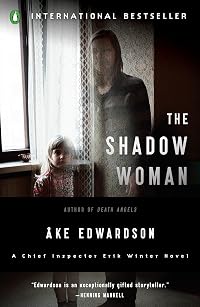


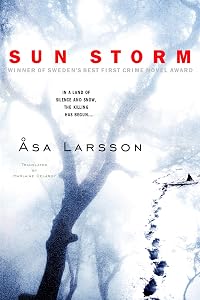
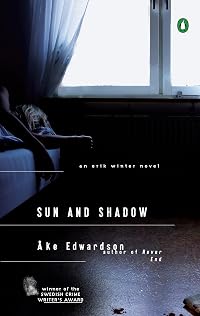
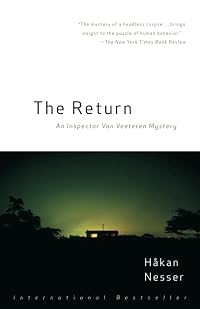
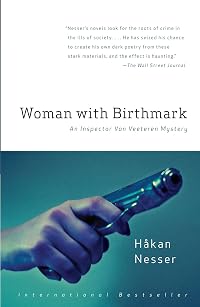











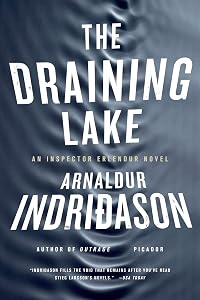




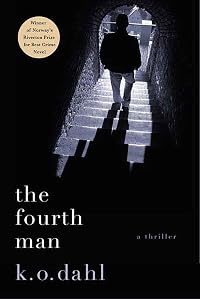
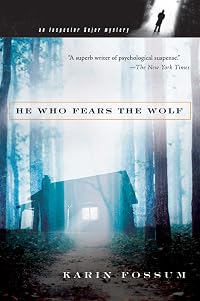
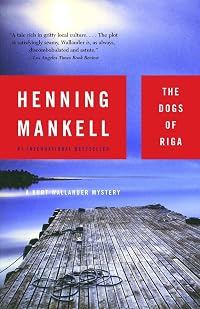




Member Recommendations
Member Reviews
The original title of this is Dans med en ängel and the English version is Death Angels. The English version is probably cheaper because of the fixed book prices in Germany, but for some reason I prefer reading Nordic Noir in German.
There were many excellent aspects in this novel, and others that were not so good, but altogether it was a fantastic reading experience.
To begin with, I really like the investigator in this novel. Erik Winter is in his late thirties, he has affairs with several women, and his parents are so wealthy that he does not have to work for a living, but only does so because he likes it. His lifestyle is very luxurious. All of this would usually make me loath the character, but somehow it is not so with Winter - show more because he has a lot of empathy, I like his work ethics, and he treats his fellow policemen rather well.
The story takes place in Göteborg where a young man from London is murdered in a hotel room. Shortly after, it is discovered that the same also happened reversed - a Swedish young man was killed in a hotel room in London. The murders are very gruesome and the police are at a loss.
Well, the plot is interesting, but what is even more striking is the language. In the beginning the author includes many metaphors and similes, the language is sometimes almost lyrical. It seems a bit too forced, though, and hems the reading flow. After a few chapters, this is toned down, and from then on I loved the language and the atmosphere it creates, creating pictures in my mind and slowing down the reading to make room for emotions like fear and uncertainty.
I became totally engrossed in this story and did not want to put it down. The language remains a bit uneven from time to time, but I am quite sure that it is due to the translation. Other reviewers have commented on that as well and I am happy to see that the translator (Wolfdietrich Müller) changes after the second book.
The only thing that could be improved is the ending becausethere are several investigation lines left hanging:
Why did the murderer wear a wig?
Why did he dance, or what else did the footprints signify?
What about the aspect of homosexuality? Was it a coincidence or does the murderer hate gay men?
What happened to the burglar who found the clothes?
Why did the murderer choose to kill in two cities, and why London and Göteborg? Was it just to confuse Winter? I thought there might be a deeper meaning.
I also think that the motive is too weak and could have been made stronger by giving more of a background story, by explaining more about the childhood/teenage stories of Winter and Bolger.
I have not read as much Nordic Noir as many others, but I do think that this is very good novel apart from the few points I mentioned above. I am looking forward to continuing with this series very much. show less
There were many excellent aspects in this novel, and others that were not so good, but altogether it was a fantastic reading experience.
To begin with, I really like the investigator in this novel. Erik Winter is in his late thirties, he has affairs with several women, and his parents are so wealthy that he does not have to work for a living, but only does so because he likes it. His lifestyle is very luxurious. All of this would usually make me loath the character, but somehow it is not so with Winter - show more because he has a lot of empathy, I like his work ethics, and he treats his fellow policemen rather well.
The story takes place in Göteborg where a young man from London is murdered in a hotel room. Shortly after, it is discovered that the same also happened reversed - a Swedish young man was killed in a hotel room in London. The murders are very gruesome and the police are at a loss.
Well, the plot is interesting, but what is even more striking is the language. In the beginning the author includes many metaphors and similes, the language is sometimes almost lyrical. It seems a bit too forced, though, and hems the reading flow. After a few chapters, this is toned down, and from then on I loved the language and the atmosphere it creates, creating pictures in my mind and slowing down the reading to make room for emotions like fear and uncertainty.
I became totally engrossed in this story and did not want to put it down. The language remains a bit uneven from time to time, but I am quite sure that it is due to the translation. Other reviewers have commented on that as well and I am happy to see that the translator (Wolfdietrich Müller) changes after the second book.
The only thing that could be improved is the ending because
Why did the murderer wear a wig?
Why did he dance, or what else did the footprints signify?
What about the aspect of homosexuality? Was it a coincidence or does the murderer hate gay men?
What happened to the burglar who found the clothes?
Why did the murderer choose to kill in two cities, and why London and Göteborg? Was it just to confuse Winter? I thought there might be a deeper meaning.
I also think that the motive is too weak and could have been made stronger by giving more of a background story, by explaining more about the childhood/teenage stories of Winter and Bolger.
I have not read as much Nordic Noir as many others, but I do think that this is very good novel apart from the few points I mentioned above. I am looking forward to continuing with this series very much. show less
This is a mystery, but the language of it is so beautiful that it is almost slippery so I was having trouble hanging onto the facts of it - for the mystery. On finishing I immediately started it again, which is something I can't remembering doing with a mystery before. But the satisfaction is as much in the poetry and the characters as in the mystery. The characters in this case are involving, and I would be glad to read more about them. One thing that makes the book hard to read is that the detectives in it are affected by the murders (there are multiple related victims) and feel the despair of them, so the reader does as well. At least I did. Others have said that this is the latest translated, but chronologically the first, so I will show more be happy to continue with the rest. show less
The first fifth of this book is very laborious and slow. The language (descriptions and dialogue) is awkward, slightly archaic, and almost seems like it's a translations from another language. If it wasn't for the fact that the story takes place in the two cities I grew up in, Göteborg and London, I would have put this down before 100 pages. It does pick up, but not to a satisfactory point.
I did like the descriptions of the vistas, and particularly the parts about Skånegatan (the police headquarters in Göteborg) were very dear to me since several of my family members in Sweden are police officers and it's familiar grounds to me. The city vistas, particularly those in London, sometimes become more like driving-directions, but there show more are also some nice details that I enjoyed.
The mystery part was decent - the murders are gruesome and the stakes are high, but the reader is almost exclusively told about the gruesomeness, not shown, which is a little irritating, especially when you've made a horrific picture in your head and a detail comes by that makes you feel like you've misunderstood the crime scene completely. Also, Winter keeps having these peculiar visions of the murders and the murderer, but sometimes he wakes from ruminations and sometimes from sleep, so it's unclear whether he has supernatural powers, or if this is just an expression of normal police instincts. This questions wouldn't matter all that much if it wasn't for all the religious ponderings that pop up throughout the novel.
This is the first in the series about Erik Winter and it has not been translated into English, but others (books 3, 4, and 5 as of today) in the series have and perhaps this one was skipped for a reason. There's a Swedish TV-series of Erik Winter's cases and I'll definitely take a look at that one, but I'll probably skip the other books (there are nine more novels and one short story collection). show less
I did like the descriptions of the vistas, and particularly the parts about Skånegatan (the police headquarters in Göteborg) were very dear to me since several of my family members in Sweden are police officers and it's familiar grounds to me. The city vistas, particularly those in London, sometimes become more like driving-directions, but there show more are also some nice details that I enjoyed.
The mystery part was decent - the murders are gruesome and the stakes are high, but the reader is almost exclusively told about the gruesomeness, not shown, which is a little irritating, especially when you've made a horrific picture in your head and a detail comes by that makes you feel like you've misunderstood the crime scene completely. Also, Winter keeps having these peculiar visions of the murders and the murderer, but sometimes he wakes from ruminations and sometimes from sleep, so it's unclear whether he has supernatural powers, or if this is just an expression of normal police instincts. This questions wouldn't matter all that much if it wasn't for all the religious ponderings that pop up throughout the novel.
This is the first in the series about Erik Winter and it has not been translated into English, but others (books 3, 4, and 5 as of today) in the series have and perhaps this one was skipped for a reason. There's a Swedish TV-series of Erik Winter's cases and I'll definitely take a look at that one, but I'll probably skip the other books (there are nine more novels and one short story collection). show less
The first book in this series, focusing on Erik Winter, who is a police officer with flair in Göteborg. In this first case he has to deal with murders that are committed in his home town and in London -- the two places are well described, the characters are interesting, and the plot works well for me -- you have to pay attention in order not to miss a comment or a small detail.
The translated prose is a bit dry, and occasionally it seems a bit too literal. This is the first of this series, though not the first to be translated.
Edwardson develops a pretty good sense of place, and the characters are believably quirky--surprising, but not cutesy or overly contrived.
Somehow, though the conclusion oversteps the setup--it doesn't make that much sense, we haven't been properly prepared for it. In the strong sense of place, strong sense of human frailty, and in the rather disjointed conclusion, this novel is strongly in the Chandler/Hammett tradition. But that tradition is old and well-populated.
Edwardson develops a pretty good sense of place, and the characters are believably quirky--surprising, but not cutesy or overly contrived.
Somehow, though the conclusion oversteps the setup--it doesn't make that much sense, we haven't been properly prepared for it. In the strong sense of place, strong sense of human frailty, and in the rather disjointed conclusion, this novel is strongly in the Chandler/Hammett tradition. But that tradition is old and well-populated.
In this novel, Erik Winter teams up with Scotland Yard to solve a mysterious case that has the same M.O. as other cases in which British and Swedish young men have been found murdered in extremely violent ways. The discovery of filming equipment suggests the killer maybe recording his deeds to gain notoriety in the snuff film world. While Winter works the UK side of the case his colleague in Sweden questions a stripper named Angel, who he believes knows more than she is telling, her beauty and her expertise in handling people prove to be daunting challenge. However the key to solving the case may lay with the thief who found a sack full of bloody clothes.
I found the story to have a sluggish start. It is intensive in police procedural show more and takes a while before the action kicks in however just when you think it has peaked you are thrown a few more curves to keep you guessing. The effects a homicide has on the officers working the case and on the victims’ families is quite emotional and well done. I was quite fascinated by the in depth psychological characterisation of the Chief Inspector and his British associate. There are many sub-characters and keeping up with their Swedish names and their parts can be challenging at times. I have the feeling I was on the wrong track at times and missed out on some of the important nuances between players. show less
I found the story to have a sluggish start. It is intensive in police procedural show more and takes a while before the action kicks in however just when you think it has peaked you are thrown a few more curves to keep you guessing. The effects a homicide has on the officers working the case and on the victims’ families is quite emotional and well done. I was quite fascinated by the in depth psychological characterisation of the Chief Inspector and his British associate. There are many sub-characters and keeping up with their Swedish names and their parts can be challenging at times. I have the feeling I was on the wrong track at times and missed out on some of the important nuances between players. show less
London. Ein junger schwedischer Tourist wird in einem Hotelzimmer brutal ermordet aufgefunden. Kurz darauf geschieht in Göteborg eine ähnlich sadistische Bluttat. Das Opfer diesmal: ein junger Engländer. Besteht eine Verbindung zwischen den beiden Verbrechen? Spuren an beiden Tatorten deuten auf eine Verbindung zur extremen Hardcore-Pornoszene hin. Hauptkommissar Erik Winter muss sehr bald feststellen, dass ihm der Mann, der den tödlichen Tanz mit dem Engel perfekt beherrscht, näher steht, als ihm lieb ist.
Members
- Recently Added By
Lists

Scandinavian Crime Fiction
224 works; 37 members

Allie's Wishlist
217 works; 2 members
Author Information

54+ Works 4,828 Members
Åke Edwardson was born in Småland, Sweden on March 10, 1953. Before becoming a full-time author, he was a journalist, a lecturer in journalism at Gothenburg University, and press officer for the United Nations. He writes the Chief Inspector Erik Winter series. He has won numerous awards including the Swedish Academy of Crime Writers' Award three show more times. (Bowker Author Biography) show less
Some Editions
Awards and Honors
Awards
Series

Belongs to Publisher Series
Common Knowledge
- Canonical title
- Death Angels
- Original title
- Dans med en ängel
- Original publication date
- 1997 (original Swedish) (original Swedish)
- People/Characters*
- Erik Winter; Steve Macdonald; Lars Bergenhem; Aneta Djanali; Fredrik Halders; Hanne Östergaard (show all 9); Johan Bolger; Bertil Ringmar; Angela Hoffman
- Important places
- Göteborg, Sweden; London, England, UK
- Dedication*
- Meinen Brüdern
Dank an Bendix, Rita, Dan, Tulle, Anders, Lasse, Göran, Bengt und Cliff - First words
- He was no longer able to move. He couldn't remember how long it had been this way. Movement was like a shadow play now.
- Last words*
- (Click to show. Warning: May contain spoilers.)"Es ist viel wärmer geworden," sagte sie.
- Blurbers
- Menkell, Henning
- Original language
- Swedish
*Some information comes from Common Knowledge in other languages. Click "Edit" for more information.
Classifications
- Genres
- Fiction and Literature, Mystery
- DDC/MDS
- 839.73 — Literature & rhetoric German & related literatures Other Germanic literatures Swedish literature Swedish fiction
- LCC
- PT9876.15 .D93 .D3613 — Language and Literature German, Dutch and Scandinavian literatures Swedish literature Individual authors or works 1961-2000
- BISAC
Statistics
- Members
- 617
- Popularity
- 47,378
- Reviews
- 16
- Rating
- (3.33)
- Languages
- 14 — Danish, Dutch, English, Estonian, Finnish, French, German, Icelandic, Italian, Norwegian (Bokmål), Norwegian, Polish, Russian, Swedish
- Media
- Paper, Audiobook, Ebook
- ISBNs
- 53
- ASINs
- 8