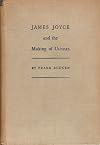
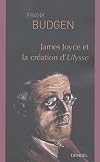
James Joyce and the Making of Ulysses
by Frank Budgen
On This Page
Description
In Zurich in 1918 and 1919, the English painter Frank Budgen and the Irish writer James Joyce met almost daily to walk, talk, and drink wine; their talk, among other things, was of the complex novel Joyce was then writing. This captivating study is the record of these conversations, and of a continuing friendship, as well as an acute critical commentary on the work itself. The only first-hand account available of the growth of Ulysses, the book is here reissued in its original form, together show more with Budgen's essays of 1939-41 on Finnegan's Wake, his deeply felt obituary of Joyce, and his "Further Recollections" of 1955. An introduction by Joyce scholar Clive Hart draws on much unpublished material to trace the history of the book, and pay a personal tribute to Frank Budgen, his friend, who died in 1971 at the age of eighty-nine. show lessTags
Recommendations















Member Reviews
His is the kind of laugh one would expect to hear if the president of the republic took the wrong hat, but not if an old man’s hat blew off into the gutter. —Frank Budgen on James Joyce
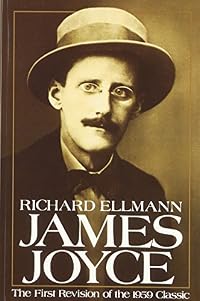
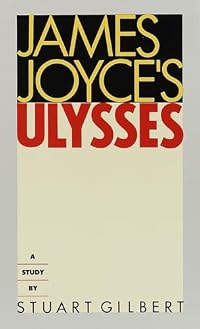
One of the early expository works on Ulysses by an actual acquaintance of James Joyce (see also Stuart Gilbert’s). Originally published in 1934, James Joyce and the Making of Ulysses was republished twice: first in 1960 by Indiana University, with an excellent introduction by Hugh Kenner and four paintings by Budgen of scenes from Ulysses, and in 1972 by Oxford, ho-hum introduction by Clive Hart, but with extra material and Budgen's cover sketch of himself and Joyce sharing a bottle.
Budgen was an English painter in the employ of the British show more Information Service in Zurich during WWI when he befriended Joyce. The two met regularly over drinks during the time when Joyce was writing the middle sections of Ulysses, with Budgen the amiable sounding-board and discerning reader, impressed but not overawed. The fun part here is seeing the development of Joyce’s work through Bugden’s eyes. For Budgen, Ulysses was a process and not an artifact, writes Kenner; Budgen’s training in Impressionism “accustomed him to the notion that a man who is fabricating a work of art employs deliberate procedures, expends pains on small areas and dedicates his full attention to a taut internal economy.”
Like Gilbert, Budgen was refuting those critics who thought Ulysses nonsensical and disorderly. He presents Joyce as a master artificer—"ingenious, patient and daring.” Because he subscribed to no limiting aesthetic creed, says Budgen, Joyce was willing to use any available instrument that might serve his purpose; “When an artist believes in no creed, he is more likely to believe in himself, in what he sees, hears, experiences.” Budgen saw Joyce as a delicate recording instrument, in command of a multiplicity of technical devices, an artist who could spend a day working on two sentences. Joyce’s depiction of a day in the life of Leopold Bloom takes the reader through numerous changes of key and scale, his "realism verging on the mystical"—in the intricate presentation of clock-time in “The Wandering Rocks,” the musical immersion of “The Sirens,” the wonder of ontogeny (human and linguistic) in “The Oxen of the Sun.”
We learn a great deal from Budgen about Joyce the artist (“Portait of the Artist as a Grown Man”?), and about Ulysses as a work of art. Joyce and his readers are fortunate to have such an articulate and sympathetic companion. show less
One of the early expository works on Ulysses by an actual acquaintance of James Joyce (see also Stuart Gilbert’s). Originally published in 1934, James Joyce and the Making of Ulysses was republished twice: first in 1960 by Indiana University, with an excellent introduction by Hugh Kenner and four paintings by Budgen of scenes from Ulysses, and in 1972 by Oxford, ho-hum introduction by Clive Hart, but with extra material and Budgen's cover sketch of himself and Joyce sharing a bottle.
Budgen was an English painter in the employ of the British show more Information Service in Zurich during WWI when he befriended Joyce. The two met regularly over drinks during the time when Joyce was writing the middle sections of Ulysses, with Budgen the amiable sounding-board and discerning reader, impressed but not overawed. The fun part here is seeing the development of Joyce’s work through Bugden’s eyes. For Budgen, Ulysses was a process and not an artifact, writes Kenner; Budgen’s training in Impressionism “accustomed him to the notion that a man who is fabricating a work of art employs deliberate procedures, expends pains on small areas and dedicates his full attention to a taut internal economy.”
Like Gilbert, Budgen was refuting those critics who thought Ulysses nonsensical and disorderly. He presents Joyce as a master artificer—"ingenious, patient and daring.” Because he subscribed to no limiting aesthetic creed, says Budgen, Joyce was willing to use any available instrument that might serve his purpose; “When an artist believes in no creed, he is more likely to believe in himself, in what he sees, hears, experiences.” Budgen saw Joyce as a delicate recording instrument, in command of a multiplicity of technical devices, an artist who could spend a day working on two sentences. Joyce’s depiction of a day in the life of Leopold Bloom takes the reader through numerous changes of key and scale, his "realism verging on the mystical"—in the intricate presentation of clock-time in “The Wandering Rocks,” the musical immersion of “The Sirens,” the wonder of ontogeny (human and linguistic) in “The Oxen of the Sun.”
We learn a great deal from Budgen about Joyce the artist (“Portait of the Artist as a Grown Man”?), and about Ulysses as a work of art. Joyce and his readers are fortunate to have such an articulate and sympathetic companion. show less
I read this book in full after completing "Ulysses," and found it a great way to recap what I had read in Joyce's classic. Most of this volume is commentary on each episode of "Ulysses," making it a suitable reader's guide. It was satisfying to go into each episode in prose detail, although the commentary on "Penelope," at only five pages long, was disappointing in its brevity. Moreover, some of Budgen's analysis feels dated both at the superficial and deep levels.
As Budgen was personally acquainted with Joyce, having even read some drafts of both "Ulysses" and "Finnegan's Wake," there are some interesting bits of trivia about Joyce's life woven throughout each chapter. In particular, Budgen details Joyce's literary and musical show more preferences in Chapter IX (p. 175-183) that may help scholar-readers decipher any meaning to be found in his oeuvre. On the flip side, the final chapter digresses into expository prose on "Finnegan's Wake" (referred to as "Work In Progress") that doesn't fit with the rest of the text. The third edition concludes with "Further Recollections of James Joyce" that offer further reflections. show less
As Budgen was personally acquainted with Joyce, having even read some drafts of both "Ulysses" and "Finnegan's Wake," there are some interesting bits of trivia about Joyce's life woven throughout each chapter. In particular, Budgen details Joyce's literary and musical show more preferences in Chapter IX (p. 175-183) that may help scholar-readers decipher any meaning to be found in his oeuvre. On the flip side, the final chapter digresses into expository prose on "Finnegan's Wake" (referred to as "Work In Progress") that doesn't fit with the rest of the text. The third edition concludes with "Further Recollections of James Joyce" that offer further reflections. show less
Those who know more than I do about Ulysses and its author, James Joyce, say that this is best of the voluminous secondary literature. I started it immediately after finishing Ulysses, and found it enhanced my enjoyment of what I had read. Budgen was present at the creation, so to speak, in that he and Joyce met nearly daily while both lived in Zurich during World War 1 and while Joyce was immersed in his ten-year project. A rough outline of the contents and style of each of the sections of the book are interspersed with his insights into the man. A final chapter deals with what was long called Work in Progress as parts were published, eventually Finnegans Wake. I always thought that book would be too obscure for me, but with Budgen's show more encouragement, I might even tackle that one of these days. He makes it sound enjoyable to read. This, too, is a good read, although no substitute for reading Ulysses itself. show less
Ratings
Members
- Recently Added By
Author Information
3+ Works 159 Members
Some Editions
Series
Belongs to Publisher Series
Common Knowledge
- Canonical title
- James Joyce and the Making of Ulysses
- People/Characters
- James Joyce
- Important places
- Zürich, Zürich, Switzerland
Classifications
Statistics
- Members
- 152
- Popularity
- 214,715
- Reviews
- 3
- Rating
- (4.08)
- Languages
- English, French, German
- Media
- Paper
- ISBNs
- 7
- ASINs
- 6