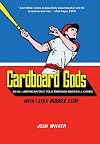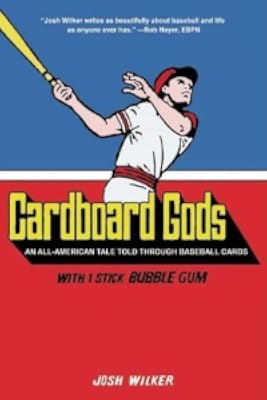
Cardboard Gods: An All-American Tale Told Through Baseball Cards
by Josh Wilker
On This Page
Description
Cardboard Gods is the memoir of Josh Wilker, a brilliant writer who has marked the stages of his life through the baseball cards he collected as a child. It also captures the experience of growing up obsessed with baseball cards and explores what it means to be a fan of the game. Along the way, as we get to know Josh, his family, and his friends, we also get Josh’s classic observations about the central artifacts from his life: the baseball cards themselves. Josh writes about an imagined show more correspondence with his favorite player, Carl Yastrzemski; he uses the magical bubble-blowing powers of journeyman Kurt Bevacqua to shed light on the weakening of the powerful childhood bond with his older brother; he considers the doomed utopian back-to-the-land dreams of his hippie parents against the backdrop of inimitable 1970s baseball figures such as “Designated Pinch Runner” Herb Washington and Mark “The Bird” Fidrych. Cardboard Gods is more than just the story of a man who can’t let go of his past, it’s proof that — to paraphrase Jim Bouton — as children we grow up holding baseball cards but in the end we realize that it’s really the other way around. show lessTags
Recommendations











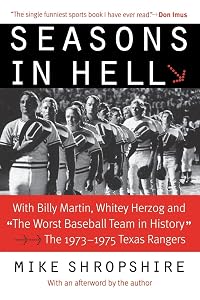



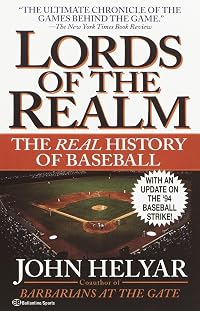

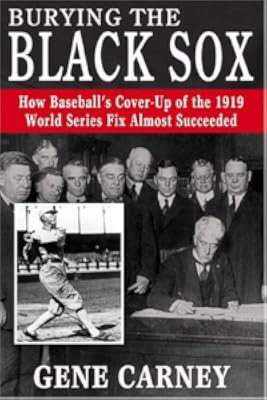


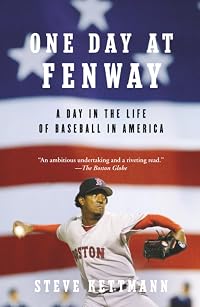










Member Recommendations
Talking to Girls About Duran Duran: One Young Man's Quest for True Love and a Cooler Haircut by Rob Sheffield
zhejw Wilker's memoir is told through the baseball cards he collected in the late 1970s while Sheffield's is told through the pop songs he listened to in the 1980s. Both are well-written and interspersed with a good balance of humor and deep insights into life.

Bigrider7 Both are coming of age memoirs that are both funny and touching.
Member Reviews
I’m a notorious tightwad, my cheapness manifests itself in many forms. One such example is that each year, as a Christmas gift, I buy my biological father something that I hope to inherit someday when he passes away. Generally this gift is a book, even though my father doesn’t even read books—except for THE book (the Bible that is). After getting less than 20 pages into Cardboard Gods, it became obvious that this was going to be the old man’s gift for the Baby Jesus’s birthday this year. To use a baseball analogy, reading this book was like watching a little known, major league hurler pitch a near perfect game. Right off the bat, as you start reading you realize that this guy has brought his good stuff. His curve ball is show more biting, his fastball has a sharp giddy-up, he is in command of the plate, pinpoint control. As the game goes on, he seems to be getting stronger, more confident—perhaps a lapse in judgment or a missed pitch here and there, but nothing to get him into trouble. By the seventh inning you are cheering him on, in total appreciation of being able to witness the greatness of a masterly executed shutout or no-hitter even.
By the time the final out is recorded Cardboard Gods may not have been a perfect game for everyone who reads it, but it was an absolutely perfect read for me (kinda like the Doc Ellis no-hitter that WIlker's describes). Of course some of the reason this book resonated with me so much certainly has something to do with the fact that author Josh Wilker is the same age as me, that 95% of the baseball cards he mentions were ones that I owned and coveted, that he grew up in an alternative family situation that was not exactly like mine, but somewhat similar since it involved moving from house to house frequently, step-parents and a brother who is close in age, and that both Wilkers and I were UPS package handlers in the early 90s.
But there are plenty of aspects of Cardboard Gods that anyone can appreciate, for instance the brilliant use of a “device of continuity” that ties the book together. Wilker starts each chapter out with a reproduction of a Topps baseball card circa 1974 to 1980 and then going on to connect an aspect of his childhood and/or American culture and/or the nature of mankind with an aspect of that card. Wilker’s observations about the poses, gestures and facial expressions of the ball players captured on the cards were especially brilliant as he insightfully wove these snapshots into the parallel narrative of his childhood in 1970s America. One great example of this was the side-by-side chapters in which Wilker juxtaposes a 1978 Bo McLaughlin card with a 1976 Steve Garvey card:
“Everybody was going from before to after. Everybody had a look on their face like they’d just caught a whiff of a nearby landfill. Everybody was ambivalent about the
length of their hair…Everybody went back and forth from having a regular job to laying on rusty lawn furniture all afternoon unemployed…Everybody began wondering how to file for divorce…Everybody was Bo McLaughlin…Everybody except Steve Garvey.”
It was eye opening for me how similar Wilker’s sense of these player’s essense (as obtained from their cards) were to my sense of these player’s essense (from what I gleaned from their card) and I image to the sense that thousands of other men my age had gotten as well. Wilker’s was right on the money time after time, from his ruminations on the 1976 Victory Leaders card with Jim Palmer and Randy Jones to the old school admiration triggered by the 1978 Wilbur Wood card and so on and so forth. And I was repeatedly amazed at how he used baseball cards to say so much about people, about the trials and tribulations of childhood and about 1970s America all at the same time.
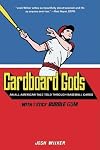
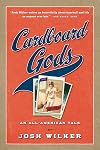
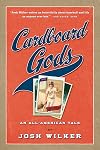
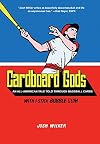
As I flipped the pages from chapter to chapter, each revealing another lost treasured image of the Cardboard Gods from my childhood, I began to notice a sense of exhiliration—an exhileration that was similar to the exhiliration that (just like Wilker explained having as a kid) I also experienced in my youth every time I bought a new pack of baseball cards and then obsessively thumbed from one Cardboard God to the next. Wilker even pays homage to that lost experience of exhiliration (common to nearly every boy who ever bought a pack of baseball cards in the 70s) by opening the book with an offering (in image at least) of one of those rock hard miniature slabs of pink sugar/bubble gum that came inside every pack of Topps baseball cards from that era. Even the cover of Cardboard Gods is cleverly designed to replicate the packaging of a pack of baseball cards from the 70s era. This all resonated with me (a thrift store/garage sale junkie anyway) as Cardboard Gods displayed a rich understanding of that certain 1970s Americana vibe that only a kid growing up in that era could truly understand.
I imagine that a lot of guys in their 40s have experiences of wandering up to the storage area above their parent’s garage some weekend afternoon, looking for a tool or something, and stumbling upon a stack of shoeboxes that houses the thousands of baseballs cards that they once collected as a kid. Reading Cardboard Gods was like opening up those boxes and being bombarded with those long lost memories, and for this alone it deserves a permanent place on my Best Reads Ever shelf. show less
By the time the final out is recorded Cardboard Gods may not have been a perfect game for everyone who reads it, but it was an absolutely perfect read for me (kinda like the Doc Ellis no-hitter that WIlker's describes). Of course some of the reason this book resonated with me so much certainly has something to do with the fact that author Josh Wilker is the same age as me, that 95% of the baseball cards he mentions were ones that I owned and coveted, that he grew up in an alternative family situation that was not exactly like mine, but somewhat similar since it involved moving from house to house frequently, step-parents and a brother who is close in age, and that both Wilkers and I were UPS package handlers in the early 90s.
But there are plenty of aspects of Cardboard Gods that anyone can appreciate, for instance the brilliant use of a “device of continuity” that ties the book together. Wilker starts each chapter out with a reproduction of a Topps baseball card circa 1974 to 1980 and then going on to connect an aspect of his childhood and/or American culture and/or the nature of mankind with an aspect of that card. Wilker’s observations about the poses, gestures and facial expressions of the ball players captured on the cards were especially brilliant as he insightfully wove these snapshots into the parallel narrative of his childhood in 1970s America. One great example of this was the side-by-side chapters in which Wilker juxtaposes a 1978 Bo McLaughlin card with a 1976 Steve Garvey card:
“Everybody was going from before to after. Everybody had a look on their face like they’d just caught a whiff of a nearby landfill. Everybody was ambivalent about the
length of their hair…Everybody went back and forth from having a regular job to laying on rusty lawn furniture all afternoon unemployed…Everybody began wondering how to file for divorce…Everybody was Bo McLaughlin…Everybody except Steve Garvey.”
It was eye opening for me how similar Wilker’s sense of these player’s essense (as obtained from their cards) were to my sense of these player’s essense (from what I gleaned from their card) and I image to the sense that thousands of other men my age had gotten as well. Wilker’s was right on the money time after time, from his ruminations on the 1976 Victory Leaders card with Jim Palmer and Randy Jones to the old school admiration triggered by the 1978 Wilbur Wood card and so on and so forth. And I was repeatedly amazed at how he used baseball cards to say so much about people, about the trials and tribulations of childhood and about 1970s America all at the same time.
As I flipped the pages from chapter to chapter, each revealing another lost treasured image of the Cardboard Gods from my childhood, I began to notice a sense of exhiliration—an exhileration that was similar to the exhiliration that (just like Wilker explained having as a kid) I also experienced in my youth every time I bought a new pack of baseball cards and then obsessively thumbed from one Cardboard God to the next. Wilker even pays homage to that lost experience of exhiliration (common to nearly every boy who ever bought a pack of baseball cards in the 70s) by opening the book with an offering (in image at least) of one of those rock hard miniature slabs of pink sugar/bubble gum that came inside every pack of Topps baseball cards from that era. Even the cover of Cardboard Gods is cleverly designed to replicate the packaging of a pack of baseball cards from the 70s era. This all resonated with me (a thrift store/garage sale junkie anyway) as Cardboard Gods displayed a rich understanding of that certain 1970s Americana vibe that only a kid growing up in that era could truly understand.
I imagine that a lot of guys in their 40s have experiences of wandering up to the storage area above their parent’s garage some weekend afternoon, looking for a tool or something, and stumbling upon a stack of shoeboxes that houses the thousands of baseballs cards that they once collected as a kid. Reading Cardboard Gods was like opening up those boxes and being bombarded with those long lost memories, and for this alone it deserves a permanent place on my Best Reads Ever shelf. show less
For this former baseball card fanatic, "Cardboard Gods" has an irresistible hook: each chapter of this memoir corresponds to a baseball card that the author collected in his youth. The book is beautifully designed and printed, and the cards, which date from the late seventies and early eighties are fun to look at, as mustaches, questionable haircuts, and poorly designed uniforms abound. The author can also be said to have a good eye. When I collected cards in the late eighties and early nineties, the monetary value of baseball cards almost made them invisible as objects in themselves. Wilker, on the other hand, has taken the time to really look at his cards, even those that most collectors would consider "worthless." He considers their show more design, speculates on where and when their pictures were taken, and even comments on sloppy airbrush jobs. Years removed from the height of his collecting mania, he takes the time to consider the feelings and problems that his former heroes – his cardboard gods – might have experienced.
On the whole, however, the book fails to live up to its premise. Wilker certainly describes credit for his honesty. He doesn't spare his readers the details of his chaotic post-sixties upbringing or sugarcoat the fact he was a painfully awkward, deeply lonely adolescent who idolized his older brother and exhibited no athletic talent of his own. Indeed, baseball cards seem to have been one of his few sources of comfort in his youth, as well as serving as a connection to the world outside of the isolated Vermont town that he grew up in. Still, one gets the sense that the author is trying to paint his picture on too small a canvas. Some of Wilker's card-inspired vignettes, such as his short history of guys named Cy in the major leagues, are funny and affecting; in others, the connection that the author attempts to establish between his emotional state and a single baseball card grows a bit tenuous. In fact, the book's strongest material, which describes the author's recounting of how he overcame his uncertain beginnings to forge a good-enough adult life, contains relatively little baseball commentary of any sort. The bottom line? If you can tell difference between Topps and Fleer at a glance, "Cardboard Gods" might be worth a read. If not, you might want to leave this one in the shoebox at the back of your closet. show less
On the whole, however, the book fails to live up to its premise. Wilker certainly describes credit for his honesty. He doesn't spare his readers the details of his chaotic post-sixties upbringing or sugarcoat the fact he was a painfully awkward, deeply lonely adolescent who idolized his older brother and exhibited no athletic talent of his own. Indeed, baseball cards seem to have been one of his few sources of comfort in his youth, as well as serving as a connection to the world outside of the isolated Vermont town that he grew up in. Still, one gets the sense that the author is trying to paint his picture on too small a canvas. Some of Wilker's card-inspired vignettes, such as his short history of guys named Cy in the major leagues, are funny and affecting; in others, the connection that the author attempts to establish between his emotional state and a single baseball card grows a bit tenuous. In fact, the book's strongest material, which describes the author's recounting of how he overcame his uncertain beginnings to forge a good-enough adult life, contains relatively little baseball commentary of any sort. The bottom line? If you can tell difference between Topps and Fleer at a glance, "Cardboard Gods" might be worth a read. If not, you might want to leave this one in the shoebox at the back of your closet. show less
Before Josh Wilker came along, there were really only two ways of writing about baseball cards: waxing wistfully nostalgic about a more innocent, summery sun-dappled past, or as the subject of a history of the cutthroated-ness of the sports card business. No one thought to write about cards the way Wilker has: as a coping mechanism to escape reality.
It works here, as it does on his same-named blog, in spite of the format sometimes veering into the gimmicky (chapters are "packs" and individual cards serve as prologues, epilogues, and other narrative devices). It works because Wilker's writing style isn't syrupy. He resists the temptation to make things rosy, or discuss his sports cards as investment vehicles. But most of all, the book show more works because it isn't really about the cards. show less
It works here, as it does on his same-named blog, in spite of the format sometimes veering into the gimmicky (chapters are "packs" and individual cards serve as prologues, epilogues, and other narrative devices). It works because Wilker's writing style isn't syrupy. He resists the temptation to make things rosy, or discuss his sports cards as investment vehicles. But most of all, the book show more works because it isn't really about the cards. show less
As a young boy, collecting baseball cards was one of my favorite hobbies. There was something incredibly satisfying about the whole process of going to the store, purchasing the package of cards wrapped in wax paper, eating the flavorless, brittle wedge of gum, and sorting through your bounty--the cards themselves.
My fixation upon collecting cards lasted several years. I stowed away any spare change that I could find and would nearly beg to be able to go to the nearest store to purchase them.
In Josh Wilker's "Cardboard Gods", I learned that Wilker and I shared a hobby as youths, but reading this excellent book might actually be a greater reward than possessing the actual cards (or "cardboard gods") themselves.
Wilker's book is show more comparable to the best work of modern, popular memoirists and essayists (think Augusten Burroughs and David Sedaris) with a similarly funny and thought-provoking edge.
What makes Wilker's book so unique is that each of his individual vignettes begin with a picture of a baseball card from his collection and a brief description of the player pictured. Rather than providing a bland recounting of each player's life, Wilker imbues each "cardboard god" with personal meaning as he details aspects of his unconventional family, living a bohemian early 1970's lifestyle in Vermont.
Throughout the book, Wilker, long ago abandoning his baseball card collection, struggles with his own personal foibles and the intricacies of living an authentic life in the modern world.
In much the same manner as we often root for our professional sports heroes, by the end of Wilker's fine book, you are rooting for him (and his family members, too) to overcome his many struggles.
In the end, the renewed significance of the "cardboard gods" in Wilker's life seems to provide the impetus necessary for him to overcome his struggles, or at the very least, continue to strive, against the difficulties of life.
In that process, the realization could be, that regardless of the difficulties that life might present, as much as we hate to admit it, the very answer to our struggles might be something we are already quite intimate with, just waiting for acknowledgement. show less
My fixation upon collecting cards lasted several years. I stowed away any spare change that I could find and would nearly beg to be able to go to the nearest store to purchase them.
In Josh Wilker's "Cardboard Gods", I learned that Wilker and I shared a hobby as youths, but reading this excellent book might actually be a greater reward than possessing the actual cards (or "cardboard gods") themselves.
Wilker's book is show more comparable to the best work of modern, popular memoirists and essayists (think Augusten Burroughs and David Sedaris) with a similarly funny and thought-provoking edge.
What makes Wilker's book so unique is that each of his individual vignettes begin with a picture of a baseball card from his collection and a brief description of the player pictured. Rather than providing a bland recounting of each player's life, Wilker imbues each "cardboard god" with personal meaning as he details aspects of his unconventional family, living a bohemian early 1970's lifestyle in Vermont.
Throughout the book, Wilker, long ago abandoning his baseball card collection, struggles with his own personal foibles and the intricacies of living an authentic life in the modern world.
In much the same manner as we often root for our professional sports heroes, by the end of Wilker's fine book, you are rooting for him (and his family members, too) to overcome his many struggles.
In the end, the renewed significance of the "cardboard gods" in Wilker's life seems to provide the impetus necessary for him to overcome his struggles, or at the very least, continue to strive, against the difficulties of life.
In that process, the realization could be, that regardless of the difficulties that life might present, as much as we hate to admit it, the very answer to our struggles might be something we are already quite intimate with, just waiting for acknowledgement. show less
I have to preface this review by saying that I have never read anything else that Josh has ever written, including his blogs. This book was my first experience with his writing, and I have to say I wasn't a huge fan. I was not born yet, in the generation he is mostly focusing on in this book, and it makes me feel, kind of, detached, or distant from the book. Now, I am not saying that I cannot read a book that is written about a generation, more so, that this book didn't do its job of making me feel like a part of its generation.
Another problem I had with this book was the feeling that the baseball card link was used as too much of a gimmick. Like I said, I haven't read any of his stuff before, so it is possible that the baseball cards show more did really represent cardboard gods, whom he still reveres to this day, but as a casual reader just picking up this book, it came across as very gimmicky. The links from the authors life to the baseball card leading off the chapter, while sometimes proving to be very interesting and informational (Herb Washington for example), sometimes seemed very forced. Like psychic readings, and Nostradamus's predictions, the link from life story to baseball card feels very generalized, and if you look hard enough you could find some card to fit any life experience, or some life experience to match a specific card.
My third problem with this book is that, it feels like, just as the chapter is getting good, and we are building up to a great conclusion, the chapter just kind of ends. I don't know if that is done intentionally, letting the reader glean their own conclusions, or whatever, but I am not a big fan of that premise. I do not want to try to figure out what I "get" from the book, it is your life story, tell me what happens next.
I feel like I am being very harsh to this book, but it really wasn't all bad. It was well written. It was enjoyable. Like I said before, it was loaded with interesting facts and anecdotes. It was very well reviewed by most other people that I have seen. I guess it just wasn't really for me. show less
Another problem I had with this book was the feeling that the baseball card link was used as too much of a gimmick. Like I said, I haven't read any of his stuff before, so it is possible that the baseball cards show more did really represent cardboard gods, whom he still reveres to this day, but as a casual reader just picking up this book, it came across as very gimmicky. The links from the authors life to the baseball card leading off the chapter, while sometimes proving to be very interesting and informational (Herb Washington for example), sometimes seemed very forced. Like psychic readings, and Nostradamus's predictions, the link from life story to baseball card feels very generalized, and if you look hard enough you could find some card to fit any life experience, or some life experience to match a specific card.
My third problem with this book is that, it feels like, just as the chapter is getting good, and we are building up to a great conclusion, the chapter just kind of ends. I don't know if that is done intentionally, letting the reader glean their own conclusions, or whatever, but I am not a big fan of that premise. I do not want to try to figure out what I "get" from the book, it is your life story, tell me what happens next.
I feel like I am being very harsh to this book, but it really wasn't all bad. It was well written. It was enjoyable. Like I said before, it was loaded with interesting facts and anecdotes. It was very well reviewed by most other people that I have seen. I guess it just wasn't really for me. show less
I wasn't sure what to expect when I first received this book but to my pleasure I learned Josh Wilker is a talented writer! Wilker portrays his life story in a poignant yet humorous way that enables the reader to reminisce at the same time. I highly recommend this book for all readers.
an interesting, if uneven memoir, told through baseball cards.
Members
- Recently Added By
Lists

1970s Narratives
40 works; 6 members
Author Information
11 Works 224 Members
Awards and Honors
Awards
Common Knowledge
- Original publication date
- 2010
- People/Characters
- Rudy Meoli; Cleon Jones
Classifications
- Genres
- Sports and Leisure, Nonfiction, Biography & Memoir, General Nonfiction
- DDC/MDS
- 796.357092 — Arts & recreation Recreation, sports, and performing arts Athletic and outdoor sports and games Ball sports Ball and stick sports Baseball Biography And History Biography
- LCC
- GV875.3 .W54 — Geography, Anthropology and Recreation Recreation. Leisure Recreation. Leisure Sports Ball games: Baseball, football, golf, etc.
- BISAC
Statistics
- Members
- 141
- Popularity
- 232,154
- Reviews
- 13
- Rating
- (3.66)
- Languages
- English
- Media
- Paper, Audiobook, Ebook
- ISBNs
- 11
- ASINs
- 3