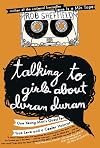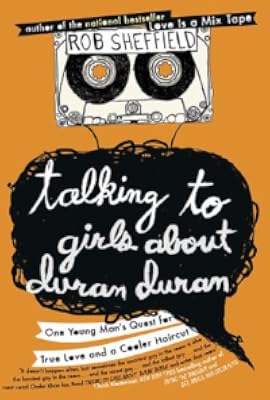
Talking to Girls About Duran Duran: One Young Man's Quest for True Love and a Cooler Haircut
by Rob Sheffield
On This Page
Description
The author of Love is a Mix Tape returns to share the soundtrack to his eighties adolescence. When he turned 13 in 1980, Sheffield had a lot to learn about women, love, music and himself, and here he offers a glimpse into his transformation from pasty, geeky "hermit boy" into a young man with his first girlfriend, his first apartment, and a sense of the world. It's all here: Inept flirtations. Dumb crushes. Deplorable fashion choices. Members Only jackets. Girls, every last one of whom seems show more to be madly in love with the bassist of Duran Duran. Sheffield's coming-of-age story has a playlist that any child of the eighties or anyone who just loves music will sing along with. These songs--and Sheffield's writing--will remind readers of that first kiss, that first car, and the moments that shaped their lives.--From publisher description. show lessTags
Recommendations






















Member Recommendations
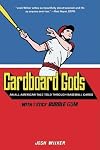
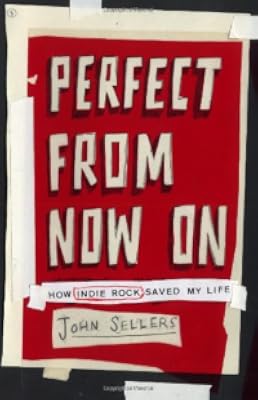
zhejw Wilker's memoir is told through the baseball cards he collected in the late 1970s while Sheffield's is told through the pop songs he listened to in the 1980s. Both are well-written and interspersed with a good balance of humor and deep insights into life.



heatherlove Just a trip back to the 80s with Talking to Girls... after you've spent your time ensconced in some fun 80s Trivia from Ready Player one.
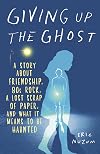
Giving Up the Ghost: A Story About Friendship, 80s Rock, a Lost Scrap of Paper, and What It Means to Be Haunted by Eric Nuzum
amyblue Both books are memoirs about growing up in the 80's with many music references.

Member Reviews
Although this book is a biography and memoir by genre, it could easily fit onto the shelf with Nick Hornby’s “High Fidelity,” “Nick and Norah’s Infinite Adventure,” and other favourite fiction of music lovers and awkward teens. Sheffield, who also wrote “Love is a Mix Tape,” is one of those down-to-earth, conversational writers who happens to know A LOT about music. And fortunately for us, he decided to write a second book — this one focusing on music of the eighties and why every girl then seemed to have a crush on the bassist of Duran Duran.
Each chapter is titled with a song, “some of my favorite ’80s relic songs that warped my brain with dubious ideas, boneheaded goals, laughable hopes, and timeless show more mysteries,” ranging from the Rolling Stones and David Bowie to Bonnie Tyler and Madonna; the stories in each chapter usually have something, somehow, to do with the song. Rob’s sisters, Tracey, Ann, and Caroline each make frequent appearances, usually helping Rob interpret some foreign action or habit of the female, such as their odd propensity for having toilet paper on the “the little rolling thing” instead of on the sink counter. Some of the lessons Rob learns are laughable, such as boyfriend lessons from Ray Parker Jr.’s “A Woman Needs Love,” and the fact that “rock epics are for boys; pop hits are for girls;” and some are mildly profound: “I Want the One I Can’t Have and It’s Driving Me Mad: one hundred percent of teenagers dream about making out, but they only dream about making out with 5 percent of other teenagers. This means our dreams and our realities are barely on speaking terms, so we look forward to making out with people who aren’t real, keeping us in a nearly universal state of teen frustration. It screws us up for the rest of our lives, as we keep hoping for the unattainable.”
Sheffield has written a funny, readable, and highly entertaining memoir which will appeal to a wide range of people — those who have their own horror stories revolving around the ’80s, to those who just have teenage horror stories. Recommended. show less
Each chapter is titled with a song, “some of my favorite ’80s relic songs that warped my brain with dubious ideas, boneheaded goals, laughable hopes, and timeless show more mysteries,” ranging from the Rolling Stones and David Bowie to Bonnie Tyler and Madonna; the stories in each chapter usually have something, somehow, to do with the song. Rob’s sisters, Tracey, Ann, and Caroline each make frequent appearances, usually helping Rob interpret some foreign action or habit of the female, such as their odd propensity for having toilet paper on the “the little rolling thing” instead of on the sink counter. Some of the lessons Rob learns are laughable, such as boyfriend lessons from Ray Parker Jr.’s “A Woman Needs Love,” and the fact that “rock epics are for boys; pop hits are for girls;” and some are mildly profound: “I Want the One I Can’t Have and It’s Driving Me Mad: one hundred percent of teenagers dream about making out, but they only dream about making out with 5 percent of other teenagers. This means our dreams and our realities are barely on speaking terms, so we look forward to making out with people who aren’t real, keeping us in a nearly universal state of teen frustration. It screws us up for the rest of our lives, as we keep hoping for the unattainable.”
Sheffield has written a funny, readable, and highly entertaining memoir which will appeal to a wide range of people — those who have their own horror stories revolving around the ’80s, to those who just have teenage horror stories. Recommended. show less
It took me less than three days to finish Rob Sheffield's equivalent of a sophomore album - his second book, Talking to Girls About Duran Duran. I was a huge fan of his memoir, Love is a Mix Tape, so I had high hopes for this book too.
Now I didn't live through the 80s, I'm not a Duran Duran fan, not Irish Catholic, and didn't recognize the majority of these songs by name, but I ripped through this book. I would get to the end of a chapter (each chapter title a different song) and think, "oh...just one more". This allowed me to finish the book in record time.
Talking to Girls About Duran Duran is Sheffield reminiscing over old 80s tunes and 80s culture (especially new wave music). But of course it is so much more. It's more windows into show more Sheffield's life, a life I admittedly fell in love with upon reading Love is a Mix Tape. Each chapter recalls a different 80s tune and it's importance in his life. Although towards the end he talks more about his life and less about the music, I didn't care. This might turn some people off, but I find Sheffield's teenage self (who dominates the majority of the chapters) to be adorably shy, and his writing witty.
Sheffield understands the grave importance music plays in our lives, how intertwined it is with everything we do. And he understands life, or at least understands its indeterminability, its subtle nuances. Talking to Girls About Duran Duran is sprinkled with insightful observations, "I was too young to know adult life is full of accidents and interrupted moments and empty beds you climb into and don't climb out of." His writing is fresh and surprising and I love it; with phrases like "glitter encrusted sex cookies" how could you not? He knows how to manipulate a story, making the reader care about his memories, like picking up garbage on the freeway or clipping his grandfather's toenails, because he can plant you right into his emotions, whisk you straight back to the 80s.
I recommend this book to fans of Sheffield's work, the 80s, music, memories, and life in general. It was an enjoyable 269page trip through the decade that no one seems able to completely leave behind. show less
Sheffield's a fascinating writer. He's a music nerd and always has been, so when he writes what is basically the story of his teens and twenties, he can't help but throw a huge amount of music into it. This book is neither a music book nor a memoir, it's an amalgam of the two.
I was born in 1984. So for me, the ‘80s mainly consisted of a lot of My Little Pony, diapers and learning how to write my own name, but not a lot of concert going and head banging. I grew up on a steady diet of ‘90s, but was only in kindergarten when the infamous “hair” decade came to a close.
This does not mean I can’t appreciate some good ‘80s references though, I was a huge fan of the original I Love the ‘80s show on VH1. I just didn’t experience the decade in the same way as others who were teens during that era.
In Talking to Girls About Duran Duran, Sheffield explores his own experiences growing up with a bunch of sisters in the 1980s. As a writer for Rolling Stone, his love of music has only grown over the years, show more but it was just in its infancy when he was introduced to the music of Madonna and Prince.
Sheffield’s candor throughout the book makes it feel like you’re chatting with a friend and reminiscing about your years spent discovering who you are. The chapters, each titled with a hit song, tell disconnected stories from his life. Some are sweet, others funny; there’s a great bit about his love of karaoke, another about the horrible things we do for the people we love (when he’s living with his grandpa).
My favorite chapter was “Enola Gay” which covers Sheffield’s time in Spain. I couldn’t stop laughing at a section where he describes seeing the movie Airplane! with friends who had never seen it. A lot of the humor is lost in translation and he finds himself howling at the jokes he knows so well, while the other wonder why characters keep saying, “Me llamo es no Shirley!”
The book’s main strength was also its main weakness. The stories are disconnected, which makes it easy to pick up and put down, but also makes it feel a bit too episodic. It veers from funny to sad, so the book doesn’t have a consistent mood. It feels like a collection of short stories or memories that have been strung together under the pretense of “’80s music.” It’s a fun summer read, but I liked it, I didn’t love it and wouldn’t re-read it.
"Sometimes it's a lonely thing to devote your heart to a song, especially when it's a song that literally nobody can stand." show less
This does not mean I can’t appreciate some good ‘80s references though, I was a huge fan of the original I Love the ‘80s show on VH1. I just didn’t experience the decade in the same way as others who were teens during that era.
In Talking to Girls About Duran Duran, Sheffield explores his own experiences growing up with a bunch of sisters in the 1980s. As a writer for Rolling Stone, his love of music has only grown over the years, show more but it was just in its infancy when he was introduced to the music of Madonna and Prince.
Sheffield’s candor throughout the book makes it feel like you’re chatting with a friend and reminiscing about your years spent discovering who you are. The chapters, each titled with a hit song, tell disconnected stories from his life. Some are sweet, others funny; there’s a great bit about his love of karaoke, another about the horrible things we do for the people we love (when he’s living with his grandpa).
My favorite chapter was “Enola Gay” which covers Sheffield’s time in Spain. I couldn’t stop laughing at a section where he describes seeing the movie Airplane! with friends who had never seen it. A lot of the humor is lost in translation and he finds himself howling at the jokes he knows so well, while the other wonder why characters keep saying, “Me llamo es no Shirley!”
The book’s main strength was also its main weakness. The stories are disconnected, which makes it easy to pick up and put down, but also makes it feel a bit too episodic. It veers from funny to sad, so the book doesn’t have a consistent mood. It feels like a collection of short stories or memories that have been strung together under the pretense of “’80s music.” It’s a fun summer read, but I liked it, I didn’t love it and wouldn’t re-read it.
"Sometimes it's a lonely thing to devote your heart to a song, especially when it's a song that literally nobody can stand." show less
Sheffield, a music critic for Rolling Stone, writes an amusing and touching depiction of his life growing up in the 1980s with each chapter built around a song from that misunderstood decade. Sheffield stands out from the stereotypical music critic as he declares a true love for a lot of this music, even the songs and bands he knows aren’t very good. The book resonates with me because so much of his life story is similar to my own. We both grew up in the 80s fascinated with the music and culture of the decade, we lived in New England suburbs, we had Irish-American families, we were unusually active in the Catholic church at a young age, we had sisters who influenced us greatly (he has three younger sisters, I have one older sister) show more and we went to college in Virginia (I went to William & Mary for undergrad, while Sheffield went to University of Virginia for graduate studies). Perhaps the most eerie similarities are when he (like I) works at a Harvard University library and he shares a house with his grandfather in the same neighborhood, and possibly even the same street, where I now live. So, if I never write my own biography, this book will give you the gist. Even if you have nothing in common with Sheffield I recommend this book for Sheffield’s humor, cheerful optimism, and deep love for the 1980s. show less
From WellReadWife.com
I have always loved Duran Duran, so when I heard the title of Rob Sheffield’s book I nearly wet my tight rolled, acid washed jeans. In Talking to Girls About Duran Duran: One Young Man’s Quest for True Love and a Cooler Haircut, Sheffield writes about coming of age in the eighties and his love for the songs that provided the soundtrack for his teen years. This book is a full-on nostalgia head rush for readers that grew up in the eighties!
Rob Sheffield is a girl’s guy. He is the kind of guy every girl loves to talk to, because he loves to listen. Sheffield credits Duran Duran for giving him a sensei-like knowledge of women. I’m sure having three sisters helped him out some as well, and that is evident show more throughout the book. In the chapter that highlights the Ray Parker Jr. song “A Woman Needs Love” Sheffield includes gems such as “saving a seat,” “counting the ply,” and “making conversation with their boyfriends” in a list of things women require of men. Spot on observations like these help make this book required reading for men seeking to understand women.
The climax of the book comes when Sheffield writes about cassingles in the chapter highlighting Ton Loc and the year 1988. Sheffield analyzes the cassingle with the precision of a surgeon performing the most complicated operation of his career. His love for the cassingle is epic. He romanticizes the cassingle setting them up as a symbol for the one hit wonders of the decade: A flimsy tape in a cheap cardboard case that is easily forgotten and thrown away.
I was in elementary school for much of the eighties. Sheffield’s writing reminded me of so many things from my youth that I thought were long forgotten. He brings back memories of nights watching Chartbusters and Night Tracks on TBS while impatiently wondering when my town would finally get MTV. He writes of a much simpler time before music lovers could access any song at any time of day on the Internet. He writes of a time when music lovers had to work to get their hands on their favorite tune of the moment. A time when music lovers had to drive to the store to buy a 45 or cassingle. Or, God forbid, you had to sit by the radio and wait until the DJ decided to play your latest favorite and hope you remembered to put in a blank cassette tape and press record on the boom box. He writes of a time forgotten by many that is worth remembering. show less
I have always loved Duran Duran, so when I heard the title of Rob Sheffield’s book I nearly wet my tight rolled, acid washed jeans. In Talking to Girls About Duran Duran: One Young Man’s Quest for True Love and a Cooler Haircut, Sheffield writes about coming of age in the eighties and his love for the songs that provided the soundtrack for his teen years. This book is a full-on nostalgia head rush for readers that grew up in the eighties!
Rob Sheffield is a girl’s guy. He is the kind of guy every girl loves to talk to, because he loves to listen. Sheffield credits Duran Duran for giving him a sensei-like knowledge of women. I’m sure having three sisters helped him out some as well, and that is evident show more throughout the book. In the chapter that highlights the Ray Parker Jr. song “A Woman Needs Love” Sheffield includes gems such as “saving a seat,” “counting the ply,” and “making conversation with their boyfriends” in a list of things women require of men. Spot on observations like these help make this book required reading for men seeking to understand women.
The climax of the book comes when Sheffield writes about cassingles in the chapter highlighting Ton Loc and the year 1988. Sheffield analyzes the cassingle with the precision of a surgeon performing the most complicated operation of his career. His love for the cassingle is epic. He romanticizes the cassingle setting them up as a symbol for the one hit wonders of the decade: A flimsy tape in a cheap cardboard case that is easily forgotten and thrown away.
I was in elementary school for much of the eighties. Sheffield’s writing reminded me of so many things from my youth that I thought were long forgotten. He brings back memories of nights watching Chartbusters and Night Tracks on TBS while impatiently wondering when my town would finally get MTV. He writes of a much simpler time before music lovers could access any song at any time of day on the Internet. He writes of a time when music lovers had to work to get their hands on their favorite tune of the moment. A time when music lovers had to drive to the store to buy a 45 or cassingle. Or, God forbid, you had to sit by the radio and wait until the DJ decided to play your latest favorite and hope you remembered to put in a blank cassette tape and press record on the boom box. He writes of a time forgotten by many that is worth remembering. show less
Talking to Girls About Duran Duran: One Young Man's Quest for True Love and a Cooler Haircut by Rob Sheffield
Okay, before we get too far into this, everyone should know that this book doesn't come out for a whole week.
This is very exciting for me.
Not only did I hold the book in my hands before the unwashed, unshaven, apparently wholly uneducated about hygiene masses, but the version I held was special. And not just because it was an uncorrected proof. Not just because Steve Perry was named Steve Terry at one point, something that confused the shit out of me for a second. This is all very new to me, so instead of thinking right away that there was a one-letter typo, my world started swirling with the possibilities of an entirely new show more band led by Steve Terry, a man who sounded by all description like Steve Perry, patron saint of sincerity in the face of ridiculousness, but was in fact an entirely different man.
Let's leave it there because the details of how long this was in my brain and how badly I wanted it to be true are goddamn embarrassing.
No, this was not just special because of the ghost of Steve Terry. It was special because this is the official launching of my career as a book critic.
Here is my basic career outline:
1. Get books before they come out.
2. Review them. Post on helpfulsnowman.com.
3. This is wildly popular somehow.
4. Actually get paid to review books.
5. Start career as sincere, earnest critic with insightful things to say.
6. Almost immediately slide into the world of writing cover quotes that are about half a sentence. "The writer has defied science and written a book as electrifying as it is grounding." "More mesmerizing than a swinging pocket watch right in front of my goddamn face that time I was in Vegas and somehow ended up at a magic show." "Not since I got a lighter with a woman on it where you rub her bikini and it disappears have I been this invested in the resolution of a mystery."
7. Get job at the New York Something.
8. Attempt to discourage young, Bambi-eyed kid reviewer from getting in over his head, actually reading all these books he reviews.
9. Bury corpse of Bambi-eyed kid reviewer somewhere near the waterfront.
So without further ado, let's get this career a-launching!
Most of you probably know Rob Sheffield as a contributing editor to Rolling Stone. Or you might have seen him on one of those shows where people ranging from cultural critics (such as Sheffield) to Vern Troyer (alcoholic Golem on a mobility scooter) talk about things of great consequence, such as whether Michael Jackson could actually destroy a car with all his might.
Those of you who are very lucky might have read his previous book, Love is a Mix Tape. If you haven't, get off your ass.
The important thing to know is that the guy does an awful lot of writing, so it's not a brand new game for him. This isn't some silly biography that starts off with the thrilling tale of who his great-grandfather is and why we should give a good goddamn. This is a silly biography that takes us through the songs that define the 1980's for Rob, which turns out to be a good storytelling tool. Everyone has a couple songs that don't really mean what they're supposed to mean. Maybe Ben Folds had a hell of a lot going through his brain, but "Rockin' the Suburbs" might as well be called "Summer, 1999" as far as I'm concerned.
Sheffield takes you through his songs, his times, and the music is the driving force some of the time and takes the passenger seat at others.
A great way to see if you'll like this book is to read the section named for Prince's "Purple Rain." It chronicles Rob's summer as the ice cream man, a summer filled with teenage freedom and forever solidifies the impossibility of selling Bomb Pops. This is one of the strongest sections. Good, clear writing, humor, and just enough relatibility to keep things fun.
Something that makes Sheffield's writing about music really work is that he's not trying to convince you to like or dislike anything. This isn't like talking to your buddy who will spend an hour trying to convince you that Ride the Lightning is the best Metallica album when it creeps up to maybe fifth on your list. This isn't like talking to some goofball who tries to convince you that Beyonce is important somehow. This is a guy who likes what he likes, makes no apologies for it, and tells you what he likes about it. Much like the claim he makes about Duran Duran having mostly female fans and not really giving a damn, Sheffield will have people who disagree with him, but he'll go right along doing his thing.
The weaker points come in when reading about songs you've never really hear of or don't give two shits about. As the wave of 80's nostalgia passes over us, you probably wouldn't be surprised to read a little something about Flock of Seagulls, David Bowie, and Hall & Oates. But Paul McCartney, L'Trimm, and the group Haysie Fantayzee (which I'm not entirely convinced wasn't a joke because the story was so perfectly 80's pop) round out a number of groups. It's really a nostalgic trip through the 80's, but moreso if you actually lived through them. Not a lot of time is spent catching you up, and folks born after 1985 will be left behind children.
To be honest, it was a little bit like a driving through a foreign country. It went fast, I enjoyed it, but at times I was so busy trying to figure out where I was that I didn't really get to enjoy the sights. To help you out I've included a track list of the main songs mentioned in the book, so if you want to spend a couple bucks or know someone with a decent library of80's music you can really get a leg up on this one.
Talking to Girls About Duran Duran by Rob Sheffield. Check it out July 15th. Or, you know, after that.
The Go-Go's, "Our Lips Are Sealed"
David Bowie, "Ashes to Ashes"
Ray Parker Jr., "A Woman Needs Love"
The Rolling Stones, "She's So Cold"
The Human League, "Love Action"
O.M.D., "Enola Gay"
Culture Club, "I'll Tumble 4 Ya"
Hall & Oates, "Maneater"
Roxy Music, "More Than This"
Bonnie Taylor, "Total Eclipse of the Heart"
Haysi Fantayzee, "Shiny Shiny"
A Flock of Seagulls, "Space Age Love Song"
Chaka Khan, "I Feel For You"
Prince, "Purple Rain"
Paul McCartney, "No More Lonely Nights"
Madonna, "Crazy For You"
The Replacements, "Left Of The Dial"
The Smiths, "Ask"
The Psychedelic Furs, "Pretty In Pink"
Lita Ford, "Kiss Me Deadly"
Tone Loc, "Funky Cold Medina"
New Kids On The Block, "Hangin' Tough"
Big Daddy Kane, "Ain't No Half Steppin'"
L'Trimm, "Cars With Boom"
Duran Duran, "All She Wants Is" show less
Okay, before we get too far into this, everyone should know that this book doesn't come out for a whole week.
This is very exciting for me.
Not only did I hold the book in my hands before the unwashed, unshaven, apparently wholly uneducated about hygiene masses, but the version I held was special. And not just because it was an uncorrected proof. Not just because Steve Perry was named Steve Terry at one point, something that confused the shit out of me for a second. This is all very new to me, so instead of thinking right away that there was a one-letter typo, my world started swirling with the possibilities of an entirely new show more band led by Steve Terry, a man who sounded by all description like Steve Perry, patron saint of sincerity in the face of ridiculousness, but was in fact an entirely different man.
Let's leave it there because the details of how long this was in my brain and how badly I wanted it to be true are goddamn embarrassing.
No, this was not just special because of the ghost of Steve Terry. It was special because this is the official launching of my career as a book critic.
Here is my basic career outline:
1. Get books before they come out.
2. Review them. Post on helpfulsnowman.com.
3. This is wildly popular somehow.
4. Actually get paid to review books.
5. Start career as sincere, earnest critic with insightful things to say.
6. Almost immediately slide into the world of writing cover quotes that are about half a sentence. "The writer has defied science and written a book as electrifying as it is grounding." "More mesmerizing than a swinging pocket watch right in front of my goddamn face that time I was in Vegas and somehow ended up at a magic show." "Not since I got a lighter with a woman on it where you rub her bikini and it disappears have I been this invested in the resolution of a mystery."
7. Get job at the New York Something.
8. Attempt to discourage young, Bambi-eyed kid reviewer from getting in over his head, actually reading all these books he reviews.
9. Bury corpse of Bambi-eyed kid reviewer somewhere near the waterfront.
So without further ado, let's get this career a-launching!
Most of you probably know Rob Sheffield as a contributing editor to Rolling Stone. Or you might have seen him on one of those shows where people ranging from cultural critics (such as Sheffield) to Vern Troyer (alcoholic Golem on a mobility scooter) talk about things of great consequence, such as whether Michael Jackson could actually destroy a car with all his might.
Those of you who are very lucky might have read his previous book, Love is a Mix Tape. If you haven't, get off your ass.
The important thing to know is that the guy does an awful lot of writing, so it's not a brand new game for him. This isn't some silly biography that starts off with the thrilling tale of who his great-grandfather is and why we should give a good goddamn. This is a silly biography that takes us through the songs that define the 1980's for Rob, which turns out to be a good storytelling tool. Everyone has a couple songs that don't really mean what they're supposed to mean. Maybe Ben Folds had a hell of a lot going through his brain, but "Rockin' the Suburbs" might as well be called "Summer, 1999" as far as I'm concerned.
Sheffield takes you through his songs, his times, and the music is the driving force some of the time and takes the passenger seat at others.
A great way to see if you'll like this book is to read the section named for Prince's "Purple Rain." It chronicles Rob's summer as the ice cream man, a summer filled with teenage freedom and forever solidifies the impossibility of selling Bomb Pops. This is one of the strongest sections. Good, clear writing, humor, and just enough relatibility to keep things fun.
Something that makes Sheffield's writing about music really work is that he's not trying to convince you to like or dislike anything. This isn't like talking to your buddy who will spend an hour trying to convince you that Ride the Lightning is the best Metallica album when it creeps up to maybe fifth on your list. This isn't like talking to some goofball who tries to convince you that Beyonce is important somehow. This is a guy who likes what he likes, makes no apologies for it, and tells you what he likes about it. Much like the claim he makes about Duran Duran having mostly female fans and not really giving a damn, Sheffield will have people who disagree with him, but he'll go right along doing his thing.
The weaker points come in when reading about songs you've never really hear of or don't give two shits about. As the wave of 80's nostalgia passes over us, you probably wouldn't be surprised to read a little something about Flock of Seagulls, David Bowie, and Hall & Oates. But Paul McCartney, L'Trimm, and the group Haysie Fantayzee (which I'm not entirely convinced wasn't a joke because the story was so perfectly 80's pop) round out a number of groups. It's really a nostalgic trip through the 80's, but moreso if you actually lived through them. Not a lot of time is spent catching you up, and folks born after 1985 will be left behind children.
To be honest, it was a little bit like a driving through a foreign country. It went fast, I enjoyed it, but at times I was so busy trying to figure out where I was that I didn't really get to enjoy the sights. To help you out I've included a track list of the main songs mentioned in the book, so if you want to spend a couple bucks or know someone with a decent library of80's music you can really get a leg up on this one.
Talking to Girls About Duran Duran by Rob Sheffield. Check it out July 15th. Or, you know, after that.
The Go-Go's, "Our Lips Are Sealed"
David Bowie, "Ashes to Ashes"
Ray Parker Jr., "A Woman Needs Love"
The Rolling Stones, "She's So Cold"
The Human League, "Love Action"
O.M.D., "Enola Gay"
Culture Club, "I'll Tumble 4 Ya"
Hall & Oates, "Maneater"
Roxy Music, "More Than This"
Bonnie Taylor, "Total Eclipse of the Heart"
Haysi Fantayzee, "Shiny Shiny"
A Flock of Seagulls, "Space Age Love Song"
Chaka Khan, "I Feel For You"
Prince, "Purple Rain"
Paul McCartney, "No More Lonely Nights"
Madonna, "Crazy For You"
The Replacements, "Left Of The Dial"
The Smiths, "Ask"
The Psychedelic Furs, "Pretty In Pink"
Lita Ford, "Kiss Me Deadly"
Tone Loc, "Funky Cold Medina"
New Kids On The Block, "Hangin' Tough"
Big Daddy Kane, "Ain't No Half Steppin'"
L'Trimm, "Cars With Boom"
Duran Duran, "All She Wants Is" show less
Members
- Recently Added By
Lists

To read: Rock 'n' Roll books
10 works; 1 member
Author Information

10+ Works 3,309 Members
Rob Sheffield was born on February 2, 1966 in Boston, Massachusetts. He attended Yale University and the University of Virginia. He is a music journalist and author. He acts as a contributing editor at Rolling Stone Magazine where he writes reviews and commentaries on current music culture. Before this, he was a contributing editor at Spin show more Magazine. He is also a DJ at the radio station WTJU in New York. His first book is Love is a Mix Tape: Life and Loss, One Song at a Time. The sequel to this is a book entitled Talking to Girls About Duran Duran: One Young Man's Quest for True Love and a Cooler Haircut. (Bowker Author Biography) show less
Common Knowledge
- People/Characters
- Rob Sheffield
- First words
- If you ever step into the Wayback Machine and zip to the 1980s, you will have some interesting conversations, even though nobody will believe a word you say.
- Quotations
- I stole [Blackstreet, "No Diggity"] from my mom, who got it as a Christmas gift from one of her students. Note: my mom was teaching first grade at the time! Damn! I liked my first grade teacher too, but I never gave her a ... (show all)song about a hooker who got game by the pound.
- Last words
- (Click to show. Warning: May contain spoilers.)That's where the mystery begins.
Classifications
- Genres
- Music, Nonfiction, Biography & Memoir, General Nonfiction
- DDC/MDS
- 781.64092 — Arts & recreation Music General principles and musical forms Traditions of music Western popular music {equally instrumental and vocal} Biography And History Biography
- LCC
- ML423 .S537 .A3 — Music Literature on music Literature on music History and criticism Biography
- BISAC
Statistics
- Members
- 593
- Popularity
- 49,473
- Reviews
- 37
- Rating
- (3.64)
- Languages
- English, French, German
- Media
- Paper, Audiobook, Ebook
- ISBNs
- 10
- ASINs
- 7