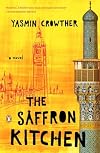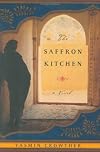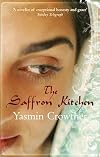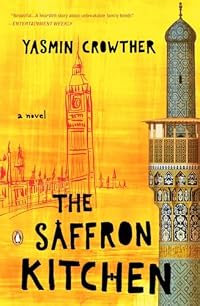
The Saffron Kitchen
by Yasmin Crowther
On This Page
Description
Fiction. Literature. HTML:Unabridged CDs - 8 CDs, 9 hoursA passionate and timely debut novel about mothers and daughters, roots and exile, from the remote mountains and riotous streets of Iran to the rain-soaked suburbs of London.
Tags
Recommendations











Member Reviews
I loved this book almost from page one. The writing was spell binding and the characters were engaging and not at all predictable. But what I will say next is that by the end of the book I ended up not liking the main character, Maryam Mazar, even if I did sympathized with her on some level. I felt that she was selfish in her final decision and that she thought more about herself than about the people who loved her.
Maryam Mazar is a woman who at the inception of the story is a sixty something lady. She lives in London now but her country of origin and birth is Iran. Through some circumstances, she is forced to leave home and settle in London where she meets a wonderful man and has a lovely daughter. In the beginning of the book, there show more is a tragedy that sends Maryam reeling and she seeks out her home in Iran, retreating from the misery that unfolds in London. I cannot delve much more into the particulars of what happens but here is where I found her decisions hard to stomach. She makes a choice that to me was very selfish and somewhat immature. Why would you leave behind all the love and care that your husband and daughter have showered you with for a life that you have not known for more than forty something years? By the time she goes back most of the people that were key actors in her life in Iran are dead and only a few important ones remain. She discards her present happiness for a past that she has somewhat eulogized in her mind and in my opinion was not totally deserving of its praises. I totally understand that because of the way in which she was forced to leave Iran, she never made peace with certain aspects of her life but I believe that we can make choices as to who we love and the importance that that love will hold in our lives. What happened to her was a travesty as she was punished for independence and being a young woman far ahead of her time, born in the wrong country for an out spoken woman. But as much as my heart hurt for her past pains, I could not reconcile her heartlessness in her decision making. Not since McEwan's Atonement have I been so angry with a character and I know that there were legions of people who wanted to give McEwan a piece of their mind for that ending. For me such endings (when well done) actually makes me applaud cause there are not many books that can get your so invested that you get so emotional at the end.
I would recommend this book as I was enthralled from start to finish. show less
Maryam Mazar is a woman who at the inception of the story is a sixty something lady. She lives in London now but her country of origin and birth is Iran. Through some circumstances, she is forced to leave home and settle in London where she meets a wonderful man and has a lovely daughter. In the beginning of the book, there show more is a tragedy that sends Maryam reeling and she seeks out her home in Iran, retreating from the misery that unfolds in London. I cannot delve much more into the particulars of what happens but here is where I found her decisions hard to stomach. She makes a choice that to me was very selfish and somewhat immature. Why would you leave behind all the love and care that your husband and daughter have showered you with for a life that you have not known for more than forty something years? By the time she goes back most of the people that were key actors in her life in Iran are dead and only a few important ones remain. She discards her present happiness for a past that she has somewhat eulogized in her mind and in my opinion was not totally deserving of its praises. I totally understand that because of the way in which she was forced to leave Iran, she never made peace with certain aspects of her life but I believe that we can make choices as to who we love and the importance that that love will hold in our lives. What happened to her was a travesty as she was punished for independence and being a young woman far ahead of her time, born in the wrong country for an out spoken woman. But as much as my heart hurt for her past pains, I could not reconcile her heartlessness in her decision making. Not since McEwan's Atonement have I been so angry with a character and I know that there were legions of people who wanted to give McEwan a piece of their mind for that ending. For me such endings (when well done) actually makes me applaud cause there are not many books that can get your so invested that you get so emotional at the end.
I would recommend this book as I was enthralled from start to finish. show less
A moving novel about a Iranian mother and the secrets from her early life that she has not shared with her English-born daughter.
Like Sara in her book, Yasmin Crowther was born and raised in Great Britain by an Iranian mother who had come there in her twenties and married an Englishman. Unlike Sara, she visited her mother’s homeland and knew it extensively. In The Saffron Kitchen, she seeks to bridge the dividedness of being both Iranian and English which she and her mother shared.
Crower tells the story of Maryam and Sara with skill and compassion. The lines of Matthew Arnold’s poem, “Dover Beach,” run through the book reflecting the idealism and resignation of its characters, and the admonition to be true to one’s self. show more Varied characters include women like Maryam who find Iranian gender definitions oppressive and others who are able to find strength and grace with in them. Male characters range from the harsh and narrow-minded to those who are unusually sensitive to the women they love.
Maryam had grown up in a priviledged family in Iran, spending summers in a remote mountain village. When her father was humiliated by her actions as a teenager, he exiled her from the life she had known. After training as a nurse, she went to England, happily married, and had a daughter. As Sara grew up, her mother seemed to be well assimilated, but Maryam remained subject to strange moods and angers. When an orphaned nephew joined the family, she falls apart, hurts other, and returns to Iran. Her husband and her grown daughter, Sara, have no idea what lies behind her actions. Sara must follow her mother to the mountain village of her childhood, before either can balance the meaning of the old and the new in their lives.
I thoroughly enjoyed The Saffron Kitchen and recommend it highly to other readers who care about complex stories of coming to terms with who we are. show less
Like Sara in her book, Yasmin Crowther was born and raised in Great Britain by an Iranian mother who had come there in her twenties and married an Englishman. Unlike Sara, she visited her mother’s homeland and knew it extensively. In The Saffron Kitchen, she seeks to bridge the dividedness of being both Iranian and English which she and her mother shared.
Crower tells the story of Maryam and Sara with skill and compassion. The lines of Matthew Arnold’s poem, “Dover Beach,” run through the book reflecting the idealism and resignation of its characters, and the admonition to be true to one’s self. show more Varied characters include women like Maryam who find Iranian gender definitions oppressive and others who are able to find strength and grace with in them. Male characters range from the harsh and narrow-minded to those who are unusually sensitive to the women they love.
Maryam had grown up in a priviledged family in Iran, spending summers in a remote mountain village. When her father was humiliated by her actions as a teenager, he exiled her from the life she had known. After training as a nurse, she went to England, happily married, and had a daughter. As Sara grew up, her mother seemed to be well assimilated, but Maryam remained subject to strange moods and angers. When an orphaned nephew joined the family, she falls apart, hurts other, and returns to Iran. Her husband and her grown daughter, Sara, have no idea what lies behind her actions. Sara must follow her mother to the mountain village of her childhood, before either can balance the meaning of the old and the new in their lives.
I thoroughly enjoyed The Saffron Kitchen and recommend it highly to other readers who care about complex stories of coming to terms with who we are. show less
You don’t hear much about the lives of real people in Iran these days, just the hard-boiled political exterior, so I was interested to read this book, much of which is set there. It was illuminating to an extent – taking in the sights of the rural mountain regions, and the author has a pleasant poetic style.
The story begins with dramatic events: Iranian mother living in London indirectly causes her daughter’s miscarriage and promptly retreats to Iran. There is a suspicion of dark and tragic events in her past. On one level the whole thing is heartbreaking, but I was oddly unmoved, perhaps because the tone was rather samey – poetic but samey. Conversations weren’t so much variations on a theme as lack of variation on a theme. show more A little bit disappointing overall. show less
The story begins with dramatic events: Iranian mother living in London indirectly causes her daughter’s miscarriage and promptly retreats to Iran. There is a suspicion of dark and tragic events in her past. On one level the whole thing is heartbreaking, but I was oddly unmoved, perhaps because the tone was rather samey – poetic but samey. Conversations weren’t so much variations on a theme as lack of variation on a theme. show more A little bit disappointing overall. show less
The Saffron Kitchen is the debut novel of author Yasmin Crowther. It is a family story that follows both a mother and a daughter, the first as she faces her trauma and finds peace in her beloved country of Iran, the other as she comes to an understanding about her mother and their difficult relationship.
Maryam Mazar was born and raised in a small village in Iran, but for the last forty years has been living in a suburb of London. Her life is comfortable and secure but when an event triggers her memory of an event that caused her to run away from Iran, she realizes that in order to heal, she must return to Iran. She basically leaves her husband and her daughter, who has also just suffered a traumatic event and returns to face her past. show more While daughter Sara, and husband Edward feel abandoned and confused, Maryam feels reborn. Only when Sara herself travels to Iran and confronts her mother’s past can the two women begin to heal their relationship.
This was an interesting story about culture, family and identity. Personally I never quite reached an understanding of Maryam so didn’t have a lot of sympathy for her. Parts of the story were very compelling while others felt a little flat. The author’s descriptions of Iran are evocative but the actual story left many questions unanswered. show less
Maryam Mazar was born and raised in a small village in Iran, but for the last forty years has been living in a suburb of London. Her life is comfortable and secure but when an event triggers her memory of an event that caused her to run away from Iran, she realizes that in order to heal, she must return to Iran. She basically leaves her husband and her daughter, who has also just suffered a traumatic event and returns to face her past. show more While daughter Sara, and husband Edward feel abandoned and confused, Maryam feels reborn. Only when Sara herself travels to Iran and confronts her mother’s past can the two women begin to heal their relationship.
This was an interesting story about culture, family and identity. Personally I never quite reached an understanding of Maryam so didn’t have a lot of sympathy for her. Parts of the story were very compelling while others felt a little flat. The author’s descriptions of Iran are evocative but the actual story left many questions unanswered. show less
In the first chapter of The Saffron Kitchen by Yasmin Crowther, Sara loses her unborn baby in an accident, and as a result, she also loses her mother, Maryam. Unable to handle what has happened to her daughter and her part in the tragedy, Maryam flees London for her native Iran and comes to terms with the events of her childhood -- the ones that forced her to escape Iran in the first place. In an effort to understand her mother's actions, Sara follows Maryam to Iran, and comes to understand how hard it is to turn your back on the past that shapes you.
The Saffron Kitchen flows nicely between Sara's point of view and Maryam's, between London and Iran, between the past and the present. It's a great story about love, independence, and show more family. I'm a sucker for books about differences in culture, and as a result I've read some terrible attempts, but I really did enjoy this one. The only thing that irks me is the ending -- I understand it and support it, but that doesn't mean I have to like it. But not all endings in life are happy -- or at least, not for everyone. show less
The Saffron Kitchen flows nicely between Sara's point of view and Maryam's, between London and Iran, between the past and the present. It's a great story about love, independence, and show more family. I'm a sucker for books about differences in culture, and as a result I've read some terrible attempts, but I really did enjoy this one. The only thing that irks me is the ending -- I understand it and support it, but that doesn't mean I have to like it. But not all endings in life are happy -- or at least, not for everyone. show less
Living in London, in a sort of exile from her Iranian girlhood, Maryam is married to an Englishman and has an adult daughter who is newly pregnant. When her late younger sister's youngest son is sent to England to live with her, his presence opens something in Maryam, a brutality and anger connected to her past. After she smacks Saeed's face and then sees Sara miscarry after she tries to console Saeed, Maryam flees to Iran to face that which she has so long ignored. The narrative splits and follows Sara as she tries to come to terms with the loss of her baby and her mother's flight and subsequent inaccessibility as well as following Maryam as she not only visits the city which she left so long ago but ultimately the tiny village where show more she spent so many happy summers as a child. While Sara tries to understand her mother from the things left behind, Maryam is facing the horror of her past, one which touched not only her but the love of her young life.
The writing in this is occasionally lovely and poetic but there are enough times where the narrative is unfortunately confused to counterbalance that. It often takes some doing to figure out which narrative the reader is following after abrupt jumps. There is quite a bit of potential here to say something about the immigrant experience but most of that is glossed over in favor of allowing Maryam to go home again so easily. The sense of place once Maryam returns to Iran is not as strong as it could be and the implication is that her father's rigidity and sense of right and wrong was far and away worse than society's own strictures so the idea of a universally Iranian experience is abandonned. Sara follows her mother to the tiny, remote village in an effort to understand her elusive mother but I'm not certain that that understanding ever happened. And Maryam's decisions as an older woman returned to Iran make her less sympathetic than I suspect the author intended. This novel is brimming with hurt and betrayal and people exiled from each other, from their homeland, from their heritage, from their potential. It was a bit frustrating to read but in the end was decent enough. Don't go into it looking for insight into Iranian culture. Rather take it from the perspective of a woman searching to understand and embrace her past even if that means shutting out her family. show less
The writing in this is occasionally lovely and poetic but there are enough times where the narrative is unfortunately confused to counterbalance that. It often takes some doing to figure out which narrative the reader is following after abrupt jumps. There is quite a bit of potential here to say something about the immigrant experience but most of that is glossed over in favor of allowing Maryam to go home again so easily. The sense of place once Maryam returns to Iran is not as strong as it could be and the implication is that her father's rigidity and sense of right and wrong was far and away worse than society's own strictures so the idea of a universally Iranian experience is abandonned. Sara follows her mother to the tiny, remote village in an effort to understand her elusive mother but I'm not certain that that understanding ever happened. And Maryam's decisions as an older woman returned to Iran make her less sympathetic than I suspect the author intended. This novel is brimming with hurt and betrayal and people exiled from each other, from their homeland, from their heritage, from their potential. It was a bit frustrating to read but in the end was decent enough. Don't go into it looking for insight into Iranian culture. Rather take it from the perspective of a woman searching to understand and embrace her past even if that means shutting out her family. show less
I didn't know anything about this book ... just found it on the library shelf and picked it out. Turned out it was a beautifully written, and quite sad, story set in England and Iran. Even though it was fiction, I can imagine a person feeling displaced when they are suddenly left to build their life in a different culture. Good book for a book club discussion.
Members
- Recently Added By
Lists

Blue Pyramid 1,276 Best Books of All Time
1,248 works; 32 members
Author Information

3 Works 668 Members
Awards and Honors
Awards
Common Knowledge
- Original title
- The saffron kitchen
- Original publication date
- 2006
- Important places
- Iran; London, England, UK
Classifications
Statistics
- Members
- 664
- Popularity
- 43,104
- Reviews
- 29
- Rating
- (3.50)
- Languages
- 9 — Danish, Dutch, English, German, Icelandic, Italian, Norwegian (Bokmål), Spanish, Swedish
- Media
- Paper, Audiobook, Ebook
- ISBNs
- 34
- UPCs
- 1
- ASINs
- 8