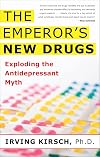
The Emperor's New Drugs: Exploding the Antidepressant Myth
by Irving Kirsch
On This Page
Description
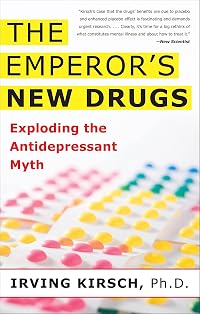
Kirsch, a researcher and clinical psychologist, for years referred patients to psychiatrists to have their depression treated with drugs before deciding to investigate for himself just how effective the drugs actually were. His research has demonstrated that what everyone knew about antidepressants was wrong. Instead of treating depression with drugs, we've been treating it with suggestion.Tags
Recommendations










Member Reviews
Incredible book that intersects a number of hot button topics beside depression and treating it - the influence of Big Pharma over studies, the routine coverups of trials showing 'bad' results and the cooperation between journals on this issue. There's a dead rot being exposed even though the book only deals with it tangentially. It very methodically goes through the metaanalysis Kirsch did using a complete picture that included FOIA requests for the data they tried to bury, and a number of objections, and experimental alternatives to try and suss out if and how antidepressants are effective. Spoiler; they're not.
From the reviews some seem to find it tedious when he systematically ticks off various experimental designs and questions, show more but I found it deeply compelling to have a laundry list of "but what if" and "have you tried" and "did you account for" questions pre-empted and answered.
Others seem to have a hard time believing so many people could be in cahoots to perpetuate what is essentially a billion dollar fraud. Yet we've seen in recent years revelations of how Big Pharma happily intentionally addicted millions to opiates they did not need and gleefully joked about the consequences, as the billions in profits kept raking in. If they're willing to kill to make a buck, knowingly hawking ineffective drugs is saintlike in comparison.
Most importantly the death of the neurotransmitter view of depression means something much more important; the real cause(s) of depression are yet to be found. show less
From the reviews some seem to find it tedious when he systematically ticks off various experimental designs and questions, show more but I found it deeply compelling to have a laundry list of "but what if" and "have you tried" and "did you account for" questions pre-empted and answered.
Others seem to have a hard time believing so many people could be in cahoots to perpetuate what is essentially a billion dollar fraud. Yet we've seen in recent years revelations of how Big Pharma happily intentionally addicted millions to opiates they did not need and gleefully joked about the consequences, as the billions in profits kept raking in. If they're willing to kill to make a buck, knowingly hawking ineffective drugs is saintlike in comparison.
Most importantly the death of the neurotransmitter view of depression means something much more important; the real cause(s) of depression are yet to be found. show less
Do I really need to say it? Big pharma is horrifying and the world is corrupted.
I just loved hearing that a medication I used to be on (citalopram) had various studies showing it’s complete ineffectiveness compared to placebo pills—but those got swept under the rug. I actually have taken multiple medications mentioned by Kirsch, and look back on those experiences with disdain.
I don’t know exactly how I feel about all of the claims made in this book, but it was still worth reading. If anything, you will learn about the cherrypicked data and skewed science that results from the greed and dishonorable principles of these large pharmaceutical companies.
Now that I have the studies drilled into my brain, I definitely want to read a show more book about the psychology of the placebo effect.
I also had no idea that the whole “chemical imbalance in the brain” thing was a theory and not concrete fact. So there’s that. show less
I just loved hearing that a medication I used to be on (citalopram) had various studies showing it’s complete ineffectiveness compared to placebo pills—but those got swept under the rug. I actually have taken multiple medications mentioned by Kirsch, and look back on those experiences with disdain.
I don’t know exactly how I feel about all of the claims made in this book, but it was still worth reading. If anything, you will learn about the cherrypicked data and skewed science that results from the greed and dishonorable principles of these large pharmaceutical companies.
Now that I have the studies drilled into my brain, I definitely want to read a show more book about the psychology of the placebo effect.
I also had no idea that the whole “chemical imbalance in the brain” thing was a theory and not concrete fact. So there’s that. show less
Interesting, but poorly written.
A signal boost rating for important work. See also Ben Goldacre.
Ratings
Members
- Recently Added By
Lists

Hachette Book Group
152 works; 6 members
Author Information

8 Works 204 Members
Irving Kirsch, a native of New York City, is a professor of psychology at the University of Hull, United Kingdom, as well as professor emeritus at the University of Connecticut. His research has been published in the British Medical Journal and covered in USA Today, the New York Times, Newsweek, and more. He currently lives in Hull.
Classifications
- Genres
- Nonfiction, General Nonfiction, Science & Nature
- DDC/MDS
- 615.78 — Applied science & technology Medicine & health Pharmacology and therapeutics Medicines grouped by effects Drugs acting on nervous system
- LCC
- RM332 .K57 — Medicine Therapeutics. Pharmacology Therapeutics. Pharmacology Drugs and their actions
- BISAC
Statistics
- Members
- 163
- Popularity
- 199,265
- Reviews
- 4
- Rating
- (4.17)
- Languages
- English, Italian
- Media
- Paper, Audiobook, Ebook
- ISBNs
- 11
- ASINs
- 5