The Fellowship of the Talisman
by Clifford D. Simak
On This Page
Description
A strange assortment of humans and otherworldly beings joins a young soldier of God on his perilous quest through an alternate, technology-free reality ruled by an all-powerful Evil In an alternate world where the Dark Ages never ended, "the Evil" that arises every five hundred years has prevented all manner of technological advancement, even well into the twentieth century. The son of a powerful English noble, young Duncan Standish has always longed to be a soldier of the Lord, and now he's show more been offered a rare opportunity to fulfill his dream. Entrusted with the delivery of an ancient manuscript--purported to be irrefutable evidence of the existence of Jesus Christ--to a noted Oxenford scholar, Duncan must journey many perilous miles in the company of a motley group of fellow travelers, including a goblin, a ghost, and other magical and non-magical companions. But the road they traverse together is fraught with terrible trials that would test even the most devout, for the Evil is strong in this place of dark wonders. Multiple Hugo, Nebula, and Locus Award-winner and SFWA Grand Master Clifford D. Simak moves easily from science fiction to quest fantasy in this enthralling tale of magic, peril, and discovery on an Earth that never was. Rich in color, thrills, and wild invention, and populated by a highly original and unforgettable cast of characters, Fellowship of the Talisman showcases the author's peerless storytelling skills, demonstrating once again that the great Simak had few equals in the realm of twentieth-century speculative fiction. show lessTags
Recommendations














Member Reviews
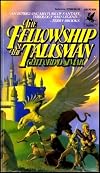
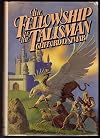
There's always more going on in a Simak fable than is obvious. Don't be fooled by the silly cover illustration. Certainly this can be read as simple quest, with the motley crew joining the original scion. A little deeper, there's an earnest parable about religion and technology. But fans of the Grand Master will find more. I wonder... this was written quite late in Simak's life... did he write the role of Andrew the anxious hermit for himself?
Not one of Simak's best...which is kind of an understatement. Very derivative with heavy borrowings from Tolkien. But the Christian content is not reduced as it is in Tolkien to battles between forces of good and evil, but right in your face.
There is a lot thrown out that goes completely unexplained in ways that are unsatisfying. First, characters say multiple times that The Horde came at some distant point in the past from space, but to what purpose is not clear. They seemingly fly through space to combat the truth of Christ?
Second, there is some sense that progress has been arrested in the world, the kind of material and intellectual progress that can ease human physical suffering as opposed to spiritual hurts. But why this is the show more case either I missed or it too is never made clear. Another result of The Horde, I suppose. But the problem is deeper because it is never made clear the relationship between physical need and spiritual need. Isn't material progress over time that eases the "Wailing for the World," simply ephemeral relief? Maybe, Simak attempts to tackle this via the giving of food and helping hands between strangers, like Andrew the Hermit's offering of a bit of cheese to Meg the Witch when they first meet even though he despises her magic and paganism.
Finally, the ending is just too abrupt and unfulfilling/unearned. The manuscript, the words of Christ are the talisman that the Horde fears--I guess in the long run?--and so they create their defensive swarm and are blown to smithereens by the force of the manuscript, thus, confirming its authenticity?
The novel as a whole seems like Lady Diane's Griffin, a bit of lion here, a touch of dragon there, a hint of serpent, and so on and so on. show less
There is a lot thrown out that goes completely unexplained in ways that are unsatisfying. First, characters say multiple times that The Horde came at some distant point in the past from space, but to what purpose is not clear. They seemingly fly through space to combat the truth of Christ?
Second, there is some sense that progress has been arrested in the world, the kind of material and intellectual progress that can ease human physical suffering as opposed to spiritual hurts. But why this is the show more case either I missed or it too is never made clear. Another result of The Horde, I suppose. But the problem is deeper because it is never made clear the relationship between physical need and spiritual need. Isn't material progress over time that eases the "Wailing for the World," simply ephemeral relief? Maybe, Simak attempts to tackle this via the giving of food and helping hands between strangers, like Andrew the Hermit's offering of a bit of cheese to Meg the Witch when they first meet even though he despises her magic and paganism.
Finally, the ending is just too abrupt and unfulfilling/unearned. The manuscript, the words of Christ are the talisman that the Horde fears--I guess in the long run?--and so they create their defensive swarm and are blown to smithereens by the force of the manuscript, thus, confirming its authenticity?
The novel as a whole seems like Lady Diane's Griffin, a bit of lion here, a touch of dragon there, a hint of serpent, and so on and so on. show less
A fairly generic fantasy quest novel. For its time, it was probably quite unique. In an alternate history Earth, scientific progress is stuck in the Dark Ages, possibly due to The Evil, a horde of evil beings that periodically desolate large areas of the planet. A young man is given a quest to deliver a precious manuscript to a translator, but he must travel through The Desolation to do so. Accompanied by one friend, one dog, one donkey and one warhorse, they set out on the trip. Along the way they pick up an unusual cast of characters while fighting off human bandits and the Hordes of Evil. The ending is extremely anti-climatic and this book reminded me too much of another of Simak's, 'Where the Evil Dwells', but this was still enjoyable.
This is an annoying book. It's not really very well written - highly awkward dialog, motivations fuzzy (or overly simplistic), setting unclear, adventures odd and fairy-tale like (that is, things happen for very unclear reasons and everyone just accepts them). It also reads (I do not know the author's actual religious convictions) like a deeply religious book written by an agnostic or even atheist. A lot of those fuzzy and simplistic motivations are 'religious', without much real feeling behind them. And yet I've reread it at least 5 or 6 times, culled it from my library and re-bought it, remember it fondly...and I don't know why! This time was triggered by someone asking for it in Name That Book.
Painfully bad, stereotypical fantasy still worsened by the fact the characters were supposedly pious but IMO the author just didn't "do" faith any better than anything else in that book.
This is another of my older books that I don't remember too much about. It is fantasy not science fiction despite the fact that Simak is more known for writing science fiction. This is a hardcover book.
From the inside flap:
Through a wilderness blighted by horror rode Duncan, son of the noble House of Standish. Astride his mighty war horse, he was pursuing a quest vital to the future of civilization. With him went a strange fellowship: a brawny man-at-arms, a banshee, a hermit, a ghost, a turncoat demon, a goblin and a witch. Opposing them came forsces of supernatural malignancy. Aiding them was a girl with the blood of enchanters in her veins who was mounted on an ancient griffin. And all this takes place in England in the 1970s... show more But in the world of The Fellowship of the Talisman, the Dark Ages never ended. There had been no Renaissance, no exploration of the lands across the sea; and men lived much as they did a thousand or more years ago. Some historians believed this situation was the result of the terror and devastation called the Evil, which broke out every five centuries, laying waste first to Macedonia, then to Iberia, and finally to a large part of England. show less
From the inside flap:
Through a wilderness blighted by horror rode Duncan, son of the noble House of Standish. Astride his mighty war horse, he was pursuing a quest vital to the future of civilization. With him went a strange fellowship: a brawny man-at-arms, a banshee, a hermit, a ghost, a turncoat demon, a goblin and a witch. Opposing them came forsces of supernatural malignancy. Aiding them was a girl with the blood of enchanters in her veins who was mounted on an ancient griffin. And all this takes place in England in the 1970s... show more But in the world of The Fellowship of the Talisman, the Dark Ages never ended. There had been no Renaissance, no exploration of the lands across the sea; and men lived much as they did a thousand or more years ago. Some historians believed this situation was the result of the terror and devastation called the Evil, which broke out every five centuries, laying waste first to Macedonia, then to Iberia, and finally to a large part of England. show less
Simack and Fantasy, not one of his better books.
Members
- Recently Added By
Lists

You Couldn't Pay Me to Read That (Take 2)
213 works; 87 members
Author Information

395+ Works 25,454 Members
Some Editions
Series
Belongs to Publisher Series
Common Knowledge
- Canonical title
- The Fellowship of the Talisman
- Original title
- The Fellowship of the Talisman
- Original publication date
- 1978
- People/Characters
- Duncan of Standish; Andrew; Conrad; Meg; Ghost (a ghost); Snoopy (A goblin) (show all 9); Diane; Cuthbert; Scratch (A demon)
- Important places
- Oxenford
- First words
- The manor house was the first undamaged structure they had seen in two days of travel through an area that had been desolated with a thoroughness at once terrifying and unbelievable.
- Last words
- (Click to show. Warning: May contain spoilers.)"And now," she said, "I'm ready for tomorrow."
- Blurbers
- Brooks, Terry
Classifications
Statistics
- Members
- 641
- Popularity
- 45,537
- Reviews
- 9
- Rating
- (3.16)
- Languages
- 9 — Bulgarian, English, Estonian, French, German, Lithuanian, Norwegian, Portuguese, Russian
- Media
- Paper, Audiobook, Ebook
- ISBNs
- 12
- ASINs
- 14