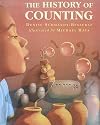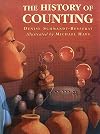
The History of Counting
by Denise Schmandt-Besserat
On This Page
Description
Describes the evolution of counting and the many ways to count and write numbers.Tags
Recommendations













Member Reviews
This book was wonderful! I learned so many things about the origins of numbers that I never knew. I guess I never really thought about where our concept of counting came from. I loved the way this book is organized and the illustrations explaining historical concepts that would otherwise be difficult to imagine. This book is going into my top children's books. I honestly couldn't recommend this book more both in a classroom setting and home setting. The fact that interested me the most was the body counting used by the Paiela in Papua New Guinea. Their highest number is twenty- eight and each part of the body represents a number.
This is a story on the history of counting, and how people all over the world use different methods to count. For example the Peiela of Papua New Guinea use “body counting” which is where different spots on their body correlate to certain numbers, for 16 they would point to their right ear. The method most people use today is “abstract counting” . This would be a great book to read to kids because not only does it tell the history of how we count but it shows kids there are many cultures that count differently.
Retelling: Author and anthropologist, Schmandt-Besserat describes how systems for counting evolved out of necessity in different civilizations and how each system had different strengths and weaknesses. Learn about cultures that use systems other than the hindu-arabic system today: the Veddas, the Paiela, and the Gilyaks. Then learn about ancient developments in the middle east: the Sumerians and the Phoenicians. Then the Greek and Roman system and how and why they adopted our modern system instead.
Thoughts and Feelings: It's very exciting to me to learn that the true origin of the hindu-arabic system of numbers is unknown but the first example was written in sanscrit in India. I like unknowns. They mean there is more puzzle pieces to show more be discovered and/or connected.
I particularly enjoyed how this author emphasized that innovations in numbers were born out of need. I often feel that, because our abstract numbers are so versatile, we can teach them without recognizing or enforcing their practicality in our culture and civilization. show less
Thoughts and Feelings: It's very exciting to me to learn that the true origin of the hindu-arabic system of numbers is unknown but the first example was written in sanscrit in India. I like unknowns. They mean there is more puzzle pieces to show more be discovered and/or connected.
I particularly enjoyed how this author emphasized that innovations in numbers were born out of need. I often feel that, because our abstract numbers are so versatile, we can teach them without recognizing or enforcing their practicality in our culture and civilization. show less
Thrift store find. ?áSurprisingly wonderful. ?áReads as smoothly as a picture-book stories, with art that fills the page and adds depth and clarity to each concept. ?áGoes beyond the basics we adults think we know. ?á
Do you know about body counting? ?áFor the Paiela of Papua New Guinea, the left pinkie represents '1,' left ring finger = '2,' left ear = 12, all the way to right pinkie which is 27. ?áSo, I'll trade you left wrist fish for left pinkie shoes....
Did you know the Arabs called 'Arabic numerals' 'Hindu numerals?' ?áThe earliest number system documented, that includes zero and looks like our number system, is Sanskrit and is 1500 years old. ?áDid you know it took centuries for Europeans to accept this new show more numbering system, and it wasn't fully accepted until about 1650? ?áI guess that means that the cargo manifest of the Mayflower could just as likely have been written in Roman numerals? ?á(Though apparently merchants etc. caught on the Arabic numerals more quickly, as the document is in modern notation:?áhttps://archive.org/stream/themayflowerandh04105gut/mf05v10.txt.)" show less
Do you know about body counting? ?áFor the Paiela of Papua New Guinea, the left pinkie represents '1,' left ring finger = '2,' left ear = 12, all the way to right pinkie which is 27. ?áSo, I'll trade you left wrist fish for left pinkie shoes....
Did you know the Arabs called 'Arabic numerals' 'Hindu numerals?' ?áThe earliest number system documented, that includes zero and looks like our number system, is Sanskrit and is 1500 years old. ?áDid you know it took centuries for Europeans to accept this new show more numbering system, and it wasn't fully accepted until about 1650? ?áI guess that means that the cargo manifest of the Mayflower could just as likely have been written in Roman numerals? ?á(Though apparently merchants etc. caught on the Arabic numerals more quickly, as the document is in modern notation:?áhttps://archive.org/stream/themayflowerandh04105gut/mf05v10.txt.)" show less
This book is very interesting. This book not only talks about mathematics, but this book also talks about the history of numbers and counting. There are many different cultures that use numbers and counting way differently than we do and it is so interesting to learn about these things.
The History of Counting is a very informative picture book that goes into full detail about not just the history of counting, but also how other cultures go about counting. The author does a great job in making connections to more modern uses of numbers that children would be able to relate to such as the numbers on the back of sports jerseys. I would recommend this book strictly to older children purely because of the reading level, though would make an exception if a gifted child showed a great interest in math and had a parent or guardian willing to read it to them.
In this book, it gives r adders the history of counting and insight on how many different people count differently around the world. For example the Veddas of Sri Lanka could using only their body parts. Certain part s of the body corresponds to a certain number, the left eye is number thirteen. The highest number they can go up to is twenty-seven. I enjoyed reading this book because it gave me a new perspective on how people use math everyday.
Members
- Recently Added By
Author Information

20+ Works 569 Members
Awards and Honors
Classifications
Statistics
- Members
- 360
- Popularity
- 87,741
- Reviews
- 13
- Rating
- (4.11)
- Languages
- English
- Media
- Paper
- ISBNs
- 4
- ASINs
- 1