
On This Page
Description
Beloved Burke hero Detective Dave Robicheaux returns to New Iberia to solve a series of grisly murders.Tags
Recommendations
























Member Reviews
Dave Robicheaux is 70 years old, and feeling his age. But it isn't Time's winged chariot he hears; it's a ghostly steamboat drifting through the mist on Bayou Teche...a vessel no one else sees, coming for to carry away the souls recently released from earth's bondage. And as if such visions weren't enough to put the notion of his own mortality uppermost in his mind, the forces of evil past and present are raging through the parishes of Southwestern Louisiana, with Dave and his family directly in their path. This story line rumbles and crackles like the electrical storms Burke describes so vividly, and the ending left me feeling I had experienced a very close lightning strike myself. If you've read earlier entries in the series, don't show more quit before you get to this one. It's one of Burke's best. show less
"It has been my experience that most human stories are circular rather than linear."
Dave Robicheaux is made aware of the deaths of several girls in his and neighboring parishes of Louisiana, and much to his bosses chagrin, he begins to poke around outside his jurisdiction. His daughter’s new boyfriend is a famous author, hoping to help her with her novel, as one of his friends, a criminal turned famous author. When connections from a small-time pimp to the criminal author keeps surfacing Dave provokes his daughter's ire as well as his own curiosity. Things begin to get a little too contrived for his liking, as his life and his daughter’s lives wind closer and closer to the deaths of those girls. In the end, only being prepared for show more anything is what can save them.
Filled with fantastic descriptions of character and landscape, Burke fills his book with exposition about history and personal lives as well as anecdotes about dialect and politics. Far from tiresome, and apparently as good a place as any for the newcomer to jump in, I listened to this book while commuting, while cleaning, while lounging - never tiring of Will Patton’s accents and voices for the myriad of unfortunates who caught the eye of Burke’s sober detective. It was easy to separate the goons from one another, and the poor souls ensnared in the beckoning lie of a better life. The disillusion that our narrator sees is paralleled in the fallen plantation empires and the failure of dreams and unsavory endings that befall so many in his scope. Keeping his own family from being pulled under is all there seems left for Dave to do, even as he runs around, solving other crimes.
It is well known amongst fans of James Lee Burke that his characters are flawed souls, complete with demons and friends who dog them, and his descriptions of the Louisiana Bayou are replete with unforgiving details of history. Despite the headaches that Dave Robicheaux and Clete Purcell get themselves into, they come back for more, like the main character of a Tom Cruise movie. That the ending is often an unbelievable twist of evil plots and blazing gunfire that they somehow survive completely caught me by surprise that has become familiar to old fans. But, as they’re back in Creole Belle, the next book, this isn’t one to be puzzled over too long. Enjoy it for what it is, or give it a miss.
Dave Robicheaux #18. show less
Dave Robicheaux is made aware of the deaths of several girls in his and neighboring parishes of Louisiana, and much to his bosses chagrin, he begins to poke around outside his jurisdiction. His daughter’s new boyfriend is a famous author, hoping to help her with her novel, as one of his friends, a criminal turned famous author. When connections from a small-time pimp to the criminal author keeps surfacing Dave provokes his daughter's ire as well as his own curiosity. Things begin to get a little too contrived for his liking, as his life and his daughter’s lives wind closer and closer to the deaths of those girls. In the end, only being prepared for show more anything is what can save them.
Filled with fantastic descriptions of character and landscape, Burke fills his book with exposition about history and personal lives as well as anecdotes about dialect and politics. Far from tiresome, and apparently as good a place as any for the newcomer to jump in, I listened to this book while commuting, while cleaning, while lounging - never tiring of Will Patton’s accents and voices for the myriad of unfortunates who caught the eye of Burke’s sober detective. It was easy to separate the goons from one another, and the poor souls ensnared in the beckoning lie of a better life. The disillusion that our narrator sees is paralleled in the fallen plantation empires and the failure of dreams and unsavory endings that befall so many in his scope. Keeping his own family from being pulled under is all there seems left for Dave to do, even as he runs around, solving other crimes.
It is well known amongst fans of James Lee Burke that his characters are flawed souls, complete with demons and friends who dog them, and his descriptions of the Louisiana Bayou are replete with unforgiving details of history. Despite the headaches that Dave Robicheaux and Clete Purcell get themselves into, they come back for more, like the main character of a Tom Cruise movie. That the ending is often an unbelievable twist of evil plots and blazing gunfire that they somehow survive completely caught me by surprise that has become familiar to old fans. But, as they’re back in Creole Belle, the next book, this isn’t one to be puzzled over too long. Enjoy it for what it is, or give it a miss.
Dave Robicheaux #18. show less
This, I believe, is James Lee Burke’s twenty-ninth novel, and I think I have read about twenty of those. From which you can already guess that he is likely a favourite of mine, and indeed I think he currently is probably the best American writer of crime fiction around (assuming that James Ellroy has moved beyond the genre). This is mainly due to his often remarked-upon writing style which of a lyrical intensity you do not find often, and especially not in crime fiction which often tends towards the sparse and matter-of-fact tone.
His novels are mostly set in rural areas, and the beauty of the scenery and Burke’s colourful descriptions – from the luscious green of Lousiana swamps to the sepia and ochre of the Texas prairie – show more contrasts starkly with the violence and corruption of human society that appears mostly fueled by greed and insanity, the few moments of warmth and human kindness fleeting and often futile. Maybe it’s just me, but Burke’s novels, never exactly a light comfort read, seem to have grown increasingly darker over recent years, and The Glass Rainbow appears to continue that trend.
It is the eighteenth volume in the series featuring his best-known protagonist, small-town Louisiana deputy sherrif Dave Robicheaux. After having lost one wife to violence and one to a incurable disease, it would seem like like Robichaux, steadily advancing into old age, finally has managed to carve out his own small haven of private happiness with his most recent partner Molly and his adopted daughter Alafair. Only to have drastically demonstrated to him just how fragile that happiness is when Alafair gets involved with a man he disapproves of and then is drawn into a criminal conspiracy that threatens not only her life but also that of Molly and Robicheaux himself.
And then there is Tripod, the family pet racoon who is slowly succumbing to old age, thus signalling that Robicheaux’ private paradise will eventually be doomed by time and eath, without him being able to do anything about it – et ego in Arcadia. The novel appears almost baroque in the persistence of the Vanity motif, and it certainly offers itself to be read it as an allegoryon that subject. What is quite un-baroque, though, is the rage Robicheaux and a few others muster, their outright and unwavering refusal to put up with the state of the world and accept it as God-given. Like all good crime fiction, The Glass Rainbow is a highly moralistic work and is carried by the stubborn conviction that there is a good cause to fight for, and that making a stand has value and matters, even if it appears futile. show less
His novels are mostly set in rural areas, and the beauty of the scenery and Burke’s colourful descriptions – from the luscious green of Lousiana swamps to the sepia and ochre of the Texas prairie – show more contrasts starkly with the violence and corruption of human society that appears mostly fueled by greed and insanity, the few moments of warmth and human kindness fleeting and often futile. Maybe it’s just me, but Burke’s novels, never exactly a light comfort read, seem to have grown increasingly darker over recent years, and The Glass Rainbow appears to continue that trend.
It is the eighteenth volume in the series featuring his best-known protagonist, small-town Louisiana deputy sherrif Dave Robicheaux. After having lost one wife to violence and one to a incurable disease, it would seem like like Robichaux, steadily advancing into old age, finally has managed to carve out his own small haven of private happiness with his most recent partner Molly and his adopted daughter Alafair. Only to have drastically demonstrated to him just how fragile that happiness is when Alafair gets involved with a man he disapproves of and then is drawn into a criminal conspiracy that threatens not only her life but also that of Molly and Robicheaux himself.
And then there is Tripod, the family pet racoon who is slowly succumbing to old age, thus signalling that Robicheaux’ private paradise will eventually be doomed by time and eath, without him being able to do anything about it – et ego in Arcadia. The novel appears almost baroque in the persistence of the Vanity motif, and it certainly offers itself to be read it as an allegoryon that subject. What is quite un-baroque, though, is the rage Robicheaux and a few others muster, their outright and unwavering refusal to put up with the state of the world and accept it as God-given. Like all good crime fiction, The Glass Rainbow is a highly moralistic work and is carried by the stubborn conviction that there is a good cause to fight for, and that making a stand has value and matters, even if it appears futile. show less
I'm still somewhat stunned by the end of the book which I finished just a few hours ago. I'm not sure what to make of it but it has to be one of the greatest endings of all time. I won't say more than that so as not to spoil the book for future readers.
Dave Robicheaux is still plugging away as a detective in New Iberia, Lousiana, but in this book his detecting takes him into the neighbouring districts. Seven young women in Jefferson Davis Parish have been killed but no-one seems to be doing anything about it. One of them, Bernadette Latiolais, seemed different from the rest of the victims. She was smart and not into partying or prostitution. Her brother who is on a prison gang in Mississippi wants to talk to Dave. He fingers a notorious show more pimp, Herman Stanga. Dave talks to Stanga but makes no headway. Then Clete Purcell gets in on the act. Clete does not have the restraint that Dave does but neither does he have the limitations of being a policeman. He beats Stanga up in front of many witnesses.
But maybe Stanga isn't the guilty party. Dave does not like his daughter, Alafair's new boyfriend, Kermit Abelard, and he especially doesn't like Kermit's buddy, ex-convict and new author Robert Weingart. As he pursues his investigation the Abelard/Weingart names keep coming up and Dave doesn't think he is jealous of Alafair's love interest. He's afraid Alafair may be coming into contact with genuine evil.
We really get to see a lot of Clete Purcell in this book. Clete is everything Dave is not. He's a boozer, a womanizer and maybe crazy too boot. But he really does look out for Dave and he has his own ethics that he follows. I finally get why Dave puts up with Clete.
Burke's writing about Louisiana is a paean to a land he obviously loves. It was pure pleasure to read his descriptions of sunrises, sunsets and drives through green countryside with herons standing by the side of bayeux. Some day I hope to get there but until then it was sure nice to get away from a cold January in Winnipeg to explore New Iberia and surroundings with Dave Robicheaux. show less
Dave Robicheaux is still plugging away as a detective in New Iberia, Lousiana, but in this book his detecting takes him into the neighbouring districts. Seven young women in Jefferson Davis Parish have been killed but no-one seems to be doing anything about it. One of them, Bernadette Latiolais, seemed different from the rest of the victims. She was smart and not into partying or prostitution. Her brother who is on a prison gang in Mississippi wants to talk to Dave. He fingers a notorious show more pimp, Herman Stanga. Dave talks to Stanga but makes no headway. Then Clete Purcell gets in on the act. Clete does not have the restraint that Dave does but neither does he have the limitations of being a policeman. He beats Stanga up in front of many witnesses.
But maybe Stanga isn't the guilty party. Dave does not like his daughter, Alafair's new boyfriend, Kermit Abelard, and he especially doesn't like Kermit's buddy, ex-convict and new author Robert Weingart. As he pursues his investigation the Abelard/Weingart names keep coming up and Dave doesn't think he is jealous of Alafair's love interest. He's afraid Alafair may be coming into contact with genuine evil.
We really get to see a lot of Clete Purcell in this book. Clete is everything Dave is not. He's a boozer, a womanizer and maybe crazy too boot. But he really does look out for Dave and he has his own ethics that he follows. I finally get why Dave puts up with Clete.
Burke's writing about Louisiana is a paean to a land he obviously loves. It was pure pleasure to read his descriptions of sunrises, sunsets and drives through green countryside with herons standing by the side of bayeux. Some day I hope to get there but until then it was sure nice to get away from a cold January in Winnipeg to explore New Iberia and surroundings with Dave Robicheaux. show less
By my count, The Glass Rainbow is number 18 in James Lee Burke’s wonderful Dave Robicheaux series – and I have read and enjoyed them all. In the Robicheaux series, Burke has created two of my all-time favorite fictional characters: Dave Robicheaux and Clete Purcel. Amidst all the violence and mayhem found in a typical Dave Robicheaux novel, these two men manage to nurture one of the most touching male friendships ever created by a novelist. It is a friendship that literally keeps both men alive, and it is hard even to imagine what either of their lives would have been like if the two had never met.
The Glass Rainbow is about the search for a serial killer who has killed seven young women in Jefferson Davis Parish, just minutes from show more Dave’s home in New Iberia, Louisiana. Suspecting that Herman Stanga, a lowlife New Iberia pimp, might know something about several of the victims, Clete and Dave confront him at his home. Their visit to Stanga’s home gets the attention of someone who does not appreciate their efforts, and the race is on. Will they survive the investigation? Will Dave’s wife and daughter survive it?
Seldom has Dave Robicheaux been confronted by evil of this magnitude. It is said that psychopaths recognize, and have a way of finding, each other. Dave and Clete are dealing with a snakes’ nest of psychopaths this time – and not all the snakes in it appear to be poisonous before they bite, leading to what is perhaps the most nerve-wracking finale of any book in the series (I could barely turn the pages fast enough to get through it).
Without a doubt, The Glass Rainbow is one of the best books in the series. It is filled with action and the long-running characters face more personal danger in it than they have in a while. But what makes it even more special is the way that Burke share’s Dave’s innermost thoughts and philosophies with the reader. Dave Robicheaux is a thinker:
“Someone once said that had Sir Walter Scott not written his romantic accounts of medieval chivalry, there would have been no War Between the States. I doubted if that was true, either. I believed the legend of the Lost Cause was created after the fact, when the graves of Shiloh and Antietam became vast stone gardens reminding us forever that we imposed this suffering on ourselves.” (Page 121)
“How about oil? Its extraction and production in Louisiana had set us free from economic bondage to the agricultural oligarchy that had ruled the state from antebellum days well into the mid-twentieth century. But we discovered that our new corporate liege lord had a few warts on his face, too. Like the Great Whore of Babylon, Louisiana was always desirable for her beauty and not her virtue, and when her new corporate suitor plunged into things, he left his mark.” (Page 242)
“In the alluvial sweep of the land, I thought I could see the past and the present and the future all at once, as though time were not sequential in nature but took place without a beginning or an end, like a flash of green light rippling outward from the center of creation, not unlike a dream inside the mind of God.” (Page 243)
“George Orwell once wrote that people are always better than we think they are. They are more kind, more loving, more brave and decent…But too often there are times when our fellow human beings let us down, and when they do, all of us are the less for it.” (Page 293)
“Don’t let anyone tell you that age purchases you freedom from fear of death. As Clete Purcel once said in describing his experience in a battalion aid station in the Central Highlands, it’s a sonofabitch. Men cry out for their mothers; they grip your hands with an intensity that can break bones; their breath covers your face like damp cobwebs and tries to draw you inside them. As George Orwell suggested long ago, if you can choose the manner of your death, let it be in hot blood and not in bed.” (Pages 351-352)
And my favorite:
“Because that’s the way I’ll always see her. A father never sees the woman. He always sees the little girl.” (Page 390)
Despite all he has experienced or witnessed in his life, Dave Robicheaux is still a white knight; he plays by the rules even when confronting the most repulsive of the bad guys. Protecting those who cannot protect themselves is his mission in life, and he does it well. One day there will be no Dave Robicheaux in New Iberia and it will be a poorer place. So will the inner-world of readers everywhere. James Lee Burke proves here that he is still very much on top of his game.
Rated at: 5.0 show less
The Glass Rainbow is about the search for a serial killer who has killed seven young women in Jefferson Davis Parish, just minutes from show more Dave’s home in New Iberia, Louisiana. Suspecting that Herman Stanga, a lowlife New Iberia pimp, might know something about several of the victims, Clete and Dave confront him at his home. Their visit to Stanga’s home gets the attention of someone who does not appreciate their efforts, and the race is on. Will they survive the investigation? Will Dave’s wife and daughter survive it?
Seldom has Dave Robicheaux been confronted by evil of this magnitude. It is said that psychopaths recognize, and have a way of finding, each other. Dave and Clete are dealing with a snakes’ nest of psychopaths this time – and not all the snakes in it appear to be poisonous before they bite, leading to what is perhaps the most nerve-wracking finale of any book in the series (I could barely turn the pages fast enough to get through it).
Without a doubt, The Glass Rainbow is one of the best books in the series. It is filled with action and the long-running characters face more personal danger in it than they have in a while. But what makes it even more special is the way that Burke share’s Dave’s innermost thoughts and philosophies with the reader. Dave Robicheaux is a thinker:
“Someone once said that had Sir Walter Scott not written his romantic accounts of medieval chivalry, there would have been no War Between the States. I doubted if that was true, either. I believed the legend of the Lost Cause was created after the fact, when the graves of Shiloh and Antietam became vast stone gardens reminding us forever that we imposed this suffering on ourselves.” (Page 121)
“How about oil? Its extraction and production in Louisiana had set us free from economic bondage to the agricultural oligarchy that had ruled the state from antebellum days well into the mid-twentieth century. But we discovered that our new corporate liege lord had a few warts on his face, too. Like the Great Whore of Babylon, Louisiana was always desirable for her beauty and not her virtue, and when her new corporate suitor plunged into things, he left his mark.” (Page 242)
“In the alluvial sweep of the land, I thought I could see the past and the present and the future all at once, as though time were not sequential in nature but took place without a beginning or an end, like a flash of green light rippling outward from the center of creation, not unlike a dream inside the mind of God.” (Page 243)
“George Orwell once wrote that people are always better than we think they are. They are more kind, more loving, more brave and decent…But too often there are times when our fellow human beings let us down, and when they do, all of us are the less for it.” (Page 293)
“Don’t let anyone tell you that age purchases you freedom from fear of death. As Clete Purcel once said in describing his experience in a battalion aid station in the Central Highlands, it’s a sonofabitch. Men cry out for their mothers; they grip your hands with an intensity that can break bones; their breath covers your face like damp cobwebs and tries to draw you inside them. As George Orwell suggested long ago, if you can choose the manner of your death, let it be in hot blood and not in bed.” (Pages 351-352)
And my favorite:
“Because that’s the way I’ll always see her. A father never sees the woman. He always sees the little girl.” (Page 390)
Despite all he has experienced or witnessed in his life, Dave Robicheaux is still a white knight; he plays by the rules even when confronting the most repulsive of the bad guys. Protecting those who cannot protect themselves is his mission in life, and he does it well. One day there will be no Dave Robicheaux in New Iberia and it will be a poorer place. So will the inner-world of readers everywhere. James Lee Burke proves here that he is still very much on top of his game.
Rated at: 5.0 show less
Have you ever smelled the magnolias, tasted the gumbo, seen the Spanish moss strung like Christmas garlands in the live oaks, heard the rain play on a tin roof, felt the damp salt breeze off the Gulf of Mexico? And the fleeting visions in the corner of your eye are indeed ghosts of an antebellum past, in the land of Marie Laveau. James Lee Burke's gifts are such that you will experience all of these things right there in your own home or in the coffee shop or on the evening train, even if you have never made it to New Orleans (NuOrlans) or south to New Iberia Parish.
Mr. Burke is the recipient of two Edgars (Edgar Allan Poe Award for best novel of the year), awarded by the Mystery Writers of America (MWA), the only author to win more show more than one. In 2009 he was named a "Grand Master" by the MWA. He also received the Louisiana Writer Award presented by the now Governor of Louisiana Kathleen Blanco. Mr. Burke is a Guggenheim Fellow, a Bread Loaf Fellow and a National Endowment for the Arts Fellow (NEA). The Lost Get Back Boogie, his fourth novel, was nominated for a Pulitzer Prize. He also taught creative writing at Wichita State University.
The Glass Rainbow is the best James Lee Burke novel, the best Dave Robicheaux tale. The novel begins with the investigation of the deaths of seven girls and young women. There is a list of suspects: an heir to a plantation fortune turned author of historical novels; an ex-con turned author of a novel about his prison time (one of those people made famous by an affluent "sophisticated" readership living vicariously on illicit thrills); a swamp-wise dealer/pimp/entrepreneur who preys expertly on desperate people with dreams of a significant life; a nouveaux-riche millionaire and his wife with old money pretensions, under investigation by the IRS and the SEC.
Dave Robicheaux, New Iberia Parish Sheriff Detective, Vietnam vet and recovering alcoholic who harbors no illusions about his fellow man, is conducting the investigation into the young women's deaths. As always, best friend and private investigator Clete Purcel, Vietnam Vet, disgraced former cop and alcoholic with a death wish (who is somehow adorable despite these things), has his back (sometimes in the form of ag assault and maybe justifiable homicide.)
The extra ingredient in this mix is the presence of Dave's daughter Alafair, home for the summer between college and law school. She is also writing a novel (there's a lot of writing going on here) and becomes involved with Kermit Abelard, aforementioned plantation heir from our suspect list.
This brew comes to a boil with results that I did not see coming. I kept counting the pages because I did not want it to end. This novel changes everything. Nothing in Dave and Clete's world will ever be the same. By the climax of The Glass Rainbow I was holding my breath with tears in my eyes. show less
Mr. Burke is the recipient of two Edgars (Edgar Allan Poe Award for best novel of the year), awarded by the Mystery Writers of America (MWA), the only author to win more show more than one. In 2009 he was named a "Grand Master" by the MWA. He also received the Louisiana Writer Award presented by the now Governor of Louisiana Kathleen Blanco. Mr. Burke is a Guggenheim Fellow, a Bread Loaf Fellow and a National Endowment for the Arts Fellow (NEA). The Lost Get Back Boogie, his fourth novel, was nominated for a Pulitzer Prize. He also taught creative writing at Wichita State University.
The Glass Rainbow is the best James Lee Burke novel, the best Dave Robicheaux tale. The novel begins with the investigation of the deaths of seven girls and young women. There is a list of suspects: an heir to a plantation fortune turned author of historical novels; an ex-con turned author of a novel about his prison time (one of those people made famous by an affluent "sophisticated" readership living vicariously on illicit thrills); a swamp-wise dealer/pimp/entrepreneur who preys expertly on desperate people with dreams of a significant life; a nouveaux-riche millionaire and his wife with old money pretensions, under investigation by the IRS and the SEC.
Dave Robicheaux, New Iberia Parish Sheriff Detective, Vietnam vet and recovering alcoholic who harbors no illusions about his fellow man, is conducting the investigation into the young women's deaths. As always, best friend and private investigator Clete Purcel, Vietnam Vet, disgraced former cop and alcoholic with a death wish (who is somehow adorable despite these things), has his back (sometimes in the form of ag assault and maybe justifiable homicide.)
The extra ingredient in this mix is the presence of Dave's daughter Alafair, home for the summer between college and law school. She is also writing a novel (there's a lot of writing going on here) and becomes involved with Kermit Abelard, aforementioned plantation heir from our suspect list.
This brew comes to a boil with results that I did not see coming. I kept counting the pages because I did not want it to end. This novel changes everything. Nothing in Dave and Clete's world will ever be the same. By the climax of The Glass Rainbow I was holding my breath with tears in my eyes. show less
James Lee Burke has always been a go-to writer for me. His Dave Robichaux series, in particular, has given me many hours of entertainment and an appreciation of writing place that I did not have before. Set in southern Louisiana, these books tell the story of Dave Robichaux and his friend and former partner in the New Orleans Police Department, Clete Purcel. Both men are deeply flawed, alcoholics in and out of recovery, and men who stand by their own code of honor as they become involved in the crimes they encounter.
Burke understands southern Louisiana - the look, the feel, the smells, the sounds, and its people. His books always present nuanced characters and plots that are deeply embedded within decades of Louisiana history. He does show more not romanticize, but he does not denigrate, either. Rather he celebrates the good of a life that was, the bad of that life, and the present as we all watch places like New Iberia and New Orleans swept off the map by hurricanes and government neglect.
Burke never ceases to make me want to read over and over again and he always makes me homesick for the South with all its flawed beauty. Glass Rainbow is one of the best in this series - if you're a fan, read it. If you're not a fan, I envy you. Start at the beginning of the series and work your way through - you won't be sorry. show less
Burke understands southern Louisiana - the look, the feel, the smells, the sounds, and its people. His books always present nuanced characters and plots that are deeply embedded within decades of Louisiana history. He does show more not romanticize, but he does not denigrate, either. Rather he celebrates the good of a life that was, the bad of that life, and the present as we all watch places like New Iberia and New Orleans swept off the map by hurricanes and government neglect.
Burke never ceases to make me want to read over and over again and he always makes me homesick for the South with all its flawed beauty. Glass Rainbow is one of the best in this series - if you're a fan, read it. If you're not a fan, I envy you. Start at the beginning of the series and work your way through - you won't be sorry. show less
Members
- Recently Added By
Lists

Books whose title names an object usually found in the kitchen
171 works; 14 members
Author Information

122+ Works 38,648 Members
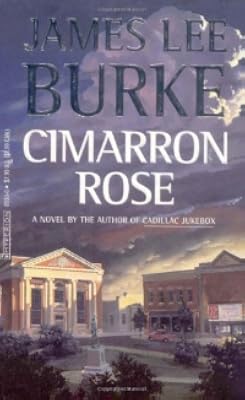
James Lee Burke, winner of two Edgar awards, is the author of nineteen previous novels, many of them "New York Times" bestsellers, including "Cimmaron Rose", Cadillac Jukebox", & "Sunset Limited". He & his wife divide their time between Missoula, Montana, & New Iberia, Louisiana. (Publisher Provided)
Some Editions
Awards and Honors
Awards
Series

Common Knowledge
- Canonical title
- The Glass Rainbow
- Original title
- The Glass Rainbow
- Original publication date
- 2010
- People/Characters
- Dave Robicheaux; Alafair Robicheaux; Clete Purcel (Cletus Purcel); Helen Soileau; Kermit Abelard; Molly Robicheaux (show all 15); Vidor Perkins; Herman Stanga; Robert Weingart; Emma Poche; Carolyn Blanchet; Koko Hebert; Bernadette Latiolais; Timothy Abelard; Jewel Laveau
- Important places
- New Iberia, Louisiana, USA; Bayou Teche, Louisiana, USA; Natchez, Mississippi, USA; St. Martinville, Louisiana, USA; Lafayette, Louisiana, USA; Louisiana, USA (show all 8); Mississippi, USA; USA
- Dedication
- To my cousins, Alafair Kane, Charlotte, Elrod, Karen McRae, and Mary Murdy
- First words
- The room I had rented in an old part of Natchez seemed more reflective of New Orleans than a river town in Mississippi.
- Quotations
- I know the dead are out there, beckoning from the shadows, perhaps pointing the way for the rest of us. But I don't fear them, and I conceive of them as friends whom I don't think I'll mind joining. It's not a bad way to be. ... (show all) page 216
- Last words
- (Click to show. Warning: May contain spoilers.)And that's the way it went in the year 2009, the two of us locked together on a gangplank on the banks of Bayou Teche, in New Iberia, Louisiana, praying for the pinkness of another dawn, like finding safe harbor inside a giant conch shell, the winds of youth and spring echoing eternally.
Classifications
Statistics
- Members
- 1,060
- Popularity
- 24,396
- Reviews
- 44
- Rating
- (4.17)
- Languages
- Danish, English, French, Norwegian
- Media
- Paper, Audiobook, Ebook
- ISBNs
- 39
- ASINs
- 13