On This Page
Description
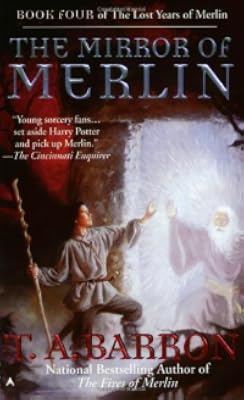
Through adventures involving a haunted marsh, talking trees, and the creature called the ballymag, the young wizard Merlin continues to experience both his growing powers and his essential humanity.Tags
Recommendations



Member Reviews
The Mirror of Merlin is the slowest of the series thus far. It wasn’t until about 150 pages into the book (only about a 250 page book) that things really began to happen. I just felt like this was a little slower than the plot should have moved. Maybe if something more important happened to Merlin at the beginning of the story it would have been more interesting. Basically, we just learn that he is trying to control his shadow, which he is having a hard time with and that his art of Leaping isn’t what it should be. Nonetheless, I stuck with it and am glad I did because the ending was pretty good.
However, I can’t say to much about what happens in the last 100 pages besides saying that Merlin does find the mirror. I’m not going to show more say what he finds in the mirror or what happens at the end of the book, so if you want to know you will have to read other reviews (no spoilers!). I will say that this book contains the most about the Arthurian legend in its last 100 pages.
I was really upset that Rhia wasn’t in this book. I really liked her character and thought it would have been more interesting to have her along than Hallia. I didn’t feel that Hallia served to much of a purpose in this novel other than telling Merlin about a great flaming tree in the center of the Marsh and showing him how to find it. She also isn’t anymore developed in this book than she was in the previous. We at least get to see her relationship with Merlin start to develop. The best thing was being able to see some more of the baby dragon!
A new creature introduced in this novel was the ballymag. He is pretty much the traveling companion of Merlin and Hallia on their adventure within the Marsh. I didn’t really like him that well. His speech was just really strange and annoying, and other than knowing his way around the Marsh I would say he didn’t serve a purpose. I think Barron could have worked a little harder with this little creature to make him more adoring like Shim. I don’t want another Shim in a different creature, I just want the author to spend as much time developing these new creatures as he did with Shim. That’s what makes Shim such a good character in the first book. Oh well! Maybe you will like the ballymag!
Anyway, I thought the book was pretty good. Just not as interesting or exciting as the others. I did enjoy the ending however, which bumped up my rating of the book. After reading all the others in the series you will want to read this as the ending of the book is important. Anyone who loves the series or who likes fantasy books should enjoy this book as well. Just be sure to read them in order! show less
However, I can’t say to much about what happens in the last 100 pages besides saying that Merlin does find the mirror. I’m not going to show more say what he finds in the mirror or what happens at the end of the book, so if you want to know you will have to read other reviews (no spoilers!). I will say that this book contains the most about the Arthurian legend in its last 100 pages.
I was really upset that Rhia wasn’t in this book. I really liked her character and thought it would have been more interesting to have her along than Hallia. I didn’t feel that Hallia served to much of a purpose in this novel other than telling Merlin about a great flaming tree in the center of the Marsh and showing him how to find it. She also isn’t anymore developed in this book than she was in the previous. We at least get to see her relationship with Merlin start to develop. The best thing was being able to see some more of the baby dragon!
A new creature introduced in this novel was the ballymag. He is pretty much the traveling companion of Merlin and Hallia on their adventure within the Marsh. I didn’t really like him that well. His speech was just really strange and annoying, and other than knowing his way around the Marsh I would say he didn’t serve a purpose. I think Barron could have worked a little harder with this little creature to make him more adoring like Shim. I don’t want another Shim in a different creature, I just want the author to spend as much time developing these new creatures as he did with Shim. That’s what makes Shim such a good character in the first book. Oh well! Maybe you will like the ballymag!
Anyway, I thought the book was pretty good. Just not as interesting or exciting as the others. I did enjoy the ending however, which bumped up my rating of the book. After reading all the others in the series you will want to read this as the ending of the book is important. Anyone who loves the series or who likes fantasy books should enjoy this book as well. Just be sure to read them in order! show less
Book Review
David C. Hall
EDCI 4120/5120
Barron, T.A. (1999). The mirror of merlin.
Grade Levels: 7-9
Category: Fantasy
Read-Alouds: pp. 22-30 (Chapter II-The Ballymag); 102-115 (Chapters XII-XIII—Two Silent/Ector); 173-190 (Chapters XX-XXI—The Mists of Time/Voices); 225-245 (Chapters XXV-XVII—Tunnels/A Test of Loyalties/Their Own Story)
Summary: A young Merlin, joined by his friend Hallia, the deer-woman and his own disobedient shadow, goes on a fantastic journey as he tried to find out what is causing the strange wickedness which is rising out of the mists of the isle of Fincayra. Along the way, he encounters the odd little Ballmag, the Marsh Ghouls, a young man who calls himself Ector, and a magical mirror that leads him to a show more meeting with the old wise Merlin, his own older self, who is the mentor and teacher to the young Arthur. This fateful meeting is followed by a battle with the evil witch, Nimue, from which Merlin and Hallia emerge triumphant.
Themes: The Mirror of Merlin explores the themes of life’s journey from young adulthood to maturity, and the importance of character and integrity along the way. Young Merlin faces many obstacles and is forced to make personal sacrifices that benefit others before he has the opportunity to meet and learn from his older, wiser self. The final chapters of the novel focus attention on the importance of every individual working to shape their own destiny through the everyday choices they make along the way.
Discussion Questions:
Early in the novel, Merlin and Hallia meet a young boy named Ector (who turns out to be the young Arthur). Did your perception of the boy’s character change when his true identity was revealed to the reader? If so, why?
Young Merlin meets his “older” self, which creates an interesting opportunity for the young Merlin to question his older, wiser and more worldly adult self. If you could meet your “younger self” (say, you at age 10) what advice would you give to the “younger-you”?
The older Merlin says (to the young Merlin), “You have a destiny, my lad, that much is true. But you also have choices. Yes—and choices are nothing less than the power of creation. Through
them, you can create your own life, your own future, your own destiny.” Do you believe this statement? What does it mean for the young Merlin, and what could it mean for you?
Reader Response: My initial response to the first 170 pages of The Mirror of Merlin was that it was a novel emphasizing style over substance, description over plot and story. The first three-quarters of the book feature interesting but sometimes trite characters, and in spite of battles and challenges faced by the novel’s protagonist, very little actually happens, and what does happen doesn’t always make a lot of sense, even in this fantasy world of the years before the wizard Merlin comes into contact with the young Arthur. Not having read any of the other novels in the series, I assumed that the author was rationing out Merlin’s “lost years” in part to extend the series. By Part III (Chapter XX) I found myself totally engrossed in the novels story and message, and begrudgingly appreciative of what the author was trying to accomplish with this series of novels for young adults.
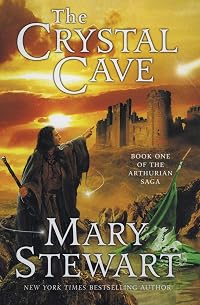
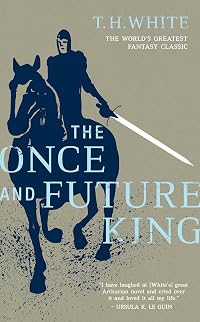
The story of King Arthur has proved remarkably malleable, adjusting (magically?) to adaptations into opera, musical comedy, drama, movies, cartoons and even comic books. In this series of novels on the lost years of Merlin, author T.A. Barron has created a praiseworthy addition to the already-voluminous Arthurian saga; these novels concentrating on Merlin’s life before Arthur complement the adult literature contributions of T.H. White’s The Book of Merlyn and Mary Stewart’s The Wicked Day, The Crystal Cave, The Hollow Hills and The Last Enchantment. show less
David C. Hall
EDCI 4120/5120
Barron, T.A. (1999). The mirror of merlin.
Grade Levels: 7-9
Category: Fantasy
Read-Alouds: pp. 22-30 (Chapter II-The Ballymag); 102-115 (Chapters XII-XIII—Two Silent/Ector); 173-190 (Chapters XX-XXI—The Mists of Time/Voices); 225-245 (Chapters XXV-XVII—Tunnels/A Test of Loyalties/Their Own Story)
Summary: A young Merlin, joined by his friend Hallia, the deer-woman and his own disobedient shadow, goes on a fantastic journey as he tried to find out what is causing the strange wickedness which is rising out of the mists of the isle of Fincayra. Along the way, he encounters the odd little Ballmag, the Marsh Ghouls, a young man who calls himself Ector, and a magical mirror that leads him to a show more meeting with the old wise Merlin, his own older self, who is the mentor and teacher to the young Arthur. This fateful meeting is followed by a battle with the evil witch, Nimue, from which Merlin and Hallia emerge triumphant.
Themes: The Mirror of Merlin explores the themes of life’s journey from young adulthood to maturity, and the importance of character and integrity along the way. Young Merlin faces many obstacles and is forced to make personal sacrifices that benefit others before he has the opportunity to meet and learn from his older, wiser self. The final chapters of the novel focus attention on the importance of every individual working to shape their own destiny through the everyday choices they make along the way.
Discussion Questions:
Early in the novel, Merlin and Hallia meet a young boy named Ector (who turns out to be the young Arthur). Did your perception of the boy’s character change when his true identity was revealed to the reader? If so, why?
Young Merlin meets his “older” self, which creates an interesting opportunity for the young Merlin to question his older, wiser and more worldly adult self. If you could meet your “younger self” (say, you at age 10) what advice would you give to the “younger-you”?
The older Merlin says (to the young Merlin), “You have a destiny, my lad, that much is true. But you also have choices. Yes—and choices are nothing less than the power of creation. Through
them, you can create your own life, your own future, your own destiny.” Do you believe this statement? What does it mean for the young Merlin, and what could it mean for you?
Reader Response: My initial response to the first 170 pages of The Mirror of Merlin was that it was a novel emphasizing style over substance, description over plot and story. The first three-quarters of the book feature interesting but sometimes trite characters, and in spite of battles and challenges faced by the novel’s protagonist, very little actually happens, and what does happen doesn’t always make a lot of sense, even in this fantasy world of the years before the wizard Merlin comes into contact with the young Arthur. Not having read any of the other novels in the series, I assumed that the author was rationing out Merlin’s “lost years” in part to extend the series. By Part III (Chapter XX) I found myself totally engrossed in the novels story and message, and begrudgingly appreciative of what the author was trying to accomplish with this series of novels for young adults.
The story of King Arthur has proved remarkably malleable, adjusting (magically?) to adaptations into opera, musical comedy, drama, movies, cartoons and even comic books. In this series of novels on the lost years of Merlin, author T.A. Barron has created a praiseworthy addition to the already-voluminous Arthurian saga; these novels concentrating on Merlin’s life before Arthur complement the adult literature contributions of T.H. White’s The Book of Merlyn and Mary Stewart’s The Wicked Day, The Crystal Cave, The Hollow Hills and The Last Enchantment. show less
Childhood read, good times, not great.
So good!
I don't really remember this book, but I do remember enjoying this series when I was a kid.
The Lost Years of Merlin is a good series. TA Barron does a great job with it.
(blank)
Members
- Recently Added By
Author Information

61+ Works 14,729 Members
Born Thomas Archibald Barron in 1952, author T. A. Barron grew up in Colorado's "ranch country". He graduated from Princeton University and also attended Oxford as a Rhodes Scholar. Before writing, Barron had a successful career as a venture capitalist manager in New York City. In 1989, Barron became a full time writer and conservationist. Many of show more his books incorporate nature and ecological concern into their themes, garnering him two Nautilus Visionary Book Awards in 2005 and 2007. He has also received International Reading Association and American Library Association awards for his works. He resides in Colorado with his wife, Currie and their children. show less
Some Editions
Awards and Honors
Series


Common Knowledge
- Canonical title
- The Mirror of Merlin
- Original title
- The Mirror of Merlin
- Alternate titles
- The Mirror of Fate
- Original publication date
- 1999
- People/Characters
- Merlin; Hallia; Ector
- Important places
- Fincayra (fictional)
- Epigraph
- In misty dreams and shadowed memories
Of fabled cities I have dwelt apace...
In crystal splendor I have spanned the seas
And clothed myself in legendary grace.
--from a sixth-century poem,
SONG OF DYFYDDIAETH
The world from which the stories came
lies still within the astral mists...
--W. B. Yeats - Dedication
- This book is dedicated to
M. Jerry Weiss
devoted friend of students, teachers, and wizards
with special appreciation to
Jennifer Herron - First words
- Many are the mirrors I have examined; many are the faces I have seen.
Classifications
Statistics
- Members
- 1,514
- Popularity
- 15,323
- Reviews
- 7
- Rating
- (3.99)
- Languages
- English, French, German, Portuguese
- Media
- Paper, Audiobook, Ebook
- ISBNs
- 26
- ASINs
- 11