
Cabeza de Vaca's Adventures in the Unknown Interior of America
by ÁLVAR NÚÑEZ CABEZA DE VACA (Author), Álvar Núñez Cabeza de Vaca
On This Page
Description
This edition of Álvar Núñez Cabeza de Vaca's Relación offers readers Rolena Adorno and Patrick Charles Pautz's celebrated translation of Cabeza de Vaca's account of the 1527 Pánfilo de Narváez expedition to North America. The dramatic narrative tells the story of some of the first Europeans and the first-known African to encounter the North American wilderness and its Native inhabitants. It is a fascinating tale of survival against the highest odds, and it highlights Native Americans show more and their interactions with the newcomers in a manner seldom seen in writings of the period. In this English-language edition, reproduced from their award-winning three-volume set, Adorno and Pautz supplement the engrossing account with a general introduction that orients the reader to Cabeza de Vaca's world. They also provide explanatory notes, which resolve many of the narrative's most perplexing questions. This highly readable translation fires the imagination and illuminates the enduring appeal of Cabeza de Vaca's experience for a modern audience. show lessTags
Recommendations

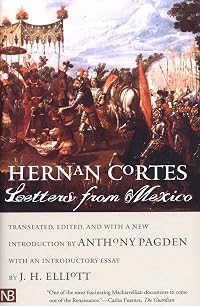
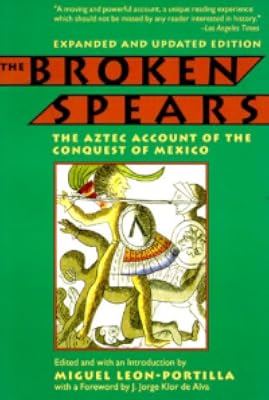



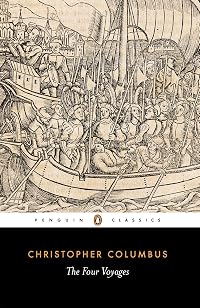

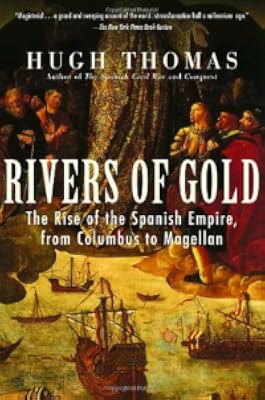























Member Recommendations

Cecrow Estebanico appears in both expeditions.

Member Reviews
Breathtaking, amazing. Cabeza de Vaca's first person account allowed me to glimpse what it was like for Europeans to encounter a hurricane for the first time, for example, or to realize how utterly helpless the Spaniards were, how lost, when they were first exploring new territory. I've watched Nicolás Echevarría's extraordinary film and have also read three biographies now of Cabeza de Vaca's experiences, but reading the man's own words moved me in a completely different way. I was worried the text would feel obscure but it's completely riveting, a life and death story told in a straightforward style:
One of the mounted men, Juan Velásquez, a native of Cuéllar, impatiently rode into the river. The violent current swept him from his show more saddle. He grabbed the reins but drowned with the horse. The subjects of that chief--whose name turned out to be Dulchanchellin--found the body of the beast and told us where in the stream below we likely would find the body of Cuéllar. They went to look for it. This death hit us hard, for until now not a man had been lost. The horse, meanwhile, furnished a supper for many that night.
Cyclone Covey's translation includes in-text notes, offset in square brackets, that are unobtrusive and extremely informative. show less
One of the mounted men, Juan Velásquez, a native of Cuéllar, impatiently rode into the river. The violent current swept him from his show more saddle. He grabbed the reins but drowned with the horse. The subjects of that chief--whose name turned out to be Dulchanchellin--found the body of the beast and told us where in the stream below we likely would find the body of Cuéllar. They went to look for it. This death hit us hard, for until now not a man had been lost. The horse, meanwhile, furnished a supper for many that night.
Cyclone Covey's translation includes in-text notes, offset in square brackets, that are unobtrusive and extremely informative. show less
The memoirs of a horrific, doomed settlement expedition to Mexico and Florida, told by one of the few survivors. Very strong Aguirre vibes here. One thing about being a surivor, you get to tell the story your way, and make it sound like it would have gone differently if everybody had just listened to you. One thing I will take away from this book: Don't walk into a village and steal their corn, then expect them not to come hunt you down.
There are three things that really struck me about this book.
First, it reads very much like Marco Polo does, simple sentences, slightly formulaic, and little description beyond “the people of this country go naked and have a strange custom”. This is partly because Cabeza de Vaca can’t write Spanish for anything and had to be simplified, and partly because he’s writing a manual and a map, of sorts, for the King of Spain.
Second, it really was one darn thing after another for him, at least how he tells it. First there’s a shipwreck, then they put in at the wrong spot, then they run out of food and have to eat the horses, and then they have to build a boat but don’t know how, and then their new boats get wrecked….
Third, for show more all that Cabeza de Vaca goes on about the uncivilized peoples he encounters, with their inexplicable customs and tendency to enslave him*, he also talks about how they’re willing to take him in and give him food when they have little, and how the Spanish should work with and accommodate their cultures rather than slaughtering them. (He also seems to be under the impression they thought he was a god most of the time, however.)
I’m still not sure what I think of the book. It’s curious, and an interesting if incomplete look at the American Southwest in the 16th century, but is it good? Would I recommend it? I guess if you’re interested, go for it. It’s a short read.
*It’s hard to tell from the text whether this is true slavery, most of the time, or just “well, you’re here and if we’re going to feed you, you need to contribute.” All the historical background I’ve read says slavery, but I wouldn’t be surprised if the writers were casually racist too.
6/10 show less
First, it reads very much like Marco Polo does, simple sentences, slightly formulaic, and little description beyond “the people of this country go naked and have a strange custom”. This is partly because Cabeza de Vaca can’t write Spanish for anything and had to be simplified, and partly because he’s writing a manual and a map, of sorts, for the King of Spain.
Second, it really was one darn thing after another for him, at least how he tells it. First there’s a shipwreck, then they put in at the wrong spot, then they run out of food and have to eat the horses, and then they have to build a boat but don’t know how, and then their new boats get wrecked….
Third, for show more all that Cabeza de Vaca goes on about the uncivilized peoples he encounters, with their inexplicable customs and tendency to enslave him*, he also talks about how they’re willing to take him in and give him food when they have little, and how the Spanish should work with and accommodate their cultures rather than slaughtering them. (He also seems to be under the impression they thought he was a god most of the time, however.)
I’m still not sure what I think of the book. It’s curious, and an interesting if incomplete look at the American Southwest in the 16th century, but is it good? Would I recommend it? I guess if you’re interested, go for it. It’s a short read.
*It’s hard to tell from the text whether this is true slavery, most of the time, or just “well, you’re here and if we’re going to feed you, you need to contribute.” All the historical background I’ve read says slavery, but I wouldn’t be surprised if the writers were casually racist too.
6/10 show less
Expecting a tale of a voyage and mainland travels, the horrors detailed by Cabeza de Vaca were a shock.
From near starvation and slavery through bizarre customs to betrayal by "Christians," to becoming faith healers,
this was captivating despite a ton of repletion.
Given Cabeza's stance here against Spanish slavery, it was bewildering to read that he was
eventually sent home in dishonor from South America for allegedly mistreating native people.
From near starvation and slavery through bizarre customs to betrayal by "Christians," to becoming faith healers,
this was captivating despite a ton of repletion.
Given Cabeza's stance here against Spanish slavery, it was bewildering to read that he was
eventually sent home in dishonor from South America for allegedly mistreating native people.
This is the horrifying misadventure of Spanish explorer Cabeza de Vaca. He relates to the Spanish king what befell his fellow Spaniards in their exploration of the new world. The large host he began with, upon reaching Florida, was eventually destroyed by shipwreck, disease, malnourishment and the predations of the indigenous inhabitants. After spending many years making his way up Florida, across the Gulf Coast, through northern Mexico, down the Pacific coast before finally making it home again, only he and three others managed to survive. His detail of the never before seen flora, fauna and descriptions of the various tribes he encountered provided a wealth of detail regarding customs and general anthropology. The survivors went from show more being abused by the natives to being perceived as medical men with the power to heal and were followed by adoring tribes everywhere they went. When finally encountering fellow Spaniards again, he was horrified by their enslavement and mistreatment of the Indians. He provides new meaning to the word survival as his detail of the suffering they endured and what they had to do to survive makes one ache for them. This would make an excellent adventure film as it touches upon so many aspects of culture clash and wonder. show less
A fascinating read. This version is a translation of Cabeza de Vaca's account, but also lets us know where his account differs from the joint account by the few survivors of the journey. It also recounts some of the details unearthed by Carl Sauer and Cleve Hallenbeck in the 1930s which confirm many of the details in the journal.
The details of how little they ate and still survived amaze me. Not to mention the fact that the tribes would eat mostly one food while it was in season, then move on to the next. I wish the book had included a map to follow his trail. The insights of a person who lived among the various tribes not as a conqueror, but as a slave give perspective. He managed to better his situation by learning the languages of show more several tribes so that he could act as a go-between and do trading back and forth. In that way he was able to gain a little, and he was on the path most of the time alone, so avoided the beatings which were common. He described many of the customs of the people, which seem bizarre to our materialistic culture, such as that when a tribe brought a healer among their neighbors, they would go and pilfer everything they wanted from the homes, then when the pilfered people took the healer to the next tribe, they would do the same. Since the tribes didn't live in one place long, but constantly moved to find the next food source, I don't imagine there was much to pilfer.
In the end, the four survivors became healers. Not by choice, but because the tribes they were among at the time decided that they were. So, praying for the people, and blowing on them, then making the sign of the cross, they would pray for healing with all their hearts, because if the people were not healed, they would put the healers to death! The people were healed, many times and miraculously, so that these four became a legend. Rather than take advantage of that though, they seem to have grown compassion for the natives. I believe that their own faith was strengthened and refined, or at least Cabeza de Vaca's was. They did use their power to make the tribes take them to the "Christians" further on (down in Mexico), but they made sure that each tribe had food distributed evenly, and that they did not leave one person without a blessing. When they arrived to the place where the "Christians" were, they found that the land was deserted, the natives had fled in terror because they didn't want to be enslaved. Cabeza de Vaca and the others went to the Governor at that place and protested about the treatment and misunderstandings. In this one place, that changed the way the natives were treated. At least until these four men went home to Spain.
In spite of our present feeling about the results of this period of history, I believe it is important to read this sort of first person material to gain perspective. In reading it, it becomes clear how the jumble of history can happen one person at a time through misunderstandings, differing personalities and distant uncomprehending governments with their own agendas. show less
The details of how little they ate and still survived amaze me. Not to mention the fact that the tribes would eat mostly one food while it was in season, then move on to the next. I wish the book had included a map to follow his trail. The insights of a person who lived among the various tribes not as a conqueror, but as a slave give perspective. He managed to better his situation by learning the languages of show more several tribes so that he could act as a go-between and do trading back and forth. In that way he was able to gain a little, and he was on the path most of the time alone, so avoided the beatings which were common. He described many of the customs of the people, which seem bizarre to our materialistic culture, such as that when a tribe brought a healer among their neighbors, they would go and pilfer everything they wanted from the homes, then when the pilfered people took the healer to the next tribe, they would do the same. Since the tribes didn't live in one place long, but constantly moved to find the next food source, I don't imagine there was much to pilfer.
In the end, the four survivors became healers. Not by choice, but because the tribes they were among at the time decided that they were. So, praying for the people, and blowing on them, then making the sign of the cross, they would pray for healing with all their hearts, because if the people were not healed, they would put the healers to death! The people were healed, many times and miraculously, so that these four became a legend. Rather than take advantage of that though, they seem to have grown compassion for the natives. I believe that their own faith was strengthened and refined, or at least Cabeza de Vaca's was. They did use their power to make the tribes take them to the "Christians" further on (down in Mexico), but they made sure that each tribe had food distributed evenly, and that they did not leave one person without a blessing. When they arrived to the place where the "Christians" were, they found that the land was deserted, the natives had fled in terror because they didn't want to be enslaved. Cabeza de Vaca and the others went to the Governor at that place and protested about the treatment and misunderstandings. In this one place, that changed the way the natives were treated. At least until these four men went home to Spain.
In spite of our present feeling about the results of this period of history, I believe it is important to read this sort of first person material to gain perspective. In reading it, it becomes clear how the jumble of history can happen one person at a time through misunderstandings, differing personalities and distant uncomprehending governments with their own agendas. show less
I can't add much to tinkettleinn's review of this book. De Vaca and his crew are essentially murderous Keystone Kops who more or less aimlessly wander around Southeastern America 500 years ago in search of food, shelter, and (unwilling) native guides while trying to find a way home. Along the way they enslave, murder, kidnap, torture, and steal all of the food of the natives (when they have the upper hand), and are themselves enslaved by, or work at minor jobs for, the natives (when they don't have the upper hand). De Vaca and his crew lose and find one-another over and over again throughout the narrative, bumbling around under the author and a few of his compatriots almost accidentally find their way back to "civilization."
De Vaca's show more account is not a pleasant read, but it gives insight into the biased world-view of a Spanish adventurer and the lives of the natives living in Southeastern America 500 years ago. It is an interesting read, and educational, but not light or enjoyable by any means. My star rating reflects a compromise between 5 stars for educational/historic merit and 1 star for enjoyable/happy reading. show less
De Vaca's show more account is not a pleasant read, but it gives insight into the biased world-view of a Spanish adventurer and the lives of the natives living in Southeastern America 500 years ago. It is an interesting read, and educational, but not light or enjoyable by any means. My star rating reflects a compromise between 5 stars for educational/historic merit and 1 star for enjoyable/happy reading. show less
Members
- Recently Added By
Author Information

6+ Works 1,208 Members
Some Editions
Awards and Honors
Series
Belongs to Publisher Series
Work Relationships
Is contained in
Contains
Inspired
Common Knowledge
- Canonical title
- Cabeza de Vaca's Adventures in the Unknown Interior of America
- Original title
- Naufragios
- Original publication date
- 1542
- People/Characters
- Alvar Nuñez Cabeza de Vaca
- Important places
- Florida, USA; Pacific Ocean
- Related movies
- Cabeza de Vaca (1991 | IMDb)
- First words
- On the twenty-seventh day of the month of June 1527 Governor Panfilo de Navaez departed from the port of San Lucar de Barramed, with power and mandate from Your Majesty to conquer and govern the provinces that extend from the... (show all) River of the Palms to the Cape of Florida, which lie on the mainland.
- Last words
- (Click to show. Warning: May contain spoilers.)The fourth was Estevanico, an Arab negro from Azamor.
- Original language
- Spanish
Classifications
- Genres
- Nonfiction, History, Travel, General Nonfiction, Biography & Memoir
- DDC/MDS
- 970.01 — History & geography History of North America History of North America North America -1599
- LCC
- E125 .N9 .A3 — History of the United States America Discovery of America and early explorations Post-Columbian period. El Dorado
- BISAC
Statistics
- Members
- 1,160
- Popularity
- 21,657
- Reviews
- 24
- Rating
- (3.78)
- Languages
- 8 — Chinese, Dutch, English, French, German, Italian, Portuguese, Spanish
- Media
- Paper, Audiobook, Ebook
- ISBNs
- 87
- UPCs
- 2
- ASINs
- 20
