On This Page
Description
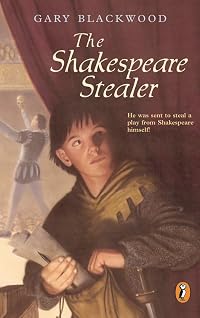
A young orphan boy is ordered by his master to infiltrate Shakespeare's acting troupe in order to steal the script of "Hamlet," but he discovers instead the meaning of friendship and loyalty.Tags
Recommendations










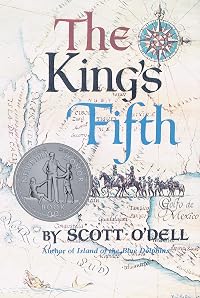
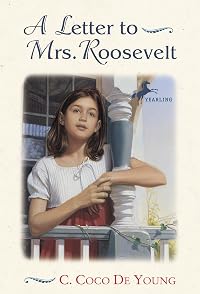
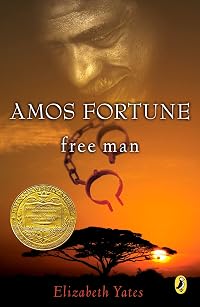
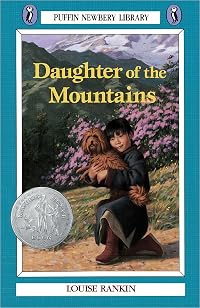

Member Recommendations
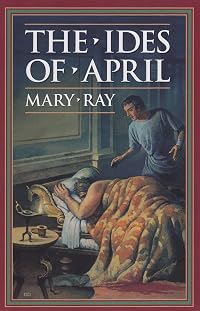
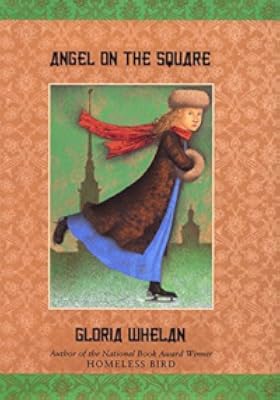
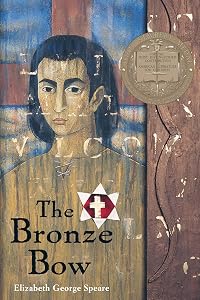
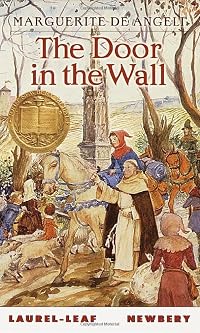
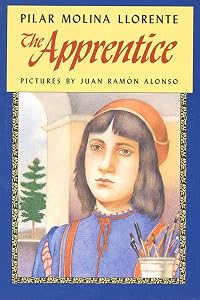
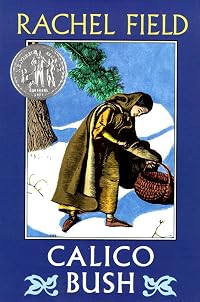
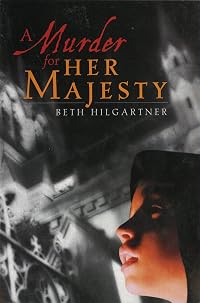
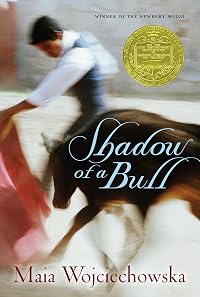
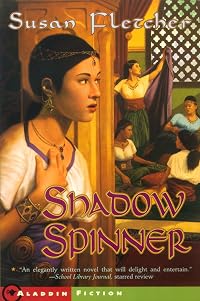
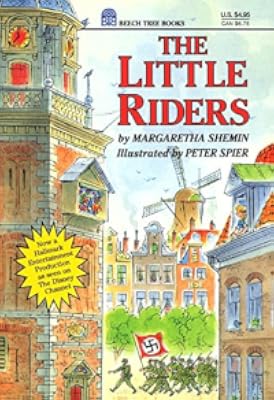
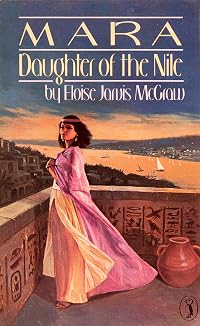
FutureMrsJoshGroban Another story set in Elizabethan London, but the main characters are a precocious girl and Christoper Marlowe.
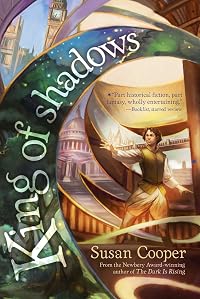
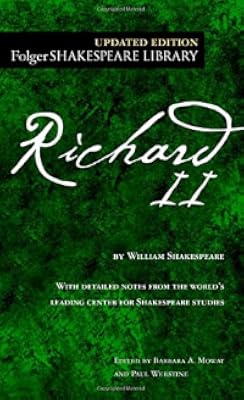
Caramellunacy Both stories are about a boy becoming involved in the theater - in particular with Shakespeare's theater. While Shakespeare Stealer is straight historical and King of Shadows is a time-slip novel, both will appeal to those interested in the theater.
Member Reviews
What would you do if you were stuck in a world trapped around lies? Would you leave? Would you stay? Would you just act?
In The Shakespeare Stealer by Gary Blackwood Widge, an orphan is put to the ultimate test when he is offered everything he’s ever dreamed until he meets some unexpected friends. For most of his life, Widge lived with a doctor he called Dr. Bright, but when a strange man showed up one day he was instantly pulled aside for money, as if he was trash being thrown away for something shiny and new. What this man didn’t tell him was that all he wanted was the play Hamlet by Mr. Shakespeare for back in the 1600s most play were not available for the public. So, all Widge had to do was was write down the play, give it to show more his master, and get all of his dreams and wishes, but once inside the Globe Theater, Widge is enthralled by the play and taken in by the company as an apprentice. Soon Widge is torn by his fear of his master, his loyalty to the people who have treated him as a friend, and his growing desire to continue as an actor. As full of twists and turns, this entertaining novel is rich with period details, inspiring characters, and drama which kept me wondering one question throughout. Will Widge come through and deliver the play for his master or continue to learn the fine arts of theater?
While reading this book I could picture a movie in my head. My favorite character was one of the actors part of the theater, Julian or more like Julia. She didn’t let anything get in her way although she was a girl and girls aren’t allowed to be apart of any arts such as drama and music by order of the Queen. But, she pretended to be a boy so she could follow her dream, which was quite inspiring. In addition, throughout the novel, I loved the old fashioned country language along with proper londoner language that was descriptive, fun, yet easy to understand. In conclusion, this read was rather gripping and extremely entertaining with some funny bits too, so I would really recommend it to anyone who likes some history with great friendships with a hard decision. show less
In The Shakespeare Stealer by Gary Blackwood Widge, an orphan is put to the ultimate test when he is offered everything he’s ever dreamed until he meets some unexpected friends. For most of his life, Widge lived with a doctor he called Dr. Bright, but when a strange man showed up one day he was instantly pulled aside for money, as if he was trash being thrown away for something shiny and new. What this man didn’t tell him was that all he wanted was the play Hamlet by Mr. Shakespeare for back in the 1600s most play were not available for the public. So, all Widge had to do was was write down the play, give it to show more his master, and get all of his dreams and wishes, but once inside the Globe Theater, Widge is enthralled by the play and taken in by the company as an apprentice. Soon Widge is torn by his fear of his master, his loyalty to the people who have treated him as a friend, and his growing desire to continue as an actor. As full of twists and turns, this entertaining novel is rich with period details, inspiring characters, and drama which kept me wondering one question throughout. Will Widge come through and deliver the play for his master or continue to learn the fine arts of theater?
While reading this book I could picture a movie in my head. My favorite character was one of the actors part of the theater, Julian or more like Julia. She didn’t let anything get in her way although she was a girl and girls aren’t allowed to be apart of any arts such as drama and music by order of the Queen. But, she pretended to be a boy so she could follow her dream, which was quite inspiring. In addition, throughout the novel, I loved the old fashioned country language along with proper londoner language that was descriptive, fun, yet easy to understand. In conclusion, this read was rather gripping and extremely entertaining with some funny bits too, so I would really recommend it to anyone who likes some history with great friendships with a hard decision. show less
When I saw that this book was going to be my daughter's 6th grade summer reading book, I was pleased as punch. As an English major dork, I adore Shakespeare. I have been known to read the plays for pleasure. And I thought that exposing kids to Shakespeare in a roundabout way was sheer genius. All this before I even read the book. So it was delightful to discover that the book was fun and entertaining too.
The premise of the book is that Widge is a lowly apprentice who has been taught a version of shorthand by one of his masters. He has never known family or caring, just having been a means to an end in the indentured servitude that has comprised his entire young life so far. His latest master, a genial seeming man, has ordered Widge to show more steal Shakespeare's Hamlet by attending the play and transcribing it as it occurs. And to make certain that Widge does as he's bidden, he sends the rather scary Falconer with Widge as a sort of enforcer. But Widge doesn't manage to write down the play because he is too engrossed in the pageantry and wonder of the world of imagination. In failing to steal Hamlet, Widge somehow ends up as an apprentice in the Globe theater, falling further and further under the spell of acting, becoming a valued part of the theater family, and escaping the menacing Falconer. But he can't escape his task forever.
Blackwood has created a credible cast of characters and set them in a nicely rendered London in the time of Shakespeare. He has provided an intriguing and easy entry into a world that helps to define the literary world today and has done it without condescending to kids or under-estimating their intelligence. The tension that Widge feels about whether or not Falconer will come to claim him and punish him for his master is conveyed nicely to the middle grade reader. Blackwood's real triumph here though, is in weaving the underlying threads of right versus wrong (embodied here by the idea of intellectual property) and the importance of family (natural or found) in with such a meticulously drawn historical world. He imparts little asides about the times in almost every scene of the book but these instructive bits are so well integrated into the story that they never seem forced or out of place. Really, this is the sort of book I would have loved as a middle grade reader.
When I asked R. what she thought about the book, she gave me a long plot summary and then said, "I liked that he [the author] made them talk like they would and that there were secrets that some people didn't tell." She says she recommends it and so do I. show less
The premise of the book is that Widge is a lowly apprentice who has been taught a version of shorthand by one of his masters. He has never known family or caring, just having been a means to an end in the indentured servitude that has comprised his entire young life so far. His latest master, a genial seeming man, has ordered Widge to show more steal Shakespeare's Hamlet by attending the play and transcribing it as it occurs. And to make certain that Widge does as he's bidden, he sends the rather scary Falconer with Widge as a sort of enforcer. But Widge doesn't manage to write down the play because he is too engrossed in the pageantry and wonder of the world of imagination. In failing to steal Hamlet, Widge somehow ends up as an apprentice in the Globe theater, falling further and further under the spell of acting, becoming a valued part of the theater family, and escaping the menacing Falconer. But he can't escape his task forever.
Blackwood has created a credible cast of characters and set them in a nicely rendered London in the time of Shakespeare. He has provided an intriguing and easy entry into a world that helps to define the literary world today and has done it without condescending to kids or under-estimating their intelligence. The tension that Widge feels about whether or not Falconer will come to claim him and punish him for his master is conveyed nicely to the middle grade reader. Blackwood's real triumph here though, is in weaving the underlying threads of right versus wrong (embodied here by the idea of intellectual property) and the importance of family (natural or found) in with such a meticulously drawn historical world. He imparts little asides about the times in almost every scene of the book but these instructive bits are so well integrated into the story that they never seem forced or out of place. Really, this is the sort of book I would have loved as a middle grade reader.
When I asked R. what she thought about the book, she gave me a long plot summary and then said, "I liked that he [the author] made them talk like they would and that there were secrets that some people didn't tell." She says she recommends it and so do I. show less
A historical novel set at the Golden Theatre during Shakespeare’s reign there!
The Story.
I’ve never had a proper name – never known me mum or dad, neither. The only name I’ve had in this life was called me at the orphanage – Widge. It’s the name I’ve been known by for all me fourteen years, and it tells a truthsome tale – that there are none who know and love me.
Dr. Bright took me in when I was a puny lad of seven. He seemed favorably disposed towards me and even taught me to read and write a special code of shorthand. I soon kenned for what purpose he had taught me this skill – it was only that I might aid him in stealing the works of others. But what cared I for the right or wrong of it? If I did not copy, I was not show more fed. So I copied.
Then, in my fourteenth year, a man came. He was altogether fierce, but he offered my master ten pounds for me and he – having no special affection for me – gladly relinquished me for so large a sum. I soon learned that my new master, Simon Black, wanted me for a particular purpose. He ran an acting company and he wanted me to attend the premieres of William Shakespeare’s new plays and take them down word for word, that way his troupe of players might stay abreast of the hottest London plays. I saw no reason to refuse, and thus it was that I was conducted to London and set in the performance of Hamlet…
But as I meet the players and Mister Shakespeare himself, I begin to wonder – is what I’m doing right?
Discussion.
I picked this book up in 2012, recognizing it from its popularity on Goodreads. I decided I would read it while snobbishly agreeing with myself that I probably wouldn’t like it because, after all, it was liked by the masses! And my tastes were obviously far superior to that of the masses! I ended up loving it. What a good lesson for my snobbish little nose.
In The Shakespeare Stealer, Gary Blackwood has created an utterly unique story. I’ve read lots of books in which some young character has a fleeting and highly forced encounter with a historical figure. But none of them have been so riveting, so real as The Shakespeare Stealer. TSS fully immerses its readers into not only Shakespeare’s historical and geographical setting, but also the breadth and majesty of Shakespeare’s play Hamlet. Because through a course of events, Widge joins Shakespeare’s troupe of actors and begins to act in the play himself!
And then there’s another thing – Widge’s progression as a character. When we first meet Widge, he has been tossed from an orphanage into the hands of an unscrupulous master. He has known no love or familial connection and has never been taught even the most basic concepts of right and wrong. He does what is profitable for himself and cares little as to whether his actions are good or bad. It is at this juncture that he is sent to London to steal Hamlet.
First, Widge is entranced with the majesty of the play – the beauty of the words, and the breathtaking excitement of the duels. After he loses his notebook in the theatre, his only choice is to join the company while he tries to recover it. The other players swarm around him, offering him their friendship and a sense of belonging. At first, Widge doesn’t know how to respond to the goodwill being offered him – he is accustomed to being treated only with slurs and kicks. But he grows into not only his role as an extra, but also his role as a friend. At this point, as he witnesses all of the hard work that goes on to make a play successful and the fierce loyalties amongst the players, he begins to question himself. Is it right to take another man’s work without paying for it? Am I justified in stealing a play just because I am afraid of what might happen to me if I don’t? These people have offered me there friendship – what do I owe to them based on the relationships we have established?
I don’t want to give away the story, but I’ll just say that I was pleased with the moral progression that Widge demonstrated. : )
In Shakespeare’s time, it was considered shameful for a woman to play on the stage, so boys played the part of women, wearing dresses and wigs and speaking in a high voice. Towards the end of the story we learn that one of the boys who plays women’s parts is actually a girl who disguised herself as a boy to get into the troupe so that she could pretend to be a woman! #confusing
Widge says on page 46 that he’s heard of a sport called “bear-baiting”. He briefly describes it and concludes that “it did not sound very sporting to me.” [pg. 46] In one of the last chapters, two men duel and one of them is killed.
In one brief conversation, the apprentices puzzle over why Shakespeare is so pensive. One boy suggests that he is brooding over a thwarted love affair, to which another of the boys indignantly responds that Shakespeare is already married.
Conclusion. Fine – superb. I loved this story and I think that lovers of classic literature will enjoy it as well.
Visit The Blithering Bookster to read more reviews!
www.blitheringbookster.com show less
The Story.
I’ve never had a proper name – never known me mum or dad, neither. The only name I’ve had in this life was called me at the orphanage – Widge. It’s the name I’ve been known by for all me fourteen years, and it tells a truthsome tale – that there are none who know and love me.
Dr. Bright took me in when I was a puny lad of seven. He seemed favorably disposed towards me and even taught me to read and write a special code of shorthand. I soon kenned for what purpose he had taught me this skill – it was only that I might aid him in stealing the works of others. But what cared I for the right or wrong of it? If I did not copy, I was not show more fed. So I copied.
Then, in my fourteenth year, a man came. He was altogether fierce, but he offered my master ten pounds for me and he – having no special affection for me – gladly relinquished me for so large a sum. I soon learned that my new master, Simon Black, wanted me for a particular purpose. He ran an acting company and he wanted me to attend the premieres of William Shakespeare’s new plays and take them down word for word, that way his troupe of players might stay abreast of the hottest London plays. I saw no reason to refuse, and thus it was that I was conducted to London and set in the performance of Hamlet…
But as I meet the players and Mister Shakespeare himself, I begin to wonder – is what I’m doing right?
Discussion.
I picked this book up in 2012, recognizing it from its popularity on Goodreads. I decided I would read it while snobbishly agreeing with myself that I probably wouldn’t like it because, after all, it was liked by the masses! And my tastes were obviously far superior to that of the masses! I ended up loving it. What a good lesson for my snobbish little nose.
In The Shakespeare Stealer, Gary Blackwood has created an utterly unique story. I’ve read lots of books in which some young character has a fleeting and highly forced encounter with a historical figure. But none of them have been so riveting, so real as The Shakespeare Stealer. TSS fully immerses its readers into not only Shakespeare’s historical and geographical setting, but also the breadth and majesty of Shakespeare’s play Hamlet. Because through a course of events, Widge joins Shakespeare’s troupe of actors and begins to act in the play himself!
And then there’s another thing – Widge’s progression as a character. When we first meet Widge, he has been tossed from an orphanage into the hands of an unscrupulous master. He has known no love or familial connection and has never been taught even the most basic concepts of right and wrong. He does what is profitable for himself and cares little as to whether his actions are good or bad. It is at this juncture that he is sent to London to steal Hamlet.
First, Widge is entranced with the majesty of the play – the beauty of the words, and the breathtaking excitement of the duels. After he loses his notebook in the theatre, his only choice is to join the company while he tries to recover it. The other players swarm around him, offering him their friendship and a sense of belonging. At first, Widge doesn’t know how to respond to the goodwill being offered him – he is accustomed to being treated only with slurs and kicks. But he grows into not only his role as an extra, but also his role as a friend. At this point, as he witnesses all of the hard work that goes on to make a play successful and the fierce loyalties amongst the players, he begins to question himself. Is it right to take another man’s work without paying for it? Am I justified in stealing a play just because I am afraid of what might happen to me if I don’t? These people have offered me there friendship – what do I owe to them based on the relationships we have established?
I don’t want to give away the story, but I’ll just say that I was pleased with the moral progression that Widge demonstrated. : )
In Shakespeare’s time, it was considered shameful for a woman to play on the stage, so boys played the part of women, wearing dresses and wigs and speaking in a high voice. Towards the end of the story we learn that one of the boys who plays women’s parts is actually a girl who disguised herself as a boy to get into the troupe so that she could pretend to be a woman! #confusing
Widge says on page 46 that he’s heard of a sport called “bear-baiting”. He briefly describes it and concludes that “it did not sound very sporting to me.” [pg. 46] In one of the last chapters, two men duel and one of them is killed.
In one brief conversation, the apprentices puzzle over why Shakespeare is so pensive. One boy suggests that he is brooding over a thwarted love affair, to which another of the boys indignantly responds that Shakespeare is already married.
Conclusion. Fine – superb. I loved this story and I think that lovers of classic literature will enjoy it as well.
Visit The Blithering Bookster to read more reviews!
www.blitheringbookster.com show less
A quick YA read that reminded me of Shakespeare in Love. It would be a great introduction to Shakespeare for a middle school kid. Widge is an orphan who has yet to find a kind family. He is tasked with stealing a script of Hamlet and discovers a love of acting instead. There’s a quick pace with a few twists and it’s an easy read. I’d recommend for 5th or 6th grade.
I found this an engaging romp, but not much more.
I did like the bits that compared the country wight's language to that of the city boys, and the wordplay and jests of the players, but the rest feels pretty forgettable to me. I also wanted the playwright to have a larger role.
Oh, and I did appreciate learning why the plays were not always published, and therefore why we have naysayers doubting Shakespeare's authorship of them.
I do recommend it for interested youngsters and educators.
I did like the bits that compared the country wight's language to that of the city boys, and the wordplay and jests of the players, but the rest feels pretty forgettable to me. I also wanted the playwright to have a larger role.
Oh, and I did appreciate learning why the plays were not always published, and therefore why we have naysayers doubting Shakespeare's authorship of them.
I do recommend it for interested youngsters and educators.
This quick and easy first person coming of age (almost?) story was almost fun, a little bit Oliver Twist-ish, and very moralizing. The interesting flip-side to the benign neglect of his orphanage was the recurring theme of right-from-wrong having been whatever filled one's belly, and learning how or why loyalty and not lying were good things. And not stealing. Felt a bit judgmental without trying to look judgmental, and the lucky orphan finds family story felt a bit off to me, for some reason. Maybe just my cynical anger; sorry.
The Shakespeare Stealer is a historical fiction adventure, featuring Widge, a poor orphan boy, recently apprenticed to first one, and then another unsavory master. As a "prentice," Widge is unfamiliar with the concepts of freedom, choice, honesty, and friendship. For Widge, life is merely a series of events over which he has no control; he survives them, or he does not.
When Widge's new master gives him the task of stealing William Shakespeare's latest play, The Tragedy of Hamlet: Prince of Denmark, he thinks of it as nothing more than another of life's turns. He will steal the play or be severely beaten. Only after Widge ingratiates himself with the Lord Chamberlain's Men, Shakespeare's acting company, does he realizes that, while life show more may be a grand stage upon which we are all actors, we have the ability to play our part as we choose.
The historical details are threaded into the story creating a rich tapestry which includes period dialogue, anecdotes about Shakespeare and his contemporaries, and an insider's view of theater life in Elizabethan London. The message of honesty, loyalty and friendship may be a bit heavy-handed, but the story line is full of intrigue and adventure; the action is fast-paced and exciting. My library has this book in the young adult (YA) section, but it would make a fine choice for grade 6 and up.
An ALA Notable Children's Book Award winner show less
When Widge's new master gives him the task of stealing William Shakespeare's latest play, The Tragedy of Hamlet: Prince of Denmark, he thinks of it as nothing more than another of life's turns. He will steal the play or be severely beaten. Only after Widge ingratiates himself with the Lord Chamberlain's Men, Shakespeare's acting company, does he realizes that, while life show more may be a grand stage upon which we are all actors, we have the ability to play our part as we choose.
The historical details are threaded into the story creating a rich tapestry which includes period dialogue, anecdotes about Shakespeare and his contemporaries, and an insider's view of theater life in Elizabethan London. The message of honesty, loyalty and friendship may be a bit heavy-handed, but the story line is full of intrigue and adventure; the action is fast-paced and exciting. My library has this book in the young adult (YA) section, but it would make a fine choice for grade 6 and up.
An ALA Notable Children's Book Award winner show less
Members
- Recently Added By
Lists

Sonlight Books
1,487 works; 25 members

Historical Fiction
889 works; 91 members

Novels featuring Orphans
76 works; 10 members

Books About Boys
175 works; 15 members

GCS 6th grade summer reading list
171 works; 4 members

Read Alouds for CC Cycle 2
17 works; 2 members

Torchlight & Build Your Library Level 2
30 works; 1 member
Author Information

40+ Works 5,894 Members
Awards and Honors
Awards
Distinctions
Series

Work Relationships
Is contained in
Common Knowledge
- Original publication date
- 1998
- People/Characters
- Widge; William Shakespeare; Julian
- Important places
- London, England, UK
- Dedication
- For Tegan, my only collaboration - and a masterpiece
- First words
- I never knew my mother or my father.
- Quotations
- Though I did not care for the company of dead folk, it was easier to make my way through them. I slipped as quietly as I could between headstones and crypts. The earth was soft from the rain and, in places, from being recentl... (show all)y turned up. It gave way slightly under my feet, making me fear that if I did not move quickly, I would sink down into the realm of the dead.
- Last words
- (Click to show. Warning: May contain spoilers.)But the ones that had made the most difference to me were the words I had heard before and never fully understood their import - words such as honesty and trust, loyalty and friendship. And family. And home.
Classifications
Statistics
- Members
- 2,768
- Popularity
- 6,634
- Reviews
- 31
- Rating
- (3.64)
- Languages
- Chinese, English, German
- Media
- Paper, Audiobook, Ebook
- ISBNs
- 26
- UPCs
- 1
- ASINs
- 6