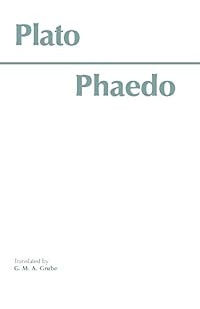
Phaedo
by Plato
On This Page
Description
The Phaedo is acknowledged to be one of Plato's masterpieces, showing him both as a philosopher and as a dramatist at the height of his powers. For its moving account of the execution of Socrates, the Phaedo ranks among the supreme literary achievements of antiquity. It is also a documentcrucial to the understanding of many ideas deeply ingrained in western culture, and provides one of the best introductions to Plato's thought. This new edition is eminently suitable for readers new to Plato, show more offering a readable translation which is accessible without the aid of a commentary andassumes no prior knowledge of the ancient Greek world or language. show lessTags
Recommendations















Member Reviews
Platão é sempre uma delícia de ler, dos filósofos um dos mais literários, imagine então o Fédon tido como seu diálogo mais abertamente literário, então imagine o quão delicinha essa nova tradução da @penguincompanhia é, que eliminou todos aqueles tu e vós das traduções clássicas e deixou mais próximo de um diálogo real de gente como a gente na contemporaneidade, além de tudo é lotado de notas e com uma introdução preciosa do Gabriele Cornelli. Imperdível tanto para filósofos quanto para literatos, além de qualquer um que queira estar afiado com o método socrático.
The lovers of learning know that when philosophy gets hold of their soul, it is imprisoned in and clinging to the body, and that it is forced to examine other things through it as through a cage and not by itself, and that it wallows in every kind of ignorance. Philosophy sees that the worst feature of this imprisonment is that it is due to desires, so that the prisoner himself is contributing to his own incarceration most of all. [...] Philosophy then persuades the soul to withdraw from the senses in so far as it is not compelled to use them and bids the soul to gather itself together by itself, to trust only itself and whatever reality, existing by itself, the soul by itself understands, and not to consider as true whatever it show more examines by other means, for this is different in different circumstances and is sensible and visible, whereas what the soul itself sees is intelligible and invisible. The soul of the true philosopher thinks that this deliverance must not be opposed and so keeps away from pleasures and desires and pains as far as he can.
Some beautiful writing and hopeful arguments in the face of death, but not a wholly convincing justification for believing in the immortality of the soul. The theory of Forms gets a full treatment here for anyone looking to learn more about Plato's metaphysics. And one can't help but feeling a little twinge of melancholy mixed with admiration when Socrates blithely drinks the hemlock and tells everyone to stop their crying, by Zeus! show less
Some beautiful writing and hopeful arguments in the face of death, but not a wholly convincing justification for believing in the immortality of the soul. The theory of Forms gets a full treatment here for anyone looking to learn more about Plato's metaphysics. And one can't help but feeling a little twinge of melancholy mixed with admiration when Socrates blithely drinks the hemlock and tells everyone to stop their crying, by Zeus! show less
This is the final dialogue of Socrates before he is given poison to die for his crime of 'corrupting the youth' with philosophy, and exercising his speech. This is the first of the longer works of Plato in the volume I am reading, which is edited by John M Cooper. This longer dialogue allows more room to explore a couple different ideas in depth. The content of the majority of the dialogue is whether or not the soul is immortal. The immortality of the soul is explored through three different epistemic/metaphysical theories. They are the theory of recollection, the theory of forms, and the theory of opposites, along with a general stylistic emphasis on dialogue as a way to do philosophy, but there is no formal explanation of dialogue, show more unlike how the theories are formally explained.
Theory of Recollection - A metaphysical belief that we understand abstract ideas like beauty and justice, and more, because our soul's have experienced these things in their true form before our souls took a material form, and essentially states that all learning is essentially remembering what the soul already knew before birth. Now I don't believe the metaphysical claims of this belief, I do think it provides a decent proto-framework of how memory functions, in which we recall previous knowledge and experiences.
Theory of Opposites - A theory that posits that certain things, attributes, and characteristics have an opposite relationship to one another. This text often uses the idea that qualities we would describe as large, have an opposite relationship to qualities we would describe as small. A big man came from a small man, because the big man was once a small man before he gained in size, through muscle and fat, and the theory also holds for the opposite in this example. Where a big man can become a small man by losing weight. If we were to think through this epistemic model today, It is probably most similar to how we use contrast as a way to understand and engage with the world around us through comparison of differing states, measurements and, and even contrasting themes in literature.
Theory of Forms - There is a throughline of the theory of forms through out the text, and I think it is directly mentioned/explained near the end of the text, but it is not as discussed as much as the theory of recollection and opposites is. I am not too concerned summarizing this, because I know it will appear in more detail in Plato's later works.
Below is a collection of some of the quotes that struck me, I liked, or had some thoughts on.
"I am afraid that other people do not realize that the one aim of those who practice philosophy in the proper manner is to practice for dying and death. Now if this is true, it would be strange indeed if they were eager for this all their lives and then resent it when what they have wanted and practiced for a long time comes upon them" 64a - I think this is in reference to the Greek idea of Memento Mori, a belief that it is good to think of one's death often. I know this is a prominent feature of Stoicism. I don't know much about Memento Mori, but just wanted to make note of it. If I try to engage with this way of thinking about philosophy, I land on some sort of existential interpretation, where I ponder my insignificance, which leads me to a position of humility. I also want to point out that this is different from Marx's famous quote about philosophy "The philosopher's have only interpreted the world in various ways, the point however is to change it." While I must admit that I am just beginning my journey into reading philosophical works, and I lack context for either definition, my intuitive sense tells me that I do not think that both of these definitions of philosophy are incompatible when comparing them.
"Are not even the poets forever telling us that we do not see or hear anything accurately, and surely if those two physical senses are not clear or precise, our other sense can hardly be accurate, as they are all inferior to these." 65b - Just a general call to be careful reflecting on first hand experience gathered by our sense organs and attribute it as a reliable method to find reason and wisdom.
"The lovers of learning know that when philosophy gets hold of their soul, it is imprisoned in and clinging to the body, and that it is forced to examine other things through it as through a cage and not by itself, and that it wallows in every kind of ignorance. Philosophy sees that the worst feature of this imprisonment is that it is due to desires, so that the prisoner himself is contributing to his own incarceration most of all. As I say, the lovers of learning know that philosophy gets hold of their soul when it is in that state, then gently encourages it and tries to free it by showing them that investigation through the eyes is full of deceit, as is that through the ears and other senses. Philosophy then persuades the soul to withdraw from the senses in so far as it is not compelled to use them and bids the soul to gather itself together by itself, to trust only itself and whatever reality, existing by itself, the soul by itself understands, and not to consider as true whatever it examines by other means, for this is different in different circumstances and is sensible and visible, whereas what the soul itself sees is intelligible and invisible." 82e-83b - THIS, THIS RIGHT HERE IS WHAT I WANT TO SCREAM AT EVERYONE I KNOW...I wish everyone had this realization of the human experience. I mourn those who have no internal world and methodology to examine the world around them.
"You seem to think me inferior to the swans in prophecy. They sing before too, but when they realize that they must die they sing most and most beautifully, as they rejoice that they are about to depart to join the god whose servants they are. But men, because of their own fear of death, tell lies about the swans and say that they lament their death and sing in sorrow. They do not reflect that no bird sings when it is hungry or cold or suffers in any other way, neither the nightingale nor the swallow nor the hoopoe, though they do say that these sing laments when in pain. Nor do the swans, but I believe that as they belong to Apollo, they are prophetic, have knowledge of the future and sing of the blessing of the underworld, sing and rejoice on that day beyond what they did before. As I believe myself to be a fellow servant with the swans and dedicated to the same god, and have received from my master a gift of prophecy not inferior to theirs, I am no more despondent than they on leaving life. Therefore, you must speak and ask whatever you want as long as the authorities allow it." 84e-85b
"We should not become misologues, as people become misanthropes. There is no greater evil one can suffer than to hate reasonable discourse. Misology and misanthropy arise in the same way. Misanthropy comes when a man without knowledge or skill has placed great trust in someone and believes him to be altogether truthful, sound and trustworthy; then, a short time afterwards he finds him to be wicked and unreliable, and then this happens in another case; when one has frequently had that experience, especially with those whom one believed to be one's closest friends, then, in the end, after many such blows, one comes to hate all men and to believe that no one is sound in any way at all. Have you not seen this happen?" 89d-89e - An early commentary on cynics, trolls and people who are anti-intellectuals. As someone who feels like I am a former misanthrope, and who sees a lot of traits of misanthropy in my family, I can say with confidence that being in the regular presence of those who hate reasonable discourse is an existence of pure suffering and alienation. There is nothing darker I have experienced in my life than having no voice, no autonomy, and no humanity. This is a large driving force of my radicalization and awaking to the injustices of the age I live. I could say more, but It would be too much. To be open minded, explore nuance, and be capable of seeing most concepts as mutable is nothing but life-giving, and beautiful to the highest degree.
"This then is the first thing we should guard against, he said. We should not allow into our minds the conviction that argumentation has nothing sound about it; much rather we should believe that it is we who are not yet sound and that we must take courage and be eager to attain soundness, you and the others for the sake of your whole life still to come, and I for the sake of death itself. I am in danger at this moment of not having a philosophical attitude about this, but like those who are quite uneducated, I am eager to get the better of you in argument, for the uneducated, when they engage in argument about anything, give no thought to the truth about the subject of discussion but are only eager that those present will accept the position they have set forth. I differ from them only to this extent: I shall not be eager to get the agreement of those present that what I say is true, except incidentally, but I shall be very eager that I should myself be thoroughly convinced that things are so. For I am thinking -- see in how contentious a spirit -- that if what I say is true, it is a fine thing to be convinced; if, on the other hand, nothing exists after death, at least for this time before I die I shall distress those present less with lamentations, and my folly will not continue to exist along with me -- that would be a bad thing -- but will come to an end in a short time. Thus prepared, Simmias and Cebes, he said, I come to deal with your argument. If you will take my advice, you will give but little thought to Socrates but much more to truth. If you think that what I say is true, agree with me; if not, oppose it with every argument and take care that in my eagerness I do not deceive myself and you and, like a bee, leave my sting in you when I go." 90e-91c - An explanation of what black and white thinking looks like, versus what good dialogue is supposed to be... Which in my understanding looks something like a shared exploration of an idea, taking into account each person's unique positions and subjective experiences as they all discuss the idea.
"The water and mist and air are the sediment of the ether and they always flow into the hollows of the Earth." 109b - I just liked this wording.
"When the officer of the Eleven came and stood by him and said: "I shall not reproach you as I do the others, Socrates. They are angry with me and curse me when, obeying the orders of my superiors, I tell them to drink the poison. During the time you have been here I have come to know you in other was as the noblest, the gentlest and the best man who has ever come here. So now too I know that you will not make trouble for me; you know who is responsible and you will direct your anger against them. You know what message I bring. Fare you well, and try to endure what you must as easily as possible." 116c-116d - RIP Socrates, philosophy Jesus, martyr of free speech.
How strange and beautiful it is to read a conversation of a man who lived almost 2500 years ago describe parts of his very niche human experience, and for me to recognize that I share his very niche human experience. It is a very special thing to experience such a thing."
Title: Phaedo
Series: Socratic Dialogues
Order: 2
Author/Editor: Plato
Note (Accolades):
Genre/Subject: Philosophy, Greek
Pages: 74
Owned/Platform: PDF
Excitement: 7
Rating: 9
How did I hear about it:
Finished: Yes
Read over the course of: On and off over many months
Date Finished: Tue, Jul 8, 2025
Reason Finished: Wanting to read through Plato's works.
Reason Dropped:
Expectations: Exceeded
Pacing Feel: Too Long
Style: Dialogue
Worth My Time: Yes show less
Theory of Recollection - A metaphysical belief that we understand abstract ideas like beauty and justice, and more, because our soul's have experienced these things in their true form before our souls took a material form, and essentially states that all learning is essentially remembering what the soul already knew before birth. Now I don't believe the metaphysical claims of this belief, I do think it provides a decent proto-framework of how memory functions, in which we recall previous knowledge and experiences.
Theory of Opposites - A theory that posits that certain things, attributes, and characteristics have an opposite relationship to one another. This text often uses the idea that qualities we would describe as large, have an opposite relationship to qualities we would describe as small. A big man came from a small man, because the big man was once a small man before he gained in size, through muscle and fat, and the theory also holds for the opposite in this example. Where a big man can become a small man by losing weight. If we were to think through this epistemic model today, It is probably most similar to how we use contrast as a way to understand and engage with the world around us through comparison of differing states, measurements and, and even contrasting themes in literature.
Theory of Forms - There is a throughline of the theory of forms through out the text, and I think it is directly mentioned/explained near the end of the text, but it is not as discussed as much as the theory of recollection and opposites is. I am not too concerned summarizing this, because I know it will appear in more detail in Plato's later works.
Below is a collection of some of the quotes that struck me, I liked, or had some thoughts on.
"I am afraid that other people do not realize that the one aim of those who practice philosophy in the proper manner is to practice for dying and death. Now if this is true, it would be strange indeed if they were eager for this all their lives and then resent it when what they have wanted and practiced for a long time comes upon them" 64a - I think this is in reference to the Greek idea of Memento Mori, a belief that it is good to think of one's death often. I know this is a prominent feature of Stoicism. I don't know much about Memento Mori, but just wanted to make note of it. If I try to engage with this way of thinking about philosophy, I land on some sort of existential interpretation, where I ponder my insignificance, which leads me to a position of humility. I also want to point out that this is different from Marx's famous quote about philosophy "The philosopher's have only interpreted the world in various ways, the point however is to change it." While I must admit that I am just beginning my journey into reading philosophical works, and I lack context for either definition, my intuitive sense tells me that I do not think that both of these definitions of philosophy are incompatible when comparing them.
"Are not even the poets forever telling us that we do not see or hear anything accurately, and surely if those two physical senses are not clear or precise, our other sense can hardly be accurate, as they are all inferior to these." 65b - Just a general call to be careful reflecting on first hand experience gathered by our sense organs and attribute it as a reliable method to find reason and wisdom.
"The lovers of learning know that when philosophy gets hold of their soul, it is imprisoned in and clinging to the body, and that it is forced to examine other things through it as through a cage and not by itself, and that it wallows in every kind of ignorance. Philosophy sees that the worst feature of this imprisonment is that it is due to desires, so that the prisoner himself is contributing to his own incarceration most of all. As I say, the lovers of learning know that philosophy gets hold of their soul when it is in that state, then gently encourages it and tries to free it by showing them that investigation through the eyes is full of deceit, as is that through the ears and other senses. Philosophy then persuades the soul to withdraw from the senses in so far as it is not compelled to use them and bids the soul to gather itself together by itself, to trust only itself and whatever reality, existing by itself, the soul by itself understands, and not to consider as true whatever it examines by other means, for this is different in different circumstances and is sensible and visible, whereas what the soul itself sees is intelligible and invisible." 82e-83b - THIS, THIS RIGHT HERE IS WHAT I WANT TO SCREAM AT EVERYONE I KNOW...I wish everyone had this realization of the human experience. I mourn those who have no internal world and methodology to examine the world around them.
"You seem to think me inferior to the swans in prophecy. They sing before too, but when they realize that they must die they sing most and most beautifully, as they rejoice that they are about to depart to join the god whose servants they are. But men, because of their own fear of death, tell lies about the swans and say that they lament their death and sing in sorrow. They do not reflect that no bird sings when it is hungry or cold or suffers in any other way, neither the nightingale nor the swallow nor the hoopoe, though they do say that these sing laments when in pain. Nor do the swans, but I believe that as they belong to Apollo, they are prophetic, have knowledge of the future and sing of the blessing of the underworld, sing and rejoice on that day beyond what they did before. As I believe myself to be a fellow servant with the swans and dedicated to the same god, and have received from my master a gift of prophecy not inferior to theirs, I am no more despondent than they on leaving life. Therefore, you must speak and ask whatever you want as long as the authorities allow it." 84e-85b
"We should not become misologues, as people become misanthropes. There is no greater evil one can suffer than to hate reasonable discourse. Misology and misanthropy arise in the same way. Misanthropy comes when a man without knowledge or skill has placed great trust in someone and believes him to be altogether truthful, sound and trustworthy; then, a short time afterwards he finds him to be wicked and unreliable, and then this happens in another case; when one has frequently had that experience, especially with those whom one believed to be one's closest friends, then, in the end, after many such blows, one comes to hate all men and to believe that no one is sound in any way at all. Have you not seen this happen?" 89d-89e - An early commentary on cynics, trolls and people who are anti-intellectuals. As someone who feels like I am a former misanthrope, and who sees a lot of traits of misanthropy in my family, I can say with confidence that being in the regular presence of those who hate reasonable discourse is an existence of pure suffering and alienation. There is nothing darker I have experienced in my life than having no voice, no autonomy, and no humanity. This is a large driving force of my radicalization and awaking to the injustices of the age I live. I could say more, but It would be too much. To be open minded, explore nuance, and be capable of seeing most concepts as mutable is nothing but life-giving, and beautiful to the highest degree.
"This then is the first thing we should guard against, he said. We should not allow into our minds the conviction that argumentation has nothing sound about it; much rather we should believe that it is we who are not yet sound and that we must take courage and be eager to attain soundness, you and the others for the sake of your whole life still to come, and I for the sake of death itself. I am in danger at this moment of not having a philosophical attitude about this, but like those who are quite uneducated, I am eager to get the better of you in argument, for the uneducated, when they engage in argument about anything, give no thought to the truth about the subject of discussion but are only eager that those present will accept the position they have set forth. I differ from them only to this extent: I shall not be eager to get the agreement of those present that what I say is true, except incidentally, but I shall be very eager that I should myself be thoroughly convinced that things are so. For I am thinking -- see in how contentious a spirit -- that if what I say is true, it is a fine thing to be convinced; if, on the other hand, nothing exists after death, at least for this time before I die I shall distress those present less with lamentations, and my folly will not continue to exist along with me -- that would be a bad thing -- but will come to an end in a short time. Thus prepared, Simmias and Cebes, he said, I come to deal with your argument. If you will take my advice, you will give but little thought to Socrates but much more to truth. If you think that what I say is true, agree with me; if not, oppose it with every argument and take care that in my eagerness I do not deceive myself and you and, like a bee, leave my sting in you when I go." 90e-91c - An explanation of what black and white thinking looks like, versus what good dialogue is supposed to be... Which in my understanding looks something like a shared exploration of an idea, taking into account each person's unique positions and subjective experiences as they all discuss the idea.
"The water and mist and air are the sediment of the ether and they always flow into the hollows of the Earth." 109b - I just liked this wording.
"When the officer of the Eleven came and stood by him and said: "I shall not reproach you as I do the others, Socrates. They are angry with me and curse me when, obeying the orders of my superiors, I tell them to drink the poison. During the time you have been here I have come to know you in other was as the noblest, the gentlest and the best man who has ever come here. So now too I know that you will not make trouble for me; you know who is responsible and you will direct your anger against them. You know what message I bring. Fare you well, and try to endure what you must as easily as possible." 116c-116d - RIP Socrates, philosophy Jesus, martyr of free speech.
How strange and beautiful it is to read a conversation of a man who lived almost 2500 years ago describe parts of his very niche human experience, and for me to recognize that I share his very niche human experience. It is a very special thing to experience such a thing."
Title: Phaedo
Series: Socratic Dialogues
Order: 2
Author/Editor: Plato
Note (Accolades):
Genre/Subject: Philosophy, Greek
Pages: 74
Owned/Platform: PDF
Excitement: 7
Rating: 9
How did I hear about it:
Finished: Yes
Read over the course of: On and off over many months
Date Finished: Tue, Jul 8, 2025
Reason Finished: Wanting to read through Plato's works.
Reason Dropped:
Expectations: Exceeded
Pacing Feel: Too Long
Style: Dialogue
Worth My Time: Yes show less
The introduction to this one seems related to the text only in that they're both on the same subject; it's not introducing Plato as much as it's lining up a more modern set of questions about the soul and immortality. Which is fine, as far as it goes, but it goes...all over the place. (Either that or it's trying to apologize that Plato isn't Christian; I'm not entirely sure which.)
But Plato isn't at all Christian, as is clear by the very first discussion of death being a *leaving* of the gods, rather than a going to join them. Or the cyclical nature of life and death, or the suggestion (even though rejected) that the body might sometimes outlive the soul. This is the kind of thing that's fascinating even if you disagree with it in every show more particular, simply because it's so *different* - and yet similar, too, in the places where Plato was used by the medieval theologians.
There's a really interesting idea to be picked out if you combine Socrates's argument about knowledge already had at birth implying the persistence of the soul and what we now know about instincts and biology (plus a rejection of Cartesian Dualism), but I don't know if anyone's done that yet. show less
But Plato isn't at all Christian, as is clear by the very first discussion of death being a *leaving* of the gods, rather than a going to join them. Or the cyclical nature of life and death, or the suggestion (even though rejected) that the body might sometimes outlive the soul. This is the kind of thing that's fascinating even if you disagree with it in every show more particular, simply because it's so *different* - and yet similar, too, in the places where Plato was used by the medieval theologians.
There's a really interesting idea to be picked out if you combine Socrates's argument about knowledge already had at birth implying the persistence of the soul and what we now know about instincts and biology (plus a rejection of Cartesian Dualism), but I don't know if anyone's done that yet. show less
Chegamos ao desfecho da trilogia envolvendo o julgamento e morte de Sócrates, após a Apologia e Crito. O filósofo condenado se reune com seus amigos por uma última vez, a discutir a morte, e acaba por fornecer uma teoria proto-cristã do além vida, com direito a purgatório para aqueles apegados ao corpo e sua influência degradante, e um céu para os filósofos, que ao agirem rumo à sabedoria, devem erguer-se aos céus da imaterialidade, liberando a alma de seu pesado suporte corpóreo, em um planeta redondo de uma terra oca. Claro, trata-se de mito, uma formulação que nos dará esperança e é conveniente. Entretanto, Sócrates antes estabelece o que importa - a geração dos opostos na matéria, da vida da morte, assim como show more do sono da vigília; a imortalidade da alma, com a evidência do aprender como reconhecer e relembrar; a separação entre os opostos ideais, as formas, no fundo imiscíveis; a teoria da participação das coisas nas ideias, em que cada coisa tem imanentemente suas qualidades, assim também particularizadas, mas que apontam para um virtual geral, que é sem participar, a forma em si. show less
We continue our journey with Socrates to the moments before and of his death, as retold by Phaedo. This is an example of one of Plato's "Socratic" dialogues--it seems that Socrates and his fateful occasion are a convenient catalyst for Plato's idea of Forms and the Soul. To kick it off, Socrates tosses out the window his earlier denunciation of those who claim to know something of death (as recounted in the [b:Crito|780072|Crito|Plato|https://images.gr-assets.com/books/1348233590s/780072.jpg|6315175]): "...it is perhaps most appropriate for one who is about to depart yonder to tell and examine tales about what we believe the journey to be like" (53). From here we moved into a discussion of the body being a constraint on our ability to show more know thing in themselves (skepticism concerning sense perception); the soul's ability to know things in themselves; learning as recollection (detailed also in the [b:Meno|846122|Meno|Plato|https://images.gr-assets.com/books/1415425069s/846122.jpg|140111]); why a philosopher should not fear death (teaser: death is what all philosophers strive for); and then a meaty discussion on the immortality of the soul, which is full of convenient analogies and an omission of states in addition to properties. There's also a nice little huh? moment: "He [Socrates] stroked my [Phaedo's] head and pressed the hair on the bask of my neck, for he was in the habit of playing with my hair at times" (77). show less
A typical Plato dialogue, with key philosophical questions, in this case, the attitute against death and the status of soul, interesting propositions in an easy to follow dialetics, and or course a colourful picture of the human characteres involved, especially Socrates. As for the the philosophical content itself, it's explored in a somewhat simplified tone, as it is also common in many Platonic dialogues. Very good and entertaining reading, altough not so deep in coverage.
Members
- Recently Added By
Lists

100 Books to Read in a Lifetime (That Are Older Than 200 Years)
415 works; 175 members

Filosofía - Clásicos
217 works; 1 member

Great Books Favorites
71 works; 6 members

Literary Works Read in College
316 works; 15 members

Blue Pyramid 1,276 Best Books of All Time
1,248 works; 32 members

How to Read a Book's Recommended Reading List
309 works; 10 members

Greatest Books, allegedly
484 works; 9 members

Books Referenced by Izetbegovic's Islam Between East and West
233 works; 2 members

Books Read in 2010
631 works; 11 members
New Lifetime Reading Plan by Fadiman and Major
225 works; 5 members

Recommended Reading : 600 Classics Reviewed, Editors of Salem Press, 2015
634 works; 6 members

In Our Time books
4,934 works; 2 members
Author Information

Plato was born c. 427 B.C. in Athens, Greece, to an aristocratic family very much involved in political government. Pericles, famous ruler of Athens during its golden age, was Plato's stepfather. Plato was well educated and studied under Socrates, with whom he developed a close friendship. When Socrates was publically executed in 399 B.C., Plato show more finally distanced himself from a career in Athenian politics, instead becoming one of the greatest philosophers of Western civilization. Plato extended Socrates's inquiries to his students, one of the most famous being Aristotle. Plato's The Republic is an enduring work, discussing justice, the importance of education, and the qualities needed for rulers to succeed. Plato felt governors must be philosophers so they may govern wisely and effectively. Plato founded the Academy, an educational institution dedicated to pursuing philosophic truth. The Academy lasted well into the 6th century A.D., and is the model for all western universities. Its formation is along the lines Plato laid out in The Republic. Many of Plato's essays and writings survive to this day. Plato died in 347 B.C. at the age of 80. (Bowker Author Biography) show less
Some Editions
Awards and Honors
Series
Belongs to Publisher Series
The Little Library of Liberal Arts (no. 30)
Little Library of the Liberal Arts (no. 30)
Work Relationships
Is contained in
The Dialogues of Plato: Apology; Crito; Euthyphro; Phædo; Protagoras; Meno; Symposium; Gorgias, Part III by Plato
The Apology, Phaedo and Crito of Plato / The Golden Sayings of Epictetus / The Meditations of Marcus Aurelius by Charles William Eliot (indirect)
Is abridged in
Has as a study
Has as a student's study guide
Common Knowledge
- Canonical title
- Phaedo
- Original title
- Φαίδων
- Original publication date
- c. 400 B.C.E.
- People/Characters
- Phaedo
- Important places
- Athens, Greece
- Important events
- 4th century BCE
- First words*
- Die Personen des Dialogs: Echekrates, Phaidon.
Ort: Phleius (im Nordosten der Peleponnes), kurz nach dem Tode Sokrates.
Echekrates: Phaidon, warst du selbst bei Sokrates an jenem Tage, als er das Gift trank im Gefä... (show all)ngnis, oder hast du es von einem anderen gehört?
Echekrates: Warst du selbst, Phaidon, beim Sokrates an jenem Tage, als er im Gefängnis den Giftbecher trank, oder hast du von einem anderen darüber gehört? (neu durchgesehene Übersetzung von Friedrich Schleiermacher) - Last words*
- (Click to show. Warning: May contain spoilers.)Dies, mein Echekrates, war das Ende unseres Freundes, des Mannes, der, wie wir wohl sagen dürfen, von seinen Zeitgenossen, die wir kennengeleernt haben, der beste und der einsichtigste und gerechteste überhaupt war. (neu durchgesehene Übersetzung von Friedrich Schleiermacher)
- Original language*
- Altgriechisch
- Disambiguation notice
- Please separate and combine only LT works having substantially the same content. For example, this LT work includes one of Plato's dialogues: Phaedo. Thank you.
Phaedo and Phaedrus are two ... (show all)separate works by Plato.
*Some information comes from Common Knowledge in other languages. Click "Edit" for more information.
Classifications
Statistics
- Members
- 1,921
- Popularity
- 11,032
- Reviews
- 21
- Rating
- (3.92)
- Languages
- 22 — Catalan, Chinese, Czech, Danish, Dutch, English, Finnish, French, German, Greek (Ancient), Greek, Hungarian, Italian, Japanese, Polish, Portuguese, Romanian, Russian, Spanish, Swedish, Turkish, Welsh
- Media
- Paper, Audiobook, Ebook
- ISBNs
- 159
- ASINs
- 34