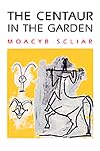
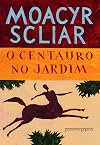
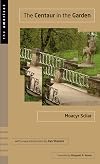
The Centaur in the Garden
by Moacyr Scliar
On This Page
Description
"A novel of magical realism set in an early twentieth-century Jewish immigrant colony in southern Brazil"--Provided by publisher.Tags
Recommendations

















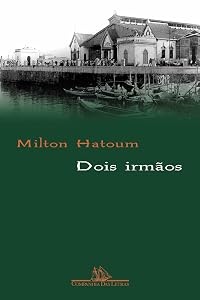

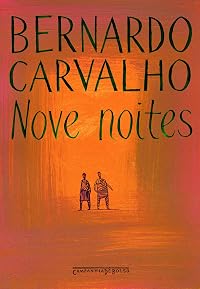
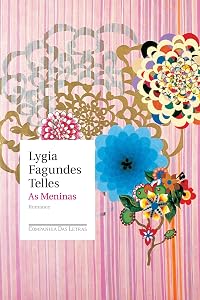

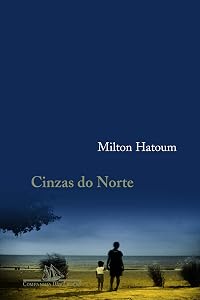













Member Recommendations

Member Reviews
(A lot of spoilers in this review)
This is an immensely readable book. The prose flows very well and the story is engaging. I found myself consuming vast quantities of the book in short periods of time. The author skillfully balances descriptions of events with the narrator’s thoughts – it never feels like a rote here’s-what-happened and you get a good glimpse of the narrator’s character. I had some problems with the plot turns near the end and some of it started to get repetitive but I’d still recommend it. The book is the story of the narrator, Guedali Tartakovsky, a centaur. It’s essentially a realistic treatment of a centaur’s life and what happens when he attempts to live a normal life.
Guedali, the first person show more narrator, is the fourth child of Jewish immigrants to Brazil. The reason why he is born a centaur is left for the reader to figure out though there are several explanations proposed. Of course his parents are horrified and there’s unhappiness and comedy in the descriptions of his early life – for example, the scene where he’s circumcised. His being a centaur parallels the family’s Jewish background – something that sets them apart and causes them to close ranks. The descriptions and events move along quickly as the family eventually has to flee their countryside farm for the city and Guedali feels left out as family members drift away. After a crushing one-sided love affair, Guedali runs away and leads a picaresque lifestyle where he joins the circus and meets a centauress.
Guedali and his love, Tita, eventually start living normally. They make friends and Guedali has a successful normal job. Some years fly by this way, but it never seems rushed. The author’s focus on all the little prejudices is a very nice touch and demonstrates that even something as extraordinary as being a centaur can become normal and of less concern than other issues. Guedali’s parents are a bit suspicious of Tita, not because she’s a centaur, but because she’s not Jewish. His friends also are rather reserved with her since they think of her as an uneducated country girl (though they are outwardly nice and accepting). His family agonizes about them living together but not marrying. As the years go by and the couple remains comfortable, some discontent is seen. Guedali’s friends worry about their material success and nostalgically think back to the days when they were socialist activists. As a parallel, Guedali remembers his unencumbered days as a free-living centaur. However, some of this desire for the past eventually becomes repetitive and some melodramatic, magic realist events happen that undermine the realistic tone. One could find symbolic meaning to some of these events but it all seemed a bit too much.
The intro mentions that there was a controversy over whether Yann Martel, who wrote the popular and critically acclaimed novel, Life of Pi, had stolen his plot from Scliar’s Max and the Cats. I haven’t read that Scliar, but there were a couple ways that this one reminded me of Life of Pi. The author has a winning voice and skillfully balances a rather fantastic concept for 2/3 of the book. However, the final act is too supernatural and contrived. The end is happy, but poses the question of whether the whole book was real or not. show less
This is an immensely readable book. The prose flows very well and the story is engaging. I found myself consuming vast quantities of the book in short periods of time. The author skillfully balances descriptions of events with the narrator’s thoughts – it never feels like a rote here’s-what-happened and you get a good glimpse of the narrator’s character. I had some problems with the plot turns near the end and some of it started to get repetitive but I’d still recommend it. The book is the story of the narrator, Guedali Tartakovsky, a centaur. It’s essentially a realistic treatment of a centaur’s life and what happens when he attempts to live a normal life.
Guedali, the first person show more narrator, is the fourth child of Jewish immigrants to Brazil. The reason why he is born a centaur is left for the reader to figure out though there are several explanations proposed. Of course his parents are horrified and there’s unhappiness and comedy in the descriptions of his early life – for example, the scene where he’s circumcised. His being a centaur parallels the family’s Jewish background – something that sets them apart and causes them to close ranks. The descriptions and events move along quickly as the family eventually has to flee their countryside farm for the city and Guedali feels left out as family members drift away. After a crushing one-sided love affair, Guedali runs away and leads a picaresque lifestyle where he joins the circus and meets a centauress.
Guedali and his love, Tita, eventually start living normally. They make friends and Guedali has a successful normal job. Some years fly by this way, but it never seems rushed. The author’s focus on all the little prejudices is a very nice touch and demonstrates that even something as extraordinary as being a centaur can become normal and of less concern than other issues. Guedali’s parents are a bit suspicious of Tita, not because she’s a centaur, but because she’s not Jewish. His friends also are rather reserved with her since they think of her as an uneducated country girl (though they are outwardly nice and accepting). His family agonizes about them living together but not marrying. As the years go by and the couple remains comfortable, some discontent is seen. Guedali’s friends worry about their material success and nostalgically think back to the days when they were socialist activists. As a parallel, Guedali remembers his unencumbered days as a free-living centaur. However, some of this desire for the past eventually becomes repetitive and some melodramatic, magic realist events happen that undermine the realistic tone. One could find symbolic meaning to some of these events but it all seemed a bit too much.
The intro mentions that there was a controversy over whether Yann Martel, who wrote the popular and critically acclaimed novel, Life of Pi, had stolen his plot from Scliar’s Max and the Cats. I haven’t read that Scliar, but there were a couple ways that this one reminded me of Life of Pi. The author has a winning voice and skillfully balances a rather fantastic concept for 2/3 of the book. However, the final act is too supernatural and contrived. The end is happy, but poses the question of whether the whole book was real or not. show less
Weirdly fascinating.
Tr. Margaret A. Neves. Novel.
No interior do Rio Grande do Sul, na pacata família Tratskovsky, nasce um centauro: um ser metade homem, metade cavalo. Seu nome é Guedali, quarto filho de um casal de imigrantes judeus russos. A partir desse evento fantástico, Moacyr Scliar constrói um romance que se situa entre a fábula e o realismo, evidenciando a dualidade da vida em sociedade, em que é preciso harmonizar individualismo e coletividade
Jun 23, 2021Portuguese (Portugal)
verde
Jun 19, 2024Spanish
Ratings
Members
- Recently Added By
Lists

Troublesome bodies
110 works; 7 members

Speculative Fiction from around the World
610 works; 18 members
Author Information

166+ Works 2,222 Members
Scliar was born and still lives in Rio Grande do Sul, Brazil. A physician since 1962, Scliar started his career as a writer telling stories about his experiences as a young doctor. He is a prolific writer and has produced more than 10 novels, many of which have won literary prizes. He studied at the Yiddish College in Porto Alegre and went to a show more Catholic school for his secondary studies. This childhood experience provided the imaginative background for many of his stories. His writing has much of what he called "his Jewishness": "As much as possible I live in peace with my Jewishness. I have extracted from it what it has of the best: fantasy, ethical substance, and above all, humor" (Escrever & Viver). The Centaur in the Garden is a story about a centaur who is Brazilian and Jewish, a fantasy of the half-horse, half-human child who grows into adulthood in search of his identity. (Bowker Author Biography) show less
Some Editions
Awards and Honors
Common Knowledge
- Canonical title
- The Centaur in the Garden
- Original publication date
- 1980
- Important places
- Brazil
Classifications
- Genres
- Fiction and Literature, General Fiction, Fantasy
- DDC/MDS
- 869.3 — Literature & rhetoric Spanish Literature Literatures of Portuguese and Galician languages Portuguese fiction
- LCC
- PQ9698.29 .C54 .C4313 — Language and Literature French, Italian, Spanish and Portuguese literatures Portuguese literature Provincial, local, colonial, etc. Brazil
- BISAC
Statistics
- Members
- 254
- Popularity
- 128,209
- Reviews
- 5
- Rating
- (3.55)
- Languages
- 9 — Dutch, English, French, German, Italian, Portuguese, Russian, Spanish, Swedish
- Media
- Paper, Ebook
- ISBNs
- 24
- ASINs
- 2