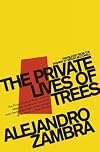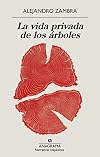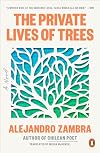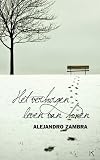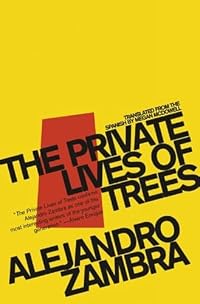
The Private Lives of Trees
by Alejandro Zambra
On This Page
Description
"Veronica is late, and Julián is increasingly convinced she won't ever come home. To pass the time, he improvises a story about trees to coax his stepdaughter, Daniela, to sleep. But as the night stretches on before him, and the hours pass with no sign of Veronica, Julián finds himself caught up in the slipstream of the story of his life-of their lives together"--Tags
Recommendations












Member Reviews
Julián, el protagonista, espera durante toda la noche el regreso de Verónica, su mujer. Y, como no se cansa de repetir, el libro acabará con su regreso o hasta que Julián esté seguro de que no volverá. Será una larga noche, en la que Julián tendrá que cuidar de su hijastra Daniela, a la que le cuenta cuentos sobre la vida privada de los árboles. Una noche, también, llena de recuerdos sobre su relación anterior con Karla, que casi se convierte en su enemiga. Una noche en la que Julián, profesor de literatura entre semana y escritor los domingos, imaginará cómo será Daniela según vaya creciendo. Y Verónica que no vuelve. Y Julián rememora cómo ha sido su vida hasta ahora, y cómo puede ser si ella no regresa. Zambra lo show more describe mejor:
"Cuando alguien no llega, en las novelas, piensa Julián, es porque le ha sucedido algo malo. Pero esto no es, por fortuna, una novela: en cosa de minutos Verónica llegará con una historia real, con un motivo razonable que justifique su tardanza, y entonces hablaremos de su clase de dibujo, de la niña, de mi libro, de los peces, de la necesidad de comprar un celular, de un pedazo de budín que queda en el horno, del futuro, y tal vez un poco, también, del pasado. [...]"
Alejandro Zambra, chileno, me gustó en su su primera novela, 'Bonsái', y con esta, su segunda novela, también me ha gustado. Cada una de sus páginas está impregnada de nostalgia y melancolía. Mediante frases bien construídas y párrafos cortos, Zambra nos llena la cabeza de imágenes. Sin duda, un joven escritor a seguir. show less
"Cuando alguien no llega, en las novelas, piensa Julián, es porque le ha sucedido algo malo. Pero esto no es, por fortuna, una novela: en cosa de minutos Verónica llegará con una historia real, con un motivo razonable que justifique su tardanza, y entonces hablaremos de su clase de dibujo, de la niña, de mi libro, de los peces, de la necesidad de comprar un celular, de un pedazo de budín que queda en el horno, del futuro, y tal vez un poco, también, del pasado. [...]"
Alejandro Zambra, chileno, me gustó en su su primera novela, 'Bonsái', y con esta, su segunda novela, también me ha gustado. Cada una de sus páginas está impregnada de nostalgia y melancolía. Mediante frases bien construídas y párrafos cortos, Zambra nos llena la cabeza de imágenes. Sin duda, un joven escritor a seguir. show less
This is a charming novella that at first doesn't seem to have much to it, but it sneaks up on you. Julián is a young professor and writer (apparently the same narrator as Zambra's earlier Bonsai); "The Private Life of Trees" is a story he tells his stepdaughter Daniela one evening as they wait for her mother Verónica to return. But she doesn't return; Daniela goes to sleep but Julián stays awake, thinking about his life, about Verónica's life, and in the end imagining Daniela's life in the future and how she might in turn remember Julián from when she was a little girl. That's it, but in those seemingly inconsequential night thoughts we get a catalog of the forms of love, particularly those forms that are intertwined with stories. show more Julián becomes a silent Scheherazade, telling himself stories to forestall knowledge of whatever misfortune might be keeping Verónica from coming home.
The accents on the characters' names are one of the few signs that this book comes from another language, and I think they're unnecessary; it could happen anywhere. Megan McDowell's translation reads naturally in English, with a tone just right for Julián's character. He doesn't want to imagine the worst; the best he imagines is so modest it might seem sad. But, for Daniela's sake, he refuses to be sad—and that's the strongest form his love can take. show less
The accents on the characters' names are one of the few signs that this book comes from another language, and I think they're unnecessary; it could happen anywhere. Megan McDowell's translation reads naturally in English, with a tone just right for Julián's character. He doesn't want to imagine the worst; the best he imagines is so modest it might seem sad. But, for Daniela's sake, he refuses to be sad—and that's the strongest form his love can take. show less
How can an author pack so much into a novella? That is the question I am left with after reading "The Private Lives of Trees". The author takes us through one long night suffered by Julian, a writer and stepfather, who is waiting for his wife to come home. I won't tell if she does or not, and frankly, it is almost irrelevant. The reader is allowed access to the stream of thoughts, feelings, imaginings, hopes, history, and fears of one man for one night. His ponderings are the stuff of being human, vulnerable, angry, sad, and hopeful. Oh yes......the private lives of trees is what Julian calls the stories he tells his beloved stepdaughter at bedtime every night until she sleeps.....
This is a gem of a short novel. It opens as a professor and writer, Julián, is telling his stepdaughter Daniela a bedtime story while waiting for his wife Verónica to return from an art class. The bedtime story is a sweet, humorous and quirky story about two trees who are friends. As you read on, you learn that Verónica is later than usual, and as time passes, Julián grows progressively more anxious.
In 98 pages, Zambra uses this simple premise to move into a story which is much more than this framework. I an reluctant to say more, because part of the pleasure of this beautiful short novel comes from your being led, with great care, along Julián's reflections, memories and projections into the future.
Throughout the novel, I could show more tell that Zambra weighed every sentence, every phrase, every word with great care. The result is a simple eloquence that beautifully sustains that atmosphere of that opening bedtime story, even as Zambra also explores the anxious thoughts, justifications, and fears we have all experienced while waiting for a loved one who is late returning.
This is a novel that is imbued with a great sense of affection and love. As I mentioned to Mike Puma earlier today, it is a gentle novel. Reading it feels like being wrapped in a blanket and lulled to sleep by someone whom you trust, someone who is watching over you with love. As Mike said, we don't have enough cause these days to use the word "gentle" -- for this reason, I recommend this novel to you. show less
In 98 pages, Zambra uses this simple premise to move into a story which is much more than this framework. I an reluctant to say more, because part of the pleasure of this beautiful short novel comes from your being led, with great care, along Julián's reflections, memories and projections into the future.
Throughout the novel, I could show more tell that Zambra weighed every sentence, every phrase, every word with great care. The result is a simple eloquence that beautifully sustains that atmosphere of that opening bedtime story, even as Zambra also explores the anxious thoughts, justifications, and fears we have all experienced while waiting for a loved one who is late returning.
This is a novel that is imbued with a great sense of affection and love. As I mentioned to Mike Puma earlier today, it is a gentle novel. Reading it feels like being wrapped in a blanket and lulled to sleep by someone whom you trust, someone who is watching over you with love. As Mike said, we don't have enough cause these days to use the word "gentle" -- for this reason, I recommend this novel to you. show less
This was a conceptually interesting and enjoyable novella about a literature professor (Julián) who is writing a novel about his past life in an unhappy marriage, how he met and won the love of his current wife (Verónica), and the future life of his eight year old step-daughter (Daniela). Verónica has not yet returned home from her art class, and Julián anxiously awaits her return, while putting Daniela to bed with a story, "The Private Lives of Trees", and writing his book, which will end when Verónica returns home. This novella consists of ordinary stories about every day lives, and in Zambra's delicate hand these characters are allowed to slowly develop and mature.
This is a short novella from 2007 which I found charming. It was about family, reading, writing and relationships told in an often dreamlike style being both sad and self-reflective about aging and the passing of time. I haven't read Bonsai yet, but I think I will.
The second novel by the internationally celebrated writer Alejandro Zambra, a “short and strikingly original” (The New Yorker) book about the stories we spin for ourselves and our loved ones—now reissued by Penguin
Veronica is late, and Julián is increasingly convinced she won't ever come home. To pass the time, he improvises a story about trees to coax his stepdaughter, Daniela, to sleep. He has made a life as a literature professor, developing a novel about a man tending to a bonsai tree on the weekends. He is a narrator, an architect, a chronicler of other people's stories. But as the night stretches on before him, and the hours pass with no sign of Veronica, Julián finds himself caught up in the slipstream of the story of his show more life—of their lives together. What combination of desire and coincidence led them here, to this very night? What will the future—and possibly motherless—Daniela think of him and his stories? Why tell stories at all?
The second novel by acclaimed Chilean writer Alejandro Zambra, The Private Lives of Trees overflows with his signature wit and his gift for crafting short novels that manage to contain whole worlds. show less
Veronica is late, and Julián is increasingly convinced she won't ever come home. To pass the time, he improvises a story about trees to coax his stepdaughter, Daniela, to sleep. He has made a life as a literature professor, developing a novel about a man tending to a bonsai tree on the weekends. He is a narrator, an architect, a chronicler of other people's stories. But as the night stretches on before him, and the hours pass with no sign of Veronica, Julián finds himself caught up in the slipstream of the story of his show more life—of their lives together. What combination of desire and coincidence led them here, to this very night? What will the future—and possibly motherless—Daniela think of him and his stories? Why tell stories at all?
The second novel by acclaimed Chilean writer Alejandro Zambra, The Private Lives of Trees overflows with his signature wit and his gift for crafting short novels that manage to contain whole worlds. show less
Members
- Recently Added By
Author Information

19+ Works 2,824 Members
Awards and Honors
Series
Belongs to Publisher Series
Narrativas hispánicas (416)
Work Relationships
Common Knowledge
- Canonical title*
- Het verborgen leven van bomen
- Original title
- La vida privada de los árboles
- Original publication date
- 2010 (English) (English)
- People/Characters
- Julián; Daniela; Verónica; Karla
- Important places
- Santiago, Chile
- First words
- Julián lulls the little girl to sleep with "The Private Lives of Trees," an ongoing story he's made up to tell her at bedtime.
- Last words
- (Click to show. Warning: May contain spoilers.)And he looks at her and gives her a kiss and he lets her go.
*Some information comes from Common Knowledge in other languages. Click "Edit" for more information.
Classifications
- Genres
- Fiction and Literature, General Fiction
- DDC/MDS
- 863.7 — Literature & rhetoric Spanish Literature Spanish fiction 21st Century
- LCC
- PQ8098.36 .A43 .V5313 — Language and Literature French, Italian, Spanish and Portuguese literatures Spanish literature Provincial, local, colonial, etc. Spanish America
- BISAC
Statistics
- Members
- 390
- Popularity
- 79,508
- Reviews
- 16
- Rating
- (3.53)
- Languages
- 6 — Dutch, English, French, Portuguese, Spanish, Turkish
- Media
- Paper, Audiobook, Ebook
- ISBNs
- 18
- ASINs
- 3