Nox
by Anne Carson
On This Page
Description
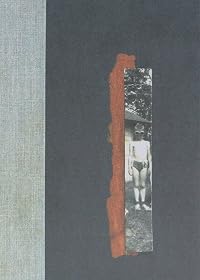
Presents a facsimile of a book the author created after the death of her brother, and includes poetry, family photographs, letters, and sketches that deal with coming to terms with the loss.Tags
Recommendations
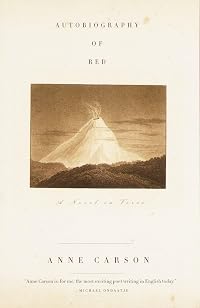

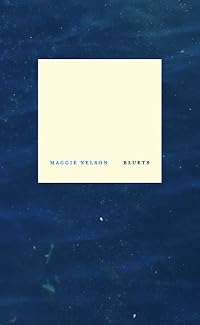

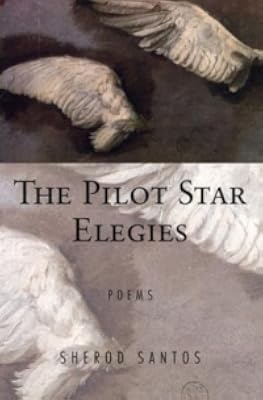
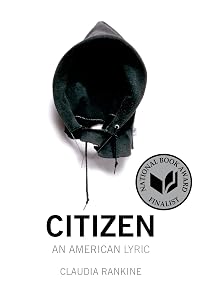





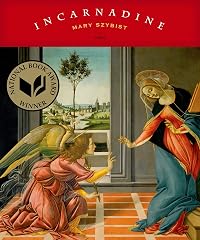

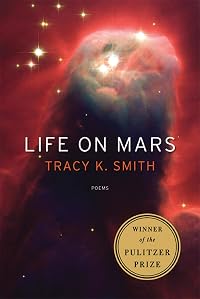
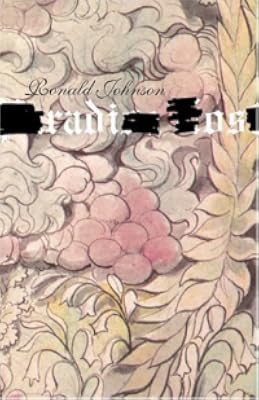
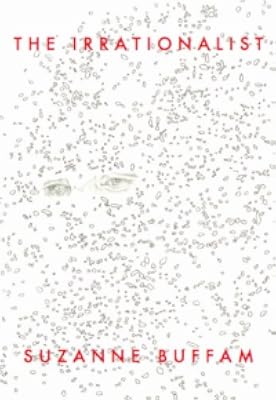

Member Recommendations
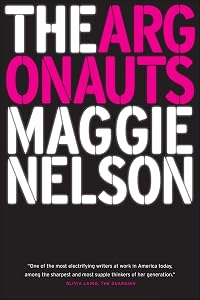
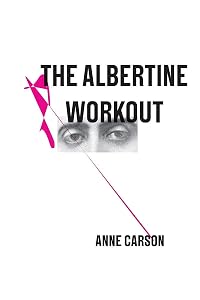
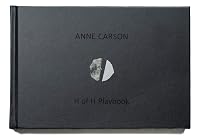
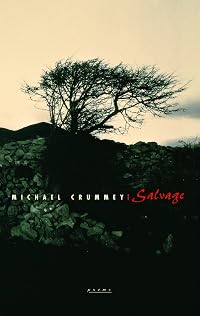
unlucky Superficially, these books have their accordion format in common. However, they are also both meditations on loss, grief, silence, and language, and both are beautiful in their own way.
Member Reviews
Here is one book that I should probably always leave on my Currently Reading shelf, if only because it is something that demands revisiting year after year. As a physical object it is exquisite, with its box container and accordian folded leaves that present the illusion of single separate pages only to coalesce into one very large and long continuous page... Much like the fragmented pieces that together form a life. And this physical presentation is basically Carson's thesis: to somehow bring together the fragments she's collected of her dead brother's years and in them discover the life that was hidden to her when he was alive.
The result is magnificent and sobering and melancholy and haunting. The print quality is so high that you're show more tricked into thinking the staples and pressed-in ink impressions and pastings are all actual 3d renderings and not just superb trompe loeil ink on paper - and that's very important to the text because a visceral feel to these pages is essential to the reading experience.
The text alternates between a word by word translation of Catallus poem 101 and letter fragments from her brother mixed with the author's reflections. Read slowly to savor... And then put it on a safe shelf until you're ready to reread next year. show less
The result is magnificent and sobering and melancholy and haunting. The print quality is so high that you're show more tricked into thinking the staples and pressed-in ink impressions and pastings are all actual 3d renderings and not just superb trompe loeil ink on paper - and that's very important to the text because a visceral feel to these pages is essential to the reading experience.
The text alternates between a word by word translation of Catallus poem 101 and letter fragments from her brother mixed with the author's reflections. Read slowly to savor... And then put it on a safe shelf until you're ready to reread next year. show less
On the surface, Nox is a simple memoir about grief. Anne Carson is dealing with the death of her brother, Michael. It reminded me of Love, an Index by Rebecca Lindenberg, though my emotional reaction to this was much more muted. Maybe because the author never really knew her brother at all. By her own admission, she and her brother were never that close and he barely kept in touch with the family. The emotional core of the book is much more her mourning of that fact than his actual death.
But what makes Nox really interesting as a work is how Carson juxtaposes that grief memoir with the difficulties and failures of her translation work. She is working on a poem by Catallus, a poet of the late Roman Republic. The poem happens to be an show more elegy to Catallus's own brother who died abroad. Carson takes each word of the poem and gives an etymological breakdown of each one. Nox then becomes something more complex, a dual elegy of sorts. About the loss of her brother but also about that idea of failed translation, the near-impossible task of finding the right word and expression. In a way, experiencing grief is like that. Both premises reinforce each other, capturing that constant, groping-in-the-dark feeling of mourning.
The accordion-style format of the physical book design adds to the poetry's impact. Grief is ever-expanding; words and their meaning are slippery, unstable, and constantly moving. show less
But what makes Nox really interesting as a work is how Carson juxtaposes that grief memoir with the difficulties and failures of her translation work. She is working on a poem by Catallus, a poet of the late Roman Republic. The poem happens to be an show more elegy to Catallus's own brother who died abroad. Carson takes each word of the poem and gives an etymological breakdown of each one. Nox then becomes something more complex, a dual elegy of sorts. About the loss of her brother but also about that idea of failed translation, the near-impossible task of finding the right word and expression. In a way, experiencing grief is like that. Both premises reinforce each other, capturing that constant, groping-in-the-dark feeling of mourning.
The accordion-style format of the physical book design adds to the poetry's impact. Grief is ever-expanding; words and their meaning are slippery, unstable, and constantly moving. show less
To call Anne Carson’s staggering Nox a book of poetry is not quite accurate, for both its physical and psychic dimensions transcend traditional taxonomies of genre. Nox is many things: an artist’s book, a journal, a collage, an elegy, a meditation on grief, and a souvenir, in the literal sense. It is a powerful statement of personal loss couched in a language of classical rigor, a spiritual exorcism given artifactual manifestation.
To start with Nox’s physical attributes: the book is a careful facsimile of a document the grief-stricken Carson assembled on the occasion of her estranged brother’s death. As such, it is essentially a replica of a scrapbook, containing pasted-in snippets of letters, photos, stained scraps of typing, show more lexical entries, a translation, and a smattering of jagged, abstract drawings; in the words of Joyelle McSweeney, “a {poetic} model based on an attractively varied set of transhistorical and cross-disciplinary examples.” It has been printed not as a traditional codex but as one uninterrupted accordion-style folding document, which in turn has been housed in a handsome if slightly forbidding case. Not your average book of word-slinging, to be sure.
All of this armature—and hats off to New Directions for a very pleasingly designed and printed volume indeed—would be peripheral, even self-indulgent, if the book’s unusual format was not mirrored by the strange beauty and emotional intensity of it contents. As glimpses of Carson’s relation with her troubled brother begin to surface through the textual and graphical chaos, the loss gradually accumulates a fatalistic inevitability worthy of Carson’s classical models. Carson’s brother, his life and his death both, were mysteries to Carson, and they remain mysteries to the reader, which is in part the source of their evocative and haunting appeal.
At first perusal Nox strikes the reader as capricious and disorienting, but as one progresses through the trajectory of Carson’s mourning some structural elements begin to recur and thus to emerge. The first of these is her use of lexical entries, as from a Latin dictionary, both as motif and as explicit manifestation of her fundamentally classicist, in the original sense of the word, outlook. For this reader, it was a revelation to find with what incantatory, onrushing velocity a lexical entry reads:
fortuna: the more or less personified agency supposed to direct events, Fortune…; ill-starred; the way in which events fall out, chance, hazard; a favorable occasion; what befalls or is destined to befall, one’s fate; (applied to persons whose destiny is bound up with one’s own); prosperity, good fortune; unfortunate circumstances, bad luck; social position, rank, station; greatness; wealth, property, fortune.
This particular entry is typical of the whole in that it is subtly but inescapably apposite to the death of Carson’s brother, whose life was “ill-starred” and “bound up with” Carson’s “own” indeed. Through repetition, both contextual and rhythmic, all of the lexical entries come to take on this strange, elegiac undertone.
The book’s second textual variant consists of short blocks of prose detailing the gradual disappearance of her brother: “All the years and time that had passed over him came streaming into me, all that history.” These sequences, numbered as neatly as examples in a grammar textbook, are harrowing in the disjunction between their tragic implications and their matter-of-fact tone. Commentators have frequently noted the unadorned nature of Carson’s work—it is often elastic, to put it mildly, in meter and line—and these passages attest to this plainness of approach. “I guess it never ends,” Carson writes, ostensibly of her attempts to make sense of a Catullan ode. “A brother never ends. I prowl him. He does not end.”
In contrast to these fairly straightforward entries stand fragments of verse (“I love the old questions”, “I am curious about the season of coldness you have there”) that dot the manuscript like snatches of a half-remembered poem or an overheard conversation. These phrases, elliptical, dreamlike, have the power to evoke Carson’s loss by indirection, partly in counterpoint to the prose segments, but also by their function as captions to the fourth and most dominant structural facet of Nox, which is its searing graphical elements. The pages contain many blurry, sepia-toned snapshots and snippets of typed or scrawled letters, often sliced into fanned-out ribbons, as if the collagist were deranged by grief. These last visuals prove in some ways to be the most jarring; there is something violent and desperate about the way they are splattered across the page.
The cumulatie effect of this multimedia assault is dazzling. The expression of grief that Carson delineates creeps up on the reader, its effect being all the more vivid for its subtlety and slow accretion. The ultimate source of Nox’s power is Carson’s deeply classical aesthetic, as she seeks to express a very modern—actually rather sordid and commonplace—loss in a way that is steeped in the alien sensibility of an ancient culture, what Sainte-Beuve referred to as “the vast living expression of a whole epoch and a semi-barbarous civilization.” This is a very unusual position from which to attack the craft; as a prosodic tactic it seems, to this reader, quite possibly unique. Carson’s poetic voice genuinely has more in common with the ancient poets of Rome than it does with her twentieth-century peers: although there are some very private and intensely personal emotions portrayed, one would never think to describe Carson’s poetry as “confessional” in the same way as Lowell or Plath. Even the towering elegies of Shelley and Tennyson, by comparison, seem a mite… soggy, when contrasted with the radical austerity of Carson’s reflections. All told Nox is a singular achievement, and if its strategies are a bit opaque, it nevertheless stands as an affecting document and the product of an original and fertile mind working in a highly distinctive vein. From Zoland Poetry Review online, Winter 2010. show less
To start with Nox’s physical attributes: the book is a careful facsimile of a document the grief-stricken Carson assembled on the occasion of her estranged brother’s death. As such, it is essentially a replica of a scrapbook, containing pasted-in snippets of letters, photos, stained scraps of typing, show more lexical entries, a translation, and a smattering of jagged, abstract drawings; in the words of Joyelle McSweeney, “a {poetic} model based on an attractively varied set of transhistorical and cross-disciplinary examples.” It has been printed not as a traditional codex but as one uninterrupted accordion-style folding document, which in turn has been housed in a handsome if slightly forbidding case. Not your average book of word-slinging, to be sure.
All of this armature—and hats off to New Directions for a very pleasingly designed and printed volume indeed—would be peripheral, even self-indulgent, if the book’s unusual format was not mirrored by the strange beauty and emotional intensity of it contents. As glimpses of Carson’s relation with her troubled brother begin to surface through the textual and graphical chaos, the loss gradually accumulates a fatalistic inevitability worthy of Carson’s classical models. Carson’s brother, his life and his death both, were mysteries to Carson, and they remain mysteries to the reader, which is in part the source of their evocative and haunting appeal.
At first perusal Nox strikes the reader as capricious and disorienting, but as one progresses through the trajectory of Carson’s mourning some structural elements begin to recur and thus to emerge. The first of these is her use of lexical entries, as from a Latin dictionary, both as motif and as explicit manifestation of her fundamentally classicist, in the original sense of the word, outlook. For this reader, it was a revelation to find with what incantatory, onrushing velocity a lexical entry reads:
fortuna: the more or less personified agency supposed to direct events, Fortune…; ill-starred; the way in which events fall out, chance, hazard; a favorable occasion; what befalls or is destined to befall, one’s fate; (applied to persons whose destiny is bound up with one’s own); prosperity, good fortune; unfortunate circumstances, bad luck; social position, rank, station; greatness; wealth, property, fortune.
This particular entry is typical of the whole in that it is subtly but inescapably apposite to the death of Carson’s brother, whose life was “ill-starred” and “bound up with” Carson’s “own” indeed. Through repetition, both contextual and rhythmic, all of the lexical entries come to take on this strange, elegiac undertone.
The book’s second textual variant consists of short blocks of prose detailing the gradual disappearance of her brother: “All the years and time that had passed over him came streaming into me, all that history.” These sequences, numbered as neatly as examples in a grammar textbook, are harrowing in the disjunction between their tragic implications and their matter-of-fact tone. Commentators have frequently noted the unadorned nature of Carson’s work—it is often elastic, to put it mildly, in meter and line—and these passages attest to this plainness of approach. “I guess it never ends,” Carson writes, ostensibly of her attempts to make sense of a Catullan ode. “A brother never ends. I prowl him. He does not end.”
In contrast to these fairly straightforward entries stand fragments of verse (“I love the old questions”, “I am curious about the season of coldness you have there”) that dot the manuscript like snatches of a half-remembered poem or an overheard conversation. These phrases, elliptical, dreamlike, have the power to evoke Carson’s loss by indirection, partly in counterpoint to the prose segments, but also by their function as captions to the fourth and most dominant structural facet of Nox, which is its searing graphical elements. The pages contain many blurry, sepia-toned snapshots and snippets of typed or scrawled letters, often sliced into fanned-out ribbons, as if the collagist were deranged by grief. These last visuals prove in some ways to be the most jarring; there is something violent and desperate about the way they are splattered across the page.
The cumulatie effect of this multimedia assault is dazzling. The expression of grief that Carson delineates creeps up on the reader, its effect being all the more vivid for its subtlety and slow accretion. The ultimate source of Nox’s power is Carson’s deeply classical aesthetic, as she seeks to express a very modern—actually rather sordid and commonplace—loss in a way that is steeped in the alien sensibility of an ancient culture, what Sainte-Beuve referred to as “the vast living expression of a whole epoch and a semi-barbarous civilization.” This is a very unusual position from which to attack the craft; as a prosodic tactic it seems, to this reader, quite possibly unique. Carson’s poetic voice genuinely has more in common with the ancient poets of Rome than it does with her twentieth-century peers: although there are some very private and intensely personal emotions portrayed, one would never think to describe Carson’s poetry as “confessional” in the same way as Lowell or Plath. Even the towering elegies of Shelley and Tennyson, by comparison, seem a mite… soggy, when contrasted with the radical austerity of Carson’s reflections. All told Nox is a singular achievement, and if its strategies are a bit opaque, it nevertheless stands as an affecting document and the product of an original and fertile mind working in a highly distinctive vein. From Zoland Poetry Review online, Winter 2010. show less
I wasn't sure whether I was doing the wrong thing or the right thing reading this all in one go. On the one hand I felt I should have been savouring and processing the definitions/translations of each Latin word and the connections made between said word and Carson's personal reflections. On the other hand the book folds out as one long piece, and although it's a translation and a fragmentary elegy and many other things besides, it is also a poem, and not an unreasonable amount to consume in one go.
It's hard to imagine the death of a sibling, but almost equally hard for me to understand the distance between Carson and her brother. And then how to overcome that distance, how to grieve someone who is close to you and yet so far from you, show more it's so fundamentally dissimilar from my own life and relationships that I was reading this like I was learning the answer to a mystery, or like I was slowly putting together the pieces of a jigsaw puzzle that I have no picture-reference for.
I'm so curious to read some of Anne Carson's translations of Greek plays. I keep seeing fragments and she seems to have a real genius for translation. show less
It's hard to imagine the death of a sibling, but almost equally hard for me to understand the distance between Carson and her brother. And then how to overcome that distance, how to grieve someone who is close to you and yet so far from you, show more it's so fundamentally dissimilar from my own life and relationships that I was reading this like I was learning the answer to a mystery, or like I was slowly putting together the pieces of a jigsaw puzzle that I have no picture-reference for.
I'm so curious to read some of Anne Carson's translations of Greek plays. I keep seeing fragments and she seems to have a real genius for translation. show less
Some straightforward observations about Anne Carson's elegy Nox: it comes in a large box, like a rectangular room. Inside the box is a free-floating accordion-style book, which though beautiful is difficult to hold comfortably in the hand; it bends and twists as one turns the pages. The book (the room) opens with an elegy by Catullus for his dead brother, in the original Latin, whose physical appearance is smudged and water-stained, and whose import is, of course, obscure to non-Latin-speaking readers. This entry-way then opens out in at least two directions: for the rest of the book, the left-hand pages contain lexicographical entries enumerating the shades of each word from the Catullus poem; while the right-hand pages gingerly prod show more the story of Carson's own brother—his haunted life and his sudden death. The non-Latin-speaking reader, attempting to allow the lexical entries to gradually elucidate Catullus's poem, performs a kind of reading gymnastics, holding the accordion-folded book open at the page she has reached, using one finger to mark the location of the Latin verse for easy reference, and balancing the whole outer box in either her palms or her lap.
I was drawn by the presentation of Nox, but I didn't realize at first how integral it is to the experience of meaning in the poem. Carson, like the reader, is handling an unwieldy object as she explores her brother's life and death: one she doesn't know quite how to approach, or hold together; one that threatens to slide out of her hands or unravel like the accordion-folded pages of Nox; one whose shadings and repercussions are difficult to tease out, reflecting one one another unexpectedly like a hall of mirrors. The necessity of supporting an unfamiliar shape makes one feel the full weight of the object in one's hands—this box or book, or the reality of a loved one's death. She writes, of the Catullus poem that begins and permeates her own work,
Carson's poem, like her concept of translation and grief, is three-dimensional in content as well as form. The parallel threads of lexicographical entries and personal passages (interspersed with reproductions of personal mementos—actual letters, photographs, letterhead) play off each other in an almost endlessly resonant way. I was surprised to find myself especially intrigued by the dictionary entries, suggesting as they do the wealth of connotative possibility lying just beneath the skin of language, and also how little of language lies in the words themselves. Supplied only with each word's definition, in the absence of a grammar relating them to one another, any understanding of Catullus's poem 101 remained frustratingly elusive. Take Carson's definition of the word vectus, which occurs in Catullus's opening line "Multas per gentes et multa per aequora vectus":
Several things. The first, which struck me over and over with these entries, is that they are lovely. This reads as a poem in its own right, from the surface elements (bolded title at the top and narrow, verse-like formatting one the page), to its introduction and development of a theme, to the way it takes that theme to another level through juxtaposition of unexpected images and metaphors. The examples of usage, of course, speak to Carson's larger themes: "driven into danger"; "what the transient hour brought only once"; "to vanish by night into nothing"—all of these fragments swim into the realm of loss and death. Remarkably, the word "nox" (and also noctis, nocte, noctum, meaning "night"), never actually appears in poem 101, but is mentioned over and over in the definitions of the words Catullus does use: in the entry on multas we get "multa nox: late in the night, perhaps too late"; the entry on aequora gives us "inmensumne noctis aequor confecimus?: have we made it across the vast plain of night?"; and even an innocent conjunction like et (and) gives us "(et nocte): (you know it was night)." Gradually, then, "nox" becomes a kind of ghostly presence, suffusing the whole of poem 101 despite never being seen itself. Similarly, the narrator of Nox feels she never understood or even really saw her brother, but cannot escape the reality of his now-permanent absence.
These definitions also emphasize how many different shades of meaning a single word can have, and the difficulty in choosing a path on which to approach a piece of writing. If every one of the fifty-plus words in poem 101 has as many different senses as vectus, how is one to arrive at a single, "definitive" translation, or even a sense of the poem's meaning that will fit inside one's head? Is the word, in this instance, being used in a manner that contains its connotation of bodily effort, or in its poetic sense of being carried along by wings? Is it closer to connoting bearing a load, or being "driven into danger" oneself? Are we sailing, or driving? Is something being carried from one place to another, or caused to extend between the two points? All of these meanings inhere within the word itself; add to that the absence of a grammar specifying how these word-islands are linked together, and Carson's metaphorical room of meaning is dark indeed. Similarly island-like are the scraps of connection she manages to salvage from a lifetime of scant contact with her brother: the single letter he sent from Copenhagen; the two phone calls in five years; the body language of old photographs. How does it all connect? What is the grammar linking these disparate definitions and scattershot senses into a coherent picture?
Perhaps more germaine: if we can't fit it into a coherent picture, how do we make peace with the dead?
Nox is truly a beautiful, affecting piece, and I feel I've only started exploring its dark reaches.
A final note: I would be very interested to hear how a reader who knows or has studied Latin would interact with Carson's elegy, since so much of my own reading experience hinged on trying to make sense of an unknown yet oddly familiar language, and relating that to the speaker's attempts to make sense of death, which is also unknown yet familiar. I imagine, though, that even in the case of a poem in one's native language, the overwhelming number of interpretive possibilities represented by word-combinations would still hold true, as would Carson's own journey throughout these pages. show less
I was drawn by the presentation of Nox, but I didn't realize at first how integral it is to the experience of meaning in the poem. Carson, like the reader, is handling an unwieldy object as she explores her brother's life and death: one she doesn't know quite how to approach, or hold together; one that threatens to slide out of her hands or unravel like the accordion-folded pages of Nox; one whose shadings and repercussions are difficult to tease out, reflecting one one another unexpectedly like a hall of mirrors. The necessity of supporting an unfamiliar shape makes one feel the full weight of the object in one's hands—this box or book, or the reality of a loved one's death. She writes, of the Catullus poem that begins and permeates her own work,
I never arrived at the translation I would have liked to do of poem 101. But over the years of working at it, I came to think of translating as a room, not exactly an unknown room, where one gropes for the light switch. I guess it never ends. A brother never ends. I prowl him. He does not end.
Carson's poem, like her concept of translation and grief, is three-dimensional in content as well as form. The parallel threads of lexicographical entries and personal passages (interspersed with reproductions of personal mementos—actual letters, photographs, letterhead) play off each other in an almost endlessly resonant way. I was surprised to find myself especially intrigued by the dictionary entries, suggesting as they do the wealth of connotative possibility lying just beneath the skin of language, and also how little of language lies in the words themselves. Supplied only with each word's definition, in the absence of a grammar relating them to one another, any understanding of Catullus's poem 101 remained frustratingly elusive. Take Carson's definition of the word vectus, which occurs in Catullus's opening line "Multas per gentes et multa per aequora vectus":
vectus
veho vehere vexi vectum
[cf. Skt vahati, Gk δχος, OHG wagan,
Eng wain] to convey from one place to
another by bodily effort, to carry (a
rider), to convey (of vehicles, ships,
etc.), to carry (of draught animals); (of
things, with diminished idea of motion)
to sustain a load; to cause to be
transported, bring; (of wind, water, etc.)
to carry along, bear along; in pericula
vectus: driven into danger; (of time) to
carry with it, bring; to cause to extend
or stretch from one point to another; to
travel by some or other conveyance; to
travel by sea, sail; to ride, drive;
(poetical) to be carried on wings, fly;
vecta spolia: borne in triumph; per
noctem in nihilo vehi: to vanish by
night into nothing; quod fugiens semel
hora vexit: what the transient hour
brought once and only once.
Several things. The first, which struck me over and over with these entries, is that they are lovely. This reads as a poem in its own right, from the surface elements (bolded title at the top and narrow, verse-like formatting one the page), to its introduction and development of a theme, to the way it takes that theme to another level through juxtaposition of unexpected images and metaphors. The examples of usage, of course, speak to Carson's larger themes: "driven into danger"; "what the transient hour brought only once"; "to vanish by night into nothing"—all of these fragments swim into the realm of loss and death. Remarkably, the word "nox" (and also noctis, nocte, noctum, meaning "night"), never actually appears in poem 101, but is mentioned over and over in the definitions of the words Catullus does use: in the entry on multas we get "multa nox: late in the night, perhaps too late"; the entry on aequora gives us "inmensumne noctis aequor confecimus?: have we made it across the vast plain of night?"; and even an innocent conjunction like et (and) gives us "(et nocte): (you know it was night)." Gradually, then, "nox" becomes a kind of ghostly presence, suffusing the whole of poem 101 despite never being seen itself. Similarly, the narrator of Nox feels she never understood or even really saw her brother, but cannot escape the reality of his now-permanent absence.
These definitions also emphasize how many different shades of meaning a single word can have, and the difficulty in choosing a path on which to approach a piece of writing. If every one of the fifty-plus words in poem 101 has as many different senses as vectus, how is one to arrive at a single, "definitive" translation, or even a sense of the poem's meaning that will fit inside one's head? Is the word, in this instance, being used in a manner that contains its connotation of bodily effort, or in its poetic sense of being carried along by wings? Is it closer to connoting bearing a load, or being "driven into danger" oneself? Are we sailing, or driving? Is something being carried from one place to another, or caused to extend between the two points? All of these meanings inhere within the word itself; add to that the absence of a grammar specifying how these word-islands are linked together, and Carson's metaphorical room of meaning is dark indeed. Similarly island-like are the scraps of connection she manages to salvage from a lifetime of scant contact with her brother: the single letter he sent from Copenhagen; the two phone calls in five years; the body language of old photographs. How does it all connect? What is the grammar linking these disparate definitions and scattershot senses into a coherent picture?
Perhaps more germaine: if we can't fit it into a coherent picture, how do we make peace with the dead?
Mother is dead.
Yes I guess she is.
She had a lot of pain because of you.
Yes I guess she did.
Why didn't you write.
Well it was hard for me.
Are you sick.
No.
Do you work.
Yes.
Are you happy.
No. Oh no.
Nox is truly a beautiful, affecting piece, and I feel I've only started exploring its dark reaches.
A final note: I would be very interested to hear how a reader who knows or has studied Latin would interact with Carson's elegy, since so much of my own reading experience hinged on trying to make sense of an unknown yet oddly familiar language, and relating that to the speaker's attempts to make sense of death, which is also unknown yet familiar. I imagine, though, that even in the case of a poem in one's native language, the overwhelming number of interpretive possibilities represented by word-combinations would still hold true, as would Carson's own journey throughout these pages. show less
As an object, this book is wonderful. The conception, the design, the packaging and printing all combine to create a special experience. If you love physical books, the physicality of books, you will appreciate this. As an elegy for her brother, or maybe for her uneasy relationship with her brother, the contents of the book also were moving and thought-provoking and brave and complicated. A unique experience, equally art and poetry perhaps. I laud Carson for sharing this and the publisher for taking a risk on it.
"History can be at once concrete and indecipherable. Historian can be a storydog that roams around Asia Minor collecting bits of muteness like burrs in its hide. Note that the word mute is regarded by linguists as an onomatopoeic formation referring not to silence but to a certain fundamental opacity of human being, which likes to show the truth by allowing it to be seen hiding."
Good, but not on par with her other stuff, but it's also a very different kind of book. There is something unsatisfying to it that is probably on purpose, given the subject matter and how she probably couldn't find any resolution from it either. The presentation is amazing and gives this book an automatic extra star. If you didn't know already, it's an accordion show more book. I laid it out on my kitchen table like a sacred veil to be draped on the dead. show less
Good, but not on par with her other stuff, but it's also a very different kind of book. There is something unsatisfying to it that is probably on purpose, given the subject matter and how she probably couldn't find any resolution from it either. The presentation is amazing and gives this book an automatic extra star. If you didn't know already, it's an accordion show more book. I laid it out on my kitchen table like a sacred veil to be draped on the dead. show less
Members
- Recently Added By
Lists

Deathreads
78 works; 2 members

In Our Time books
4,934 works; 2 members
Author Information

52+ Works 10,095 Members
Anne Carson was born December 16, 1950. Carson is a poet, an essayist, and a classicist. She is the director of the graduate program in Classics at McGill University, where she also teaches Latin and Greek. Carson is perhaps besst know for Autobiography of Red: A Novel in Verse, which won the 1998 QSPELL Prize for Poetry. Carson recently won the show more 2001 Griffin Poetry Prize for Men in the Off Hours. Carson also won the T.S. Eliot poetry prize for The Beauty of the Husband, the first woman to win the award in its nine-year history. She was awarded a Guggenheim Fellowship in 1998 and received a $500,000 MacArthur Fellowship in 2000. Carson is the author of seven books. (Bowker Author Biography) show less
Awards and Honors
Awards
Distinctions
Common Knowledge
- Canonical title
- Nox
- Original publication date
- 2010-04-27
Classifications
Statistics
- Members
- 686
- Popularity
- 41,706
- Reviews
- 20
- Rating
- (4.24)
- Languages
- Danish, English, Spanish
- Media
- Paper
- ISBNs
- 4
- ASINs
- 1