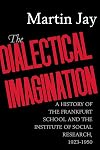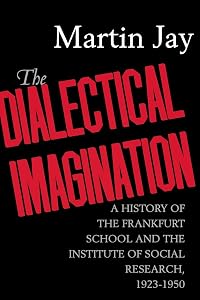
The Dialectical Imagination: A History of the Frankfurt School and the Institute of Social Research, 1923-1950
by Martin Jay
On This Page
Description
Herbert Marcuse, Erich Fromm, Max Horkheimer, Franz Neumann, Theodor Adorno, Leo Lowenthal-the impact of the Frankfurt School on the sociological, political, and cultural thought of the twentieth century has been profound. The Dialectical Imagination is a major history of this monumental cultural and intellectual enterprise during its early years in Germany and in the United States. Martin Jay has provided a substantial new preface for this edition, in which he reflects on the continuing show more relevance of the work of the Frankfurt School. show lessTags
Recommendations















Member Reviews
In the early 1920s, a formidable array of intellectual talent coalesced into a group that called themselves the Institut fur Sozialforschung (the Institute for Social Research). They would later come to be known more simply as the Frankfurt School. Consisting mostly of assimilated German Jews, they had a truly impressive body of interests, running from sociology, sinology, philosophy, Marxism, musicology, psychology, and psychoanalysis. Max Horkheimer and Theodor Adorno are probably most affiliated with the first generation of the school, but it also included Herbert Marcuse, Erich Fromm, Leo Lowenthal, Paul Lazarsfeld, and Franz Neumann, many of whom are still read today.
But when one does hear the words “Frankfurt School” today, show more their influence on Marxism is perhaps what most immediately comes to mind. The members thought that the German Social Democratic Party was spineless and ineffective, but equally thought that the Communist party was too hard-lined and ideological. Because of this, their academic work paved a middle course between the bourgeois politics of the Social Democrats and the sclerotic, obsolescent, vulgar Marxism that they perceived in Germany, and which was soon to all but disappear.
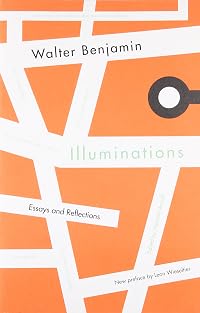
Martin Jay uses this book as an opportunity to write a multi-person biography of many of the figures above, interlarded with the objective, measured perspective that I’ve come to know Jay for. (I’ve also read his “Songs of Experience: Modern American and European Variations on a Universal Theme,” which is a philosophical history of experience over the last four hundred years or so, and which I have also reviewed for this site.) He discusses the major work which they produced, including their analysis of Nazism, aesthetic theory and Adorno’s devastating critique of mass culture, and the later more empirical work that came out after World War II. In the last chapter, some of the contributions of Walter Benjamin, a figure more peripherally related to the school but still extraordinarily important in his own right, are more fully fleshed out. In school, I read Benjamin’s “Art in the Age of Mechanical Reproduction” (which I’m sure that every student in a philosophy of art course is made to read), and found that it completely changed some of my assumptions about aesthetic experience. I have several other volumes of Benjamin’s work, including one of media criticism, and Jay’s book has made me much more curious to pick those up.
If there is one complaint that I could level against the book, it would be that Jay pays almost equal attention to everyone, even those figures that few people really read these days. For whatever reason, I thought “history of the Frankfurt School” might mean “a detailed discussion of Horkheimer and Adorno,” with maybe a little Marcuse or Benjamin tossed in for good measure. But he really tells the entire history of the Institute itself, including how it was funded and the minor figures that no one really except for perhaps academic specialists read anymore (like Neumann and Lazarsfeld). If you’re looking for a book that gives a more straightforward account on the major ideas of critical theory and its continuing interdisciplinary influences, this isn’t really the book that you’re looking for – which is what this book seemed to be – this isn’t really the book for you. If this is what you’re more interested in I’ve heard, though I can’t confirm since I haven’t read them, that the Very Short Introduction’s book on the group by Stephen E. Bronner or Thomas Wheatland’s “The Frankfurt School in Exile” might be more appropriate. show less
But when one does hear the words “Frankfurt School” today, show more their influence on Marxism is perhaps what most immediately comes to mind. The members thought that the German Social Democratic Party was spineless and ineffective, but equally thought that the Communist party was too hard-lined and ideological. Because of this, their academic work paved a middle course between the bourgeois politics of the Social Democrats and the sclerotic, obsolescent, vulgar Marxism that they perceived in Germany, and which was soon to all but disappear.
Martin Jay uses this book as an opportunity to write a multi-person biography of many of the figures above, interlarded with the objective, measured perspective that I’ve come to know Jay for. (I’ve also read his “Songs of Experience: Modern American and European Variations on a Universal Theme,” which is a philosophical history of experience over the last four hundred years or so, and which I have also reviewed for this site.) He discusses the major work which they produced, including their analysis of Nazism, aesthetic theory and Adorno’s devastating critique of mass culture, and the later more empirical work that came out after World War II. In the last chapter, some of the contributions of Walter Benjamin, a figure more peripherally related to the school but still extraordinarily important in his own right, are more fully fleshed out. In school, I read Benjamin’s “Art in the Age of Mechanical Reproduction” (which I’m sure that every student in a philosophy of art course is made to read), and found that it completely changed some of my assumptions about aesthetic experience. I have several other volumes of Benjamin’s work, including one of media criticism, and Jay’s book has made me much more curious to pick those up.
If there is one complaint that I could level against the book, it would be that Jay pays almost equal attention to everyone, even those figures that few people really read these days. For whatever reason, I thought “history of the Frankfurt School” might mean “a detailed discussion of Horkheimer and Adorno,” with maybe a little Marcuse or Benjamin tossed in for good measure. But he really tells the entire history of the Institute itself, including how it was funded and the minor figures that no one really except for perhaps academic specialists read anymore (like Neumann and Lazarsfeld). If you’re looking for a book that gives a more straightforward account on the major ideas of critical theory and its continuing interdisciplinary influences, this isn’t really the book that you’re looking for – which is what this book seemed to be – this isn’t really the book for you. If this is what you’re more interested in I’ve heard, though I can’t confirm since I haven’t read them, that the Very Short Introduction’s book on the group by Stephen E. Bronner or Thomas Wheatland’s “The Frankfurt School in Exile” might be more appropriate. show less
Titolo: L' immaginazione dialettica. Storia della Scuola di Francoforte e dell'Istituto per le ricerche sociali (1923-1950)
Autore: Martin Jay
Traduttore: Paoli N.
Editore: Einaudi
Collana: Piccola biblioteca Einaudi
Data di Pubblicazione: 1979
ISBN: 8806178717
ISBN-13: 9788806178710
Pagine: XX-515
Reparto: Filosofia > Metafisica e ontologia
Autore: Martin Jay
Traduttore: Paoli N.
Editore: Einaudi
Collana: Piccola biblioteca Einaudi
Data di Pubblicazione: 1979
ISBN: 8806178717
ISBN-13: 9788806178710
Pagine: XX-515
Reparto: Filosofia > Metafisica e ontologia
LBB-1
Jun 21, 2022Catalan
Ratings
Members
- Recently Added By
Author Information

23+ Works 1,429 Members
Martin Jay is the Sidney Hellman Ehrman Professor of History at the University of California-Berkeley, and the author of Essays from the Edge (Virginia).
Awards and Honors
Awards
Series
Belongs to Publisher Series
Common Knowledge
- Canonical title
- The Dialectical Imagination: A History of the Frankfurt School and the Institute of Social Research, 1923-1950
- Original title
- The Dialectical Imagination: A History of the Frankfurt School and the Institute of Social Research, 1923-1950
- Original publication date
- 1973
- Dedication*
- Ai miei genitori
Edward e Sari Jay - First words*
- Nel mondo moderno è diventato un luogo comune considerare l'intellettuale come un individuo estraniato, disadattato e insoddisfatto.
Introduzione
Uno dei più notevoli mutamenti prodotti dalla prima guerra mondiale, almeno per quanto riguarda la sua ripercussione sugli intellettuali fu lo spostamento a oriente del centro gravitazionale del socialismo. - Last words*
- (Click to show. Warning: May contain spoilers.)Per quanto la maggior parte del mio lavoro sia dedicata alle idee della Scuola di Francoforte spero che alcune di quelle esperienze e i loro rapporti con le idee siano evidenti, perché, per molti versi, bene male esse furono le uniche esperienze di una generazione straordinaria il cui momento storico è ormai irrevocabilmente passato.
Introduzione
(Click to show. Warning: May contain spoilers.)Scrivere teorie sociali e fare ricerca scientifica era tollerabile solo se si conservava intatto il loro impulso critico e negativo, perché, e su questo punto la Scuola di Francoforte ha sempre insistito, era solo rifiutando di lodare il presente che si poteva conservare la possibilità di un futuro in cui scrivere una poesia non sarebbe più stato un atto di barbarie. - Original language
- English
*Some information comes from Common Knowledge in other languages. Click "Edit" for more information.
Classifications
- Genres
- Nonfiction, Sociology, Philosophy, Literature Studies and Criticism, History, General Nonfiction
- DDC/MDS
- 300.720434164 — Society, government, & culture Social sciences, sociology & anthropology Social sciences Education And Research Social sciences--research
- LCC
- H62 .J37 — Social sciences Social sciences (General)
- BISAC
Statistics
- Members
- 534
- Popularity
- 56,130
- Reviews
- 3
- Rating
- (3.76)
- Languages
- 9 — Chinese, Dutch, English, French, German, Italian, Portuguese, Spanish, Turkish
- Media
- Paper, Ebook
- ISBNs
- 16
- ASINs
- 7