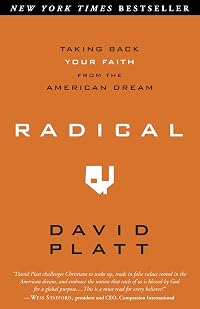
Radical: Taking Back Your Faith from the American Dream
by David Platt
On This Page
Description
New York Times bestsellerWhat is Jesus worth to you?
It's easy for American Christians to forget how Jesus said his followers would actually live, what their new lifestyle would actually look like. They would, he said, leave behind security, money, convenience, even family for him. They would abandon everything for the gospel. They would take up their crosses daily...
But who do you know who lives like that? Do you?
In Radical, David Platt challenges you to consider with an open heart show more how we have manipulated the gospel to fit our cultural preferences. He shows what Jesus actually said about being his disciple—then invites you to believe and obey what you have heard. And he tells the dramatic story of what is happening as a "successful" suburban church decides to get serious about the gospel according to Jesus.
Finally, he urges you to join in The Radical Experiment — a one-year journey in authentic discipleship that will transform how you live in a world that desperately needs the Good News Jesus came to bring. show less
Tags
Recommendations

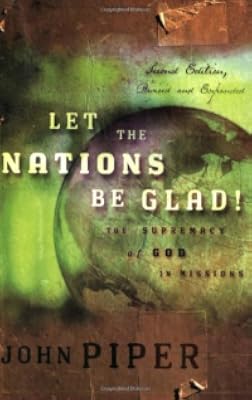



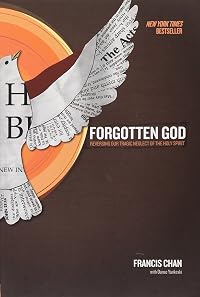

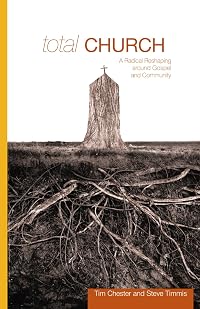
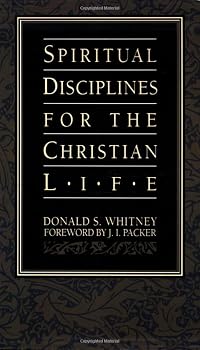






Member Reviews
It is ironic to call a book entitled "Radical" imbalanced; by the nature of the case, such is Platt's goal. A gifted preacher, and a personable writer, Platt's call is good, but his technique is cruel, and his application over-generalized. Some Christians are called to radical lives like he describes; but others are called to be radical in a different way. Platt misses the radical nature of a life of boring Christian faithfulness, and sees no middle ground between the life of a first-century evangelist and the american dream.
If God flooded the church with more people heeding Platt's call, much good would be done, but with such a short-sighted vision, it would be temporary at best. The Apostle Paul had learned how to abound, as well as show more how to be in want. Platt sees that many American Christians have abundance, but don't know how to use it. Unfortunately, his answer involves running right back to being in want, and not actually learning how to abound in a way that glorifies God. He explicitly denies making wealth the problem, but his answer involves getting rid of wealth. It is hard to see how someone could accumulate the immense capital needed to do the good work of a C.T. Studd without it looking on the surface like he was pursuing something like the american dream. Much of Platt's motivation comes in the form of guilt manipulation, disguised in the language of God's glory. He doesn't appear to have a category for the faithful father who spends his life working to provide his children with a bed, food, and a college education (all things which Platt sees as good, and not opposed to the radical living he is talking about), who gives faithfully to his Church, and saves enough to enable his children to do the same. Is God not just as glorified by generations of boring faithfulness as he is with one dramatic spending of capital?
His eschatology seems to constrain his thought to the short term, as the immediate swallows up the long-term, and his baptistic atomism leads him to put what should be covenantal, communal expectations on individual churches and people.
His heart is in the right place, and many people need to hear his call. But he mistakes a calling for the Christian life. The things he cautions Christians against indulging in are explicitly promised to Christians as the blessing of God. He warns Christians against blessings without nuance, or at least without appreciating the true weight of the nuances he nods his head to. Wealth and blessings are to be used and developed, not scattered and avoided. Strangely, at the end of the day, it is the american dream that is not as radically materialistic as the blessings God promises to give to his faithful people. By mistakenly "spiritualizing" away the idea of heavenly treasure, and by not allowing the blessings that Christ the King gives to his people to be a reality in this age (though of course not as fully or completely as at the end of all things) Platt has given us a radically imbalanced picture of the Christian life.
If God gave us many more radical Christians like Platt calls for, it would be a great blessing to the world. But if every Christian took Platt's call as the normal Christian life, a crushing burden of guilt and a short-sighted vision would harm the Church. show less
If God flooded the church with more people heeding Platt's call, much good would be done, but with such a short-sighted vision, it would be temporary at best. The Apostle Paul had learned how to abound, as well as show more how to be in want. Platt sees that many American Christians have abundance, but don't know how to use it. Unfortunately, his answer involves running right back to being in want, and not actually learning how to abound in a way that glorifies God. He explicitly denies making wealth the problem, but his answer involves getting rid of wealth. It is hard to see how someone could accumulate the immense capital needed to do the good work of a C.T. Studd without it looking on the surface like he was pursuing something like the american dream. Much of Platt's motivation comes in the form of guilt manipulation, disguised in the language of God's glory. He doesn't appear to have a category for the faithful father who spends his life working to provide his children with a bed, food, and a college education (all things which Platt sees as good, and not opposed to the radical living he is talking about), who gives faithfully to his Church, and saves enough to enable his children to do the same. Is God not just as glorified by generations of boring faithfulness as he is with one dramatic spending of capital?
His eschatology seems to constrain his thought to the short term, as the immediate swallows up the long-term, and his baptistic atomism leads him to put what should be covenantal, communal expectations on individual churches and people.
His heart is in the right place, and many people need to hear his call. But he mistakes a calling for the Christian life. The things he cautions Christians against indulging in are explicitly promised to Christians as the blessing of God. He warns Christians against blessings without nuance, or at least without appreciating the true weight of the nuances he nods his head to. Wealth and blessings are to be used and developed, not scattered and avoided. Strangely, at the end of the day, it is the american dream that is not as radically materialistic as the blessings God promises to give to his faithful people. By mistakenly "spiritualizing" away the idea of heavenly treasure, and by not allowing the blessings that Christ the King gives to his people to be a reality in this age (though of course not as fully or completely as at the end of all things) Platt has given us a radically imbalanced picture of the Christian life.
If God gave us many more radical Christians like Platt calls for, it would be a great blessing to the world. But if every Christian took Platt's call as the normal Christian life, a crushing burden of guilt and a short-sighted vision would harm the Church. show less
 This review was written for LibraryThing Early Reviewers.
Essentially, semi-Pelagianism on steroids, so if you define the purpose of Gospel as the divine reality meant to convict the church and spur it on to good work through guilt-inducing commands, this is your book. If you, however, believe Gal 5:1, avoid this book.
Platt takes his much-needed and refreshing Evangelical social critique and instead of using it to inspire Christians to work for the common good (1 Cor 12:7), he uses it as a truly effective hammer of Law. Guilt reigns as the author details how the American church has lost sight of the Gospel and in some sense become an organization antithetical to the bloody cross. He rightly calls the church back to its roots: radical service to the poor and a mission to all nations. The show more author, however, seems unable to do so without making readers second-guess own their fruits and validity of their faith claims.
Ultimately, without any room for a Christian brotherhood containing any who are broken in ways he is not, Platt fills his book with speculative exegesis that based on assumptions he brings to the table.
The book works well for Christians who prioritize Matt 7:16-23 over Eph 2:8-9, giving the Arminian reader many more imperatives for their arsenal, and therefore, an even higher standard to 1) be convicted of, and 2) judge others by. No one in the book hears the plight of the poor and believes they’re truly free to ignore them. Instead, every example contains someone who wrestles with whether to be faithful or disobedient, ultimately motivated not by love but by obligation, obedience, and guilt. Sadly, the book does a disservice to the poor since Platt never calls people to help the poor for the sake of the poor. Rather, Platt's logic usually goes
1. There are many poor with desparate needs.
2. Christians are called to help the poor.
3. Are you helping the poor?
4. Maybe your lack of helping the poor is a sign of your spiritual emptiness.
Although I agree with Platt's conclusions, since he always presents service thusly, the reader motivated by his writing is often not motivated out of love but rather out of a sense of duty and a desire for evidence of the Spirit in their life. He always brings in the issue of personal piety to confuse people's motives, undercutting the even more central command to love.
Finally, and ironically, his critique of the American Dream is lightweight. Sanitized for the American Christian, Platt never prods deep enough to ask questions that get to the real heart of consumerism, which is sad. show less
Platt takes his much-needed and refreshing Evangelical social critique and instead of using it to inspire Christians to work for the common good (1 Cor 12:7), he uses it as a truly effective hammer of Law. Guilt reigns as the author details how the American church has lost sight of the Gospel and in some sense become an organization antithetical to the bloody cross. He rightly calls the church back to its roots: radical service to the poor and a mission to all nations. The show more author, however, seems unable to do so without making readers second-guess own their fruits and validity of their faith claims.
Ultimately, without any room for a Christian brotherhood containing any who are broken in ways he is not, Platt fills his book with speculative exegesis that based on assumptions he brings to the table.
The book works well for Christians who prioritize Matt 7:16-23 over Eph 2:8-9, giving the Arminian reader many more imperatives for their arsenal, and therefore, an even higher standard to 1) be convicted of, and 2) judge others by. No one in the book hears the plight of the poor and believes they’re truly free to ignore them. Instead, every example contains someone who wrestles with whether to be faithful or disobedient, ultimately motivated not by love but by obligation, obedience, and guilt. Sadly, the book does a disservice to the poor since Platt never calls people to help the poor for the sake of the poor. Rather, Platt's logic usually goes
1. There are many poor with desparate needs.
2. Christians are called to help the poor.
3. Are you helping the poor?
4. Maybe your lack of helping the poor is a sign of your spiritual emptiness.
Although I agree with Platt's conclusions, since he always presents service thusly, the reader motivated by his writing is often not motivated out of love but rather out of a sense of duty and a desire for evidence of the Spirit in their life. He always brings in the issue of personal piety to confuse people's motives, undercutting the even more central command to love.
Finally, and ironically, his critique of the American Dream is lightweight. Sanitized for the American Christian, Platt never prods deep enough to ask questions that get to the real heart of consumerism, which is sad. show less
Mixed feelings/thoughts about this book overall — would mildly recommend.
There were parts of the book that I felt were convicting and challenging to me personally:
- giving past generously to the point it hurts
- getting outside our church bubble and getting to know people in another context
- realizing we’re all called to ‘go,’ it’s just a matter of when, where, and for how long
Entirely on me: it’s easy to read a book and get a jolt of spiritual electricity. It’s much harder to actually apply it in a sustainable, meaningful, lifechanging way. Doing that is fully my responsibility…I’m just putting it here that I wrestle with this and won’t know whether I got it right until I give an accounting to God someday.
What show more didn’t hit quite right:
- It’s not really radical to live Biblically though it might seem it because of cultural context.
- Ministry and missions cost money. Some people go and others’ role may be to fund them, possibly even with their income from full-time corporate jobs. Going on a mission trip is a wonderful experience, but not everyone can and not every church offers the opportunity. Those who don’t go aren’t less than.
- Serving others and spreading the gospel is vitally important, but there can be a tendency to overlook people right in our communities and ‘backyards.’ They matter to God, too; every soul does.
- By design, Churches are loaded with imperfect people. As a result, the Church can be wasteful and political, especially when money is involved (same with non-profits, even Christian ones). Look at the percentage of spent on the mission versus salaries, buildings, and overhead, check out the leadership, accountability, and who controls the purse strings. If you ask Him, God will show you how He wants you to use His resources.
- Platt hasn’t stepped away from megachurch pastoring or stopped taking a salary as far as I know (that’s an observation, not necessarily a criticism though it’s a potential one). From the outside, it’s unclear how radical his leadership is around his teachings. Teachers/pastors aren’t perfect either--test their teaching against scripture standards.
-Radical was Platt’s first book and though he expresses some sensitivities about publshing, I guess success overruled any hesitancy to publish more. He’s since authored a whole lot of books. When pastors get so visible they become ‘brands,’ that makes me uneasy.
I don’t know Platt and certainly am not in a position to judge him. Radical makes some sound points, especially to the point it points you to Jesus. Beyond that, let scripture guide you to know better who God is, His character, and how to boldly and unconventionally live your faith in a God-pleasing way whatever your circumstances and cultural context. show less
There were parts of the book that I felt were convicting and challenging to me personally:
- giving past generously to the point it hurts
- getting outside our church bubble and getting to know people in another context
- realizing we’re all called to ‘go,’ it’s just a matter of when, where, and for how long
Entirely on me: it’s easy to read a book and get a jolt of spiritual electricity. It’s much harder to actually apply it in a sustainable, meaningful, lifechanging way. Doing that is fully my responsibility…I’m just putting it here that I wrestle with this and won’t know whether I got it right until I give an accounting to God someday.
What show more didn’t hit quite right:
- It’s not really radical to live Biblically though it might seem it because of cultural context.
- Ministry and missions cost money. Some people go and others’ role may be to fund them, possibly even with their income from full-time corporate jobs. Going on a mission trip is a wonderful experience, but not everyone can and not every church offers the opportunity. Those who don’t go aren’t less than.
- Serving others and spreading the gospel is vitally important, but there can be a tendency to overlook people right in our communities and ‘backyards.’ They matter to God, too; every soul does.
- By design, Churches are loaded with imperfect people. As a result, the Church can be wasteful and political, especially when money is involved (same with non-profits, even Christian ones). Look at the percentage of spent on the mission versus salaries, buildings, and overhead, check out the leadership, accountability, and who controls the purse strings. If you ask Him, God will show you how He wants you to use His resources.
- Platt hasn’t stepped away from megachurch pastoring or stopped taking a salary as far as I know (that’s an observation, not necessarily a criticism though it’s a potential one). From the outside, it’s unclear how radical his leadership is around his teachings. Teachers/pastors aren’t perfect either--test their teaching against scripture standards.
-Radical was Platt’s first book and though he expresses some sensitivities about publshing, I guess success overruled any hesitancy to publish more. He’s since authored a whole lot of books. When pastors get so visible they become ‘brands,’ that makes me uneasy.
I don’t know Platt and certainly am not in a position to judge him. Radical makes some sound points, especially to the point it points you to Jesus. Beyond that, let scripture guide you to know better who God is, His character, and how to boldly and unconventionally live your faith in a God-pleasing way whatever your circumstances and cultural context. show less
I recently received a recommendation from a couple of pastors for the book, Radical, Taking Back Your Faith From the American Dream. I certainly would not recommend it – especially to an immature Christian or interpreter. Dr. David Platt is the author; he is a middle aged pastor of The Church at Brook Hills, a four-thousand-member congregation in Birmingham, AL. This is the synopsis from the back cover of the book, “It’s easy for American Christians to forget how Jesus said his followers would actually live, what their new lifestyle would actually look like. They would, he said, leave behind security, money, convenience, even family for him. They would abandon everything for the gospel, they would take up their crosses daily. . show more .”
A few thoughts about it:
1. It is a Best Seller. I’m suspicious of any religious book that makes the New York Times bestseller list. To me that makes it a “fad” book. I’ve heard that pastors have had congregants “raving” about the book. This is reminiscent of the book In His Steps that popularized the acronym WWJD. which is seen on jewelry, clothing, Bible covers, and even some church decor. In my 10 years of ministry and 25 plus years of Christian life, I’ve known few solid and mature Christians who are heavily influenced by “fad” books. Most of them are “plodders” whose lives are more influenced by a consistent diet of God’s Word through their daily reading or weekly pastoral preaching.
2. It is experiential, not expositional. In addition to the previous point, there are very few sources quoted other than the Bible. Several of those sources are memoirs or biographies which do not offer anything authoritative, just a powerful quotation, opinions, or a personal experience. Furthermore, he spends far more time giving examples which support his assertions than he does explaining the Scriptures from which he has developed his conclusions. This is very similar to Bill Gothard (if you are familiar with his teachings). Bill Gothard’s interpretations of Scripture are often dubious, yet he has an ability to weave in an illustration which seems to prove his interpretation. Unfortunately, many Christians do not have enough hermeneutical understanding to realize that they are allowing themselves to be swayed by someone else’s experience rather than being confronted with absolute truth. Quite candidly, there is far more storytelling and opining in this book, which appeals to the emotions, than Biblical exposition, which appeals to the will.
3. It isn’t radical, but normal discipleship (based on sound doctrine). As I read through the book and thought on the author’s examples of what people that he knew were doing, it dawned on me that that what he describes as “radical” is actually “normal” for the kinds of Christians that I have known for my whole life. I’ve known many Christians who have quit their jobs, sold their houses, and gone to a Bible college/university/seminary to prepare for full time work on a foreign mission field. I’ve known many Christians who have long given more than a 10% tithe and have often sacrificed to be able to give more and more to the work of God. I’ve known many Christians who have spent a week or two each year going on short term mission trips and have been regularly involved in all kinds of ministries intended to reach those who are lost and spread God’s glory. The author eluded a couple of times to the mega church movement and the health, wealth, and prosperity gospel. He seems to be working off of the premise that most Christians in the U.S. are of the Joel Osteen caliber and he is trying to rescue them from that misunderstanding – I do appreciate that attempt. However, it concerns me that Christians in my circle, that I thought already understood discipleship, are so taken with this book.
4. It is theologically confusing. It used to be, that if I didn’t understand something about which an author was writing, I thought that I was unintelligent. Now, having written, preached, and taught as much as I have, I realize that it is just as much or more the author’s fault. It is more the author’s responsibility to communicate than it is the recipient’s to decipher what is being written or explained. Frankly, I’m still a bit confused about where the author stands on two particular theological questions:
A) The Holy Spirit? Any man who has earned a doctorate understands his word usage. Furthermore, when he repeats something, it is obviously for the sake of emphasis. I’m not sure what Dr. Platt believes about the Holy Spirit. He writes of the continual “coming” of the Holy Spirit rather than the constant presence. It seems like he has more of an Old Testament understanding of the Holy Spirit than a New Testament one. Here are several examples (pages 57-58): “The Holy Spirit comes to dwell in you” and “he answers by sending the Holy Spirit” and “God gives you the Spirit of wisdom” and “God gives you the Spirit of power” and when you ask for the fruit of the Spirit, “he gives you the Spirit, who makes these things a reality in your life.” The author goes on to say “We ask God for gifts in prayer, and he gives us the Giver.” He concludes with something that he calls bold; I’ll quote it entirely. The author is hypothetically speaking to God, “Would you . . . would you just come down, live in me, and walk through this for me?” Then, “Isn’t it pushing the envelope to ask the God of the universe to come down and take residence in you and me?” I’m very confused with what Dr. Platt believes. According to what the Bible teaches about salvation and the Holy Spirit, that happened once at the moment of salvation. As insinuated already, he is using the verb tenses that he is using on purpose, and he used them repeatedly, so I’m inclined to think that he doesn’t have the same Pneumatology that I do. Perhaps Dr. Platt is not a Dispensationalist, or perhaps he does not believe in the permanency of the indwelling of the Spirit, perhaps he is a non-cessationist, or perhaps – but not likely – he didn’t realize what he was writing? I can only surmise . . . but we’re not on the same page.
B) Salvation or Sanctification? Dr. Platt’s usage of the Scriptures was scary (not for me, but thinking of an undiscerning person reading his interpretations and applications). Most of his assertions regarding money, possessions, and discipleship, were taken from either parables or individual encounters in the gospels. I’ll give a couple of examples. First, the rich man and Lazarus in Luke chapter 16: the book, Radical, is written to Christians and Dr. Platt asks the question on page 114, “with whom do you identify more – Lazarus or the rich man? For that matter, with whom do I identify more?” He then goes on by stating that he realized he was more like the rich man than Lazarus – as are, in his conclusion, the bulk of the people reading his book. However, the context must be clearly understood before conclusions can be made. This story was told to “the Pharisees, who were covetous . . . and they derided him.” Jesus’ point in the story was to show that the covetousness of the Pharisees was keeping them from receiving Him as their Messiah. This is not a lesson taught to Christians regarding sanctification. Jesus was not teaching here that believers must give up their wealth if they will be committed disciples, He was warning that adherence to wealth would keep the Pharisees from salvation. Using this story to ask those who are believers with whom they identify is confusing – and possibly manipulative (though I can’t discern the author’s motives). Regardless, it is a wrong interpretation. He concludes this segment by basically saying (page 115), that Christians in the U.S. are like the rich man and that if we neglect the Lazaruses of other countries (especially believers in other countries), that we are not really the people of God. I can’t be any clearer, his interpretation is wrong and therefore his application is baseless. Unfortunately, it will be read by undiscerning people and be presumed to be true and they will make life decisions based on faulty teaching. Secondly, the rich young man in Mark chapter 10: this encounter clearly begins with an unsaved man. Jesus tells him that to inherit eternal life, he must sell all that he has and give it to the poor. The question here is not, “I’m a believer, what must I do to be a more committed disciple.” A couple of paragraphs later, Dr. Platt says, “If Mark 10 teaches anything, it teaches us that Jesus does sometimes call people to sell everything they have and give it to the poor.” This is blatantly false, it is not the one thing the passage is teaching. The man that Jesus was talking to was an unbeliever whose question was about salvation, not sanctification.
Do I believe that believers should sacrifice as a part of discipleship? Yes. Do I believe that one’s generosity is an indication of discipleship? Yes. Do I believe that greed and possessions can hinder discipleship? Yes. However, Dr. Platt is confusing the issue by taking passages of Scripture that are speaking of whether or not one is even saved and then applying it to the sanctification aspect of discipleship. This approach will undoubtedly cause unsaved people to think that they must give up wealth to be saved (works salvation). Or, it will cause those who are saved to doubt their salvation because they have not sold everything and given it to the poor. This is not just my assumption about the author’s intent; he essentially states this on page 125 while speaking of how hard it is for the rich man to enter into the kingdom, “We just don’t believe that our wealth can be a barrier to entering the kingdom of God.” Again, when he uses the word “We” he is speaking of himself and the Christians to whom he is writing the book.
The book is confusing because the author uses Scripture which is teaching that wealth will keep the unsaved people from faith in Christ and applying it to professing Christians. The unavoidable result will be for one to doubt their salvation. This is dangerous.
Enough for now; there is more that I could write, but I think I have sufficiently expressed my conclusions. show less
A few thoughts about it:
1. It is a Best Seller. I’m suspicious of any religious book that makes the New York Times bestseller list. To me that makes it a “fad” book. I’ve heard that pastors have had congregants “raving” about the book. This is reminiscent of the book In His Steps that popularized the acronym WWJD. which is seen on jewelry, clothing, Bible covers, and even some church decor. In my 10 years of ministry and 25 plus years of Christian life, I’ve known few solid and mature Christians who are heavily influenced by “fad” books. Most of them are “plodders” whose lives are more influenced by a consistent diet of God’s Word through their daily reading or weekly pastoral preaching.
2. It is experiential, not expositional. In addition to the previous point, there are very few sources quoted other than the Bible. Several of those sources are memoirs or biographies which do not offer anything authoritative, just a powerful quotation, opinions, or a personal experience. Furthermore, he spends far more time giving examples which support his assertions than he does explaining the Scriptures from which he has developed his conclusions. This is very similar to Bill Gothard (if you are familiar with his teachings). Bill Gothard’s interpretations of Scripture are often dubious, yet he has an ability to weave in an illustration which seems to prove his interpretation. Unfortunately, many Christians do not have enough hermeneutical understanding to realize that they are allowing themselves to be swayed by someone else’s experience rather than being confronted with absolute truth. Quite candidly, there is far more storytelling and opining in this book, which appeals to the emotions, than Biblical exposition, which appeals to the will.
3. It isn’t radical, but normal discipleship (based on sound doctrine). As I read through the book and thought on the author’s examples of what people that he knew were doing, it dawned on me that that what he describes as “radical” is actually “normal” for the kinds of Christians that I have known for my whole life. I’ve known many Christians who have quit their jobs, sold their houses, and gone to a Bible college/university/seminary to prepare for full time work on a foreign mission field. I’ve known many Christians who have long given more than a 10% tithe and have often sacrificed to be able to give more and more to the work of God. I’ve known many Christians who have spent a week or two each year going on short term mission trips and have been regularly involved in all kinds of ministries intended to reach those who are lost and spread God’s glory. The author eluded a couple of times to the mega church movement and the health, wealth, and prosperity gospel. He seems to be working off of the premise that most Christians in the U.S. are of the Joel Osteen caliber and he is trying to rescue them from that misunderstanding – I do appreciate that attempt. However, it concerns me that Christians in my circle, that I thought already understood discipleship, are so taken with this book.
4. It is theologically confusing. It used to be, that if I didn’t understand something about which an author was writing, I thought that I was unintelligent. Now, having written, preached, and taught as much as I have, I realize that it is just as much or more the author’s fault. It is more the author’s responsibility to communicate than it is the recipient’s to decipher what is being written or explained. Frankly, I’m still a bit confused about where the author stands on two particular theological questions:
A) The Holy Spirit? Any man who has earned a doctorate understands his word usage. Furthermore, when he repeats something, it is obviously for the sake of emphasis. I’m not sure what Dr. Platt believes about the Holy Spirit. He writes of the continual “coming” of the Holy Spirit rather than the constant presence. It seems like he has more of an Old Testament understanding of the Holy Spirit than a New Testament one. Here are several examples (pages 57-58): “The Holy Spirit comes to dwell in you” and “he answers by sending the Holy Spirit” and “God gives you the Spirit of wisdom” and “God gives you the Spirit of power” and when you ask for the fruit of the Spirit, “he gives you the Spirit, who makes these things a reality in your life.” The author goes on to say “We ask God for gifts in prayer, and he gives us the Giver.” He concludes with something that he calls bold; I’ll quote it entirely. The author is hypothetically speaking to God, “Would you . . . would you just come down, live in me, and walk through this for me?” Then, “Isn’t it pushing the envelope to ask the God of the universe to come down and take residence in you and me?” I’m very confused with what Dr. Platt believes. According to what the Bible teaches about salvation and the Holy Spirit, that happened once at the moment of salvation. As insinuated already, he is using the verb tenses that he is using on purpose, and he used them repeatedly, so I’m inclined to think that he doesn’t have the same Pneumatology that I do. Perhaps Dr. Platt is not a Dispensationalist, or perhaps he does not believe in the permanency of the indwelling of the Spirit, perhaps he is a non-cessationist, or perhaps – but not likely – he didn’t realize what he was writing? I can only surmise . . . but we’re not on the same page.
B) Salvation or Sanctification? Dr. Platt’s usage of the Scriptures was scary (not for me, but thinking of an undiscerning person reading his interpretations and applications). Most of his assertions regarding money, possessions, and discipleship, were taken from either parables or individual encounters in the gospels. I’ll give a couple of examples. First, the rich man and Lazarus in Luke chapter 16: the book, Radical, is written to Christians and Dr. Platt asks the question on page 114, “with whom do you identify more – Lazarus or the rich man? For that matter, with whom do I identify more?” He then goes on by stating that he realized he was more like the rich man than Lazarus – as are, in his conclusion, the bulk of the people reading his book. However, the context must be clearly understood before conclusions can be made. This story was told to “the Pharisees, who were covetous . . . and they derided him.” Jesus’ point in the story was to show that the covetousness of the Pharisees was keeping them from receiving Him as their Messiah. This is not a lesson taught to Christians regarding sanctification. Jesus was not teaching here that believers must give up their wealth if they will be committed disciples, He was warning that adherence to wealth would keep the Pharisees from salvation. Using this story to ask those who are believers with whom they identify is confusing – and possibly manipulative (though I can’t discern the author’s motives). Regardless, it is a wrong interpretation. He concludes this segment by basically saying (page 115), that Christians in the U.S. are like the rich man and that if we neglect the Lazaruses of other countries (especially believers in other countries), that we are not really the people of God. I can’t be any clearer, his interpretation is wrong and therefore his application is baseless. Unfortunately, it will be read by undiscerning people and be presumed to be true and they will make life decisions based on faulty teaching. Secondly, the rich young man in Mark chapter 10: this encounter clearly begins with an unsaved man. Jesus tells him that to inherit eternal life, he must sell all that he has and give it to the poor. The question here is not, “I’m a believer, what must I do to be a more committed disciple.” A couple of paragraphs later, Dr. Platt says, “If Mark 10 teaches anything, it teaches us that Jesus does sometimes call people to sell everything they have and give it to the poor.” This is blatantly false, it is not the one thing the passage is teaching. The man that Jesus was talking to was an unbeliever whose question was about salvation, not sanctification.
Do I believe that believers should sacrifice as a part of discipleship? Yes. Do I believe that one’s generosity is an indication of discipleship? Yes. Do I believe that greed and possessions can hinder discipleship? Yes. However, Dr. Platt is confusing the issue by taking passages of Scripture that are speaking of whether or not one is even saved and then applying it to the sanctification aspect of discipleship. This approach will undoubtedly cause unsaved people to think that they must give up wealth to be saved (works salvation). Or, it will cause those who are saved to doubt their salvation because they have not sold everything and given it to the poor. This is not just my assumption about the author’s intent; he essentially states this on page 125 while speaking of how hard it is for the rich man to enter into the kingdom, “We just don’t believe that our wealth can be a barrier to entering the kingdom of God.” Again, when he uses the word “We” he is speaking of himself and the Christians to whom he is writing the book.
The book is confusing because the author uses Scripture which is teaching that wealth will keep the unsaved people from faith in Christ and applying it to professing Christians. The unavoidable result will be for one to doubt their salvation. This is dangerous.
Enough for now; there is more that I could write, but I think I have sufficiently expressed my conclusions. show less
I was very impressed - and refreshed - by this book. Although unfortunately grievous in some of its details (like the deacon who said that he would "just as soon God annihilate [the people on the streets of New Orleans] and send them to hell"), the book outlines the sad state of the church in America today, and calls us to be more. To be radical. Readers are challenged to change our thinking about what "successful" Christianity is.
For instance, are megachurches the model we see in the Gospels? Or did Jesus lead more of a "minichurch"? Are we hungry for comfort and entertainment? Or for the Word? Do we urge people to repentance? Or just to "repeat after me" and mindlessly echo some words? Do we prioritize the things Jesus prioritizes? show more Do we depend primarily on ourselves, or on God? What are we DOING for the God who redeemed us?
As the author rephrases familiar Scriptures to strip from them their OVERLY-familiar "Christianese" and make us really THINK about what they actually say, we are charged to truly serve Christ: with our time, our habits, our finances, our decisions.
It was refreshing to me to see that there are still pastors out there teaching the hard-hitting truth of Scripture. (And, as best I can tell, living it.)
This is an absolute must-read for every Christian in America. show less
For instance, are megachurches the model we see in the Gospels? Or did Jesus lead more of a "minichurch"? Are we hungry for comfort and entertainment? Or for the Word? Do we urge people to repentance? Or just to "repeat after me" and mindlessly echo some words? Do we prioritize the things Jesus prioritizes? show more Do we depend primarily on ourselves, or on God? What are we DOING for the God who redeemed us?
As the author rephrases familiar Scriptures to strip from them their OVERLY-familiar "Christianese" and make us really THINK about what they actually say, we are charged to truly serve Christ: with our time, our habits, our finances, our decisions.
It was refreshing to me to see that there are still pastors out there teaching the hard-hitting truth of Scripture. (And, as best I can tell, living it.)
This is an absolute must-read for every Christian in America. show less
This review was written for LibraryThing Early Reviewers.If you are content with trying to be a Christian and having the "American dream," then don't read this book.
If you like being comfortable, don't read this book.
But if you're really trying to follow Jesus no matter what the cost, then by all means you must consider this book.
The author convincingly and in a convicting way sets forth the contrasts between what Jesus demands of His followers and the ideals of the "American dream." He is more than willing to point fingers at churches and believers and how they have "sold out" the hard parts of the message of Jesus in their pursuit of American ideals. He then shows the way toward radical discipleship-- standing firm for Biblical truth, giving sacrificially, showing concern for the poor and show more dispossessed, and proclaiming the Gospel of the Kingdom boldly in all places.
Many a sacred cow of American Christianity are eloquently slaughtered, and it is for the best, even if it is uncomfortable. The only reason why I cannot make a wholesale endorsement of the book is the Evangelical predisposition of the author and his insistence on faith only and eternal security.
Nevertheless, the book is most worthy of consideration. show less
If you like being comfortable, don't read this book.
But if you're really trying to follow Jesus no matter what the cost, then by all means you must consider this book.
The author convincingly and in a convicting way sets forth the contrasts between what Jesus demands of His followers and the ideals of the "American dream." He is more than willing to point fingers at churches and believers and how they have "sold out" the hard parts of the message of Jesus in their pursuit of American ideals. He then shows the way toward radical discipleship-- standing firm for Biblical truth, giving sacrificially, showing concern for the poor and show more dispossessed, and proclaiming the Gospel of the Kingdom boldly in all places.
Many a sacred cow of American Christianity are eloquently slaughtered, and it is for the best, even if it is uncomfortable. The only reason why I cannot make a wholesale endorsement of the book is the Evangelical predisposition of the author and his insistence on faith only and eternal security.
Nevertheless, the book is most worthy of consideration. show less
This review was written for LibraryThing Early Reviewers.Radical by David Platt was exactly that: radical. I was challenged and inspired by this book. The author has made some great observations of our society and gives the Christian reader suggestions (based on commands from God) on what we can do to ensure we aren't "conformed to this world" (Romans 12:2).
David Platt believes that there are many professing Christians who "have in many areas blindly and unknowingly embraced values and ideas that are common in our culture but are antithetical to the gospel (Jesus) taught." He goes on to say: "Here we stand amid an American dream dominated by self-advancement, self-esteem, and self-sufficiency, by individualism, materialism, and universalism. Yet I want to show you our desperate need to show more revisit the words of Jesus, to listen to them, to believe them, and to obey them. We need to return with urgency to a biblical gospel, because the cost of not doing so is great for our lives, our families, our churches, and the world around us."
In Chapter Two, the author does a great job of describing the gospel, then he goes on to explain what he sees as the problem in our churches today:
"The dangerous assumption we unkowingly accept in the American dream is that our greatest asset is our own ability. The American dream prizes what people can accomplish when they believe in themselves and trust in themselves, and we are drawn toward such thinking. But the gospel has different priorities. The gospel beckons us to die to ourselves and to believe in God and to trust in his power."
"While the goal of the American dream is to make much of us, the goal of the gospel is to make much of God."
One illustration that I will not soon forget is about the time the author was reading a "Christian news publication" and noticed two headlines next to each other. One pronounced the celebration of a new $23 million building for a church. The article beneath described the church's new sanctuary which consisted of marble, stained glass, etc. The other headline was atop a much smaller article. It proclaimed that "Baptist Relief Helps Sudanese Refugees." Nothing wrong with that, except the article stated that 350,000 Sudanese refugees were dying of malnutrition, and "Baptists have raised $5,000 to send to refugees in western Sudan." I almost cried when I read that.
Next, Mr. Platt explains in detail what he sees as the solution to the problem: obey God in reaching the world for Christ with the gospel. He suggests we consider the words of Jesus to the rich young ruler to go and sell everything he had and follow Christ. What "things" do we need to give up in order to follow Jesus? "What luxuries does God intend for my family and me to savor, and what luxuries does God invite us to sacrifice?" Then, there is the challenge to go to those who need to hear the gospel.
In the last chapter of the book, the author sums up all he says by suggesting the following:
"I dare you over the next year to:
1. pray for the entire world;
2. read through the entire Word;
3. sacrifice your money for a specific purpose;
4. spend you time in another context;
5. commit your life to a multiplying community."
I gained a lot by reading this book. I will be going through it again and praying to see what the Lord will have me do in these areas. Here is one more quote (my favorite from the book):
"Radical obedience to Christ is not easy; it is dangerous. It is not smooth sailing aboard a luxury liner; it is sacrificial duty aboard a troop carrier. It's not comfort, not health, not wealth, and not prosperity in this world. Radical obedience to Christ risks losing all thes things. But in the end, such risk finds its reward in Christ. And he is more than enough for us."
If you profess Jesus as your savior, you should read this book. But remember, it is RADICAL, and it may change your thinking and how you live your life! show less
David Platt believes that there are many professing Christians who "have in many areas blindly and unknowingly embraced values and ideas that are common in our culture but are antithetical to the gospel (Jesus) taught." He goes on to say: "Here we stand amid an American dream dominated by self-advancement, self-esteem, and self-sufficiency, by individualism, materialism, and universalism. Yet I want to show you our desperate need to show more revisit the words of Jesus, to listen to them, to believe them, and to obey them. We need to return with urgency to a biblical gospel, because the cost of not doing so is great for our lives, our families, our churches, and the world around us."
In Chapter Two, the author does a great job of describing the gospel, then he goes on to explain what he sees as the problem in our churches today:
"The dangerous assumption we unkowingly accept in the American dream is that our greatest asset is our own ability. The American dream prizes what people can accomplish when they believe in themselves and trust in themselves, and we are drawn toward such thinking. But the gospel has different priorities. The gospel beckons us to die to ourselves and to believe in God and to trust in his power."
"While the goal of the American dream is to make much of us, the goal of the gospel is to make much of God."
One illustration that I will not soon forget is about the time the author was reading a "Christian news publication" and noticed two headlines next to each other. One pronounced the celebration of a new $23 million building for a church. The article beneath described the church's new sanctuary which consisted of marble, stained glass, etc. The other headline was atop a much smaller article. It proclaimed that "Baptist Relief Helps Sudanese Refugees." Nothing wrong with that, except the article stated that 350,000 Sudanese refugees were dying of malnutrition, and "Baptists have raised $5,000 to send to refugees in western Sudan." I almost cried when I read that.
Next, Mr. Platt explains in detail what he sees as the solution to the problem: obey God in reaching the world for Christ with the gospel. He suggests we consider the words of Jesus to the rich young ruler to go and sell everything he had and follow Christ. What "things" do we need to give up in order to follow Jesus? "What luxuries does God intend for my family and me to savor, and what luxuries does God invite us to sacrifice?" Then, there is the challenge to go to those who need to hear the gospel.
In the last chapter of the book, the author sums up all he says by suggesting the following:
"I dare you over the next year to:
1. pray for the entire world;
2. read through the entire Word;
3. sacrifice your money for a specific purpose;
4. spend you time in another context;
5. commit your life to a multiplying community."
I gained a lot by reading this book. I will be going through it again and praying to see what the Lord will have me do in these areas. Here is one more quote (my favorite from the book):
"Radical obedience to Christ is not easy; it is dangerous. It is not smooth sailing aboard a luxury liner; it is sacrificial duty aboard a troop carrier. It's not comfort, not health, not wealth, and not prosperity in this world. Radical obedience to Christ risks losing all thes things. But in the end, such risk finds its reward in Christ. And he is more than enough for us."
If you profess Jesus as your savior, you should read this book. But remember, it is RADICAL, and it may change your thinking and how you live your life! show less
Members
- Recently Added By
Lists

Sycamore Baptist Church Book Study Reading List
156 works; 5 members
Author Information

104+ Works 11,652 Members
David Platt was born in 1979. He received a B.A. in journalism from the University of Georgia and a M.Div, Th.M, and Ph.D from the New Orleans Baptist Theological Seminary. After he finished his doctorate, Platt served at New Orleans Baptist Theological Seminary as Dean of Chapel and Assistant Professor of Expository Preaching and Apologetics. He show more also served at Edgewater Baptist Church in New Orleans. At the age of 26, Platt was hired to lead the congregation of The Church at Brook Hills in Birmingham, Alabama. He has written several books including Radical: Taking Back Your Faith from the American Dream, Radical Together: Unleashing the People of God for the Purpose of God, Follow Me: A Call to Die. A Call to Live, and Counter Culture: In a World of Poverty, Same-Sex Marriage, Racism, Sex Slavery, Immigration, Persecution, Abortion, Orphans, Pornography. (Bowker Author Biography) show less
Common Knowledge
- Original publication date
- 2010
- Dedication
- To Heather, my beautiful bride and best friend
- First words
- "The youngest megachurch pastor in history."
- Last words
- (Click to show. Warning: May contain spoilers.)Let's not waver any longer.
- Blurbers
- Stafford, Wess; Hunt, Johnny; Matte, Greg; Rankin, Jerry; Akin, Daniel L.; Patrick, Darrin (show all 8); Moore, Russell D.; Stetzer, Ed
Classifications
- Genres
- Religion & Spirituality, Nonfiction, General Nonfiction
- DDC/MDS
- 261.10973 — Religion Christian organization, social work & worship Social theology and interreligious relations and attitudes The Church in Society and the World
- LCC
- BV4501.3 .P63 — Philosophy, Psychology and Religion Practical Theology Practical Theology Practical religion. The Christian life
- BISAC
Statistics
- Members
- 4,539
- Popularity
- 3,230
- Reviews
- 76
- Rating
- (4.04)
- Languages
- English, Portuguese, Spanish, Swedish
- Media
- Paper, Audiobook, Ebook
- ISBNs
- 13
- ASINs
- 15
