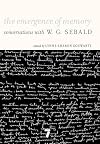
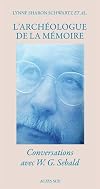
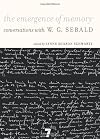
Emergence of Memory: Conversations with W.G. Sebald
by Lynne Sharon Schwartz, W.G. Sebald
On This Page
Description
When German author W. G. Sebald died in a car accident at the age of fifty-seven, the literary world mourned the loss of a writer whose oeuvre it was just beginning to appreciate. Through published interviews with and essays on Sebald, award-winning translator and author Lynne Sharon Schwartz offers a profound portrait of the writer, who has been praised posthumously for his unflinching explorations of historical cruelty, memory, and dislocation. With contributions from poet, essayist, and show more translator Charles Simic, New Republic editor Ruth Franklin, Bookworm radio host Michael Silverblatt, and more, The Emergence of Memory offers Sebald’s own voice in interviews between 1997 up to a month before his death in 2001. Also included are cogent accounts of almost all of Sebald’s books, thematically linked to events in the contributors’ own lives. Contributors include Carole Angier, Joseph Cuomo, Ruth Franklin, Michael Hofmann, Arthur Lubow, Tim Parks, Michael Silverblatt, Charles Simic, and Eleanor Wachtel. show lessTags
Recommendations









Member Reviews
Fascinating collection of essays about and conversations with the writer W G Sebald (Max). Exploring his themes of memory, silence (as in how his nation of origin refused to talk about the war, so he felt born into this silence), and his wonderful digressions. His books don't fit into any easy category, he has never called them novels or non-fiction, while both true stories and blurring of reality are within the pages.
This book is the next best thing I've found to reading Sebald himself. It's gratifying to find so many other people excited about this writer. There is something about the way he puts himself, mysteriously but beautifully, into his narratives and explanations. No one else writes quite the same way as him. Schwartz's collection helps me appreciate Sebald even more without taking away any of the beauty or mystery.
 This review was written for LibraryThing Early Reviewers.
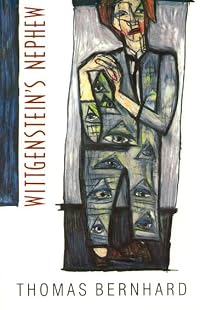
The introductory essay by Lynne Sharon Schwartz is tightly written and insightful from beginning to end. This raises hopes for the rest of the book. However, I found the first short essay, "The Hunter" by Tim Parks, to be a little too brief to be pleasurable; it may simply require rereading. What follows is a fantastic interview with Sebald by Eleanor Wachtel, titled "The Ghost." Here we get a behind the scenes view of THE EMIGRANTS, Sebald's second novel. All the characters in EMIGRANTS actually existed and led the lives depicted; and 90% of the photos have a genuine connection with the narratives. While there is perhaps an interesting obliquity or ellipticality to the subsequent interview, "Who Is W.G. Sebald" by Carole Angier, I show more found Angier's penchant for pseudo high-style reflections instead of straightforward questions most annoying. We lose all sense of a shared conversation, inferences we might draw had she retained the Q & A format are lost. This is my least favorite interview in the book. Yet despite Angier's failed attempts at style, we do discover which bits are fiction and which aren't. The characters and their fates, for instance, are real. But some details, such Ambrose Adelwarth's photographed diary, is a fiction. Sebald wrote it himself; though a diary by Adelwarth in multiple languages did exist, it's not clear that Sebald ever had access to it. Such invention, he says, is limited "most of the time" to the level of minor detail as a means of providing "l'effect du réel." The fourth piece is Michael Silverblatt's interview with Sebald, "A Poem of an Invisible Subject," and it's a corker. Silverblatt's knowledge of Sebald's novels seems exhaustive. The interviewer's questions are so pointed that one finds oneself laughing out loud at times when all Sebald can reply to each is "yes" "yes" "yes" before going on to expatiate on his interlocutor's idea. Silverblatt is on top of everything, whether it be matters of structure, metaphor, voice, influences, what have you. It is also in Silverblatt's interview that we first learn of some of Sebald's models. These include the nineteenth century writers Adelbert Stifter and Gottfried Keller, whose "hypotactical syntax" Sebald says he found so useful. The point is also made here by Sebald that non-German speaking critics, because they know so little about German writing of the last two centuries, tend to attribute to him innovations he has adopted from others rather than originated. The "hypotactical syntax" of Stifter and Keller is a prominent example. The work of Thomas Bernhard, who was apparently of enormous importance to Sebald, is another. I must confess that I knew nothing about any of these writers before reading Ms. Schwartz's wonderful book. And it is for these discoveries alone that I am enormously grateful to her. The following interview by Joseph Cuomo takes the prize for revealing Sebald at his quirkiest. In none of the foregoing pieces do we get such a strong sense how literature has emerged from Sebald's life. The connection, it turns out, is very direct. He is a big believer, if I can use that word, in coincidence. What you and I might consider to be random coincidence--for instance, we have the same birthday--is for Sebald, if he likes you, an event of "major significance." He is also at his funniest here. The interview, which was held before a live audience, is regularly interrupted with the bracketed words "audience laughter." Ruth Franklin's essay "Rings of Smoke" follows, the first half of which seems a good but insight-free review of the novels and some of their themes and techniques. I found this first half lackluster. Perhaps because I know the novels so well. It's when Ms. Franklin moves onto an assessment of the book-length poem AFTER NATURE, and Sebald's only nonfiction book, ON THE NATURAL HISTORY OF DESTRUCTION, that the essay really becomes compelling. -----more to come-------- show less
This review was written for LibraryThing Early Reviewers.A series of short interviews and essays on the German writer W. S. Sebald--which lend much insight into his thinking and the creative process behind his work. The more recognizable names being the British novelist/Italian translator Tim Parks and the Yugolslavian born American poet Charles Simic. Sebald, of courses, died abruptly in December 2001 in an automobile accident. In a rather short space of time before he had rocketed upward from obscurity to a kind of international fame with a series of books many of which related back to World World and specifically the holocaust.
If anything the essays and interviews make clear it's Sebald's alienation from his own German culture--one that in his mind preferred to forget rather than to show more confront its past. This disenfranchisement the reason behind his voluntary exile in England a place to which he admits he is out of place. FWIW his voice is always lucid, his reasoning is open and very often quite humorous. Whether or not this book edited by Lynne Sharon Schwartz gets to the essence of what Sebald's work was about I at least feel a lot closer. It is a good read and for Sebald fans I think it would be a must. show less
If anything the essays and interviews make clear it's Sebald's alienation from his own German culture--one that in his mind preferred to forget rather than to show more confront its past. This disenfranchisement the reason behind his voluntary exile in England a place to which he admits he is out of place. FWIW his voice is always lucid, his reasoning is open and very often quite humorous. Whether or not this book edited by Lynne Sharon Schwartz gets to the essence of what Sebald's work was about I at least feel a lot closer. It is a good read and for Sebald fans I think it would be a must. show less
This review was written for LibraryThing Early Reviewers.I received a copy of The Emergence of Memory: Conversations with W. G. Sebald, edited by Lynne Sharon Schwartz, through LibraryThing's Early Reviewers program. Many thanks to the publisher, Seven Stories Press, and to LibraryThing, for the chance to obtain and review this book.
When I found out I'd won this book through the ER program, I felt guilty for requesting it, because I've never read anything by W. G. Sebald. However, now that I've read the book, I'm so glad I requested and won it. Sebald's work sounds difficult, experimental, hard to define, but very fascinating.
The collection contains several interviews with the writer, as the subtitle states, but also several essays and reviews, and a solid introduction by the editor, Lynne show more Sharon Schwartz. The interviews introduce a very intelligent, humane, and likeable writer. He was serious about his work and the topics he explored, but the interviews show that Sebald had a sense of humor as well. I also found the essays to be interesting and thought-provoking: not mere book reviews, nor academic criticism heavy with literary theory, but engaging essays for serious readers.
One of the essays, by Michael Hofmann, is not complimentary, and that's a good piece for Schwartz to include. Because Sebald's themes were complex, his methods unusual and experimental, his books are not for everyone. Moreover, any artist who explores the rough edges of the canvas, who tries to stretch the boundaries of what is expected and accepted, is likely to stumble at times. As Schwartz says in the introduction, the "vulnerabilities" in Sebald's work that Hofmann discusses "are real and should be taken into account in any assessment of his work."
Having been introduced to Sebald before being introduced to his writing, in a sense, I hope to read one or two of his books for myself before too long, with The Emergence of Memory near at hand to redirect me if I start to get lost. Fans of Sebald's books will certainly want to read this collection and likely enjoy it. In my case, I think I'll understand and appreciate Sebald's works a good deal more because I read this book first. show less
When I found out I'd won this book through the ER program, I felt guilty for requesting it, because I've never read anything by W. G. Sebald. However, now that I've read the book, I'm so glad I requested and won it. Sebald's work sounds difficult, experimental, hard to define, but very fascinating.
The collection contains several interviews with the writer, as the subtitle states, but also several essays and reviews, and a solid introduction by the editor, Lynne show more Sharon Schwartz. The interviews introduce a very intelligent, humane, and likeable writer. He was serious about his work and the topics he explored, but the interviews show that Sebald had a sense of humor as well. I also found the essays to be interesting and thought-provoking: not mere book reviews, nor academic criticism heavy with literary theory, but engaging essays for serious readers.
One of the essays, by Michael Hofmann, is not complimentary, and that's a good piece for Schwartz to include. Because Sebald's themes were complex, his methods unusual and experimental, his books are not for everyone. Moreover, any artist who explores the rough edges of the canvas, who tries to stretch the boundaries of what is expected and accepted, is likely to stumble at times. As Schwartz says in the introduction, the "vulnerabilities" in Sebald's work that Hofmann discusses "are real and should be taken into account in any assessment of his work."
Having been introduced to Sebald before being introduced to his writing, in a sense, I hope to read one or two of his books for myself before too long, with The Emergence of Memory near at hand to redirect me if I start to get lost. Fans of Sebald's books will certainly want to read this collection and likely enjoy it. In my case, I think I'll understand and appreciate Sebald's works a good deal more because I read this book first. show less
This review was written for LibraryThing Early Reviewers.There were fewer conversations "with" (and more ruminations "about") Sebald here than I was hoping for-- but it was still a worthwhile read.
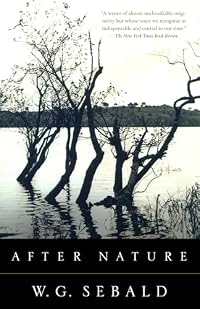
This slim volume is a compilation of reviews, interviews and essays on the work of the late author [[W.G. Sebald]]. Sebald had an interesting history. Born in 1944, his father was in the German army. His parents said nothing about their wartime experiences. Sebald felt that he had to leave Germany and eventually settled in Manchester, England where he taught at the university. His books were all written in German and late translated into English. Much has been written about Sebald's style- he used a style named " a prose poem" for [After Nature]. He used many photographs that were both real and in some cases, manipulated. His sentence structure and format were works of art in themselves. Sebald was lucky to have gifted translators. show more Sebald's subjects were based on real people and histories.He never mentions the Holocaust although certainly the subject matter figures prominently in his work.
This book helps the reader navigate Sebald's work. I found it informative and it has also given me a path to relook at Sebald's books. ( I read four of his books a number of years ago). Tragically Sebald died in a motor accident in 2001. This book of essays helps to place Sebald in the forefront of late twentieth century writing and response to the events of World War II. Do read Sebald's work before reading this volume. Recommended show less
This book helps the reader navigate Sebald's work. I found it informative and it has also given me a path to relook at Sebald's books. ( I read four of his books a number of years ago). Tragically Sebald died in a motor accident in 2001. This book of essays helps to place Sebald in the forefront of late twentieth century writing and response to the events of World War II. Do read Sebald's work before reading this volume. Recommended show less
This review was written for LibraryThing Early Reviewers.Members
- Recently Added By
Author Information

29+ Works 2,282 Members
Writer Lynne Sharon Schwartz was born and raised in Brooklyn, New York. She received a B. A. from Barnard College, an M. A. from Bryn Mawr, and started work on a Ph.D. at New York University. She chronicled her love of reading and the meaning it has had upon her life in a book called Ruined by Reading. She has published around twenty books show more including Rough Strife, which was nominated for a National Book Award and Leaving Brooklyn, which was nominated for the Pen/Faulkner Award for Fiction. She has also written for children in such books as The Four Questions, explaining the traditions of Passover. She is also an Italian translator and her translations include A Place to Live and Other Selected Essays by Natalia Ginzburg and Smoke over Birkenau by Liana Millu. (Bowker Author Biography) show less

32+ Works 16,945 Members
He studied German language and literature in Freiburg, Switzerland and Manchester. He has taught at the University of East Anglia in Norwich, England since 1970. He became a professor of European literature in 1987. From 1989 to 1994 was the first director of the British Centre for Literary Translation. He was born in Wertach in Allgau, Germany in show more 1944. (Bowker Author Biography) show less

W. G. Sebald has a Legacy Library. Legacy libraries are the personal libraries of famous readers, entered by LibraryThing members from the Legacy Libraries group.
Common Knowledge
- Canonical title
- Emergence of Memory: Conversations with W.G. Sebald
Classifications
- Genres
- Literature Studies and Criticism, Nonfiction, Fiction and Literature
- DDC/MDS
- 833.914 — Literature & rhetoric German & related literatures German fiction 1900- 1900-1990 1945-1990
- LCC
- PT2681 .E18 .Z46 — Language and Literature German, Dutch and Scandinavian literatures German literature Individual authors or works 1961-2000
- BISAC
Statistics
- Members
- 161
- Popularity
- 202,738
- Reviews
- 11
- Rating
- (4.03)
- Languages
- English, French, Greek
- Media
- Paper, Ebook
- ISBNs
- 5
- ASINs
- 2