On This Page
Description
Schoolboy pranks, japes, and practical jokes abound in The Gold Bat, a novel from beloved British humor writer P.G. Wodehouse. Follow the exploits of two incorrigible jokers as they carry out a series of increasingly bold pranks—and then try, with varying levels of success, to elude the consequences of their actions..
Tags
Recommendations














Member Reviews
Most reviewers have read this book because it's written by P.G. Wodehouse, and they judge it by comparing with latter books of that author. I have read it because I'm interested in Victorian/Edwardian British boarding school fiction, and I'm judging it in the context of that genre.
This novel, originally serialized in a magazine for boys, is set in a school called Wrykyn. It was published before the novel The White Feather, also set in that school a year later. The stories are independent, and in fact feature different characters, for most of the main characters here are Sixth Form boys (i.e. seniors) who have already graduated in The White Feather. Still, some of them made cameos in the latter novel, and it was nice seeing them here. show more
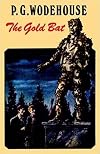
The story follows Trevor, the Captain of the first fifteen (the rugby team of the school), as he tries to organize the team and beat their arch-rivals from Ripton School. There is a lot of focus on sports, but also on many other things and characters. There's a plot involving a small golden ornament (the gold cricket bat of the title), awarded to Trevor as captain of the cricket team of his school house, for winning the school cup last year. It's due to be returned this year, but Trevor lent it to a colorful but good-hearted slacker called O'Hara, who lost it in the "crime scene" when he was tarring and feathering the statue of a local politician who had offended Irish people. This situation has the potential to land them in serious trouble. There's also a mystery involving a secret student organization that seems to be sabotaging Trevor's efforts to build a winning rugby team. There's sport injuries, boxing, school studies being vandalized, a couple of younger boys secretly caring for baby ferrets, rivalries between the different houses of the school...
I enjoyed this story, but I enjoyed The White Feather more because it had a more focused plot and it was more dramatic as an underdog story. The plot here is enjoyable but a bit all over the place. It does have a few more witty moments than The White Feather, but don't expect the witticism that later Wodehouse books are famous for. show less
This novel, originally serialized in a magazine for boys, is set in a school called Wrykyn. It was published before the novel The White Feather, also set in that school a year later. The stories are independent, and in fact feature different characters, for most of the main characters here are Sixth Form boys (i.e. seniors) who have already graduated in The White Feather. Still, some of them made cameos in the latter novel, and it was nice seeing them here. show more
The story follows Trevor, the Captain of the first fifteen (the rugby team of the school), as he tries to organize the team and beat their arch-rivals from Ripton School. There is a lot of focus on sports, but also on many other things and characters. There's a plot involving a small golden ornament (the gold cricket bat of the title), awarded to Trevor as captain of the cricket team of his school house, for winning the school cup last year. It's due to be returned this year, but Trevor lent it to a colorful but good-hearted slacker called O'Hara, who lost it in the "crime scene" when he was tarring and feathering the statue of a local politician who had offended Irish people. This situation has the potential to land them in serious trouble. There's also a mystery involving a secret student organization that seems to be sabotaging Trevor's efforts to build a winning rugby team. There's sport injuries, boxing, school studies being vandalized, a couple of younger boys secretly caring for baby ferrets, rivalries between the different houses of the school...
I enjoyed this story, but I enjoyed The White Feather more because it had a more focused plot and it was more dramatic as an underdog story. The plot here is enjoyable but a bit all over the place. It does have a few more witty moments than The White Feather, but don't expect the witticism that later Wodehouse books are famous for. show less
The third of Wodehouse's first three novels, all school stories, following The Pothunters (a light mystery with sequences of boxing and running) and A Prefect's Uncle (more overtly comic, built around cricket). Surprisingly, despite the central MacGuffin, this one isn't about cricket - it's mostly about rugby.
The plot, in general, is much tighter than either of the first two volumes, with a mystery that actually intrigues for most of the book. It falls apart right at the end, though, and the solution feels toothless and inconsequential. There are still a few too many characters, and it isn't nearly as openly funny as A Prefect's Uncle, so like the earlier two, this book is mostly interesting for showing the development of Wodehouse as show more a writer. show less
The plot, in general, is much tighter than either of the first two volumes, with a mystery that actually intrigues for most of the book. It falls apart right at the end, though, and the solution feels toothless and inconsequential. There are still a few too many characters, and it isn't nearly as openly funny as A Prefect's Uncle, so like the earlier two, this book is mostly interesting for showing the development of Wodehouse as show more a writer. show less
Another school story from early in Wodehouse's career. This one is set at the school Wrykyn. A lot of the action (such as it is) is around Barry, who is a good egg, and Rand-Brown, who is not, and who is going to play on the football team. Trevor is the captain of the football (rugby) team and must make these difficult and weighty decisions. Clowes is his sidekick. O'Hara's "right enough," for an Irishman, but unfortunately has lost the tiny gold bat entrusted to Trevor, while tar and feathering the mayor's statue in town, vandalism which was well deserved given the mayor's unseemly comments about the Irish. There are many more characters and subplots in the drama of school life and everything, of course, turns out ok.
First published in 1904, this was P. G. Wodehouse’s fourth book. Like the three before it, this one is set in an all-boys’ school. Unlike the others, however, this has a more cohesive plot. Compared to the others, I prefer this to his first and third offering, but rate his second book – “A Prefect’s Uncle” – the best of the bunch.
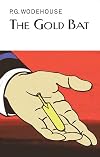
Despite the title, this volume does not focus on cricket, but rather on rugby and a little on football. I’m not into either sport, so skipped the descriptive game paragraphs. The gold bat is in fact an inch-long replica of a cricket bat made from gold.
Although I’ve only awarded this book 2 stars, there were certain parts that featured classic Wodehouse moments. I’ve written one of my show more favourite quotes below:
“It had been privily agreed upon beforehand amongst the members of the class that at a quarter past ten every one was to sneeze simultaneously.” show less
Despite the title, this volume does not focus on cricket, but rather on rugby and a little on football. I’m not into either sport, so skipped the descriptive game paragraphs. The gold bat is in fact an inch-long replica of a cricket bat made from gold.
Although I’ve only awarded this book 2 stars, there were certain parts that featured classic Wodehouse moments. I’ve written one of my show more favourite quotes below:
“It had been privily agreed upon beforehand amongst the members of the class that at a quarter past ten every one was to sneeze simultaneously.” show less
Another of Wiodehouse's early "school" stories set in what the U.S. would call a "prep" school. The gold bat is the symbol of the hero's status as captain of the school rugger team; his decision to move one boy up to what we would all the varsity team (which of course means moving another boy down) leads to his persecution by a "League" of supporters of the relegated boy, including the theft of his gold bat.
Starting to see more of Wodehouse's humor, but still very heavy on boys school and their sports.
Too much blow-by-blow rugby in this one, for my taste, and not enough character development. I didn't really care about any of the people involved.
Members
- Recently Added By
Lists

Children's Literature 1900 - 1950 in order
413 works; 8 members
Author Information

656+ Works 110,678 Members
P. G. Wodehouse was born in Guildford, United Kingdom on October 15, 1881. After completing school, he spent two years as a banker at the Hong Kong and Shanghai Bank in London and then took a job as a sports reporter and columnist for the Globe newspaper. His first novel, The Pothunters, was published in 1902. He wrote over 100 novels and short show more story collections during his lifetime including A Perfect Uncle, Love Among the Chickens, The Swoop, P. Smith in the City, Meet Mr. Milliner, Doctor Sally, Quick Service, The Old Reliable, Uneasy Money, A Damsel in Distress, Jill the Reckless, The Adventures of Sally, A Pelican at Blandings, The Girl in Blue, and Aunts Aren't Gentlemen. His most famous characters, Bertie Wooster and his manservant, Jeeves, appeared in books such as Much Obliged, Jeeves. He also wrote lyrics for musical comedies and worked as screenwriter in Hollywood in the 1930s. In 1939, he bought a villa in Le Touquet on the coast of France. He remained there when World War II started in 1939. The following year, the Germans appropriated the villa, confiscated property, and arrested him. He was detained in various German camps for almost one year before being released in 1941. He went to Berlin and spoke of his experience in five radio talks to be broadcast to America and England. The talks themselves were completely innocuous, but he was charged with treason in England. He was cleared, but settled permanently in the United States. He became a citizen in 1955. He was made a Knight Commander of the Order of the British Empire in 1975. He died from a heart attack after a long illness on February 14, 1975 at the age of 93. (Bowker Author Biography) show less
Some Editions
Series


Belongs to Publisher Series
Work Relationships
Is contained in
Common Knowledge
- Original title
- The Gold Bat
- Original publication date
- 1904
- People/Characters
- James Rupert Leather-Twigg "Shoeblossom"; Drummond; Barry; Clowes; Dick Trevor; Rand-Brown (show all 13); M'Todd; De Bertini; O'Hara; Renford; Harvey; Moriarity; Eustace Biggs, Sir Eustace
- Important places
- England, UK; Wrykyn School, Wrykyn, England, UK
- Dedication
- To the Prince of slackers
Herbert Westbrook - First words
- "Outside!"
- Quotations
- A friend may drop in for a chat. An acquaintance must justify his intrusion.
The charm about the genial Shoeblossom was that you could never tell what he was going to do next. All that you could rely on with any certainty is that it would be something better left undone.
The most immediate effect of telling anybody not to do a thing is to make him do it in order to assert his independence.
Mathematics being one of the few branches of school learning which are of any use in after life, nobody ever dreamed of doing any work in that direction.
Shoeblossom, looking as if he had not brushed his hair since early childhood, sidled in with an attempt at nonchalance which was rendered quite impossible by the hopeless state of his conscience.
It is this indomitable gift on looking on the bright side that makes us Englishmen what we are.
It is a curious thing about ideas. You do not get one for over a month, and then there comes a rush of them, all brilliant.
As the philosopher said of falling off a ladder, it is not the falling that matters: it is the sudden stopping at the other end.
An excellent thing is your lemon at half-time. It cools the mouth, quenches the thirst, stimulates the desire to be at them again, and improves the play.
When one particularly dislikes a person, one has a curious objection to seeming in good spirits in his presence. One feels that he may take it as a sort of compliment to himslef, or at any rate, contribute grins of his own, ... (show all)which would be hateful. - Last words
- (Click to show. Warning: May contain spoilers.)And Trevor agreed with him, with the mental reservation that it rather depended on whom the drawer belonged to.
- Disambiguation notice
- This is the single work, The Gold Bat. Please do not combine it with the omnibus volume The Gold Bat and other School Stories.
Classifications
Statistics
- Members
- 228
- Popularity
- 142,745
- Reviews
- 10
- Rating
- (3.44)
- Languages
- English, German
- Media
- Paper, Ebook
- ISBNs
- 41
- ASINs
- 6