On This Page
Description
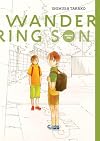
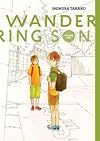
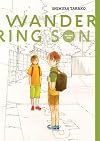
"The fifth grade. The threshold to puberty, and the beginning of the end of childhood innocence. Shuichi Nitori and his new friend Yoshino Takatsuki have happy homes, loving families, and are well-liked by their classmates. But they share a secret that further complicates a time of life that is awkward for anyone: Shuichi is a boy who wants to be a girl, and Yoshino is a girl who wants to be a boy"--Publisher's web site.Tags
Recommendations




























Member Recommendations

Member Reviews
... how do I even begin to review this volume?
I picked it up at the library today. I wasn't expecting to see it there, so I grabbed it at the first opportunity. The reason I was interested in this book is because it is a wonderful manga about two young trans people who become friends. I was desperate to read it because Japan's attitude to homosexuality and trans issues is a little bit of a mixed bag. Homosexuality (and everything else surrounding it) is kind of a niche, it is in and of itself its own little fetish and is cornered off, as it were, instead of being more widely-accepted and being mainstream.
So, any respresentations of LBTQIA people in Japanese media tend to be in that niche of 'sexual deviancy'. I was hopeful for this show more manga, though.
... I was not disappointed. Thank you, so much, Takako Shimura. This is a beautiful volume. Beautifully-drawn, simple, effortless lines, clean, neat, so well-polished, so easy to read. The text is also super simple, almost sparse but gives you just enough information to know where you are the in the character's arcs and conversations.
I love the two characters. They are beautiful and so well-written and so well-formed. They are quite young, so their language can be a little bit young, even a little bit problematic when referring to themselves, but Shimura handles this expertly. This is such a gentle, compassionate novel. It's so self-aware and carefully written. I teared up a lot (like a lot, like every 20 pages probably) and kept closing the book and holding it to my chest because it meant so much.
As someone who struggles with being cisgender, this was so validating to read and I can only imagine how validating it would be to read as a trans person. This is more than just a coming out story or a coming of age story.
The writing is simple enough but impactful enough that it would be a brilliant manga for a young person to read. (It is YA).
But if you've never read manga before, it would be easy for you to read, too. There's a couple of cool introductory pages where it talks about how to pronounce people's names and what certain suffixes mean and they also explain little tiny aspects of Japanese culture that might be an unknown to the reader. It's beautifully bound, in a really nice hardback edition and there are a few colour pages, too.
Please, if you ever read a manga, let it be this one.
Thank you, so much Takako Shimura. You have made such an important contribution to trans, YA, Japanese literature and to my life and I have no idea how to repay you expect to sing this books' praises from the rooftops and hope that someone hears me.
And seriously, where the fuck is the second volume because I NEED IT NOW D:
// oh, and a quick cw: for trans image / body issues and a couple of slurs. show less
I picked it up at the library today. I wasn't expecting to see it there, so I grabbed it at the first opportunity. The reason I was interested in this book is because it is a wonderful manga about two young trans people who become friends. I was desperate to read it because Japan's attitude to homosexuality and trans issues is a little bit of a mixed bag. Homosexuality (and everything else surrounding it) is kind of a niche, it is in and of itself its own little fetish and is cornered off, as it were, instead of being more widely-accepted and being mainstream.
So, any respresentations of LBTQIA people in Japanese media tend to be in that niche of 'sexual deviancy'. I was hopeful for this show more manga, though.
... I was not disappointed. Thank you, so much, Takako Shimura. This is a beautiful volume. Beautifully-drawn, simple, effortless lines, clean, neat, so well-polished, so easy to read. The text is also super simple, almost sparse but gives you just enough information to know where you are the in the character's arcs and conversations.
I love the two characters. They are beautiful and so well-written and so well-formed. They are quite young, so their language can be a little bit young, even a little bit problematic when referring to themselves, but Shimura handles this expertly. This is such a gentle, compassionate novel. It's so self-aware and carefully written. I teared up a lot (like a lot, like every 20 pages probably) and kept closing the book and holding it to my chest because it meant so much.
As someone who struggles with being cisgender, this was so validating to read and I can only imagine how validating it would be to read as a trans person. This is more than just a coming out story or a coming of age story.
The writing is simple enough but impactful enough that it would be a brilliant manga for a young person to read. (It is YA).
But if you've never read manga before, it would be easy for you to read, too. There's a couple of cool introductory pages where it talks about how to pronounce people's names and what certain suffixes mean and they also explain little tiny aspects of Japanese culture that might be an unknown to the reader. It's beautifully bound, in a really nice hardback edition and there are a few colour pages, too.
Please, if you ever read a manga, let it be this one.
Thank you, so much Takako Shimura. You have made such an important contribution to trans, YA, Japanese literature and to my life and I have no idea how to repay you expect to sing this books' praises from the rooftops and hope that someone hears me.
And seriously, where the fuck is the second volume because I NEED IT NOW D:
// oh, and a quick cw: for trans image / body issues and a couple of slurs. show less
I was absolutely delighted when Fantagraphics announced the license of Takako Shimura's manga series Wandering Son. The first volume, originally released in Japan in 2003, was published in English in 2011. The series is currently up to eleven volumes in Japan and is ongoing but only the first two volumes have been announced for the English edition so far. Gender play is far from uncommon in manga but is probably most often used as a gag or for comedic intent. A more serious, sincere, and realistic portrayal of gender issues, and specifically transgender issues, is much rarer. It's not a common theme to be found in comics in general which is why I was particularly excited for the release of Wandering Son in English. Plus, Fantagraphics' show more edition is beautifully presented as a full-sized hardcover with excellent print and paper quality. The volume is just as lovely to behold as it is to read.
When Shuichi Nitori transfers into his new fifth grade class, one of the first people he befriends is the handsome tomboy Yoshino Takatsuki. They don't know it at the time but they both have similar secrets--Nitori dreams of being a girl while Takatsuki wants to be a boy. Nitori is cute enough and is even mistaken for a girl on occasion but his opportunities to cross-dress are seen by most others to be entertaining rather than honest expressions of his desire. Takatsuki's tomboyishness is more socially acceptable but also hides to some extent what she really wants; she is still considered to be a girl. Fortunately, as the two of them grow closer as friends and eventually become aware of the other's secret, they also become an important source of encouragement and support for each other.
Shimura's artwork is simple but remains expressive. Very little detail is given to the backgrounds, forcing the readers' attention to the people of the story. Sometimes this means the characters' seem slightly out of context with their world, bringing the focus to their thoughts and feelings and leaving them alone with them. The artwork makes it easy to slip between dreams, daydreams, and reality. A nice balance between the text and the artwork exists in Wandering Son. Internal monologues drift from words to images; there are simply some things that are too difficult or too personal for the characters to be able to express in words yet. There is a lot that is left unsaid that the artwork still conveys. Many of Shimura's character designs are very similar. However it still is fairly easy to tell everyone apart as they all have distinctive personalities, movements, and postures.
Instead of following a strictly linear narrative, Wandering Son provides a somewhat fragmented view. To me, it seems more like a collection of memories, glimpses of important and influential moments in the characters' lives. Though told chronologically, the story has an impressionistic quality to it. Wandering Son is lovely and quiet with tremendous emotional depth. Middle school is already a tumultuous time growing up and Nitori and Takatsuki are both faced with additional challenges as they begin to explore their own identities. Included in the first volume of Wandering Son is a brief essay by the series' translator Matt Thorn called "Snips and Snails, Sugar and Spice" which examines the use of honorifics and pronouns, some of the gender quirks of both the Japanese and English languages as well as the social implications of those word choices. I was very pleased with the first volume of Wandering Son and greatly look forward to the release of the second volume.
Experiments in Manga show less
When Shuichi Nitori transfers into his new fifth grade class, one of the first people he befriends is the handsome tomboy Yoshino Takatsuki. They don't know it at the time but they both have similar secrets--Nitori dreams of being a girl while Takatsuki wants to be a boy. Nitori is cute enough and is even mistaken for a girl on occasion but his opportunities to cross-dress are seen by most others to be entertaining rather than honest expressions of his desire. Takatsuki's tomboyishness is more socially acceptable but also hides to some extent what she really wants; she is still considered to be a girl. Fortunately, as the two of them grow closer as friends and eventually become aware of the other's secret, they also become an important source of encouragement and support for each other.
Shimura's artwork is simple but remains expressive. Very little detail is given to the backgrounds, forcing the readers' attention to the people of the story. Sometimes this means the characters' seem slightly out of context with their world, bringing the focus to their thoughts and feelings and leaving them alone with them. The artwork makes it easy to slip between dreams, daydreams, and reality. A nice balance between the text and the artwork exists in Wandering Son. Internal monologues drift from words to images; there are simply some things that are too difficult or too personal for the characters to be able to express in words yet. There is a lot that is left unsaid that the artwork still conveys. Many of Shimura's character designs are very similar. However it still is fairly easy to tell everyone apart as they all have distinctive personalities, movements, and postures.
Instead of following a strictly linear narrative, Wandering Son provides a somewhat fragmented view. To me, it seems more like a collection of memories, glimpses of important and influential moments in the characters' lives. Though told chronologically, the story has an impressionistic quality to it. Wandering Son is lovely and quiet with tremendous emotional depth. Middle school is already a tumultuous time growing up and Nitori and Takatsuki are both faced with additional challenges as they begin to explore their own identities. Included in the first volume of Wandering Son is a brief essay by the series' translator Matt Thorn called "Snips and Snails, Sugar and Spice" which examines the use of honorifics and pronouns, some of the gender quirks of both the Japanese and English languages as well as the social implications of those word choices. I was very pleased with the first volume of Wandering Son and greatly look forward to the release of the second volume.
Experiments in Manga show less
I found this book to be a touching and believable story about the difficulty of forging identity and finding your place in the world. Nitori and Takatsuki are both middle school kids who are coming to grips with the fact that each of them would prefer to be a different gender. This is a difficult thing to experience in real life, much less portray in fiction, and I think that the author did a wonderful job of building the story so that each character felt real, believable, and unique. Transgender stereotypes these are not.
I am looking forward to reading more of this series.
I am looking forward to reading more of this series.
The artstyle is cute, but the paneling is a bit confusing. One page sometimes has 3 different times of the day; at one panel they're meeting up and in the next one they're parting ways already. Random time-jumps without any notice. Cuts that aren't for aesthetic purposes, but simply random and confusing. Would work for a thriller, but not a middle grade slice of life...
Also, it's a bit difficult to distinguish the characters sometimes, as everyone looks so alike.
The premise is quite nice though; you don't have just one trans character, but two, and of the opposite gender. Shuichi, a boy, who wants to be a girl; and Yoshino, a girl, who wants to be a boy.
It starts off a bit awkward, though. Yoshino has it going pretty well and knows show more what she wants, but Shuichi is of rather shy nature and gets pushed around a lot. The strangest part is that his friends are pretty much forcing him to wear girls' clothes, just because he looks at dresses a bit too long sometimes and the others think he would look cute. I'm sure they mean well (at least I hope so), but who does that? Is it a thing in Japan? Maybe I'm just hit with weird cultural differences, which make me a little uncomfortable, but... uh...
Whether it's a cultural thing or not, just please stop forcing people to wear clothes, when they clearly don't want to – no matter the gender of the person and the gender attached to the clothes. Just... don't.
Volume 1 is rather superficial and just about the clothes. E.g. Yoshino wearing a guy's school uniform, and Shuichi wanting to wear dresses.
I hope it goes deeper than that, because transgender isn't just about clothes, and I really don't want this manga to be one of those false stereotypes stories.
Generally speaking, though, can we finally stop attaching genders to things? Especially clothes. Dresses shouldn't make someone feminine/female, and trousers shouldn't be masculine/male. Please. I'm so sick of this. Just let everyone wear what they want.
~
Also, every guy who makes fun of periods, deserves to suffer. Get that period-pain-simulator and wear it 24/7 for a whole week, and suffer. Seriously. show less
Also, it's a bit difficult to distinguish the characters sometimes, as everyone looks so alike.
The premise is quite nice though; you don't have just one trans character, but two, and of the opposite gender. Shuichi, a boy, who wants to be a girl; and Yoshino, a girl, who wants to be a boy.
It starts off a bit awkward, though. Yoshino has it going pretty well and knows show more what she wants, but Shuichi is of rather shy nature and gets pushed around a lot. The strangest part is that his friends are pretty much forcing him to wear girls' clothes, just because he looks at dresses a bit too long sometimes and the others think he would look cute. I'm sure they mean well (at least I hope so), but who does that? Is it a thing in Japan? Maybe I'm just hit with weird cultural differences, which make me a little uncomfortable, but... uh...
Whether it's a cultural thing or not, just please stop forcing people to wear clothes, when they clearly don't want to – no matter the gender of the person and the gender attached to the clothes. Just... don't.
Volume 1 is rather superficial and just about the clothes. E.g. Yoshino wearing a guy's school uniform, and Shuichi wanting to wear dresses.
I hope it goes deeper than that, because transgender isn't just about clothes, and I really don't want this manga to be one of those false stereotypes stories.
Generally speaking, though, can we finally stop attaching genders to things? Especially clothes. Dresses shouldn't make someone feminine/female, and trousers shouldn't be masculine/male. Please. I'm so sick of this. Just let everyone wear what they want.
~
Also, every guy who makes fun of periods, deserves to suffer. Get that period-pain-simulator and wear it 24/7 for a whole week, and suffer. Seriously. show less
I watched a really interesting anime a few months back called Wandering Son which focuses on two main characters who are transgendered. It was such an intriguing storyline but I felt there was potential for so much more. Luckily, anime are generally based off of manga so I did a little search and Wandering Son, Vol.1 by Takako Shimura (translated by Matt Thorn) fell magically into my hands. As you can guess, there are a number of volumes in this series which consist of multiple issues. The story focuses on two fifth graders who share a secret: They both want to be the opposite gender. This is the second book that I've read which discusses gender identity but it's the first I've read with characters this young. There are the normal show more trials and tribulations of adolescence (puberty being one of them) as well as the added anxiety of gender identity and secrecy. It's an interesting storyline but unfortunately not a lot is covered in this volume (even less than in the anime) so I think I'm going to have to read several more before I get the more that I was craving. (I'm not sure if I'm interested enough to continue honestly.) The majority of the artwork is average but there are a few pages which really shine. If you're looking for an anime/manga combination that explores a topic which you may or may not be overly familiar with then you might want to give this one a chance...as long as you understand you'll have to be committed for the long haul. 5/10 since this volume fell short of my expectations. show less
Wandering Son: Book One is a gorgeous book with the best kind of book smell, heavy pages, and a very satisfying start to the story.
I recommend it to just about everyone. While it is a manga, publisher Fantagraphics and translator Matt Thorn have taken great pains to treat it more like a literary graphic novel (or, at least, the way I see it, it's more like literary fiction rather than the MMP novels you find next to the register in drugstores, when put next to most other manga on the American market). One example for how this is done is in the translator's note at the end of the book, where Thorn gives a thoughtful explanation for why he made certain choices he did in translating, and also introduces certain aspects of Japanese grammar show more to the reader - very unlike the slapdash way other manga explain translations!
This book introduces Shuichi Nitori and Yoshino Takatsuki, two ten or eleven-year-old children who have a secret they can't share with anyone else: they wish they were born as the opposite sex. Actually, this wish develops over the course of the opening chapters as the kids are teased by their classmates, and Nitori and Takatsuki discover that maybe the typical teasing of children that age as they try to figure out gender roles is more accurate than the other children realize.
I really like how a lot of this first book plays on the behavior of fifth grade children, and the way kids that age do, in fact, tease and bully each other as they test their identities and explore what it means to be "boy" or "girl". This exploration of identity theme shows up not just in gender roles for the two main characters, but in the way another character who is a bit aloof and temperamental tests out religious identity.
The pace of the book feels quiet to me, partly because of the clean lines and simple backgrounds. But the plot itself moves slowly, with not a lot of drama or comedy. It's a slice-of-life exploration of Nitori and Takatsuki, and it develops as they do.
The main thing I'd complain about is how ideal this book is, in that both Nitori and Takatsuki are in the same class and both are potentially transgender - but while that seems a bit unlikely, it is nice to be able to have the story use them to compare and contrast. Another small complaint is that the characters sometimes look too similar, but the author herself apologises in the author note at the end for her inability to draw more than 5 faces, so hopefully that is something she was working on, and it'll be improved in the next book.
Also, here is the book on my shelf, to show the difference to my other manga and light novels: http://farm6.static.flickr.com/5278/5899588496_cacf2318ec_m.jpg Wandering Son: Book One is not only hardcover (rare!), but it is much larger. show less
I recommend it to just about everyone. While it is a manga, publisher Fantagraphics and translator Matt Thorn have taken great pains to treat it more like a literary graphic novel (or, at least, the way I see it, it's more like literary fiction rather than the MMP novels you find next to the register in drugstores, when put next to most other manga on the American market). One example for how this is done is in the translator's note at the end of the book, where Thorn gives a thoughtful explanation for why he made certain choices he did in translating, and also introduces certain aspects of Japanese grammar show more to the reader - very unlike the slapdash way other manga explain translations!
This book introduces Shuichi Nitori and Yoshino Takatsuki, two ten or eleven-year-old children who have a secret they can't share with anyone else: they wish they were born as the opposite sex. Actually, this wish develops over the course of the opening chapters as the kids are teased by their classmates, and Nitori and Takatsuki discover that maybe the typical teasing of children that age as they try to figure out gender roles is more accurate than the other children realize.
I really like how a lot of this first book plays on the behavior of fifth grade children, and the way kids that age do, in fact, tease and bully each other as they test their identities and explore what it means to be "boy" or "girl". This exploration of identity theme shows up not just in gender roles for the two main characters, but in the way another character who is a bit aloof and temperamental tests out religious identity.
The pace of the book feels quiet to me, partly because of the clean lines and simple backgrounds. But the plot itself moves slowly, with not a lot of drama or comedy. It's a slice-of-life exploration of Nitori and Takatsuki, and it develops as they do.
The main thing I'd complain about is how ideal this book is, in that both Nitori and Takatsuki are in the same class and both are potentially transgender - but while that seems a bit unlikely, it is nice to be able to have the story use them to compare and contrast. Another small complaint is that the characters sometimes look too similar, but the author herself apologises in the author note at the end for her inability to draw more than 5 faces, so hopefully that is something she was working on, and it'll be improved in the next book.
Also, here is the book on my shelf, to show the difference to my other manga and light novels: http://farm6.static.flickr.com/5278/5899588496_cacf2318ec_m.jpg Wandering Son: Book One is not only hardcover (rare!), but it is much larger. show less
This volume introduces Nitori Shuichi (original Japanese name order – family name first), a shy child who was born a boy but secretly dreams about being a girl. We also meet Takatsuki Yoshino, who secretly dresses as a boy and takes a train to places where no one thinks of her as a girl. And we meet Chiba Saori, a girl who wants to be a Christian and has been encouraging Shuichi's desire to dress as a girl (most of the characters refer to each other by their family names, but I'm going to try to stick with their given names to avoid confusion later on). Saori convinces the class to put on a play where girls dress as boys and boys dress as girls, so that Shuichi can dress as a girl without anyone thinking anything of it.
So far, this show more is a very spare, gentle, and awkward story. The primary reason I was on edge was because of what could happen. At any moment, characters' secret desires might be revealed to everyone. I felt bad for Yoshino, who was made fun of for having her first period, and Shuichi, who wanted so badly to have long hair and wear pretty dresses.
I checked this series out during my vacation because it had gotten a lot of buzz, and I wanted to finally see what it was like. Which maybe meant that my expectations were a little too high. It's a nice story, but not overwhelmingly awesome. However, considering how many manga series treat cross-dressing as a joke, and how few transgender characters there are who aren't played for laughs, Wandering Son definitely stands out.
(Original review posted on A Library Girl's Familiar Diversions.) show less
So far, this show more is a very spare, gentle, and awkward story. The primary reason I was on edge was because of what could happen. At any moment, characters' secret desires might be revealed to everyone. I felt bad for Yoshino, who was made fun of for having her first period, and Shuichi, who wanted so badly to have long hair and wear pretty dresses.
I checked this series out during my vacation because it had gotten a lot of buzz, and I wanted to finally see what it was like. Which maybe meant that my expectations were a little too high. It's a nice story, but not overwhelmingly awesome. However, considering how many manga series treat cross-dressing as a joke, and how few transgender characters there are who aren't played for laughs, Wandering Son definitely stands out.
(Original review posted on A Library Girl's Familiar Diversions.) show less
Members
- Recently Added By
Lists

Recommend the 20 best books you've read in the last five years
2,168 works; 606 members
Author Information

79+ Works 1,718 Members
Some Editions
Awards and Honors
Awards
Distinctions
Notable Lists
Series

Belongs to Publisher Series
Common Knowledge
- Canonical title
- Wandering Son, Volume 1
- Original title
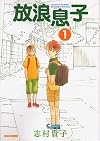
- 放浪息子 1
- Alternate titles
- Hōrō Musuko 1
- Original publication date
- 2003
- People/Characters
- Nitori, Shuichi; Takatsuki, Yoshino; Nitori, Maho; Chiba, Saori
- Related movies
- Hourou Musuko (2011)
- First words
- My big sister says her dream is to become Maiko's classmate in an idol high school.
- Last words
- (Click to show. Warning: May contain spoilers.)Even Grandma can't buy me this.
Classifications
- Genres
- LGBTQ+, Tween, Graphic Novels & Comics, Kids, Teen
- DDC/MDS
- 741.5 — Arts & recreation Drawing & decorative arts Drawing and drawings Comic books, graphic novels, fotonovelas, cartoons, caricatures, comic strips
- LCC
- PN6790 .J34 .W35413 — Language and Literature Literature (General) Literature (General) Collections of general literature Comic books, strips, etc.
- BISAC
Statistics
- Members
- 333
- Popularity
- 94,859
- Reviews
- 21
- Rating
- (3.94)
- Languages
- English, Japanese
- Media
- Paper
- ISBNs
- 4
- ASINs
- 5