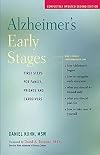
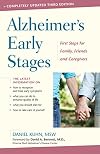
Alzheimer's Early Stages: First Steps for Family, Friends and Caregivers, 2nd edition
by Daniel Kuhn
On This Page
Description
This third edition of Alzheimer's Early Stages offers the 5 million individuals diagnosed with the disease and their loved ones and caretakers new research findings, new approaches to treatment, and new information on the three key areas of Alzheimer's disease: medical aspects, day-to-day care, and care for the caretaker. Author Daniel Kuhn has been a social worker and educator focused on enhancing the well-being of people with Alzheimer's disease and other dementias, as well as that of show more their families, since 1987. Alzheimer's disease has a beginning, not just an end; and as with all beginnings, one must take the first steps before one takes the last. The problems encountered early in the disease and the advice required then are very different from what is needed later in the disease. This book enlightens us about these early stages. Daniel Kuhn seeks to replace fear with knowledge, in the hope that knowledge will lead to empowerment. What does the disease look like and feel like when it first occurs? What types of problems are encountered first by the person with the disease, and by their family and friends? How can these problems be dealt with most effectively? This book is also about reversing the dehumanization that unfortunately is now associated with Alzheimer's disease. Although the disease should be feared and respected, it is not a cause for embarrassment or shame.... This book will serve as a discussion tool to encourage open and frank discussions about mild Alzheimer's disease among patients and family members. In Part One, readers learn about the medical aspects of Alzheimer's through descriptions of diagnosis and the progression of the disease from its earliest origins, and explanations of the current and proposed medical treatments. This section also describes potential non-drug means of treating the disease, such as physical exercise, and speculative treatments, such as coconut oil, that are gaining popularity yet are not. show lessTags
Recommendations









Member Reviews
- "Where did I leave my keys?"
"It's on the tip of my tongue."
"How could I forget to pay that bill or make that appointment? "
We all have "senior moments" that we brush off; perhaps we were too busy or stressed about other things. Forgetting is a normal part of life but sometimes we pause and shiver with dread: does that forgetfulness signal the beginning of the descent into the abyss of mild cognitive impairment (MCI) and Alzheimer's Disease (AD).
If you or a family member has recently received such a diagnosis, Alzheimer's Early Stages can help prepare you and your family for the changes that this disease brings. Kuhn deals with what AD is, how to deal with and care for an AD patient and how to take good care of yourself. Kuhn's show more suggestions range from the basic "think positive, try not to feel overwhelmed, maintain a good diet, exercise and socialize" to the equally important "keep guns and power tools away from someone with AD". He covers when it might be necessary to stop driving, finances, changing roles and responsibilities and avoiding caretaker burnout. Insights are included from people who have AD and from their caretakers. Kuhn refers the reader to many helpful websites and organizations as well as listing other resources and state by state research centers.
While this book is helpful and necessary it is also very depressing. Kuhn reminds us that there is no effective treatment for AD, no recovery or cure. Currently there are only four medications available and they do not work at all for fifty percent of patients. The other half derive limited benefit which lasts a year or less. There are no new treatments on the horizon so the immediate outlook is bleak. Add to that the fact that Medicare and most private insurance don't cover long-term care for chronic conditions like AD. This becomes a crushing burden for the family who is already coping with grief as they watch someone they love slip away. Kuhn ends with a plea for increased funding for research. We are already spending more than $200 billion annually for health care and the number of baby-boomers who will succumb to this disease requiring even more time and expenditures is bound to soar. show less
 This review was written for LibraryThing Early Reviewers.
An excellent first source for persons facing an Alzheimer's diagnosis themselves, or for family and friends of those with the disease. While Kuhn candidly admits that not much progress has been made on the medical front within the past dozen years, he does not come across as a harbinger of doom. Rather he stresses the positive choices that can be made and the quality of life issues that depend not upon medications, but rather upon attitude of those around the person facing the disease. Alzheimer's is not a one-size-fits-all diagnosis and many persons maintain a relatively high quality of life for years before facing the issues that come with late-stage Alzheimer's. All in all a hopeful and positive book that nonetheless doesn't sugar show more coat the very real issues that families face. I took away the all-important realization that a person with Alzheimer's is first and foremost a person - not a diagnosis nor a disease. A valuable section on additional resources is included at the back of the book. show less
This review was written for LibraryThing Early Reviewers.This is a book I wish I had when my father died of Alzheimer's 15 years ago. My mother, brothers and I were "driving blind," as even his doctor did not have many resources for us. Kuhn's well-written book describes in detail the many clues a family, or the patient himself, may detect in the beginning stages of Alzheimer's. Many first-hand accounts from patients and families may give "aha" moments as others recognize the symptoms. The book includes lots of advice for managing the disease, including information on current drug treatments, community resources, help for the caregivers and print, video and web resources.
This review was written for LibraryThing Early Reviewers.This book is a deep dive into the stages and levels of dementia, offering sound advice for caregivers and others who have someone in their life experiencing this diagnoses.
Sadly, my own father was in late stage Parkinson’s related dementia when I read it and I realized some of the things I could have been doing better to help him. But it did help when my mother’s own diagnoses came some years later.
I would recommend this book to anyone with elderly people in their lives. I’m not saying it will impact all elderly, but enough to warrant knowing more about it if the time comes.
Sadly, my own father was in late stage Parkinson’s related dementia when I read it and I realized some of the things I could have been doing better to help him. But it did help when my mother’s own diagnoses came some years later.
I would recommend this book to anyone with elderly people in their lives. I’m not saying it will impact all elderly, but enough to warrant knowing more about it if the time comes.
This review was written for LibraryThing Early Reviewers.First, the good news. This updated guide is literally crammed full of absolutely vital information for preparing -- legally, medically, psychologically -- for the long, hard road of a family's Alzheimer's journey. I sure wish I'd had it for our family's trip with mama.
Now, the bad news. This book is not an easy read. I don't mean that it's a "downer," though -- of course -- parts of it are. It's dense. Its design -- very copy heavy with few white-space breaks -- is mind numbing. The gold is there, but you have to dig, dig, dig for it. I had real trouble maintaining my concentration for more than a couple of pages, and often found myself having to read paragraphs several times before they'd sink in. I can't imagine how anybody already show more stressed with dread over a loved one's condition could finish it.
Lastly, the book is written for a college-reading-level audience. As I noted, I had serious difficulty wading through it. It reads like a text book. I suspect that less than half the folks I regularly corresponded with in Alzheimer's forums would have the focus and stamina to fully appreciate the wealth of information contained in this comprehensive guide. This makes me sad. show less
Now, the bad news. This book is not an easy read. I don't mean that it's a "downer," though -- of course -- parts of it are. It's dense. Its design -- very copy heavy with few white-space breaks -- is mind numbing. The gold is there, but you have to dig, dig, dig for it. I had real trouble maintaining my concentration for more than a couple of pages, and often found myself having to read paragraphs several times before they'd sink in. I can't imagine how anybody already show more stressed with dread over a loved one's condition could finish it.
Lastly, the book is written for a college-reading-level audience. As I noted, I had serious difficulty wading through it. It reads like a text book. I suspect that less than half the folks I regularly corresponded with in Alzheimer's forums would have the focus and stamina to fully appreciate the wealth of information contained in this comprehensive guide. This makes me sad. show less
This review was written for LibraryThing Early Reviewers.I found this book very informative as well as comforting and empowering... even for me as a caregiver who has been taking care of my husband who is in "advanced middle" stages of Alzheimer's disease. It was very honest in telling the un-sugar coated truth in telling the reader that "We are the ones that must change. We must do a major shift in attitude and behavior." Also the realization that research in the area is slow and if we are ever to hope for a better life for our loved ones, we must look to ourselves, not to medicine. The caretakers are the ones who can make a difference. It addresses all the emotions that I feel - sometimes on a daily basis - patience, courage, strength, frustration, ander, dispair and depression and gives me show more the knowledge that I am not alone and can go on. Excellent read. show less
This review was written for LibraryThing Early Reviewers.I thought this book excellent in regards to not only first stage alzheimer's, but also other types of dementias such as stress dementia. As I have a parent in the early stage of dementia, it opened my eyes to what I can do to ease both my parent's pain and mine. Kuhn explains clearly the signs of each stage and more indepth the first stage. He also explains how to look thru the eyes of the person with alzheimer's and reminds us that first and foremost, this person is a real, live individual and deserves to be treated as such. I would definitely recommend it to folks who have individuals in their families who are in the first stage of alzheimer's.
This review was written for LibraryThing Early Reviewers.Members
- Recently Added By
Author Information
7 Works 120 Members
Common Knowledge
- Original publication date
- 1999
- Dedication
- Dedication
In memory of my grandfather Albert Kuhn and to all others who live in the shadow of Alzheimer's disease and related dementias. - First words
- Foreword
For over twenty-five hundred years, people have recognized that old age can be accompanied by the loss of memory an other cognitve abilities. However, Alzheimer's disease and other chronic conditions of aging ... (show all)have not been considered a public health problem until recently. This is mainly the result of the remarkable increase in life expectancy that has been achieved during the past century. With people living longer and fertility declining, both the number and percentage of the older population continues to increase rapidly. This "silver tsunami" will continue well into the twenty-first century. The recognition of these demographic changes led to the founding of the National Institute on Aging in 1976 and the funding of the first Alzheimer's disease research centers in the United States in 1985.
Important Note
The material in this book is intended to provide a review of resources and inormation related to Alzheimer's disease.
Introduction: Why a Third Edition of this Book?
This book is intended to serve as a beginning guide for family members and friends of people in the early stagges of Alzheimer's disease.
1 The Need for an Accurate Diagnosis
It is evident that we are dealing with a peculiar, little-known disease process.
Alois Alzheimer, 1906
Aging is a process of change. As we grow older, our bodi... (show all)es gradually change in a variety of ways. Our hair may turn gray or start to thin. Our ears may lose their sensitivity to certain sounds. Our eyes may no longer see as well as they used to. Our skin wrinkles, and our muscle tone diminishes. Physical functions, in general, start to slow down. Older men are at greater risk of developing prostate problems than they were earlier in life. Older women are at greater risk of developing osteoporosis. Mental functions often slow down, too. Memory loss if fairly common and "senior moments" are taken for granted. We have grown accustomed to the fact that older people eventually become ill or frail. In other words, these changes occur naturally with advancing age. But should all such canges be considered normal just because they are common? Should we simply resign ourselves to living with illnesses and disabilites associated with growing older? Most people facing the prospect of decline in old age would answer such questions with a resounding "No!" - Last words
- (Click to show. Warning: May contain spoilers.)Reaching these loftly goals will take a massive effort. The sign that President Ronald Reagon kept on his desk in the Oval Office might well be adopted as the motto of everyone involved in this undertaking: IT CAN BE DONE. This same sense of optimism must fuel the hopes of all who are concerned about this mind-robbing disease, especially those living with the disease who can no longer speak for themselves.
- Blurbers
- Genova, Lisa; Paris, Daniel L.; Sager, Mark A,; Morhardt, Darby; Mittelman, Mary S.; Snyder, Lisa (show all 11); Post, Stephen G.; Troxel, David; Basting, Anne; Power, G. Allen; Bowlby-Sifton, Carol
Classifications
- Genres
- Nonfiction, General Nonfiction
- DDC/MDS
- 616.8 — Applied Science & Technology Medicine & health Diseases, Allergies, Skin Conditions Nervous Disorders: Autism, Anorexia, OCD
- LCC
- RC523.2 .K838 — Medicine Internal medicine Internal medicine Neurosciences. Biological psychiatry. Neuropsychiatry Psychiatry Psychopathology Psychoses
- BISAC
Statistics
- Members
- 87
- Popularity
- 358,886
- Reviews
- 17
- Rating
- (3.84)
- Languages
- English
- Media
- Paper, Audiobook, Ebook
- ISBNs
- 10