
On This Page
Description
Mary's second adventure as an undercover agent forces her to relive some harrowing childhood experiences as she seeks the identity of a murderer. (Ages 12 and up)Mary Quinn is back, now a trusted member of the Agency, the allfemale detective unit operating out of Miss Scrimshaw's Academy for Girls. Her new assignment sends her into the grimy underbelly of Victorian London dressed as a poor boy, evoking her own childhood memories of fear, hunger, and constant want. As she insinuates herself show more into the confidence of several persons of interest, she encounters others in desperate situations and struggles to make a difference without exposing —or losing —her identity. Mary's adventure, which takes place on the building site of the clock tower of the Houses of Parliament, offers a fictional window into a fascinating historical time and place.
. show less
Tags
Recommendations































Member Reviews
This is the second in the Mary Quinn YA mystery series.
The premise of the series, set in 1850s Victorian England, is that women, particularly in the servant class, are almost invisible to high society, and women in general, regardless of station, are never suspected of being any real threat. This makes them perfectly suited to take positions (maids, companions, governesses, etc.) in which they can make discreet inquiries and from which they can observe and investigate without arousing suspicion. Mary Quinn, rescued by and trained in the secretive investigative agency housed in Miss Scrimshaw’s Academy for Girls, is clever, fierce, and ambitious.
Lee continues Mary's story six months after the last book (A Spy in the House) left off. show more This second book deals with a bricklayer on a job site falling to his death under suspicious circumstances. Mary’s assignment is to infiltrate the building site for Big Ben (the clock tower of the title) and gather information. As an 18-year-old female of small stature, she can pass, with some effort, as a young boy of 12, and presents herself as a dogsbody to the job site’s foreman. Was the death truly an accident? Or, is there something more sinister going on?
The story is told primarily from Mary’s point of view. Through her eyes we get a vivid description of London in the 1850s, from the relative opulence of a hot bath to the abject squalor and desperate working conditions of the labour classes. This peek into the realities of life at that time was very interesting and added to the richness of the story.
The mystery has a clean, well-woven plot. There are no cheats and the resolution is satisfying. The characters are vividly drawn and capture our interest. We see the return of an old character, and are introduced to an engaging new one (whom I hope will appear in the next book!). The occasional use of period terminology (“a box of lucifers” = matches) also adds interest.
Quinn is a strong, intelligent, and resourceful female protagonist. Written with integrity, Lee has her experience suitable levels of uncertainty and indecision when she is confronted with making tough choices. Though aimed at a YA audience, this book has enough story that it will hold an adult’s interest.
As with the first book, I burned through the book in one sitting and couldn’t wait to pick up the next in the series (The Traitor in the Tunnel) to see what new adventure Mary will get into! A great, fun read. show less
The premise of the series, set in 1850s Victorian England, is that women, particularly in the servant class, are almost invisible to high society, and women in general, regardless of station, are never suspected of being any real threat. This makes them perfectly suited to take positions (maids, companions, governesses, etc.) in which they can make discreet inquiries and from which they can observe and investigate without arousing suspicion. Mary Quinn, rescued by and trained in the secretive investigative agency housed in Miss Scrimshaw’s Academy for Girls, is clever, fierce, and ambitious.
Lee continues Mary's story six months after the last book (A Spy in the House) left off. show more This second book deals with a bricklayer on a job site falling to his death under suspicious circumstances. Mary’s assignment is to infiltrate the building site for Big Ben (the clock tower of the title) and gather information. As an 18-year-old female of small stature, she can pass, with some effort, as a young boy of 12, and presents herself as a dogsbody to the job site’s foreman. Was the death truly an accident? Or, is there something more sinister going on?
The story is told primarily from Mary’s point of view. Through her eyes we get a vivid description of London in the 1850s, from the relative opulence of a hot bath to the abject squalor and desperate working conditions of the labour classes. This peek into the realities of life at that time was very interesting and added to the richness of the story.
The mystery has a clean, well-woven plot. There are no cheats and the resolution is satisfying. The characters are vividly drawn and capture our interest. We see the return of an old character, and are introduced to an engaging new one (whom I hope will appear in the next book!). The occasional use of period terminology (“a box of lucifers” = matches) also adds interest.
Quinn is a strong, intelligent, and resourceful female protagonist. Written with integrity, Lee has her experience suitable levels of uncertainty and indecision when she is confronted with making tough choices. Though aimed at a YA audience, this book has enough story that it will hold an adult’s interest.
As with the first book, I burned through the book in one sitting and couldn’t wait to pick up the next in the series (The Traitor in the Tunnel) to see what new adventure Mary will get into! A great, fun read. show less
Another fun historical mystery with Mary Quinn, this time investigating a mysterious death at a very overdue construction project for Westminster Palace. Mary disguises herself as a boy and returns to her hardscrabble roots in the impoverished parts of London. The mystery resolves in the final tenth of the novel, and while there are threads supporting it I didn't pick it out until the characters realized it as well.
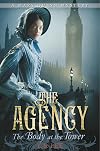
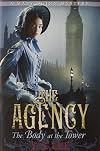
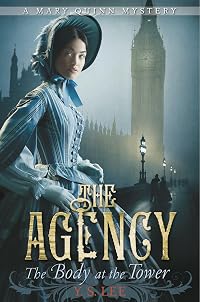
I really appreciate having a biracial character in historical fiction (a rarity) who also isn't whitewashed on the cover- some of the complexities of having multiple parts of your identity pop up here, and because this is 1850s England, are quashed down (for now, I assume- feels like a future plot thread to me).
I really appreciate having a biracial character in historical fiction (a rarity) who also isn't whitewashed on the cover- some of the complexities of having multiple parts of your identity pop up here, and because this is 1850s England, are quashed down (for now, I assume- feels like a future plot thread to me).
Mary is sent on another case for The Agency. This time she must dress as a boy and work on a building site to help determine whether the death of one of the workmen was an accident or whether something more sinister is afoot. While on the job Mary once again connects with James Easton and finds that there is a lot more going on at the building site then meets the eye.
I enjoyed the mystery and did not figure out everything right away which is always a big plus to me. The historical details were very interesting and the character development really drew me in. I felt sorry for Mary and how she felt like her mixed heritage was such a drawback. Her relationship with James is still as contemptuous as ever and I hope they eventually get show more themselves together regardless of what others think. show less
I enjoyed the mystery and did not figure out everything right away which is always a big plus to me. The historical details were very interesting and the character development really drew me in. I felt sorry for Mary and how she felt like her mixed heritage was such a drawback. Her relationship with James is still as contemptuous as ever and I hope they eventually get show more themselves together regardless of what others think. show less
Mary is sent on another case for The Agency. This time she must dress as a boy and work on a building site to help determine whether the death of one of the workmen was an accident or whether something more sinister is afoot. While on the job Mary once again connects with James Easton and finds that there is a lot more going on at the building site then meets the eye.
I enjoyed the mystery and did not figure out everything right away which is always a big plus to me. The historical details were very interesting and the character development really drew me in. I felt sorry for Mary and how she felt like her mixed heritage was such a drawback. Her relationship with James is still as contemptuous as ever and I hope they eventually get show more themselves together regardless of what others think. show less
I enjoyed the mystery and did not figure out everything right away which is always a big plus to me. The historical details were very interesting and the character development really drew me in. I felt sorry for Mary and how she felt like her mixed heritage was such a drawback. Her relationship with James is still as contemptuous as ever and I hope they eventually get show more themselves together regardless of what others think. show less
The second novel in “The Agency” series set in Victorian England begins 14 months after the previous book. It is 1859 and Mary Quinn, soon 18, is now a fully-trained member of The Agency, a secret spy ring used by the police as well as private clients. The Agency takes advantage of the stereotype of the meek female servant to their advantage. As the head of the Agency explained in the first book:
“Because women are believed to be foolish, silly, and weak, we are in a position to observe and learn more effectively than a main in a similar position. Our clients employ us to gather information, often on highly confidential subjects. We place our agents in very sensitive situations. But while a man in such a position might be subject show more to suspicion, we find that women - posing as governesses or domestic servants, for example - are often totally ignored.”
In this installment, Mary is asked to disguise herself as a twelve-year-old boy and go to work as a builder’s assistant on the construction site of the new Houses of Parliament at Westminster, now in its 25th year of work.
[The new buildings were as being erected on the site of a medieval building-complex owned by the Crown and traditionally housing the Parliament that was largely destroyed by fire in 1834. Re-construction (which eventually took 30 years) suffered great delays and cost overruns, as well as the death of both leading architects.]
Mary, cutting off her hair and posing as “Mark,” was sent to the site following the death of a carpenter, John Wick, who fell from the 300-foot-high belfry of St. Stephen’s Tower. The Agency was tasked with monitoring any gossip or talk about the death of Mr. Wick, and to see if any information could be gleaned about both the high rate of accidents at the building site and why the construction was so grossly behind schedule.
Mark had traumatic experiences at the Westminster site from the start, but perhaps nothing compared to her shock at seeing James Easton arrive to do his own investigation. James, now 20 and a civil engineer, had been in India working on railroad construction. Or at least that was what he was meant to do before contracting a bad case of malaria, coming close to death. He was now back in London, and currently without work. Thus Philip Harkness, the site engineer and an old friend of James’ father, asked James if he would provide an “independent” engineer’s report as to the safety conditions on the site, as requisitioned by the First Commissioner of Works. James was concerned he couldn’t be truly “independent” given his connection to Harkness, and insisted he would do so only if appointed by the Commissioner himself and not Harkness. This was promptly accomplished.
James immediately recognized Mary in disguise, and again when he came to see the widowed Mrs. Wick just as Mary was visiting as “Mrs. Anthony Fordham.” Mary came up with a story for James that she was researching a book about the life of the working poor in London, a subject about which she truly held an interest, having been one of them herself.
They collaborated once again, as they did in the first book, to get to the root of the murder and the problems on site, and once again, their feelings for each other were simmering just below the surface (and sometimes above it). But this time, Mary felt she owed James at least some of the truth about herself, risking everything to tell him.
Evaluation: I wasn’t quite so enchanted with this book as the first; for one thing, I couldn’t buy that Mary, an 18-year-old young woman, could so successfully pass as a 12-year-old boy. But the history integrated into the story is interesting, the interaction between James and Mary is delightful, and the intrigue will keep readers turning the pages. I definitely will continue with the series. show less
“Because women are believed to be foolish, silly, and weak, we are in a position to observe and learn more effectively than a main in a similar position. Our clients employ us to gather information, often on highly confidential subjects. We place our agents in very sensitive situations. But while a man in such a position might be subject show more to suspicion, we find that women - posing as governesses or domestic servants, for example - are often totally ignored.”
In this installment, Mary is asked to disguise herself as a twelve-year-old boy and go to work as a builder’s assistant on the construction site of the new Houses of Parliament at Westminster, now in its 25th year of work.
[The new buildings were as being erected on the site of a medieval building-complex owned by the Crown and traditionally housing the Parliament that was largely destroyed by fire in 1834. Re-construction (which eventually took 30 years) suffered great delays and cost overruns, as well as the death of both leading architects.]
Mary, cutting off her hair and posing as “Mark,” was sent to the site following the death of a carpenter, John Wick, who fell from the 300-foot-high belfry of St. Stephen’s Tower. The Agency was tasked with monitoring any gossip or talk about the death of Mr. Wick, and to see if any information could be gleaned about both the high rate of accidents at the building site and why the construction was so grossly behind schedule.
Mark had traumatic experiences at the Westminster site from the start, but perhaps nothing compared to her shock at seeing James Easton arrive to do his own investigation. James, now 20 and a civil engineer, had been in India working on railroad construction. Or at least that was what he was meant to do before contracting a bad case of malaria, coming close to death. He was now back in London, and currently without work. Thus Philip Harkness, the site engineer and an old friend of James’ father, asked James if he would provide an “independent” engineer’s report as to the safety conditions on the site, as requisitioned by the First Commissioner of Works. James was concerned he couldn’t be truly “independent” given his connection to Harkness, and insisted he would do so only if appointed by the Commissioner himself and not Harkness. This was promptly accomplished.
James immediately recognized Mary in disguise, and again when he came to see the widowed Mrs. Wick just as Mary was visiting as “Mrs. Anthony Fordham.” Mary came up with a story for James that she was researching a book about the life of the working poor in London, a subject about which she truly held an interest, having been one of them herself.
They collaborated once again, as they did in the first book, to get to the root of the murder and the problems on site, and once again, their feelings for each other were simmering just below the surface (and sometimes above it). But this time, Mary felt she owed James at least some of the truth about herself, risking everything to tell him.
Evaluation: I wasn’t quite so enchanted with this book as the first; for one thing, I couldn’t buy that Mary, an 18-year-old young woman, could so successfully pass as a 12-year-old boy. But the history integrated into the story is interesting, the interaction between James and Mary is delightful, and the intrigue will keep readers turning the pages. I definitely will continue with the series. show less
Mary Quinn has a new case. This time she needs to masquerade as a boy and get a job at a construction site to investigate the death of a worker. Her employers are branching out from their usual sorts of cases and are arguing about it which creates tension for Mary. Mary also has to deal with some trauma of her own. After a childhood as a thief who often dressed as a boy to avoid rape, this disguise is bringing back memories that she hadn't wanted to relive.
Mary also has to deal with more recent memories when James Eaton is hired to do a safety inspection of the site. After the end of her previous case, James was off to India and she thought she'd never see him again. He has returned from India sick with the aftereffects of malaria but show more recognizes Mary in a glance. She still hasn't told him she works for the Agency so spends a lot of time lying to him.
The death investigation is only the tip of the iceberg of wrongdoing at the site. Mary quickly finds herself involved investigating theft and blackmail.
This was an enjoyable story. I liked the world building which shows an England with dirt and poverty and uncaring rich people. I also liked that Mary was realistic about her fear and her need to hide her mixed heritage. Fans of historical mysteries will enjoy this series. show less
Mary also has to deal with more recent memories when James Eaton is hired to do a safety inspection of the site. After the end of her previous case, James was off to India and she thought she'd never see him again. He has returned from India sick with the aftereffects of malaria but show more recognizes Mary in a glance. She still hasn't told him she works for the Agency so spends a lot of time lying to him.
The death investigation is only the tip of the iceberg of wrongdoing at the site. Mary quickly finds herself involved investigating theft and blackmail.
This was an enjoyable story. I liked the world building which shows an England with dirt and poverty and uncaring rich people. I also liked that Mary was realistic about her fear and her need to hide her mixed heritage. Fans of historical mysteries will enjoy this series. show less
Orphan Mary Quinn works for the Agency, a secret spy organization run by and employing entirely woman. Her latest assignment has her disguised as a 12-year-old boy at the construction site of a clock tower near Parliament, investigating a mysterious death and the site’s overall generally bad reputation. Mary is skilled at her “trade,” but she finds being a boy harder than she expects when it brings back long-suppressed memories of her rough childhood.
To make matters worse—or better, in some instances—James, her old flame, has returned from India, changed in some ways, yet exactly the same in others. Will Mary be able to balance all the different parts of her life while she does her job, or will something have to show more fall—literally?
The first book in this series, A Spy in the House, was a solidly entertaining and well-researched historical mystery, but this second installment, THE BODY AT THE TOWER, throws me into fangirl zone. THE BODY AT THE TOWER, is off-the-charts incredible for its genre, a Victorian London mystery that is sure to please old and new fans.
All of Y. S. Lee’s writing strengths return in full force in this worthy sequel: from character development, to exquisitely immersing historical details, to a sizzling romance. All of the details about the Victorian era never feel forced or extravagant: readers will find it easy to fall into the gritty London that Mary inhabits, while learning incredible things about the Victorian era along the way.
The richness of the setting is matched well by the playful banter between Mary and James, banter that I described as Austen-worthy in my review of the first book, a sentiment that I heartily return to now. Sure, maybe it’s wish fulfillment in a number of ways—James is a self-described arrogant and persistent man—but damn if the pages didn’t nearly catch on fire while I was reading their banter. This is a strong-minded couple that doesn’t have it easy, but they certainly have chemistry.
Lee introduces new characters almost effortlessly, while simultaneously further exploring Mary’s conflicts with her heritage and childhood. Sure, minor characters help move the plot forward or give the MCs necessary information, but in THE BODY AT THE TOWER they acquire the possibility for life outside the story. And Mary is not just your average inexplicably competent female detective, but rather a young woman with demons of her own.
I’m not a big historical fiction OR mystery fan, but this series is one of my favorites, and probably my favorite historical mystery series. Well-written, eye-opening, and entertaining, you will dive in and be immersed immediately. THE BODY AT THE TOWER proves that Y. S. Lee is a rising star, and hasn’t even reached her peak yet. I am on tenterhooks awaiting the third book, and more after that from this incredible author! show less
To make matters worse—or better, in some instances—James, her old flame, has returned from India, changed in some ways, yet exactly the same in others. Will Mary be able to balance all the different parts of her life while she does her job, or will something have to show more fall—literally?
The first book in this series, A Spy in the House, was a solidly entertaining and well-researched historical mystery, but this second installment, THE BODY AT THE TOWER, throws me into fangirl zone. THE BODY AT THE TOWER, is off-the-charts incredible for its genre, a Victorian London mystery that is sure to please old and new fans.
All of Y. S. Lee’s writing strengths return in full force in this worthy sequel: from character development, to exquisitely immersing historical details, to a sizzling romance. All of the details about the Victorian era never feel forced or extravagant: readers will find it easy to fall into the gritty London that Mary inhabits, while learning incredible things about the Victorian era along the way.
The richness of the setting is matched well by the playful banter between Mary and James, banter that I described as Austen-worthy in my review of the first book, a sentiment that I heartily return to now. Sure, maybe it’s wish fulfillment in a number of ways—James is a self-described arrogant and persistent man—but damn if the pages didn’t nearly catch on fire while I was reading their banter. This is a strong-minded couple that doesn’t have it easy, but they certainly have chemistry.
Lee introduces new characters almost effortlessly, while simultaneously further exploring Mary’s conflicts with her heritage and childhood. Sure, minor characters help move the plot forward or give the MCs necessary information, but in THE BODY AT THE TOWER they acquire the possibility for life outside the story. And Mary is not just your average inexplicably competent female detective, but rather a young woman with demons of her own.
I’m not a big historical fiction OR mystery fan, but this series is one of my favorites, and probably my favorite historical mystery series. Well-written, eye-opening, and entertaining, you will dive in and be immersed immediately. THE BODY AT THE TOWER proves that Y. S. Lee is a rising star, and hasn’t even reached her peak yet. I am on tenterhooks awaiting the third book, and more after that from this incredible author! show less
Members
- Recently Added By
Lists

United Kingdom and Ireland
37 works; 1 member

Series
86 works; 2 members

Death and Mystery (with some Adventure)
69 works; 1 member
Author Information

11+ Works 2,400 Members
Series

Work Relationships
Is contained in
Common Knowledge
- Canonical title
- The Body at the Tower
- Original publication date
- 2010-08-10
- People/Characters
- Mary Quinn; James Easton; Octavius Jones; Mr. Harkness; Mr. Keenan; Jenkins
- Important places
- London, England, UK; Miss Scrimshaw's Academy for Girls
- Dedication
- To S., who arrived halfway through this novel.
And to N., who was here the whole time. - First words
- Prologue:
A sobbing man huddles on a narrow ledge, clawing at his eyes to shield them from the horror far below.
Chapter 1:
The freedoms of being a boy, reflected Mary, were many. - Last words
- (Click to show. Warning: May contain spoilers.)In its own time.
Classifications
Statistics
- Members
- 578
- Popularity
- 51,056
- Reviews
- 60
- Rating
- (3.91)
- Languages
- English, French, German, Spanish
- Media
- Paper, Audiobook, Ebook
- ISBNs
- 20
- ASINs
- 6