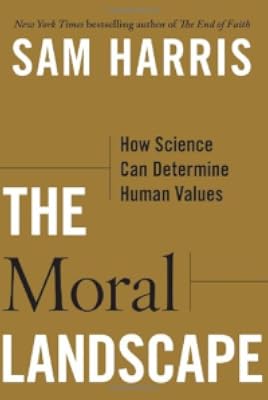
The Moral Landscape: How Science Can Determine Human Values
by Sam Harris
On This Page
Description
Sam Harris dismantles the most common justification for religious faith--that a moral system cannot be based on science.Tags
Recommendations



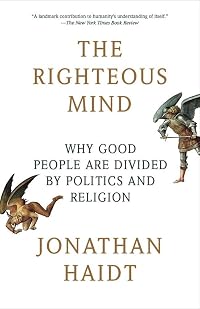
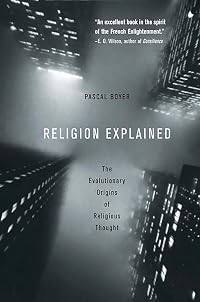
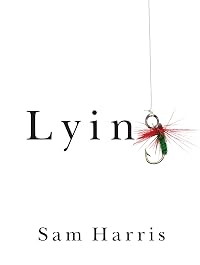
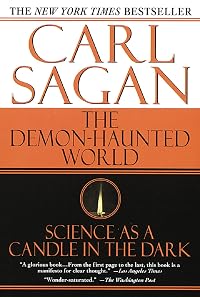
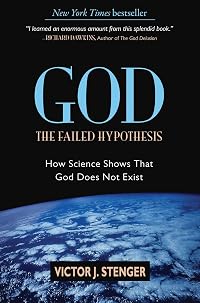
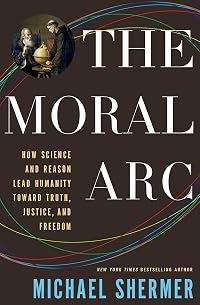
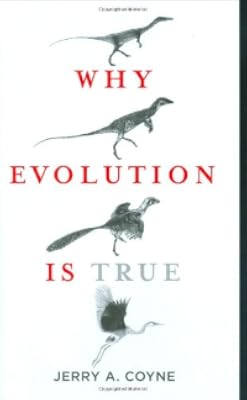
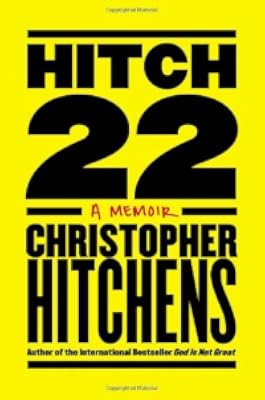
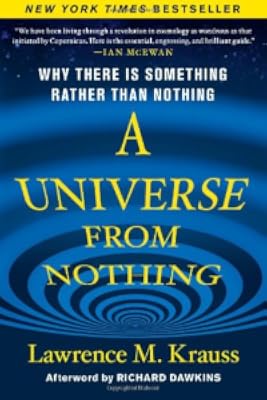
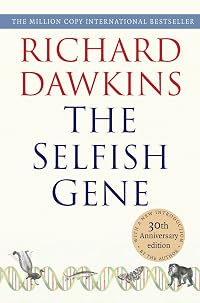
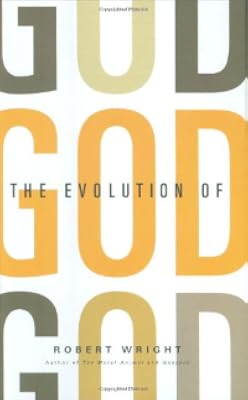
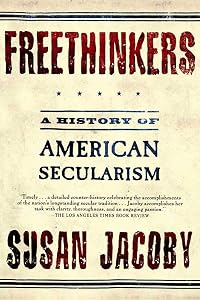



Member Recommendations
tyomero Anyone unfamiliar with recent research on neurobiology can find many interesting facts, most of the time counterintuitive.
kimberlysteele Despite its title, The World Peace Diet is not a diet book. Instead, it is a philosophical collection of observations about the ethics of eating animals and how this practice came into being. That's why it belongs with other discussions of ethics.
Member Reviews
Reading Sam Harris is an intellectual treat, a feast for the brain cells, an oasis amidst today's current 'sea of twaddle'. His arguments sizzle and his support for them is full, complete and unemotional. He is the absolute best author to return to after reading a bunch of escapist things, even good escapism so that the intellect can be re-calibrated, often with the bar raised from its previous place.
This book argues for a science-based approach to determining morality. It is an interesting argument, clearly well thought out, strong and enticing, but I still have reservations.
While, as Harris argues, a science of morality may be possible, human beings do things that are totally irrational, often very impulsive and frequently even in show more violation of their own best interests. Harris realizes this, but I believe that there are practical models for morality that can be more fully and regularly applied by people in their normal decision making.
Using Harris' technique, consider this: Captain Kirk (Star Trek) makes a decision. Mr. Spock gives him one of the "Spook is puzzled looks" and says, "Is that logical, Captain?" A science of morality is Dr. Spock, Captain Kirk is the rest of us.
Still, I like the thinking and arguments. It was a pleasure to get back to reading Harris after such a long time since my last visit to his work.
Still, however, for a clear presentation on human morality, I recommend the incomparable six stages of morality developed by Lawrence Kohlberg as well as the clear reasoning and concrete examples of Jacob Bronowski. Kohlberg's book is difficult to obtain and expensive, but a search of him and a glance at the Wikipedia article will give people the idea of the power of his work. Bronowski's book, The Ascent of Man" became a PBS series a few years ago. show less
This book argues for a science-based approach to determining morality. It is an interesting argument, clearly well thought out, strong and enticing, but I still have reservations.
While, as Harris argues, a science of morality may be possible, human beings do things that are totally irrational, often very impulsive and frequently even in show more violation of their own best interests. Harris realizes this, but I believe that there are practical models for morality that can be more fully and regularly applied by people in their normal decision making.
Using Harris' technique, consider this: Captain Kirk (Star Trek) makes a decision. Mr. Spock gives him one of the "Spook is puzzled looks" and says, "Is that logical, Captain?" A science of morality is Dr. Spock, Captain Kirk is the rest of us.
Still, I like the thinking and arguments. It was a pleasure to get back to reading Harris after such a long time since my last visit to his work.
Still, however, for a clear presentation on human morality, I recommend the incomparable six stages of morality developed by Lawrence Kohlberg as well as the clear reasoning and concrete examples of Jacob Bronowski. Kohlberg's book is difficult to obtain and expensive, but a search of him and a glance at the Wikipedia article will give people the idea of the power of his work. Bronowski's book, The Ascent of Man" became a PBS series a few years ago. show less
Reading Sam Harris is an intellectual treat, a feast for the brain cells, an oasis amidst today's current 'sea of twaddle'. His arguments sizzle and his support for them is full, complete and unemotional. He is the absolute best author to return to after reading a bunch of escapist things, even good escapism so that the intellect can be re-calibrated, often with the bar raised from its previous place.
This book argues for a science-based approach to determining morality. It is an interesting argument, clearly well thought out, strong and enticing, but I still have reservations.
While, as Harris argues, a science of morality may be possible, human beings do things that are totally irrational, often very impulsive and frequently even in show more violation of their own best interests. Harris realizes this, but I believe that there are practical models for morality that can be more fully and regularly applied by people in their normal decision making.
Using Harris' technique, consider this: Captain Kirk (Star Trek) makes a decision. Mr. Spock gives him one of the "Spook is puzzled looks" and says, "Is that logical, Captain?" A science of morality is Dr. Spock, Captain Kirk is the rest of us.
Still, I like the thinking and arguments. It was a pleasure to get back to reading Harris after such a long time since my last visit to his work.
Still, however, for a clear presentation on human morality, I recommend the incomparable six stages of morality developed by Lawrence Kohlberg as well as the clear reasoning and concrete examples of Jacob Bronowski. Kohlberg's book is difficult to obtain and expensive, but a search of him and a glance at the Wikipedia article will give people the idea of the power of his work. Bronowski's book, The Ascent of Man" became a PBS series a few years ago. show less
This book argues for a science-based approach to determining morality. It is an interesting argument, clearly well thought out, strong and enticing, but I still have reservations.
While, as Harris argues, a science of morality may be possible, human beings do things that are totally irrational, often very impulsive and frequently even in show more violation of their own best interests. Harris realizes this, but I believe that there are practical models for morality that can be more fully and regularly applied by people in their normal decision making.
Using Harris' technique, consider this: Captain Kirk (Star Trek) makes a decision. Mr. Spock gives him one of the "Spook is puzzled looks" and says, "Is that logical, Captain?" A science of morality is Dr. Spock, Captain Kirk is the rest of us.
Still, I like the thinking and arguments. It was a pleasure to get back to reading Harris after such a long time since my last visit to his work.
Still, however, for a clear presentation on human morality, I recommend the incomparable six stages of morality developed by Lawrence Kohlberg as well as the clear reasoning and concrete examples of Jacob Bronowski. Kohlberg's book is difficult to obtain and expensive, but a search of him and a glance at the Wikipedia article will give people the idea of the power of his work. Bronowski's book, The Ascent of Man" became a PBS series a few years ago. show less
Reading Sam Harris is an intellectual treat, a feast for the brain cells, an oasis amidst today's current 'sea of twaddle'. His arguments sizzle and his support for them is full, complete and unemotional. He is the absolute best author to return to after reading a bunch of escapist things, even good escapism so that the intellect can be re-calibrated, often with the bar raised from its previous place.
This book argues for a science-based approach to determining morality. It is an interesting argument, clearly well thought out, strong and enticing, but I still have reservations.
While, as Harris argues, a science of morality may be possible, human beings do things that are totally irrational, often very impulsive and frequently even in show more violation of their own best interests. Harris realizes this, but I believe that there are practical models for morality that can be more fully and regularly applied by people in their normal decision making.
Using Harris' technique, consider this: Captain Kirk (Star Trek) makes a decision. Mr. Spock gives him one of the "Spook is puzzled looks" and says, "Is that logical, Captain?" A science of morality is Dr. Spock, Captain Kirk is the rest of us.
Still, I like the thinking and arguments. It was a pleasure to get back to reading Harris after such a long time since my last visit to his work.
Still, however, for a clear presentation on human morality, I recommend the incomparable six stages of morality developed by Lawrence Kohlberg as well as the clear reasoning and concrete examples of Jacob Bronowski. Kohlberg's book is difficult to obtain and expensive, but a search of him and a glance at the Wikipedia article will give people the idea of the power of his work. Bronowski's book, The Ascent of Man" became a PBS series a few years ago. show less
This book argues for a science-based approach to determining morality. It is an interesting argument, clearly well thought out, strong and enticing, but I still have reservations.
While, as Harris argues, a science of morality may be possible, human beings do things that are totally irrational, often very impulsive and frequently even in show more violation of their own best interests. Harris realizes this, but I believe that there are practical models for morality that can be more fully and regularly applied by people in their normal decision making.
Using Harris' technique, consider this: Captain Kirk (Star Trek) makes a decision. Mr. Spock gives him one of the "Spook is puzzled looks" and says, "Is that logical, Captain?" A science of morality is Dr. Spock, Captain Kirk is the rest of us.
Still, I like the thinking and arguments. It was a pleasure to get back to reading Harris after such a long time since my last visit to his work.
Still, however, for a clear presentation on human morality, I recommend the incomparable six stages of morality developed by Lawrence Kohlberg as well as the clear reasoning and concrete examples of Jacob Bronowski. Kohlberg's book is difficult to obtain and expensive, but a search of him and a glance at the Wikipedia article will give people the idea of the power of his work. Bronowski's book, The Ascent of Man" became a PBS series a few years ago. show less
I'm struggling to overcome the overt racism of an author who seemingly gets his information on Islam from Fox news. The book reads like an attempt to vilify Muslims and polarize religions. While Christianity doesn't get out scot-free, it escapes the false claims and sweeping generalizations made about their Abrahamic brethren, Muslims. The author seems to have little worldly experience and little capability to consider ideas from any perspective other than his own. Given this, it's an effort to put stock into his arguments and hear out his ideas.
I had seen Harris speak on this book before I read it, and honestly, I was disappointed that the book had almost less content in it than his lecture. Harris succeeds at providing a framework by which to navigate the idea that religious people don't have a monopoly on morality and that you can logically set up an objective morality without religion. However, he does not suggest how we might actually implement this morality, i.e. how would we convince people that this is a compelling and reasonable argument. Furthermore, his footnotes' defense of James Watson's racist remarks make it seem like he does not understand the history of racial issues in the Western world. Nothing happens in a vacuum, and although I understand that cultural show more relativism is a problem, ignoring the history of racism in the Western world is not exactly a solution. Overall, I would say that the book is worth reading, but that it is sorely lacking in terms of suggesting actual action and implementation. show less
Okay, I'm convinced. The basis of morality should probably be based on the spectrum of effect that our actions have on the well-being of other conscious beings. We don't rely on centuries-old folklore to define our medical treatments; why rely on the same for our moral values? Some actions create greater happiness and well-being than others, and the extent to which actions lead to happiness is something that psychology and neuroscience can help measure and evaluate. The basis of a well-considered and defensible system of moral behaviour may therefore be validly based upon science, as opposed to faith in some imaginary creator. I may need to read this again, but I feel like I've got an ample amount of philosophy to chew on for the show more moment. Recommended. show less
I approached this book reluctantly as the premise (morality as a scientific pursuit) seemed at best unnecessary and at worst misguided. I was, however, eventually brought ‘round by Sam Harris’s persuasive reasoning and ability to anticipate, articulate and effectively counter my various doubts. It provided the framework and language to approach morality in a modern context, though provided no answers to the fundamental obstacle of choosing how to weight the well-being of individuals with the well-being of others. The largest failing in the book turns out to be its tiresome and wholly irrelevant tirade against modern religion which, though solidly reasoned and perfectly rational, had little to do with the subject at hand. show more ‘Discussion of religion poisons everything’, an agnostic Christopher Hitchens might conclude. show less
Members
- Recently Added By
Published Reviews
ThingScore 44
The Moral Landscape is a well-written and thoughtful exercise in secular moral realism, but it attempts to do something far more ambitious—it purports to give us the basis for a science of morality. While the subtitle of Harris' book insists otherwise, science cannot determine human values—it can do no more than tell us how to best implement the values we already have.
added by rybie2
In sum, Harris's fight against relativism, his desire to inform morality with the sciences, and his quest to bring philosophical and scientific topics to those outside the academic world are all praiseworthy goals and should be mimicked by Christian thinkers. However, Harris's tendancy [sic.] to write as if there are simply no other arguments around besides his own, certainly no rival ethical show more (much less scientific) theories, is nothing less than astonishing. It relieves him of any epistemic obligation to answer serious objections to his ethical theory. show less
added by Christa_Josh
In the end, it’s odd that one can share so many of Harris’s views and yet find his project largely unsuccessful. I certainly share his vision of the well-being of conscious creatures as a sensible end for ethics. And I agree that science can and should help us to attain this end. And I certainly agree that religion has no monopoly on morals. The problem—and it’s one that Harris never show more faces up to—is that one can agree with all these things and yet not think that morality should be “considered an undeveloped branch of science.” show less
added by danielx
Lists

Wisdom
31 works; 5 members
Secular Ethics
11 works; 2 members

Non-Fiction Worth Reading
1,015 works; 261 members

Guttabois
27 works; 1 member

Atheism, humanism, freethought, &c. — Best nonfiction books in favour of
167 works; 14 members

Real Good Religion
32 works; 1 member

Foundations of Morality
10 works; 1 member
Author Information

14+ Works 15,618 Members
Sam Harris received a degree in philosophy from Stanford University and a Ph. D in neuroscience from UCLA. His works include Letter to a Christian Nation, The Moral Landscape, and Free Will. The End of Faith won the 2005 PEN Award for Nonfiction. He is the co-founder and CEO of Project Reason, a nonprofit foundation devoted to spreading scientific show more knowledge and secular values in society. His title Waking Up: A Guide to Spirituality Without Religion made The New York Times Best Seller List. (Bowker Author Biography) show less
Awards and Honors
Distinctions
Work Relationships
Has as a commentary on the text
Common Knowledge
- Canonical title
- The Moral Landscape: How Science Can Determine Human Values
- Original title
- The Moral Landscape: How Science Can Determine Human Values
- Alternate titles
- Moral Landscape
- Original publication date
- 2010
- Dedication
- For Emma
- First words
- The people of Albania have a venerable tradition of vendetta called Kanun: if a man commits a murder, his victim's family can kill any one of his male relatives in reprisal.
- Last words
- (Click to show. Warning: May contain spoilers.)And I am convinced that merely admitting this will transform the way we think about human happiness and the public good.
- Blurbers
- McEwan, Ian; Pinker, Steven; Dawkins, Richard; Krauss, Lawrence M.
Classifications
Statistics
- Members
- 1,885
- Popularity
- 11,386
- Reviews
- 44
- Rating
- (3.75)
- Languages
- 8 — Chinese, Dutch, English, Italian, Polish, Portuguese, Swedish, Turkish
- Media
- Paper, Audiobook, Ebook
- ISBNs
- 23
- ASINs
- 12