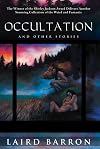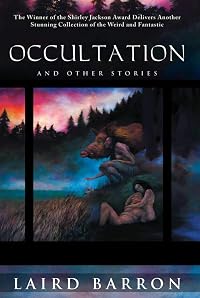
Occultation and Other Stories
by Laird Barron
On This Page
Description
Laird Barron has emerged as one of the strongest voices in modern horror and dark fantasy fiction, building on the eldritch tradition pioneered by writers such as H. P. Lovecraft, Peter Straub, and Thomas Ligotti. His stories have garnered critical acclaim and been reprinted in numerous year's best anthologies and nominated for multiple awards, including the Crawford, International Horror Guild, Shirley Jackson, Theodore Sturgeon, and World Fantasy Awards. His debut collection, The Imago show more Sequence and Other Stories, was the inaugural winner of the Shirley Jackson Award. He returns with his second collection, Occultation. Pitting ordinary men and women against a carnivorous, chaotic cosmos, Occultation's eight tales of terror (two never before published) include the Theodore Sturgeon and Shirley Jackson Award-nominated story "The Forest" and Shirley Jackson Award nominee "The Lagerstatte." Featuring an introduction by Michael Shea, Occultation brings more of the spine-chillingly sublime cosmic horror Laird Barron's fans have come to expect. show lessTags
Recommendations










Member Reviews
A second collection from Laird Barron, more tales to gouge your world out and then hold the dripping world out on the end of its talons and wave it at the universe and ask if anything wants a snack and a billion disgusting filthy things start shuffling hungrily forward.
More great writing, and a greater variety of protagonists to fall prey to the slow erosion of sanity and reality as Barron mythos grows and infects yet more settings and locales and transforms more doomed and hapless humans into food or feeders. Gay lovers, bereaved mothers, retired surveyors, scientists and married couples, all grist to the horror mill.
The stories themselves are disquieting, disturbing, and disgusting enough to churn the stomach but draws enough veils show more to churn the mind. Your heart will break and your mind will revolt at the terrible fates of many of these characters, but you'll be glad it isn't you.
Reread - or rather re-listen, just for Halloween 2020. Cosy and reassuring!
Rereread show less
More great writing, and a greater variety of protagonists to fall prey to the slow erosion of sanity and reality as Barron mythos grows and infects yet more settings and locales and transforms more doomed and hapless humans into food or feeders. Gay lovers, bereaved mothers, retired surveyors, scientists and married couples, all grist to the horror mill.
The stories themselves are disquieting, disturbing, and disgusting enough to churn the stomach but draws enough veils show more to churn the mind. Your heart will break and your mind will revolt at the terrible fates of many of these characters, but you'll be glad it isn't you.
Reread - or rather re-listen, just for Halloween 2020. Cosy and reassuring!
Rereread show less
“Her trail started at the edge of camp. It was easy to follow the broken twigs, the gore-splattered needles and leaves, and though it wound serpentine through brush and trees, he quickly guessed the destination. She’d been dragged by her hair, like a carcass.
It was a long, bloody crawl to the den.
He lay on his side, panting, fixated on her sandal. The sandal was caked in black grime and wedged between split halves of a stone. He’d seen the other shoe a ways back, dangling from a bush. The sun fell below the jagged rim of the mountains. Heat rapidly dissipated, sucked into the advancing red shadows. He mumbled and whined to himself, incoherent except for flashes of insight that urged him to slice his throat and be done, and he show more would’ve committed the act, except when the moment came, he realized he’d dropped the improvised blade, that it was lost. And so all was lost. The moon crept up from its lair and grinned its devil grin. She cried out, muffled and faint. Or a coyote yipped over the ridge. He trembled from head to toe, galvanized to pitiful life by the image of her screaming, buried alive.”
—“—30—” by Laird Barron
𝘖𝘤𝘤𝘶𝘭𝘵𝘢𝘵𝘪𝘰𝘯 is a good collection of creepy stories steeped in the obsession of transmogrification. The very bad kind of tranformation. And there is rarely anything on the shadowed blue marble of Barron’s worldscape that can stop that “monsterification”. Which is cool. I can roll with that. But it’s not a great collection. The mutations are gory and gooey and sometimes portend to an even greater darkness (the bloody tip of the chthonic iceberg). The characters, though, are mostly watered down human tea. And it’s only fitting to equate these doomed bastards with potations since humans don’t seem much else in Barron’s world except meat broth and compost for the demon horde. I really couldn’t care about any character in this entire collection as much as I did each one’s gloopy demise. It’s so much better when you feel sorry for the poor fucker—otherwise it’s nothing more than a series of different matter in entropy, higher states to lower liquified states, and you can’t even remember the name of the dude who’s now a puddle and ruined your good goddamn shoes. And the clichés . . . Jesus . . . even I at least wrote “𝘤𝘩𝘵𝘩𝘰𝘯𝘪𝘤 iceberg” in this post.
My hopes were set high for this collection. I’d read his novel, 𝘛𝘩𝘦 𝘓𝘪𝘨𝘩𝘵 𝘐𝘴 𝘵𝘩𝘦 𝘋𝘢𝘳𝘬𝘯𝘦𝘴𝘴, and really dug how much terror could be squeezed from scenes outside of the action. Locked doors and whispering baby voices . . . aliens? Monsters? I mean, wasn’t the gladiatorial shit enough? I loved that weird mélange he’d created. And 𝘖𝘤𝘤𝘶𝘭𝘵𝘢𝘵𝘪𝘰𝘯 had come highly recommended, it was in my bailiwick, had all kinds of blood and bloody beings, so . . . I don’t know . . . weak human tea, like I’ve said.
I will continue to read his newer fiction—maybe he’s embraced subtle horror and pathos over hotel intercourse and splatter. Yeah, there’s a lot of fucking in this, which, you know . . . I should’ve liked more. Oh well. I’m sure if Laird read my stuff he’d say it needed more humping. And Lovecraftian leviathans. And what’s with starting all your sentences with “and”, Mr. Sherman? And he’d be right.
Write?
I do need more humping in my fiction. But I promise you that when those lovers die mid-thrust, you’ll fucking care about their destruction.
Cthulhu iceberg? show less
It was a long, bloody crawl to the den.
He lay on his side, panting, fixated on her sandal. The sandal was caked in black grime and wedged between split halves of a stone. He’d seen the other shoe a ways back, dangling from a bush. The sun fell below the jagged rim of the mountains. Heat rapidly dissipated, sucked into the advancing red shadows. He mumbled and whined to himself, incoherent except for flashes of insight that urged him to slice his throat and be done, and he show more would’ve committed the act, except when the moment came, he realized he’d dropped the improvised blade, that it was lost. And so all was lost. The moon crept up from its lair and grinned its devil grin. She cried out, muffled and faint. Or a coyote yipped over the ridge. He trembled from head to toe, galvanized to pitiful life by the image of her screaming, buried alive.”
—“—30—” by Laird Barron
𝘖𝘤𝘤𝘶𝘭𝘵𝘢𝘵𝘪𝘰𝘯 is a good collection of creepy stories steeped in the obsession of transmogrification. The very bad kind of tranformation. And there is rarely anything on the shadowed blue marble of Barron’s worldscape that can stop that “monsterification”. Which is cool. I can roll with that. But it’s not a great collection. The mutations are gory and gooey and sometimes portend to an even greater darkness (the bloody tip of the chthonic iceberg). The characters, though, are mostly watered down human tea. And it’s only fitting to equate these doomed bastards with potations since humans don’t seem much else in Barron’s world except meat broth and compost for the demon horde. I really couldn’t care about any character in this entire collection as much as I did each one’s gloopy demise. It’s so much better when you feel sorry for the poor fucker—otherwise it’s nothing more than a series of different matter in entropy, higher states to lower liquified states, and you can’t even remember the name of the dude who’s now a puddle and ruined your good goddamn shoes. And the clichés . . . Jesus . . . even I at least wrote “𝘤𝘩𝘵𝘩𝘰𝘯𝘪𝘤 iceberg” in this post.
My hopes were set high for this collection. I’d read his novel, 𝘛𝘩𝘦 𝘓𝘪𝘨𝘩𝘵 𝘐𝘴 𝘵𝘩𝘦 𝘋𝘢𝘳𝘬𝘯𝘦𝘴𝘴, and really dug how much terror could be squeezed from scenes outside of the action. Locked doors and whispering baby voices . . . aliens? Monsters? I mean, wasn’t the gladiatorial shit enough? I loved that weird mélange he’d created. And 𝘖𝘤𝘤𝘶𝘭𝘵𝘢𝘵𝘪𝘰𝘯 had come highly recommended, it was in my bailiwick, had all kinds of blood and bloody beings, so . . . I don’t know . . . weak human tea, like I’ve said.
I will continue to read his newer fiction—maybe he’s embraced subtle horror and pathos over hotel intercourse and splatter. Yeah, there’s a lot of fucking in this, which, you know . . . I should’ve liked more. Oh well. I’m sure if Laird read my stuff he’d say it needed more humping. And Lovecraftian leviathans. And what’s with starting all your sentences with “and”, Mr. Sherman? And he’d be right.
Write?
I do need more humping in my fiction. But I promise you that when those lovers die mid-thrust, you’ll fucking care about their destruction.
Cthulhu iceberg? show less
I absolutely want to write something longer about this but it's insane how deeply every story here is suffused with horror at heterosexuality, even though I'm not sure the author realises it. It's really noticeable when you get to the best story in the book which is entirely about gay men and the only 2 women appear as dangerous interlopers that suddenly all the other stories got put in perspective for me. There's a heavy sense of gay anti natalism and het sex and the nuclear family as something that can only lead to horror. Idk if I'm reading too much into it but it just Makes Sense to me and after finding the first few stories a little disappointing when I got to Mysterium Tremendum which is an amazingly creepy and gay novella that show more suddenly everything clicked into place and I appreciated all the rest all the more. The story quality varied a bit but that one is great. show less
Laird Barron has quickly become one of my favorite living horror writers. After greatly enjoying Barron's first book, The Imago Sequence, I decided to sip his newest effort slowly, like a good scotch. With Occultation, he successfully avoids the "sophomore curse", that is, having a weak follow-up to a strong debut. Occultation is every bit at good as The Imago Sequence. The man can deliver. I love Barron's style, though I admit I didn't quite know what to make of it at first. However, after finishing his second collection, I think I've nailed down why I like him, at least for now. First and foremost Barron always leaves things unanswered, preserving the mystery. That's key in horror. Those who like their endings spelled out and neatly show more tied up with a bow should perhaps look elsewhere. Bizarre things happen, but the reader doesn't really know what they mean, how they relate, or if there's even a connection at all. I like that. Barron's not afraid to let the proverbial 'sh*t hit the fan' when he needs to. By doing so, and combined with his macho protagonists, he delivers a very American approach to horror.
Secondly, his stories are very unpredictable and often surreal. I'm never able to second guess where the story is going to lead. They're utterly bizarre in that they could go in any direction, always in a way I couldn’t have possibly imagined. Barron has done for Washington State (perhaps with the help of Wilum Pugmire) what Lovecraft did for New England. He makes the Olympic Peninsula out to be the new Miskatonic Valley.
Thirdly, Barron captures the cosmic/existentialist horror of Lovecraft and Ligotti, but in a very different way. With Lovecraft it's often via explanations of scientists or spelled out in journal entries. With Ligotti it's teased out in black prose or alluded to by doomed initiates. However, with Barron it's usually encountered like one would encounter a grizzly bear -- suddenly it's crashing out of the thicket. Think quick or die. Comments of black humor often open up bottomless gulfs of dread. Story wise, he's a midway point between Ligotti and Joe Lansdale. He has a similar approach to reality as Ligotti: the world as illusion, we are all puppets, the universe is a dark meat-grinder, etc. However, his characters and events have much more in common with Lansdale, that is, often including guys who aren’t afraid to break someone's jaw or locations that are surreal backwoods pits of human depravity. In contrast, Ligotti's characters are more or less nobody's -- that's the intent. They're just puppets realizing for the first time where the strings lead, suggesting we're all nobodys. The characters are immaterial -- just props, whereas the message, aesthetics, or philosophy is the real meat. In contrast, Barron's characters are often survivalist SOBs who face horrors head on just for the sake of a good fight (even when they know it's hopeless). show less
Secondly, his stories are very unpredictable and often surreal. I'm never able to second guess where the story is going to lead. They're utterly bizarre in that they could go in any direction, always in a way I couldn’t have possibly imagined. Barron has done for Washington State (perhaps with the help of Wilum Pugmire) what Lovecraft did for New England. He makes the Olympic Peninsula out to be the new Miskatonic Valley.
Thirdly, Barron captures the cosmic/existentialist horror of Lovecraft and Ligotti, but in a very different way. With Lovecraft it's often via explanations of scientists or spelled out in journal entries. With Ligotti it's teased out in black prose or alluded to by doomed initiates. However, with Barron it's usually encountered like one would encounter a grizzly bear -- suddenly it's crashing out of the thicket. Think quick or die. Comments of black humor often open up bottomless gulfs of dread. Story wise, he's a midway point between Ligotti and Joe Lansdale. He has a similar approach to reality as Ligotti: the world as illusion, we are all puppets, the universe is a dark meat-grinder, etc. However, his characters and events have much more in common with Lansdale, that is, often including guys who aren’t afraid to break someone's jaw or locations that are surreal backwoods pits of human depravity. In contrast, Ligotti's characters are more or less nobody's -- that's the intent. They're just puppets realizing for the first time where the strings lead, suggesting we're all nobodys. The characters are immaterial -- just props, whereas the message, aesthetics, or philosophy is the real meat. In contrast, Barron's characters are often survivalist SOBs who face horrors head on just for the sake of a good fight (even when they know it's hopeless). show less
According to Webster’s, “occultation” means “the state of being hidden from view or lost to notice” or “the shutting off of the light of one celestial body by the intervention of another; esp: an eclipse of a star or planet by the moon.” Both definitions seem appropriate to this collection, the latter as metaphor, because Barron can scare you as much with what remains hidden in his stories as with what he drags from the shadows and exposes to your horrified view. This second collection by this relatively new horror writer builds on the promise of The Imago Sequence and Other Stories, and makes it clear why no entry in a “year’s best” gets issued these days without at least one piece by Barron in it.
“Strappado,” show more for instance, is one of the most frightening stories I’ve ever read, and it haunts me even though it’s been a couple of years since I first read it. It’s the story of a couple of wealthy men, dissipated but still interested in new experiences of vice, art, and drink. After a passionate sexual interlude following a chance reunion in an Indian tourist town, they make their way to a disco off the beaten path. After drinking themselves almost into oblivion, they hear of a chance to see a Van Iblis exhibition. Van Iblis, it seems, is a guerilla artist, unwelcome in most countries “[b]ecause the shit he pulls off violates a few laws here and there. Unauthorized installations, libelous materials, health code violations. Explosions!” The excitement of seeing one of his exhibitions cannot be denied, and the men crowd into a rental van with a number of other thrill seekers for a long drive inland. The setting for the exhibition doesn’t seem too exciting: prefabricated warehouse modules and storage sheds, a bulldozer and, ominously, plastic barrels of hydrochloric acid. The longer you read, the more you can feel the jungle starting to close in, and the more things start to feel off kilter; this just isn’t right. Very much not right, as things turn out, though I’m not going to tell you another word about it, except to say that I’ve begun to reconsider having red as my favorite color. If this story doesn’t give you nightmares, it’s only because you haven’t read it; there can be no other explanation.
A few of the other stories make it clear that Barron is doing for the Pacific Northwest what H.P. Lovecraft did for New England (except that Barron is a better writer). There are Old Ones living in the forests, and they mean us no good. In “Mysterium Tremendum,” Willem finds a book entitled “Moderor de Caliginis” – “The Black Guide” – in a Seattle general goods store off the beaten track. It promises to contain directions to “secret attractions, hidden places,and persons ‘in the know’ regarding matters esoteric and arcane. It seems just the thing for planning a camping trip he and his lover and another couple will be taking soon. One particular site catches his eye: a dolmen on Mystery Mountain. Glenn, Willem’s partner, had told him that there were no megaliths or dolmen in Washington State, but the guide seems to differ. It sounds to him like an ideal place to explore
The four head out in a sky-blue Land Rover for their trip, spending the first night in an old hotel in Olympia and heading onward to the Dungeness-Sequim Valley just in time for the Lavender Festival. A night of drinking in a local tavern turns into a hell of fistfight when some of the drunks decide they don’t like the gay foursome drinking in the same place they’re drinking. The four prevail rather bloodily and head for the wilderness – and now things start to get strange. The road they’re on is almost impossible to navigate, the sheer mountainside to their left and a cliff to the right. The first night of camping leaves the group with “horror-show dreams,” they all wake up aching from the fight, and it’s time to go hiking for the dolmen, which seems like a much spookier prospect now than it did when they were making plans.
They find it. It would have been better if they hadn’t.
Barron doesn’t use Lovecraft’s word “eldritch” once, and the goriest his story gets is in describing the fight, not in telling what happened at the dolmen. By no means, though, should you get the impression that this means he doesn’t write enough. He is a master at writing just the right amount of description for your mind to run away with the images into places you’d really rather not visit. I, for one, don’t expect to ever encounter a dolmen in the woods of Washington State; Barron even writes in the story that there aren’t any there. I’d suggest that you not attempt to confirm this, because if a dolmen exists in Washington, it’s definitely home to things that don’t love you. Or maybe they love you too much? Either way, you don’t want to meet them.
“The Broadsword” is another story that helps build up the alternate reality of Washington State that Barron is creating. The wilderness there is vast and deep, something those who keep to Seattle don’t think about too much, and a man can get lost in those forests. That’s what happened to Terry Walker on a surveying trip; his partner, Pershing Dennard, never saw him again. Well, at least not until much later in his life, and under considerably different circumstances. See, he didn’t exactly get lost; he got taken. And now he has the opportunity to take Pershing along with him:
"Pershing was taken through a hole in the sub-basement foundation into darkness so thick and sticky it flowed across his skin. …
"An eternal purple-black night ruled the fleshy comb of an alien realm. Gargantuan tendrils slithered in the dark, coiling and uncoiling, and the denizens of the underworld arrived in an interminable procession through vermiculate tubes and tunnels, and gathered, chuckling and sighing, in appreciation of his agonies. In the great and abiding darkness, a sea of dead white faces brightened and glimmered like porcelain masks at a grotesque ball. He couldn’t discern their forms, only the luminescent faces, their plastic, drooling joy."
Can you hear the Lovecraft?
Barron would like you to read “—30—“ only after dark, and preferably when you’re alone, but really, in order for this story to completely creep you out, none of that is necessary. A team of two naturalists, one male and one female, is studying an area in the hills is what seems to be Eastern Washington (yes, the wilds of Washington State again). There’s a coyote den that doesn’t seem to be quite right, and the insects aren’t behaving the way you’d expect them to, and wow, it’s really isolated where they are, and isn’t she starting to act rather strangely, now that he thinks about it? When he starts having dreams in which he “limp[s] across a plain that stretched beneath a wide, carnivorous sky,” the end doesn’t seem like it can be long in coming, but you’re only halfway there.
Occultation and Other Stories contains nine stories, three of which are original to this volume. There is a smart review by Michael Shea, the author of The Autopsy and Other Tales. Although Amazon gives the page count of this book as 300, the last numbered page in my copy is 245. The book is published by Night Shade Books, a small press I much admire, and they’ve put together a nice product; I only wish the paper were a better quality. The cover is Matthew Jaffe's first published book jacket, and is appropriately odd, especially in that it contains colors not normally found in horror, bright blues, pinks and oranges that magnify the effect of the darker portions of the painting.
As I’ve been writing this review, the fog has been creeping over the hills where I live. Already I can’t see past the house across the street into the canyon behind it. It’s almost as if Barron’s stories have crept out from between the covers of this book and started infecting my world, so I’m going to finish this up in a hurry by telling you that there isn’t a clunker in this whole bunch of stories, damn it, and they’re all scary as hell, double damn it, and if you’d like to know about the future of horror, you need to read this book. Just keep a tumbler of whiskey by your elbow to deaden the effect, though whether that will really work is anyone’s guess. It doesn’t seem to help Barron’s characters much.
Disclosure: I met Laird Barron at the World Fantasy Convention in October 2009, and had a burger with him and John Langan, another fairly new horror writer who is equally talented in a completely different way. I told Barron how much his stories scared me, and he looked very pleased – which is sort of macabre when you think about it, isn’t it? Isn’t it sort of sadistic to take delight in scaring people? Except that he’s a really nice guy. Anyway, I think this is why Barron named me in his acknowledgments at the front of this book, and I am honored. But if I felt that this would prevent me from being straight with you about my reaction to this book, I would not have reviewed it. show less
“Strappado,” show more for instance, is one of the most frightening stories I’ve ever read, and it haunts me even though it’s been a couple of years since I first read it. It’s the story of a couple of wealthy men, dissipated but still interested in new experiences of vice, art, and drink. After a passionate sexual interlude following a chance reunion in an Indian tourist town, they make their way to a disco off the beaten path. After drinking themselves almost into oblivion, they hear of a chance to see a Van Iblis exhibition. Van Iblis, it seems, is a guerilla artist, unwelcome in most countries “[b]ecause the shit he pulls off violates a few laws here and there. Unauthorized installations, libelous materials, health code violations. Explosions!” The excitement of seeing one of his exhibitions cannot be denied, and the men crowd into a rental van with a number of other thrill seekers for a long drive inland. The setting for the exhibition doesn’t seem too exciting: prefabricated warehouse modules and storage sheds, a bulldozer and, ominously, plastic barrels of hydrochloric acid. The longer you read, the more you can feel the jungle starting to close in, and the more things start to feel off kilter; this just isn’t right. Very much not right, as things turn out, though I’m not going to tell you another word about it, except to say that I’ve begun to reconsider having red as my favorite color. If this story doesn’t give you nightmares, it’s only because you haven’t read it; there can be no other explanation.
A few of the other stories make it clear that Barron is doing for the Pacific Northwest what H.P. Lovecraft did for New England (except that Barron is a better writer). There are Old Ones living in the forests, and they mean us no good. In “Mysterium Tremendum,” Willem finds a book entitled “Moderor de Caliginis” – “The Black Guide” – in a Seattle general goods store off the beaten track. It promises to contain directions to “secret attractions, hidden places,and persons ‘in the know’ regarding matters esoteric and arcane. It seems just the thing for planning a camping trip he and his lover and another couple will be taking soon. One particular site catches his eye: a dolmen on Mystery Mountain. Glenn, Willem’s partner, had told him that there were no megaliths or dolmen in Washington State, but the guide seems to differ. It sounds to him like an ideal place to explore
The four head out in a sky-blue Land Rover for their trip, spending the first night in an old hotel in Olympia and heading onward to the Dungeness-Sequim Valley just in time for the Lavender Festival. A night of drinking in a local tavern turns into a hell of fistfight when some of the drunks decide they don’t like the gay foursome drinking in the same place they’re drinking. The four prevail rather bloodily and head for the wilderness – and now things start to get strange. The road they’re on is almost impossible to navigate, the sheer mountainside to their left and a cliff to the right. The first night of camping leaves the group with “horror-show dreams,” they all wake up aching from the fight, and it’s time to go hiking for the dolmen, which seems like a much spookier prospect now than it did when they were making plans.
They find it. It would have been better if they hadn’t.
Barron doesn’t use Lovecraft’s word “eldritch” once, and the goriest his story gets is in describing the fight, not in telling what happened at the dolmen. By no means, though, should you get the impression that this means he doesn’t write enough. He is a master at writing just the right amount of description for your mind to run away with the images into places you’d really rather not visit. I, for one, don’t expect to ever encounter a dolmen in the woods of Washington State; Barron even writes in the story that there aren’t any there. I’d suggest that you not attempt to confirm this, because if a dolmen exists in Washington, it’s definitely home to things that don’t love you. Or maybe they love you too much? Either way, you don’t want to meet them.
“The Broadsword” is another story that helps build up the alternate reality of Washington State that Barron is creating. The wilderness there is vast and deep, something those who keep to Seattle don’t think about too much, and a man can get lost in those forests. That’s what happened to Terry Walker on a surveying trip; his partner, Pershing Dennard, never saw him again. Well, at least not until much later in his life, and under considerably different circumstances. See, he didn’t exactly get lost; he got taken. And now he has the opportunity to take Pershing along with him:
"Pershing was taken through a hole in the sub-basement foundation into darkness so thick and sticky it flowed across his skin. …
"An eternal purple-black night ruled the fleshy comb of an alien realm. Gargantuan tendrils slithered in the dark, coiling and uncoiling, and the denizens of the underworld arrived in an interminable procession through vermiculate tubes and tunnels, and gathered, chuckling and sighing, in appreciation of his agonies. In the great and abiding darkness, a sea of dead white faces brightened and glimmered like porcelain masks at a grotesque ball. He couldn’t discern their forms, only the luminescent faces, their plastic, drooling joy."
Can you hear the Lovecraft?
Barron would like you to read “—30—“ only after dark, and preferably when you’re alone, but really, in order for this story to completely creep you out, none of that is necessary. A team of two naturalists, one male and one female, is studying an area in the hills is what seems to be Eastern Washington (yes, the wilds of Washington State again). There’s a coyote den that doesn’t seem to be quite right, and the insects aren’t behaving the way you’d expect them to, and wow, it’s really isolated where they are, and isn’t she starting to act rather strangely, now that he thinks about it? When he starts having dreams in which he “limp[s] across a plain that stretched beneath a wide, carnivorous sky,” the end doesn’t seem like it can be long in coming, but you’re only halfway there.
Occultation and Other Stories contains nine stories, three of which are original to this volume. There is a smart review by Michael Shea, the author of The Autopsy and Other Tales. Although Amazon gives the page count of this book as 300, the last numbered page in my copy is 245. The book is published by Night Shade Books, a small press I much admire, and they’ve put together a nice product; I only wish the paper were a better quality. The cover is Matthew Jaffe's first published book jacket, and is appropriately odd, especially in that it contains colors not normally found in horror, bright blues, pinks and oranges that magnify the effect of the darker portions of the painting.
As I’ve been writing this review, the fog has been creeping over the hills where I live. Already I can’t see past the house across the street into the canyon behind it. It’s almost as if Barron’s stories have crept out from between the covers of this book and started infecting my world, so I’m going to finish this up in a hurry by telling you that there isn’t a clunker in this whole bunch of stories, damn it, and they’re all scary as hell, double damn it, and if you’d like to know about the future of horror, you need to read this book. Just keep a tumbler of whiskey by your elbow to deaden the effect, though whether that will really work is anyone’s guess. It doesn’t seem to help Barron’s characters much.
Disclosure: I met Laird Barron at the World Fantasy Convention in October 2009, and had a burger with him and John Langan, another fairly new horror writer who is equally talented in a completely different way. I told Barron how much his stories scared me, and he looked very pleased – which is sort of macabre when you think about it, isn’t it? Isn’t it sort of sadistic to take delight in scaring people? Except that he’s a really nice guy. Anyway, I think this is why Barron named me in his acknowledgments at the front of this book, and I am honored. But if I felt that this would prevent me from being straight with you about my reaction to this book, I would not have reviewed it. show less
It takes a lot to creep me out. Horror so frequently disappoints me- that hyena laughing two rows behind you at the horror movie showing? That’s me, I’m afraid. That makes me sad, because I love that delicious chill of a well crafted horror story, and it’s just so rare.
Barron managed to raise the hair on the back of my neck several times with these stories. Sure, there were some predictable moments – those times when you want to scream “Don’t go in there!!!!” because you know there is a monster there- but some things came so far out of left field I never would have guessed the ending.
Barron has created a mythos of chthonic gods and monsters that wend their way through the collection. The dark, mostly unseen creepiness show more occurs in apartment houses, hotels, ordinary homes, and in campgrounds in western Washington state. Friends turn out to be wearing flesh masks to hide their otherwordlyness. These aren’t happy tales. Even survivors are scarred for life, never knowing when the Other will come for them again. Highly recommended. show less
Barron managed to raise the hair on the back of my neck several times with these stories. Sure, there were some predictable moments – those times when you want to scream “Don’t go in there!!!!” because you know there is a monster there- but some things came so far out of left field I never would have guessed the ending.
Barron has created a mythos of chthonic gods and monsters that wend their way through the collection. The dark, mostly unseen creepiness show more occurs in apartment houses, hotels, ordinary homes, and in campgrounds in western Washington state. Friends turn out to be wearing flesh masks to hide their otherwordlyness. These aren’t happy tales. Even survivors are scarred for life, never knowing when the Other will come for them again. Highly recommended. show less
Those of you bumming out about later Barron or ones that only know him from his weaker (IMHO), newer stuff need to go back to the two Nightshade Press collections of his earlier stuff and see what the man is capable of. This collection and The Imago Sequence are stunning and original new horror in the Lovecraft vein without being anything near a pastiche.
Every author is entitled to explore whatever they want, but we as readers don’t have to like it any more than we want to. I am confident Barron will find his way, if not back to stuff like Occultation, then into something just as interesting in the future. He just ain’t there now. But here we can revel in what there is.
Every author is entitled to explore whatever they want, but we as readers don’t have to like it any more than we want to. I am confident Barron will find his way, if not back to stuff like Occultation, then into something just as interesting in the future. He just ain’t there now. But here we can revel in what there is.
Members
- Recently Added By
Lists

Weird and Weirder Fiction
270 works; 35 members

Books Read in 2024
4,623 works; 126 members

To Read (Prospector)
86 works; 1 member

The Cosmic and the Weird
16 works; 1 member
Author Information

57+ Works 3,258 Members
Awards and Honors
Awards
Distinctions
Work Relationships
Common Knowledge
- Canonical title
- Occultation and Other Stories
- Original publication date
- 2010
- Dedication
- For Jody Rose, A rock in the storm
- First words
- After the drive had grown long and monotonous, Partridge shut his eyes and the woman was waiting.
- Last words
- (Click to show. Warning: May contain spoilers.)They seemed surprised to see her.
- Blurbers
- VanderMeer, Jeff; Datlow, Ellen; Link, Kelly
Classifications
Statistics
- Members
- 472
- Popularity
- 64,520
- Reviews
- 15
- Rating
- (3.91)
- Languages
- English
- Media
- Paper, Audiobook, Ebook
- ISBNs
- 3
- ASINs
- 4