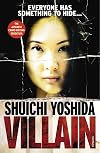
Villain
by Shūichi Yoshida
On This Page
Description
"January 6, 2002. The body of a female insurance saleswoman is found in the southernmost region of Japan, at a spot rumored to be a home to ghosts. Shortly thereafter Yuichi, a young construction worker, is arrested by the Nagasaki police on suspicion of murder..."--from publisher description.Tags
Recommendations






























Member Reviews
This was a little depressing, but only because it was so well written. I felt a certain empathy for the central character and felt that Shūichi Yoshida made him a believable person. The book was an interesting exploration of alienation and the need to feel loved by someone, to feel that you belong. It wasn't just a clichéd tale of an introverted loner turning out to be a serial killer. It was more an exploration of how life events mould us and can take us to extremes. It did leave me feeling a little bummed out, though!
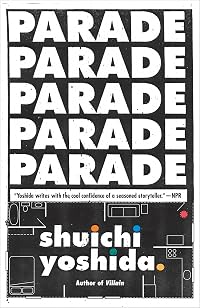
Shuichi Yoshida specialises in tales of isolation and lonliness, and Villain is another excellent piece of work, although not as complete in my view as Parade, his other work that has been translated into English.
Yoshino, an insurance saleswoman, has a late night date with the handsome college student Keigo; in the morning her body is found on the Mitsui Pass, an eerie place best avoided. And Keigo has disappeared
We soon learn that there were many sides to Yoshino; whilst her friends believe her to be dating Keigo, she was in fact having a range of assignations with men she met online. And some of them she had started asking for money.
One of these dates/ customers is Yuichi. A non communicative loner, obsessed with his car, Yuichi has show more had an unfortunate upbringing. Abandoned by his mother at an early age, he has been brought up by his grandparents in a small fishing village. He is emotionally stunted, desperate for love but with no sense of how to begin a relationship. He has previously been obsessed with the sex worker Miho, visiting her massage parlour everyday and cooking her lunch, before his intensity scared her off.
But then Yuichi encounters Mitsuyo online, another lonely young woman, with a boring job selling mens clothes. They agree to meet, and somewhat to Mitsuyo's surprise, rather than the drive to a romantic lighthouse that she was expecting, she finds herself in a love hotel with Yuichi within an hour of their first meeting. She finds herself responding to his emotional neediness and becoming obsessed with him in turn
As Keigo reappears on the scene and appears not to be the guilty party, police suspicion turns to Yuichi and he and Mitsuyo go on the run, firstly living in love hotels and then, as money gets tight and the net closes in, abandoning his car and huddling together in the abandoned lighthouse, happy, after a fashion. But it can't last and in a scene of remarkable intensity, Mitsuyo and Yuichi's relationship comes to a head as the police close in
During the course of the book we learn why Yoshino was at the Mitsue Pass, and who killed her, but not really why . In one of Shuichi's trademark morally ambiguous endings, a number of possibilities remain. But in many ways, the reason doesn't matter. What Shuichi succeeds brilliantly in doing is opening up a world of lonliness, quiet despair, inability to communicate and emotional immaturity. He seems to have a poor opinion of Japanese youth; none of his young characters, from the cruel, feckless Keigo to the naive Mitsuyo come out of this well compared to the older characters, such as Yoshino's grieving parents and Yuichi's brave, stoic grandparents. He seems to see a bleak future for these cold numb youth
An excellent book, but I as mentioned above, I do think Parade is better show less
Yoshino, an insurance saleswoman, has a late night date with the handsome college student Keigo; in the morning her body is found on the Mitsui Pass, an eerie place best avoided. And Keigo has disappeared
We soon learn that there were many sides to Yoshino; whilst her friends believe her to be dating Keigo, she was in fact having a range of assignations with men she met online. And some of them she had started asking for money.
One of these dates/ customers is Yuichi. A non communicative loner, obsessed with his car, Yuichi has show more had an unfortunate upbringing. Abandoned by his mother at an early age, he has been brought up by his grandparents in a small fishing village. He is emotionally stunted, desperate for love but with no sense of how to begin a relationship. He has previously been obsessed with the sex worker Miho, visiting her massage parlour everyday and cooking her lunch, before his intensity scared her off.
But then Yuichi encounters Mitsuyo online, another lonely young woman, with a boring job selling mens clothes. They agree to meet, and somewhat to Mitsuyo's surprise, rather than the drive to a romantic lighthouse that she was expecting, she finds herself in a love hotel with Yuichi within an hour of their first meeting. She finds herself responding to his emotional neediness and becoming obsessed with him in turn
As Keigo reappears on the scene and appears not to be the guilty party, police suspicion turns to Yuichi and he and Mitsuyo go on the run, firstly living in love hotels and then, as money gets tight and the net closes in, abandoning his car and huddling together in the abandoned lighthouse, happy, after a fashion. But it can't last and in a scene of remarkable intensity, Mitsuyo and Yuichi's relationship comes to a head as the police close in
During the course of the book we learn why Yoshino was at the Mitsue Pass, and who killed her, but not really why . In one of Shuichi's trademark morally ambiguous endings, a number of possibilities remain. But in many ways, the reason doesn't matter. What Shuichi succeeds brilliantly in doing is opening up a world of lonliness, quiet despair, inability to communicate and emotional immaturity. He seems to have a poor opinion of Japanese youth; none of his young characters, from the cruel, feckless Keigo to the naive Mitsuyo come out of this well compared to the older characters, such as Yoshino's grieving parents and Yuichi's brave, stoic grandparents. He seems to see a bleak future for these cold numb youth
An excellent book, but I as mentioned above, I do think Parade is better show less
'Isn't it like everybody says? That he's the villain in all this? And I just decided on my own to fall for someone like that.
Right?'
It seems wholly appropriate that this book ends with a question. This is more of a psychological study of damaged people, a delving into the seedy side of love hotels and gangsters extorting money, a love story or a story of obsession. This is not a crime thriller in the sense that you might expect; it is certainly not a police procedural crime novel - so whatever you are expecting, be warned.
The basic story is revealed in the first couple of pages: a girl's body is found in the remote Mitsuse Pass, on the border between the prefectures of Fukuoka and Saga. And we know that a construction worker has been show more arrested for her murder. Done deal. Story over. What follows is a slow unravelling of how the events happened, and uncovers a pretty unsavoury bunch of characters. The victim is Yoshino, a young insurance worker who dabbles in prostitution and is a bit flaky. She has an obsession with Keigo, a bit of a spoilt brat with too much money, but has also been seeing Yuichi, the aforementioned construction worker. Later in the course of events Yuichi meets Mitsuyo and ends up on the run from the police as the net closes in on him, once Keigo is cleared of the crime.
So, that's the basic premise. But this is a slow book; there are lots of quite detailed descriptions of roads and cars, of people having apparently casual conversations. There are various subplots involving the families of both victim and murderer, which may or may not contribute to the strength of the story.
What I took most from the book was Yoshida's psychological study of the characters, in particular Yuichi, abandoned by his mother as a young boy and raised by his grandparents. He is obsessive about his car, his prize possession, and prone to sudden mood swings. His relationship with Mitsuyo is a whirlwind love story that is doomed to fail from the start, and ends in an abandoned lighthouse, a suitably apt metaphor and an important symbol for Yuichi which is revealed earlier in the book.
It's not perfect, but I knew what I was getting into, having seen the (excellent) film version a few years ago. There are various narrative shifts, especially towards the end of the book when we shift from third- to first-person narrative to get the insights from many of the characters as they reflect on the events afterwards. Some are more successful than others, to be honest, but it adds to a general sense that this book is more like a documentary than thriller. Portrait of a Villain, more like it.
Anyway, I would recommend it, and thoroughly enjoyed it. It's one of those where you need to ignore the publisher's blurb and the literary reviews, and just give it a try. 4 stars from me. show less
Right?'
It seems wholly appropriate that this book ends with a question. This is more of a psychological study of damaged people, a delving into the seedy side of love hotels and gangsters extorting money, a love story or a story of obsession. This is not a crime thriller in the sense that you might expect; it is certainly not a police procedural crime novel - so whatever you are expecting, be warned.
The basic story is revealed in the first couple of pages: a girl's body is found in the remote Mitsuse Pass, on the border between the prefectures of Fukuoka and Saga. And we know that a construction worker has been show more arrested for her murder. Done deal. Story over. What follows is a slow unravelling of how the events happened, and uncovers a pretty unsavoury bunch of characters. The victim is Yoshino, a young insurance worker who dabbles in prostitution and is a bit flaky. She has an obsession with Keigo, a bit of a spoilt brat with too much money, but has also been seeing Yuichi, the aforementioned construction worker. Later in the course of events Yuichi meets Mitsuyo and ends up on the run from the police as the net closes in on him, once Keigo is cleared of the crime.
So, that's the basic premise. But this is a slow book; there are lots of quite detailed descriptions of roads and cars, of people having apparently casual conversations. There are various subplots involving the families of both victim and murderer, which may or may not contribute to the strength of the story.
What I took most from the book was Yoshida's psychological study of the characters, in particular Yuichi, abandoned by his mother as a young boy and raised by his grandparents. He is obsessive about his car, his prize possession, and prone to sudden mood swings. His relationship with Mitsuyo is a whirlwind love story that is doomed to fail from the start, and ends in an abandoned lighthouse, a suitably apt metaphor and an important symbol for Yuichi which is revealed earlier in the book.
It's not perfect, but I knew what I was getting into, having seen the (excellent) film version a few years ago. There are various narrative shifts, especially towards the end of the book when we shift from third- to first-person narrative to get the insights from many of the characters as they reflect on the events afterwards. Some are more successful than others, to be honest, but it adds to a general sense that this book is more like a documentary than thriller. Portrait of a Villain, more like it.
Anyway, I would recommend it, and thoroughly enjoyed it. It's one of those where you need to ignore the publisher's blurb and the literary reviews, and just give it a try. 4 stars from me. show less
So the first couple of pages of Villain don’t exactly make you want to jump into the fray. Because it reads like a rather boring travel guide, written by somebody who is rather into transportation and roads. You can know all you need to know about the tolls for vehicles between Nagasaki and Fukuoka, Nagasaki and Hakata.
I went along with it, and then comes the trigger. The last paragraph (of the first section) tells the reader of an arrest, of a crime, essentially spelling it out for you.
And that’s the thing I realise about Japanese crime fiction, at least the three that I have read so far (Out, The Devotion of Suspect X). That it is not about the mystery, it’s not technically a whodunnit, because you already know whodidit. Because show more it’s right there in your face, in the first few sections, the first few pages even. These books are more about the ‘why’, and the effect the murders have – on the murderers themselves, the victim’s family and friends, the other suspects.
Villain, by Shuichi Yoshida, brings out a different part of Japan, one of love hotels and online dating, and ageing seaside villages full of elderly residents. It is a quite ugly, rather lonely view of Japan.
“The scenery flowing past changed, but they never seemed to get anywhere. When the interstate ended, it connected up with the prefectural highway, and past that were city and local roads. Mitsuyo had a road atlas spread out on the dashboard. She flipped through the maps and saw that the highways and roads were all color-coded. Interstates were orange, prefectural highways were green, local roads were blue, and smaller roads were white. The countless roads were a net, a web that had caught them and the car they were in.”
Told from multiple viewpoints especially towards the end of the book, Villain shines when the focus is on the victim’s father, who struggles to come to terms with his daughter’s death, and his painful realisation that he didn’t really know his child at all.
Villain was an engrossing, thought provoking read, and leaves you wondering, who – or perhaps what – is the real ‘villain’ here. show less
I went along with it, and then comes the trigger. The last paragraph (of the first section) tells the reader of an arrest, of a crime, essentially spelling it out for you.
And that’s the thing I realise about Japanese crime fiction, at least the three that I have read so far (Out, The Devotion of Suspect X). That it is not about the mystery, it’s not technically a whodunnit, because you already know whodidit. Because show more it’s right there in your face, in the first few sections, the first few pages even. These books are more about the ‘why’, and the effect the murders have – on the murderers themselves, the victim’s family and friends, the other suspects.
Villain, by Shuichi Yoshida, brings out a different part of Japan, one of love hotels and online dating, and ageing seaside villages full of elderly residents. It is a quite ugly, rather lonely view of Japan.
“The scenery flowing past changed, but they never seemed to get anywhere. When the interstate ended, it connected up with the prefectural highway, and past that were city and local roads. Mitsuyo had a road atlas spread out on the dashboard. She flipped through the maps and saw that the highways and roads were all color-coded. Interstates were orange, prefectural highways were green, local roads were blue, and smaller roads were white. The countless roads were a net, a web that had caught them and the car they were in.”
Told from multiple viewpoints especially towards the end of the book, Villain shines when the focus is on the victim’s father, who struggles to come to terms with his daughter’s death, and his painful realisation that he didn’t really know his child at all.
Villain was an engrossing, thought provoking read, and leaves you wondering, who – or perhaps what – is the real ‘villain’ here. show less
This is the story of the murder of Yoshino, a young Japanese woman in a dead end job at a large insurance company. She fantasizes herself to be the girlfriend of Keigo, a wealthy playboy-student, and causes her friends to believe that she is dating him. In actuality, her relationship is with Yuichi, a consruction worker who lives with his grandparents. They meet in "love hotels", and Yoshino wheedles money from Yuichi in return for her sexual favors. When Yoshino turns up dead at a remote mountain overpass, suspicion initially focuses on Keigo.
This is not a police procedural, however, nor in many ways is it even a murder mystery. Rather, Yoshida presents us with a broad cross-section of contemporary Japanese society in a provincial show more city. Razor sharp portraits are drawn of a wide variety of characters as we gradually learn who murdered Yoshino. Even when we know the murderer, the book is a meditation on guilt. Who is the real villain-one who killed, but is filled with remorse, or one who does not care and is indifferent to the death?
Through multiple perspectives, Yoshida contemplates the isolation of modern life. I highly recommend this book. show less
This is not a police procedural, however, nor in many ways is it even a murder mystery. Rather, Yoshida presents us with a broad cross-section of contemporary Japanese society in a provincial show more city. Razor sharp portraits are drawn of a wide variety of characters as we gradually learn who murdered Yoshino. Even when we know the murderer, the book is a meditation on guilt. Who is the real villain-one who killed, but is filled with remorse, or one who does not care and is indifferent to the death?
Through multiple perspectives, Yoshida contemplates the isolation of modern life. I highly recommend this book. show less
Villain was one of the books I bought with a Christmas gift voucher. I am interested in Japanese fiction translated into English, enjoying Natsuo Kirino and Haruki Murakami to name a few. So when I saw another Japanese translated work on the shelf, I jumped on it immediately.
Villain does not disappoint. It is a tightly woven thriller, linking together many disparate characters who are all somehow involved in the murder of a young lady on the creepy Mitsue Pass. It involves her friends, her (imagined) boyfriend, a boy she met on a dating website and various family members. One of these people is her murderer – but which one? Why was she killed?
As I’ve found with other Japanese thrillers, this is exquisitely detailed. We have show more background into the characters and their settings, which are translated very well into English by Philip Gabriel. We know of Yuichi’s past, his grandmother’s problems and the girls he’s been seeing. We also know about his car and what he’s eaten for snacks. This may sound superfluous, but it’s not. We warm to Yuichi and the other characters, simply because we know so much about them. Yoshida paints a very clear picture of each scene – so much so that you can picture the characters and the setting in detail. The blurb on the inside cover of the book states that it’s part police procedural, but in my opinion it’s definitely not! There is little police involvement, and it is all from the characters’ viewpoint.
The identity of the murderer also creeps up slowly on the reader. It’s very subtle, and I wondered how I could have missed the signs of who did it. Even more interesting, is the reasons why the murder was committed. One thing I won’t be doing is using any online dating sites any time soon! (A lot of the young characters use a particular online dating site, to try for romance in between work and family life. Is this a comment on the pressures of the Japanese youth of today, especially with the frequent use of love hotels in the narrative?) As is often the case with Japanese books, not everything is resolved but you can make a fairly educated guess as to what happens to some of the characters whose threads are left hanging.
I really enjoyed this book as it had all the elements of a great thriller – taut and exciting. The insight into the young Japanese was an added bonus. I’ll be looking forward to reading more of Shuichi Yomada’s work. show less
Villain does not disappoint. It is a tightly woven thriller, linking together many disparate characters who are all somehow involved in the murder of a young lady on the creepy Mitsue Pass. It involves her friends, her (imagined) boyfriend, a boy she met on a dating website and various family members. One of these people is her murderer – but which one? Why was she killed?
As I’ve found with other Japanese thrillers, this is exquisitely detailed. We have show more background into the characters and their settings, which are translated very well into English by Philip Gabriel. We know of Yuichi’s past, his grandmother’s problems and the girls he’s been seeing. We also know about his car and what he’s eaten for snacks. This may sound superfluous, but it’s not. We warm to Yuichi and the other characters, simply because we know so much about them. Yoshida paints a very clear picture of each scene – so much so that you can picture the characters and the setting in detail. The blurb on the inside cover of the book states that it’s part police procedural, but in my opinion it’s definitely not! There is little police involvement, and it is all from the characters’ viewpoint.
The identity of the murderer also creeps up slowly on the reader. It’s very subtle, and I wondered how I could have missed the signs of who did it. Even more interesting, is the reasons why the murder was committed. One thing I won’t be doing is using any online dating sites any time soon! (A lot of the young characters use a particular online dating site, to try for romance in between work and family life. Is this a comment on the pressures of the Japanese youth of today, especially with the frequent use of love hotels in the narrative?) As is often the case with Japanese books, not everything is resolved but you can make a fairly educated guess as to what happens to some of the characters whose threads are left hanging.
I really enjoyed this book as it had all the elements of a great thriller – taut and exciting. The insight into the young Japanese was an added bonus. I’ll be looking forward to reading more of Shuichi Yomada’s work. show less
I had no idea what to expect when I sat down to read VILLAIN, although the Japan Book News quote on the back of the book "... lays out a panorama of modern Japanese society, a patchwork composed of people of various classes and occupations..." really appealed. And the book most definitely did not disappoint.
Intricate, telling, tightly woven, tense and yet somehow languid and flowing, VILLAIN was an outstanding read. Not just because of the way that the identity of the murderer slowly creeps up on you, but also because of the way the various voices of the characters grab the reader and hold your attention. I understand from a chat with a friend of mine that the original Japanese version may have used particular dialects or very show more individual voices for each of the characters that clearly transmits their origins / position in society. That aspect isn't as obvious in the English version, but there are still enough elements in the style to make you realise there are differences.
VILLAIN is not a whodunnit nor is it a book about justice, revenge or resolution. It's more about the life choices that can quickly turn one person into a victim and another into a murderer. It's also a rather telling look at a lot of aspects of Japanese society - pressure on the young to conform, and how so many of those societal "norms" result in a quiet sort of despair - a longing for connection. It also shows how the stratas of society impact that. There are aspects of the life of the elderly which are held up to scrutiny as well - ultimately this is not a book which pulls much in the way of punches as it looks at the lives of most of the characters.
Whilst this book is definitely a thriller, it's a slow burning, dark and quite moving. The action is pushed along in a series of chapters told in the different voices of the characters, frequently in differing timeframes as the reader is taken backwards and forwards before the death of Yoshino and after. Yoshino, a young woman strangely lost somewhere between her daytime job as an insurance saleswoman and her night-time activities which veer closely towards a sort of casual prostitution, but always with this clanging sense of a search for love, acceptance, connection. Her background of loving, albeit marginalised parents, is contrasted strongly by that of the man she meets via an on-line dating service. Yuichi is a young man with much to resent in his life. Dumped by his mother into the care of his grandparents as a very young child, he now works in construction and struggles with the role of support to those now ailing grandparents. Yuichi's expression of individuality is all in his car, his love life as bleak and opportunistic as Yoshino. These two somehow seem to be destined, in other ways you can feel the tension as both of them struggle against the reality of their likely fates versus their ultimate desires.
An overwhelming reading experience that is really going to appeal to readers who like thoughtful, discomforting and quite confrontational reading, VILLAIN is one of those books that will stay with me. show less
Intricate, telling, tightly woven, tense and yet somehow languid and flowing, VILLAIN was an outstanding read. Not just because of the way that the identity of the murderer slowly creeps up on you, but also because of the way the various voices of the characters grab the reader and hold your attention. I understand from a chat with a friend of mine that the original Japanese version may have used particular dialects or very show more individual voices for each of the characters that clearly transmits their origins / position in society. That aspect isn't as obvious in the English version, but there are still enough elements in the style to make you realise there are differences.
VILLAIN is not a whodunnit nor is it a book about justice, revenge or resolution. It's more about the life choices that can quickly turn one person into a victim and another into a murderer. It's also a rather telling look at a lot of aspects of Japanese society - pressure on the young to conform, and how so many of those societal "norms" result in a quiet sort of despair - a longing for connection. It also shows how the stratas of society impact that. There are aspects of the life of the elderly which are held up to scrutiny as well - ultimately this is not a book which pulls much in the way of punches as it looks at the lives of most of the characters.
Whilst this book is definitely a thriller, it's a slow burning, dark and quite moving. The action is pushed along in a series of chapters told in the different voices of the characters, frequently in differing timeframes as the reader is taken backwards and forwards before the death of Yoshino and after. Yoshino, a young woman strangely lost somewhere between her daytime job as an insurance saleswoman and her night-time activities which veer closely towards a sort of casual prostitution, but always with this clanging sense of a search for love, acceptance, connection. Her background of loving, albeit marginalised parents, is contrasted strongly by that of the man she meets via an on-line dating service. Yuichi is a young man with much to resent in his life. Dumped by his mother into the care of his grandparents as a very young child, he now works in construction and struggles with the role of support to those now ailing grandparents. Yuichi's expression of individuality is all in his car, his love life as bleak and opportunistic as Yoshino. These two somehow seem to be destined, in other ways you can feel the tension as both of them struggle against the reality of their likely fates versus their ultimate desires.
An overwhelming reading experience that is really going to appeal to readers who like thoughtful, discomforting and quite confrontational reading, VILLAIN is one of those books that will stay with me. show less
Members
- Recently Added By
Published Reviews
ThingScore 88
Villain is a moving and disturbing novel about loneliness, lies and the gap between expectation and reality. Highly recommended.
added by wandering_star
This starts slowly, but after 50 pages it's hypnotizing.
added by bell7
Lists

Japanese Literature
230 works; 40 members

Best Japanese Fiction
41 works; 10 members

Books That Changed Our Perspective
423 works; 168 members

Global Reads: Books Set in East Asia
139 works; 12 members
Author Information

26+ Works 586 Members
Awards and Honors
Common Knowledge
- Canonical title
- Villain
- Original title
- 悪人
- Original publication date
- 2007 (original Japanese) (original Japanese); 2010 (English: Gabriel) (English: Gabriel)
- People/Characters
- Yoshino Ishibashi; Yuichi Shimizu; Mitsuyo Magome; Keigo Masuo
- Important places
- Fukuoka, Japan
- First words
- Route 263 runs north and south some forty-eight kilometers, connecting Fukuoka and Saga Prefectures and straddling Mitsuse Pass in the Sefuri mountain range.
- Last words
- (Click to show. Warning: May contain spoilers.)Right?
Classifications
- Genres
- Fiction and Literature, General Fiction, Mystery
- DDC/MDS
- 895.636 — Literature & rhetoric Literatures of other languages Literatures of East and Southeast Asia Japanese Japanese fiction 2000–
- LCC
- PL865 .O658 .A3813 — Language and Literature Languages and literatures of Eastern Asia, Africa, Oceania Languages of Eastern Asia, Africa, Oceania Japanese language and literature Japanese literature Individual authors and works
- BISAC
Statistics
- Members
- 384
- Popularity
- 81,927
- Reviews
- 15
- Rating
- (3.57)
- Languages
- English, French, Japanese
- Media
- Paper, Ebook
- ISBNs
- 9
- ASINs
- 6