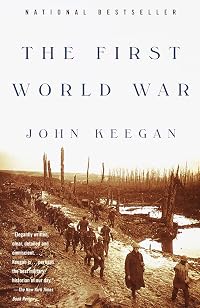
The First World War
by John Keegan
On This Page
Description
The First World War created the modern world. A conflict of unprecedented ferocity, it abruptly ended the relative peace and prosperity of the Victorian era, unleashing such demons of the twentieth century as mechanized warfare and mass death. It also helped to usher in the ideas that have shaped our times--modernism in the arts, new approaches to psychology and medicine, radical thoughts about economics and society--and in so doing shattered the faith in rationalism and liberalism that had show more prevailed in Europe since the Enlightenment. With The First World War, John Keegan, one of our most eminent military historians, fulfills a lifelong ambition to write the definitive account of the Great War for our generation. Probing the mystery of how a civilization at the height of its achievement could have propelled itself into such a ruinous conflict, Keegan takes us behind the scenes of the negotiations among Europe's crowned heads (all of them related to one another by blood) and ministers, and their doomed efforts to defuse the crisis. He reveals how, by an astonishing failure of diplomacy and communication, a bilateral dispute grew to engulf an entire continent. But the heart of Keegan's superb narrative is, of course, his analysis of the military conflict. With unequalled authority and insight, he recreates the nightmarish engagements whose names have become legend--Verdun, the Somme and Gallipoli among them--and sheds new light on the strategies and tactics employed, particularly the contributions of geography and technology. No less central to Keegan's account is the human aspect. He acquaints us with the thoughts of the intriguing personalities who oversaw the tragically unnecessary catastrophe--from heads of state like Russia's hapless tsar, Nicholas II, to renowned warmakers such as Haig, Hindenburg and Joffre. But Keegan reserves his most affecting personal sympathy for those whose individual efforts history has not recorded--"the anonymous millions, indistinguishably drab, undifferentially deprived of any scrap of the glories that by tradition made the life of the man-at-arms tolerable." By the end of the war, three great empires--the Austro-Hungarian, the Russian and the Ottoman--had collapsed. But as Keegan shows, the devastation ex-tended over the entirety of Europe, and still profoundly informs the politics and culture of the continent today. His brilliant, panoramic account of this vast and terrible conflict is destined to take its place among the classics of world history. show lessTags
Recommendations













Member Recommendations
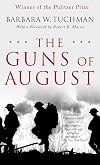
chrisharpe A thoroughly engrossing, highly readable account of the first few months of the Great War.
31
Member Reviews
World War One rocked our planet to its core. There wasn't a corner of the globe that didn't feel its effects in some way or another. Historians like John Keegan call it the Great War because it left over ten million people dead and countless others shattered both mentally and physically beyond recognition. As Keegan explains, it was the first time world powers used ferocious modernized brutality to subdue their military enemies along with innocent women, children, and livestock. No living creature stood a chance against this new age of warfare. Keegan pushes you into the muddy trenches, onto the blood soaked battle fields, and into the intimate lives of courageous but doomed soldiers. Against this bloody backdrop Keegan also brilliantly show more sheds light on secret political and religious negotiations, heated war-room strategies, and closed-door council room debates. With Keegan you travel to the Western front, East Africa, the Carpathians and beyond. This is a comprehensive history of one of the most polarizing events known to man. show less
Wars are almost always stupid, but rarely are wars as stupid as World War I.
First, the war could have easily been avoided with a little basic diplomacy. Second, the armies mostly occupied trenches, stretching nearly 500 miles, and took turns attacking the other's trenches and getting massacred in the process. Millions of young men — the lost generation — sacrificed their lives for little gain. And this went on for years.
British historian John Keegan gives us an excellent summary of this war in “The First World War” (1998).
European countries had been making war against each other for centuries, and so most of them already had plans for the next war. The generals and national leaders seemed too eager to put these plans into show more effect, allowing an obscure assassination in a secondary country to escalate into global war. But technology made the war bigger and more deadly than these generals, accustomed to soldiers charging on horseback, knew how to deal with. And so armies facing each other in trenches and slaughtering each other became all but inevitable.
While the technology to kill had advanced, the technology to communicate with one's armies had not kept pace, Keegan observes. Generals often had no idea what was going on on the battlefield until it was too late.
Americans like to believe that their late entry into the war turned the tide, but this British war historian judges the Americans mostly irrelevant and gives them very few pages in his book. "It was indeed immaterial whether the doughboys fought well or not," he says. The mere fact that the Germans had run out of young men by 1918 made their army ready to topple when American soldiers started landing in Europe in large numbers.
And then the stupid war was followed by a stupid peace treaty that made the next war all but inevitable.
Keegan takes a broad view of the war, covering not just the major battles like Verdun and Somme but also telling us what was going on in Turkey, Italy, Russia, at sea and elsewhere. This books offers an intelligent overview of a stupid war. show less
First, the war could have easily been avoided with a little basic diplomacy. Second, the armies mostly occupied trenches, stretching nearly 500 miles, and took turns attacking the other's trenches and getting massacred in the process. Millions of young men — the lost generation — sacrificed their lives for little gain. And this went on for years.
British historian John Keegan gives us an excellent summary of this war in “The First World War” (1998).
European countries had been making war against each other for centuries, and so most of them already had plans for the next war. The generals and national leaders seemed too eager to put these plans into show more effect, allowing an obscure assassination in a secondary country to escalate into global war. But technology made the war bigger and more deadly than these generals, accustomed to soldiers charging on horseback, knew how to deal with. And so armies facing each other in trenches and slaughtering each other became all but inevitable.
While the technology to kill had advanced, the technology to communicate with one's armies had not kept pace, Keegan observes. Generals often had no idea what was going on on the battlefield until it was too late.
Americans like to believe that their late entry into the war turned the tide, but this British war historian judges the Americans mostly irrelevant and gives them very few pages in his book. "It was indeed immaterial whether the doughboys fought well or not," he says. The mere fact that the Germans had run out of young men by 1918 made their army ready to topple when American soldiers started landing in Europe in large numbers.
And then the stupid war was followed by a stupid peace treaty that made the next war all but inevitable.
Keegan takes a broad view of the war, covering not just the major battles like Verdun and Somme but also telling us what was going on in Turkey, Italy, Russia, at sea and elsewhere. This books offers an intelligent overview of a stupid war. show less
John Keegan's "The First World War" might be better titled "A Military History of the First World War." He spends copious amounts of time detailing the movements of the hundreds of Armies, Divisions and Corps that moved millions of troops around the Eastern and Western fronts in WWI, and sometimes the writing seems repetitious. But that's not Keegan's fault - much of the war consisted of repeated frontal assaults across the same stretches of No Man's Land over which hundreds of thousands of men had already fought and died.
As he concedes, the battles were meaningless, the loss of life horrific, wiping out 10-30% of the young men of France, Britain, Russia, Germany, Turkey, and Austria-Hungary. It is hard to conceive of the stupendous show more stupidity of it all. An offensive gains three miles at the cost of 250,000 lives. Six months later the ground changes hands again, at a similar cost. There are no glorious, rousing tales of courage. Most of the dead were blown to bits by immense artillery barrages of millions of shells or riddled with machine gun fire as they made frontal assaults on dug-in enemy positions.
Keegan's story is not a personal one - we only rarely hear from the troops in the trenches. Instead he analyzes each major assault and assigns blame as to why it was misconceived or failed. But Keegan is a veteran military historian and he uses his deep knowledge to point out the fundamental flaws in military tactics that led to the horrendous bloodshed. Roads were poor, railroads not well-connected and most men marched on foot while their equipment was hauled by horses, hundreds of thousands of which died in the conflict. There was no opportunity for fast-moving offensives. The machine gun made frontal assaults suicidal, yet commanders on all sides believed that if their men just toughed it out a little more, the enemy could be over-run. Instead, by the end of the war, many of the troops on all sides were refusing to fight. The Russian Army had dissolved almost overnight after the Bolsheviks shoved the Tsar from power. French troops refused to march, German sailors would not leave port. By 1918, Germany, France and Britain were running out of replacement troops, but the entry ot the United States into the war promised almost limitless new blood, a final all-out German attack failed, and the Central Powers fell apart.
This is a thorough overview of a war that Keegan admits has never been understood. He does a masterful job of showing how the military tactics of the time, which emphasized the importance of mobilizing armies and rushing them to the front without delay, magnified a relatively local faceoff between the Austrians and Serbia over the assassination of a royal prince into five years of bitter slaughter. But Keegan concedes that he cannot understand how the leaders of a Europe that seemed so prosperous, cultured and at peace could so swiftly fall into a war with few goals other than national honor. Why the political leadership of the combatants failed to stop the fighting is beyond the scope of Keegan's book.
But that it did happen is a cautionary tale to anyone who would think it can never happen again. show less
As he concedes, the battles were meaningless, the loss of life horrific, wiping out 10-30% of the young men of France, Britain, Russia, Germany, Turkey, and Austria-Hungary. It is hard to conceive of the stupendous show more stupidity of it all. An offensive gains three miles at the cost of 250,000 lives. Six months later the ground changes hands again, at a similar cost. There are no glorious, rousing tales of courage. Most of the dead were blown to bits by immense artillery barrages of millions of shells or riddled with machine gun fire as they made frontal assaults on dug-in enemy positions.
Keegan's story is not a personal one - we only rarely hear from the troops in the trenches. Instead he analyzes each major assault and assigns blame as to why it was misconceived or failed. But Keegan is a veteran military historian and he uses his deep knowledge to point out the fundamental flaws in military tactics that led to the horrendous bloodshed. Roads were poor, railroads not well-connected and most men marched on foot while their equipment was hauled by horses, hundreds of thousands of which died in the conflict. There was no opportunity for fast-moving offensives. The machine gun made frontal assaults suicidal, yet commanders on all sides believed that if their men just toughed it out a little more, the enemy could be over-run. Instead, by the end of the war, many of the troops on all sides were refusing to fight. The Russian Army had dissolved almost overnight after the Bolsheviks shoved the Tsar from power. French troops refused to march, German sailors would not leave port. By 1918, Germany, France and Britain were running out of replacement troops, but the entry ot the United States into the war promised almost limitless new blood, a final all-out German attack failed, and the Central Powers fell apart.
This is a thorough overview of a war that Keegan admits has never been understood. He does a masterful job of showing how the military tactics of the time, which emphasized the importance of mobilizing armies and rushing them to the front without delay, magnified a relatively local faceoff between the Austrians and Serbia over the assassination of a royal prince into five years of bitter slaughter. But Keegan concedes that he cannot understand how the leaders of a Europe that seemed so prosperous, cultured and at peace could so swiftly fall into a war with few goals other than national honor. Why the political leadership of the combatants failed to stop the fighting is beyond the scope of Keegan's book.
But that it did happen is a cautionary tale to anyone who would think it can never happen again. show less
The UK edition of this book is packaged in a way that "sells" it to a British audience, with an emphasis on the Western Front. However, Keegan goes much further than this, with a good focus on the other theatres of the war, emphasizing its "worldwide" nature.
The style is quite easy, although occasionally there are atypical lapses into academic complexity. There is also a lot of detail of units and orders of battle, which can be fairly easily skimmed. A slightly less helpful fault (though not uncommon in books of this sort) is to find places mentioned in the text but not shown on the relevant maps in the book.
Keegan makes a lot out of technological failings, in particular of communication technology; he also shows where some of the show more reputation of WWI commanders for heartlessness is undeserved because of the nature of the technological milieu they were working within. That said, he does not fail to hold generals up to criticism for their personal failings, Haig in particular. He also does not get over-involved in technological issues beyond communication matters: he writes quite tellingly of the introduction of tanks, but less so on military aviation, which had little strategic impact in WWI when compared to WW2.
Interestingly, he mentions key military figures who went on to have major roles in WW2, but only where they are relevant to his thesis - so Rommel at Caporetto and a couple of other German commanders get a mention, but Montgomery and (refreshingly!) Hitler (beyond a namecheck on page 1 to get him out of the way) do not.
Overall, then, a solid introduction to the key events of the First World War, with enough analysis to point the reader towards an understanding of the way the First war paved the way for the Second World War without bludgeoning the reader with that fact. show less
The style is quite easy, although occasionally there are atypical lapses into academic complexity. There is also a lot of detail of units and orders of battle, which can be fairly easily skimmed. A slightly less helpful fault (though not uncommon in books of this sort) is to find places mentioned in the text but not shown on the relevant maps in the book.
Keegan makes a lot out of technological failings, in particular of communication technology; he also shows where some of the show more reputation of WWI commanders for heartlessness is undeserved because of the nature of the technological milieu they were working within. That said, he does not fail to hold generals up to criticism for their personal failings, Haig in particular. He also does not get over-involved in technological issues beyond communication matters: he writes quite tellingly of the introduction of tanks, but less so on military aviation, which had little strategic impact in WWI when compared to WW2.
Interestingly, he mentions key military figures who went on to have major roles in WW2, but only where they are relevant to his thesis - so Rommel at Caporetto and a couple of other German commanders get a mention, but Montgomery and (refreshingly!) Hitler (beyond a namecheck on page 1 to get him out of the way) do not.
Overall, then, a solid introduction to the key events of the First World War, with enough analysis to point the reader towards an understanding of the way the First war paved the way for the Second World War without bludgeoning the reader with that fact. show less
Keegan’s one-volume history of the First World War is primarily a military history, and one that gives an exceptionally clear explanation of how the entire military action of the war unfolded. Strengths include the author’s depth of knowledge and the care taken with the detail of the armies and their commanders, what they were thinking, and what made them succeed or fail.
This isn’t a war account designed to make you feel; it’s one that insists that you think, and helps you to think. I had to read it slowly, and at times I felt frustrated. The author refrains from taking sides or creating heroes. Instead, he’s interested in universal human characteristics, including why armies sometimes stop fighting, and why people are crazy show more enough to fight in the first place. show less
This isn’t a war account designed to make you feel; it’s one that insists that you think, and helps you to think. I had to read it slowly, and at times I felt frustrated. The author refrains from taking sides or creating heroes. Instead, he’s interested in universal human characteristics, including why armies sometimes stop fighting, and why people are crazy show more enough to fight in the first place. show less
For most people, the image of the First World War is probably centered around the trench war mess that characterized the Western Front. However, in Keegan's excellent take on the conflict, one is shown that this was in fact a world war, and very much a preliminary view of what was to come in World War II. But there is more than just a tale of war here, there is a splendid section discussing the run up to war, and the diplomatic processes that were exchanged. I for one found it ironic- if not unsettling- that, of all nations, Czarist Russia held the position that a world conflagration was impossible due to the interconnected international economic and banking systems. Sounds familiar, and perhaps a little too familiar for comfort. The show more scope of the war is all here, from start to end, land to sea, continent to continent, all told with Keegan's incredible knowledge of military history and his admirable lean toward impartiality. For those curious about those mud filled days of horror, there is so much more to learn, and this is an ideal source to tap. show less
Keegan's history of the first World War is exactly what I was looking for as a foundation for this year's World War I reading project. Keegan analyzes Europe's military readiness before the war and describes the inevitability of international conflict once each nation's elaborate and detailed plans had been triggered. His focus is primarily on military tactics and strategies and their effectiveness (or ineffectiveness). I now have a better understanding of the chronology of the war and its great tragedies. I was struck most by the contrast between technological advances in weaponry and in methods of communication. The size of the fronts and the logistics of wired communication resulted in generals far removed from the front and visual show more oversight of the area under their command. Armies developed elaborate plans for both offensive and defensive actions, and trusted to those in the chain of command to stick to the plan. Communication lines were quickly severed once fighting began, leaving front line commanders without a means of coordinating changes to the plan in response to circumstances.
American readers interested in learning about the U.S. involvement in the war will need to look to additional sources. The Americans don't appear until the last 75 pages or so, and even then the focus remains on the European nations and their armies. Keegan's writing isn't easy to read. He uses long sentences with complex structures. By the time I reached the end of some sentences, I had to go back and re-read the beginning to make sure I got the point. Readers with the patience for Keegan's style will be rewarded with a broad and thorough overview of the military history of World War I. show less
American readers interested in learning about the U.S. involvement in the war will need to look to additional sources. The Americans don't appear until the last 75 pages or so, and even then the focus remains on the European nations and their armies. Keegan's writing isn't easy to read. He uses long sentences with complex structures. By the time I reached the end of some sentences, I had to go back and re-read the beginning to make sure I got the point. Readers with the patience for Keegan's style will be rewarded with a broad and thorough overview of the military history of World War I. show less
Members
- Recently Added By
Lists

Books Read in 2016
4,666 works; 197 members

My Favourite Books
86 works; 5 members

r/AskHistorians' Recommended Books
1,068 works; 19 members

THE WAR ROOM
813 works; 24 members
Author Information

John Keegan, May 15, 1934 - August 2, 2012 John Keegan was born in London, England on May 15, 1934. He received a degree in history from Balliol College, Oxford in 1953. After graduation, he went to the United States on a grant to study the Civil War. When he returned to London, he wrote political reports for the United States Embassy and in 1960 show more was appointed as a lecturer at the Royal Military Academy at Sandhurst, England, a post he held for 25 years. During this time he also held visiting professorships at Princeton University and Vassar College. In 1997, he began working for the Daily Telegraph as a defense correspondent and then military affairs editor. He also contributed to the American website National Review Online. During his lifetime, he wrote more than 20 books about military history, the majority of which focus on warfare from the 14th to the 21st centuries. His works included Barbarossa: Invasion of Russia, The Face of Battle, A History of Warfare, Who Was Who in World War II, The Second World War, The American Civil War, The Mask of Command, and The Iraq War. He was knighted in 2000. He died on August 2, 2012 at age of 78. (Bowker Author Biography) show less
Some Editions
Awards and Honors
Awards
Distinctions
Notable Lists
Series
Belongs to Publisher Series
Perrin, Tempus (108)
Common Knowledge
- Canonical title
- The First World War
- Original title
- The First World War
- Original publication date
- 1998 (1e édition originale anglaise, Hutchinson) (1e édition originale anglaise, Hutchinson); 2003-08-19 (1e traduction et édition française Perrin / Agnès Vienot éditions) (1e traduction et édition française Perrin / Agnès Vienot éditions); 2005-09-01 (Réédition française, Tempus, N° 108, Perrin) (Réédition française, Tempus, N° 108, Perrin)
- Important places
- Somme, Hauts-de-France, France; Verdun, Meuse, Grand-Est, France; Gallipoli, Turkey; Turkey; Europe; France (show all 8); Middle East; Ottoman Empire
- Important events
- World War I (1914 | 1918); Gallipoli Campaign (1915-04-25 | 1916-01-09); Battle of the Somme (1916-07-01 | 1916-11-18)
- Dedication
- To the men of Kilmington who did not
return from the Great War, 1914-18 - First words
- The First World War was a tragic and unnecessary conflict.
- Last words
- (Click to show. Warning: May contain spoilers.)If we could understand its loves, as well as its hates, we would be nearer understanding the mystery of human life.
- Blurbers
- Max Wilkinson; Geoff Dyer; John Grigg; Alan Judd; Julian Critchley; Niall Ferguson
Classifications
Statistics
- Members
- 3,636
- Popularity
- 4,474
- Reviews
- 49
- Rating
- (3.85)
- Languages
- 9 — Dutch, English, Estonian, French, German, Italian, Portuguese, Russian, Swedish
- Media
- Paper, Audiobook, Ebook
- ISBNs
- 41
- ASINs
- 19