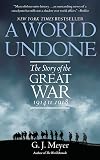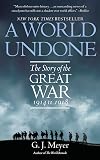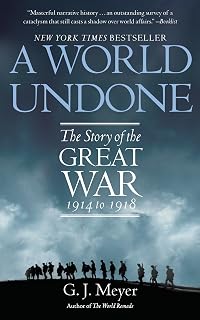
A World Undone: The Story of the Great War, 1914 to 1918
by G. J. Meyer
On This Page
Description
A narrative of the First World War examines the brutal conflict that transformed the face of Europe, paved the way for the rise of the Soviet Union and Hitler, and had repercussions that even today affect the stability of the Middle East and the Balkans.Tags
Recommendations



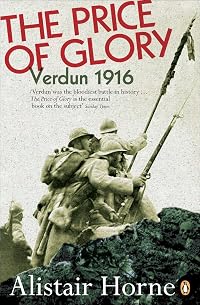
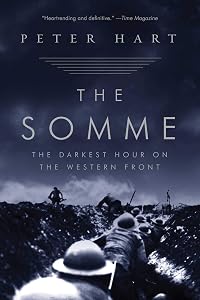
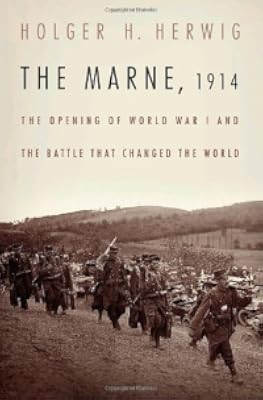

Member Recommendations
Member Reviews
While not unflawed, this much loved book is beautifully written. It conveys a sense of the movement of armies, and, for want of a better word, the 'flow' of the Great War. The first section, covering how the war came about, is simplistic and I think mostly wrong. My view on this likely is shaped by recently having read Christopher Clark's state-of-the-art masterpiece on the subject, The Sleepwalkers.
Once the first shots are fired, A World Undone begins to shine. This should be the book of choice for a general reader who seeks literacy on the First World War. This sidebar essays on key figures and trends of the war year are, at their best, masterful.
This is not an academic history and it mostly does not treat off-battlefield factors. show more David Stevenson's Cataclysm: The First World War as Political Tragedy is a book of choice for readers who also wish to understand wartime organization of domestic economies and other 'under the hood' factors that helped determine the war's final outcome.
G.J. Meyer is a very fine writer. He has given us a model narrative history on a subject of transcendent interest. show less
Once the first shots are fired, A World Undone begins to shine. This should be the book of choice for a general reader who seeks literacy on the First World War. This sidebar essays on key figures and trends of the war year are, at their best, masterful.
This is not an academic history and it mostly does not treat off-battlefield factors. show more David Stevenson's Cataclysm: The First World War as Political Tragedy is a book of choice for readers who also wish to understand wartime organization of domestic economies and other 'under the hood' factors that helped determine the war's final outcome.
G.J. Meyer is a very fine writer. He has given us a model narrative history on a subject of transcendent interest. show less
What does it mean to give a war an image, a personality? What does a war want with such a thing, anyway? Is it helping us get a handle on the cuss, learn from the past etc.? Or is the war's spectre reaching out and stroking us with shadow fingers, turning us subtly this way and that from where it lies low and malevolent, like Sauron after Isildur cut the Ring from his hand?
World War II, of course, has a personality, a story. The Nazis are history's greatest villains, Hitler its greatest megalomaniac, the soldiers who fought them (and the WACs and the Rosie the Riveters too; International Women's Day WHAT) are "the Greatest Generation". The Sauron analogy above, if perhaps frivolous, is apt: the Second World War is the reassuring myth show more that good triumphs, each of us is tested, victory ushers in an age of succulent strawberries and strong social safety nets, and the evil and the suffering are both singular ("the deadliest war in history") and when defeated, banished forever. World War II reassures us--reassures us that it had a purpose, namely, to make us stand up and say "never again". I don't mean to overplay this and suggest that e.g. the Holocaust is in any way reassuring. I just mean that we do use that black-and-white language, reduce it to "it was history's blackest evil and we beat it, huzzah". Which screams overconfidence to me.
The First World War, on the other hand (and I guess it says a little auxiliary something about the way the wars are perceived that I appellate them this way in my head: the "First", among other things the death of the British hegemony; "II", the dawn of the American), is the opposite of reassuring. It's the war that happened by accident, with the assassination at Sarajevo; the war in which our boys weren't heroes with GI Bills and NHSes to come home to, but human macerata ready for the pulping; the war where nobody was scared and everybody was all afire with how awesome killing is; the one where even after they figured it out, they didn't know how to make it stop. It's the one where the good guys weren't that good and the bad guys weren't that bad, and there's at least a viable argument that the wrong side won. It's the first Modernist war, in other words, the first war of relativism and disaffectation and anomie, and in that sense it has a lot more in common with the shitbag wars we've seen since than dubyadubyatwo, which ends up looking a lot more like the wars of the 19th century in a weird way. Hitler cut in ways out of the same cloth as Napoleon.
So yeah, the First is the war with no Hitler/Napoleon/Sauron, the one with no established narrative to rebel against. It's the one where we were gonna be home by Christmas, but also the one where we were gonna consume the decadent fin de siècle in a purifying flame. It's the one where all the parties were drug into battle willy-nilly by figures with dictatorial or at least more-than-democratic powers--but those figures were weak or grey, nonentities or cracked.
Etc. Meyer recognizes this, and of course it's what makes a good popular history that simplifies and smoothes out the contradlexities, like this one, a worthwhile project. He doesn't give us an ur-narrative--instead he walks us through the grim factuation, the death and death and death in an informative and workmanlike way about which I have little to say except that it is informative and workmanlike and also I sort of think he concentrates too much on the generals and leaders, many of whom are broadly interchangeable in terms of their impact on the progress of the war, as evidenced by the basic sameness in the results of their various strategic agendas: Schlieffen through Belgium and around the defenders' trenches? Charge boldly forward under the influence of the "cult of the offensive", as Nietzschean an approach to running a war as you can imagine from a modern army? Bleed 'em white at Verdun, open a second front at Gallipoli, strangle Britain with unrestricted submarine warfare, rally das ganze Deutschland against the foe in a final Götterdämmerung? Fail, fail, fail, fail. There is of course room in a 600-page tome like this one to get into the intricacies of why the failures, and I think Meyer is quite decent on this point--succinct on the mixed merits of the developments that did have some success, like the creeping barrage first deployed by Horne, used unsuccessfully by Nivelle and successfully for a time by "Durchbruchmüller"; like the "elastic depth" developed by Lossberg; like Churchill's tanks, which were almost called reservoirs. But overall there's nothing here to really make a case that militarily the classic History 12 explanation for all the stalemate, that machine guns and trenches trumped infantry and cavalry and that tactically and logistically it's impossible to win a war with artillery alone, doesn't hold true.
And in that sense the generals are personalities and all and I get that, but since they were basically interchangeable in terms of the way things ended up it would have been nice to see relatively more focus-and-hence-dignity given to the common people who did all the exploding and being gassed and flamethrowed and shot in the back by their own officers and starving on the home front and okay now I'm off my pinko high horse.
Some of the backgrounders are total gems--the one about the literature of the war, which of course cites both the ultimately-ugly-and-vicious-but-still-sentimentally-affecting "The soldier" by Rupert Brooke ("some corner of a foreign field / that is forever England") and what I suspect is the best poem to come out of the war, Wilfred Owen's "Dulce et decorum est" ("The old Lie; Dulce et Decorum est /
Pro patria mori"). Also the one about Ludendorff, and how he was a pudgy grindy nerd who found love and belonging at a late age and had it systematically stripped from him by the war, and yet still did maybe more than anyone else to keep it all going much, much longer than it had to. Some others are dead awful--say the one about the Turks, which practically calls them cowardly and treacherous Orientals. And in general Meyer has the journalist's weakness for the facile narrative--sometimes you can see his brain turn off, as when he's spent the last hundred pages discussing in detail all the ways that the elites on all sides actively itched for a war and for the worst possible reasons, although not all of them wanted the war they had at the time they had it, and then he rolls out a smug and empty little anecdotecapping cherry about how they were all good men who were helpless before forces beyond their control. There are flaws. But I think in general Meyer successfully gives us a set of orientating markers for a war that is not susceptible to the same kind of master narratives we use for the second--and what that means is, he does a good job at giving us the reference points we need to understand the decisions made in terms of the people who made them and the world in which they rolled out. show less
World War II, of course, has a personality, a story. The Nazis are history's greatest villains, Hitler its greatest megalomaniac, the soldiers who fought them (and the WACs and the Rosie the Riveters too; International Women's Day WHAT) are "the Greatest Generation". The Sauron analogy above, if perhaps frivolous, is apt: the Second World War is the reassuring myth show more that good triumphs, each of us is tested, victory ushers in an age of succulent strawberries and strong social safety nets, and the evil and the suffering are both singular ("the deadliest war in history") and when defeated, banished forever. World War II reassures us--reassures us that it had a purpose, namely, to make us stand up and say "never again". I don't mean to overplay this and suggest that e.g. the Holocaust is in any way reassuring. I just mean that we do use that black-and-white language, reduce it to "it was history's blackest evil and we beat it, huzzah". Which screams overconfidence to me.
The First World War, on the other hand (and I guess it says a little auxiliary something about the way the wars are perceived that I appellate them this way in my head: the "First", among other things the death of the British hegemony; "II", the dawn of the American), is the opposite of reassuring. It's the war that happened by accident, with the assassination at Sarajevo; the war in which our boys weren't heroes with GI Bills and NHSes to come home to, but human macerata ready for the pulping; the war where nobody was scared and everybody was all afire with how awesome killing is; the one where even after they figured it out, they didn't know how to make it stop. It's the one where the good guys weren't that good and the bad guys weren't that bad, and there's at least a viable argument that the wrong side won. It's the first Modernist war, in other words, the first war of relativism and disaffectation and anomie, and in that sense it has a lot more in common with the shitbag wars we've seen since than dubyadubyatwo, which ends up looking a lot more like the wars of the 19th century in a weird way. Hitler cut in ways out of the same cloth as Napoleon.
So yeah, the First is the war with no Hitler/Napoleon/Sauron, the one with no established narrative to rebel against. It's the one where we were gonna be home by Christmas, but also the one where we were gonna consume the decadent fin de siècle in a purifying flame. It's the one where all the parties were drug into battle willy-nilly by figures with dictatorial or at least more-than-democratic powers--but those figures were weak or grey, nonentities or cracked.
Etc. Meyer recognizes this, and of course it's what makes a good popular history that simplifies and smoothes out the contradlexities, like this one, a worthwhile project. He doesn't give us an ur-narrative--instead he walks us through the grim factuation, the death and death and death in an informative and workmanlike way about which I have little to say except that it is informative and workmanlike and also I sort of think he concentrates too much on the generals and leaders, many of whom are broadly interchangeable in terms of their impact on the progress of the war, as evidenced by the basic sameness in the results of their various strategic agendas: Schlieffen through Belgium and around the defenders' trenches? Charge boldly forward under the influence of the "cult of the offensive", as Nietzschean an approach to running a war as you can imagine from a modern army? Bleed 'em white at Verdun, open a second front at Gallipoli, strangle Britain with unrestricted submarine warfare, rally das ganze Deutschland against the foe in a final Götterdämmerung? Fail, fail, fail, fail. There is of course room in a 600-page tome like this one to get into the intricacies of why the failures, and I think Meyer is quite decent on this point--succinct on the mixed merits of the developments that did have some success, like the creeping barrage first deployed by Horne, used unsuccessfully by Nivelle and successfully for a time by "Durchbruchmüller"; like the "elastic depth" developed by Lossberg; like Churchill's tanks, which were almost called reservoirs. But overall there's nothing here to really make a case that militarily the classic History 12 explanation for all the stalemate, that machine guns and trenches trumped infantry and cavalry and that tactically and logistically it's impossible to win a war with artillery alone, doesn't hold true.
And in that sense the generals are personalities and all and I get that, but since they were basically interchangeable in terms of the way things ended up it would have been nice to see relatively more focus-and-hence-dignity given to the common people who did all the exploding and being gassed and flamethrowed and shot in the back by their own officers and starving on the home front and okay now I'm off my pinko high horse.
Some of the backgrounders are total gems--the one about the literature of the war, which of course cites both the ultimately-ugly-and-vicious-but-still-sentimentally-affecting "The soldier" by Rupert Brooke ("some corner of a foreign field / that is forever England") and what I suspect is the best poem to come out of the war, Wilfred Owen's "Dulce et decorum est" ("The old Lie; Dulce et Decorum est /
Pro patria mori"). Also the one about Ludendorff, and how he was a pudgy grindy nerd who found love and belonging at a late age and had it systematically stripped from him by the war, and yet still did maybe more than anyone else to keep it all going much, much longer than it had to. Some others are dead awful--say the one about the Turks, which practically calls them cowardly and treacherous Orientals. And in general Meyer has the journalist's weakness for the facile narrative--sometimes you can see his brain turn off, as when he's spent the last hundred pages discussing in detail all the ways that the elites on all sides actively itched for a war and for the worst possible reasons, although not all of them wanted the war they had at the time they had it, and then he rolls out a smug and empty little anecdotecapping cherry about how they were all good men who were helpless before forces beyond their control. There are flaws. But I think in general Meyer successfully gives us a set of orientating markers for a war that is not susceptible to the same kind of master narratives we use for the second--and what that means is, he does a good job at giving us the reference points we need to understand the decisions made in terms of the people who made them and the world in which they rolled out. show less
Despite certain faults, this is a pretty good one volume history of World War I. I particularly like the way it is organized. The book is very well-written, and if one is interested in delving further into the war, this is an excellent starting point. I was thinking as I was reading that it could almost serve as the basis of an outline.
Several readers have uncovered some minor factual errors of the type you might expect in a book that is really a summary of a period of history that could actually fill whole libraries, but facts are easily checked and I don't think this should dissuade anyone from reading the book. When you finish, you will have an excellent survey of who, why, where, what and when. I give the book four stars mostly show more because of its clarity, excellent organization of complex material and generally engaging readability. show less
Several readers have uncovered some minor factual errors of the type you might expect in a book that is really a summary of a period of history that could actually fill whole libraries, but facts are easily checked and I don't think this should dissuade anyone from reading the book. When you finish, you will have an excellent survey of who, why, where, what and when. I give the book four stars mostly show more because of its clarity, excellent organization of complex material and generally engaging readability. show less
A fantastic, one-volume history of WW1 that covers both political-military history and social history. I loved the format of this book, which was a straightforward chronological history of the war separated by standback interludes on topics including each powers' political and military leadership, the history of states and empires, the development of military technologies and tactics, each powers' officer corps, war propaganda and poetry, shell-shock, and the role of women in the war. I am much more accustomed to reading social and political history than military history, so these chapters really helped break up the endless stream of battles.
Overwhelmingly, the picture that emerges from Meyer's book is not surprising - the first world show more war seems entirely wasteful and pointless, characterized by slaughter on a truly staggering scale, especially when viewed from the perspective of contemporary warfighting where a few hundred casualties seems high. This was a great entry into the history of this period and I'll definitely be continuing to read about it because it is endlessly fascinating to me. show less
Overwhelmingly, the picture that emerges from Meyer's book is not surprising - the first world show more war seems entirely wasteful and pointless, characterized by slaughter on a truly staggering scale, especially when viewed from the perspective of contemporary warfighting where a few hundred casualties seems high. This was a great entry into the history of this period and I'll definitely be continuing to read about it because it is endlessly fascinating to me. show less
A World Undone by G. J. Meyer is a comprehensive description of what happened in World War I ("The Great War") from a high perspective. That is, why, and who, made things go as badly as they did. There are many books with the same goal as this one, but one unique feature in this book is that it's written for a modern day reader. Countries, borders are described in terms of present-day (or 2006) Europe, Asia and Africa.
I found this to be a very descriptive book and well worth reading for anyone that is remotely interested in the worst parts of modern decision making. This time represents the break from where soldiers are treated as numbers in a book, to actual people and such breaks rarely happen without pain, and neither did it do so show more here.
The text is organized chronologically with a few in-between chapters with background information on topics that couldn't be naturally interleaved into the book itself. I found that to be a very well chosen way to organize the book and as the author explains, events on one front, especially for the German army can't be properly explained if you are not aware of what happened on the other fronts at the same time.
So what this book also gives is the opportunity to see that very few military commanders and politicians were actually making wise decisions, and in more than one case, wise decisions were actually punished. We have the French philosophy of "offense, offense, offense" that kept being the mantra years after the machine guns had started slaughtering anyone that started advancing over no-mans-land. We have the British philosophy of mounted cavalry, 60 years after the charge of the light brigade. We have the Austrians that thought that an advance doesn't have to have protected flanks and supply lines and over and over again let their people be surrounded and massacred. We have the Russians that tried to win the war with manpower disregarding such things as equipment, tactics, communication and cooperation.
In fact, on the military side, the only people I developed any respect for was the Germans which seemed to have some sense of learning from mistakes and actually tried to preserve the life of their people. On the other hand, they were probably the only ones that could have ended the war earlier (by withdrawing to pre-war borders) and they didn't.
So who was the bad guy then? Well, in hindsight I'd say all of them. And none. Everyone got caught up in a mess of relationships, dreams, hate and want of glory. Serbia wanted to dominate Balkan and collect all South Slaves in one nation. Austria wanted to keep their Balkan provinces stable and thought they had to stop Serbian expansion using the first available excuse. Russia thought it needed to keep status quo at Balkan. Germany thought they were under threat of attack from Russia with their ally France. France dreamed of recovering (Germanic) areas that had once belonged to France. Britain wanted to keep the continental powers weak and balanced and disliked the German strength. So all the early participants thought the war had to happen. Not everyone in every country but enough to prevent it from not happening. This is what the book reveals if you read it and it explains a lot.
But why didn't it stop? That is an even better question. I am not sure the book contains a good explanation here but I think it's in part because losses in people didn't really matter. People were plentiful and could be ignored, at least up until 1917 when the French Army mutinied and the Russian revolution took place and 1918 when the starving German people refused to support the war anymore. One interesting, and plausible, explanation the book presents is the effect of the war propaganda. All sides had used war propaganda heavily to paint a very wrongful and very dark picture of the enemy and with everyone caught in that mindset it actually made it political suicide to start negotiations or even mention "balanced peace".
The book is still mostly occupied with the military and political side of the war and explains how places like Verdun and Somme could become slaughtering fields. "War of attrition" is the nice word for "let's kill more of them than they kill of us until they are at 0 alive and we are not" and it's a scary idea. I would have wanted a little more descriptive displays of what life in the trench was like, or maybe I should be glad I was spared it, but it feels like the book stayed slightly aloft from the most gory details. That aloftness together with a slightly short ending and a slightly short description of the life in the waring countries might be the reason I stay away from the very highest grade. Still it's an excellent book and maybe it would have just been too long if everything had been included. It's still not a short book.
But I mentioned the short ending. Because eventually the war ended and then the idiots, sorry typo, Allied leaders, decided to create a peace that made World War II and many conflicts up until the Syrian civil war of today almost inevitable. Because instead of replacing the German, Austrian, Russian and Ottoman empires with something stable and robust, arbitrary map lines, unreasonably demands and unjust treatment increased the tensions around Europe even more. I would have wanted a more descriptive follow-up of what the decisions eventually caused, just to show the reader how badly the Versailles Peace screwed things up.
So "The Great War", instead of being the war that ended all wars, it was the war that created even worse wars.
My conclusions come from previous knowledge and the contents of the book. If you want to make your own conclusions, read the book because I don't think it forces you to take any particular standpoint. show less
I found this to be a very descriptive book and well worth reading for anyone that is remotely interested in the worst parts of modern decision making. This time represents the break from where soldiers are treated as numbers in a book, to actual people and such breaks rarely happen without pain, and neither did it do so show more here.
The text is organized chronologically with a few in-between chapters with background information on topics that couldn't be naturally interleaved into the book itself. I found that to be a very well chosen way to organize the book and as the author explains, events on one front, especially for the German army can't be properly explained if you are not aware of what happened on the other fronts at the same time.
So what this book also gives is the opportunity to see that very few military commanders and politicians were actually making wise decisions, and in more than one case, wise decisions were actually punished. We have the French philosophy of "offense, offense, offense" that kept being the mantra years after the machine guns had started slaughtering anyone that started advancing over no-mans-land. We have the British philosophy of mounted cavalry, 60 years after the charge of the light brigade. We have the Austrians that thought that an advance doesn't have to have protected flanks and supply lines and over and over again let their people be surrounded and massacred. We have the Russians that tried to win the war with manpower disregarding such things as equipment, tactics, communication and cooperation.
In fact, on the military side, the only people I developed any respect for was the Germans which seemed to have some sense of learning from mistakes and actually tried to preserve the life of their people. On the other hand, they were probably the only ones that could have ended the war earlier (by withdrawing to pre-war borders) and they didn't.
So who was the bad guy then? Well, in hindsight I'd say all of them. And none. Everyone got caught up in a mess of relationships, dreams, hate and want of glory. Serbia wanted to dominate Balkan and collect all South Slaves in one nation. Austria wanted to keep their Balkan provinces stable and thought they had to stop Serbian expansion using the first available excuse. Russia thought it needed to keep status quo at Balkan. Germany thought they were under threat of attack from Russia with their ally France. France dreamed of recovering (Germanic) areas that had once belonged to France. Britain wanted to keep the continental powers weak and balanced and disliked the German strength. So all the early participants thought the war had to happen. Not everyone in every country but enough to prevent it from not happening. This is what the book reveals if you read it and it explains a lot.
But why didn't it stop? That is an even better question. I am not sure the book contains a good explanation here but I think it's in part because losses in people didn't really matter. People were plentiful and could be ignored, at least up until 1917 when the French Army mutinied and the Russian revolution took place and 1918 when the starving German people refused to support the war anymore. One interesting, and plausible, explanation the book presents is the effect of the war propaganda. All sides had used war propaganda heavily to paint a very wrongful and very dark picture of the enemy and with everyone caught in that mindset it actually made it political suicide to start negotiations or even mention "balanced peace".
The book is still mostly occupied with the military and political side of the war and explains how places like Verdun and Somme could become slaughtering fields. "War of attrition" is the nice word for "let's kill more of them than they kill of us until they are at 0 alive and we are not" and it's a scary idea. I would have wanted a little more descriptive displays of what life in the trench was like, or maybe I should be glad I was spared it, but it feels like the book stayed slightly aloft from the most gory details. That aloftness together with a slightly short ending and a slightly short description of the life in the waring countries might be the reason I stay away from the very highest grade. Still it's an excellent book and maybe it would have just been too long if everything had been included. It's still not a short book.
But I mentioned the short ending. Because eventually the war ended and then the idiots, sorry typo, Allied leaders, decided to create a peace that made World War II and many conflicts up until the Syrian civil war of today almost inevitable. Because instead of replacing the German, Austrian, Russian and Ottoman empires with something stable and robust, arbitrary map lines, unreasonably demands and unjust treatment increased the tensions around Europe even more. I would have wanted a more descriptive follow-up of what the decisions eventually caused, just to show the reader how badly the Versailles Peace screwed things up.
So "The Great War", instead of being the war that ended all wars, it was the war that created even worse wars.
My conclusions come from previous knowledge and the contents of the book. If you want to make your own conclusions, read the book because I don't think it forces you to take any particular standpoint. show less
As always I loved the late Robin Sachs’ narrative performance, but I kind of got alienated from the author by the misogyny I noted early in the book, and his ongoing arrogance (eg referring to someone as a “non-entity”) and biases. There’s always something to be learned though, and the book certainly has its place in the study of the Great War. Definitely not a must read, more of a “sure, ok, if you want.” 2.7 stars.
This is an incredibly tantalizing book. It introduces the concepts and characters in a fluid, accessible manner and gives us convenient indexes for major figures at the start and at the closing of the text. It has just about the right amount of context and flavor, never failing to show how utterly horrendous the whole period was. While it was the Second World War that was described as "a nightmare that one could not wake up from", one gets the sense that the First could aptly be described that way as well.
The author alternates chapters about the war events proper with others detailing the background of various individuals and groups that play significant roles. In my edition at least he also uses clearly distinguishable fonts for the show more two kinds of text, a welcome convenience.
Strongly recommended. show less
The author alternates chapters about the war events proper with others detailing the background of various individuals and groups that play significant roles. In my edition at least he also uses clearly distinguishable fonts for the show more two kinds of text, a welcome convenience.
Strongly recommended. show less
Members
- Recently Added By
Lists

Books about World War I
80 works; 14 members

Non-Fiction Worth Reading
1,016 works; 262 members
Author Information

12 Works 2,781 Members
Some Editions
Common Knowledge
- Original publication date
- 2006-05-30
- People/Characters
- Wilhelm II, German Kaiser and King of Prussia; Franz Ferdinand, Archduke of Austria; Douglas Haig; John French; Paul von Hindenburg; Falkenhayn (show all 18); David Lloyd George; H. H. Asquith; Joseph Joffre; Robert Nivelle; Nicholas II, Emperor of Russia; John J. Pershing; Philippe Pétain; Vladimir Lenin; Leon Trotsky; Woodrow Wilson; Ferdinand Foch; Erich Ludendorff
- Important places
- Serbia; Austria-Hungary; Russia; Germany; Luxembourg; United Kingdom (show all 15); Alsace-Lorraine, France; Turkey; Gallipoli, Çanakkale, Turkey; Italy; Warsaw, Poland; Bulgaria; Romania; Greece; Hindenburg Line (from Arras to Laffaux, near Soissons on the Aisne)
- Important events
- World War I (1914 | 1918); Battle of Mons (1914-08-23); Battle of the Marne (1914); First Battle of Ypres (1914-10-29 | 1914-11-15); Second Battle of Masurian Lakes; Second Battle of Ypres (1915-04 | 1915-06) (show all 21); Second Battle of Artois; First Battle of the Isonzo; Second Battle of Champagne; Third Battle of Artois; Battle of Jutland (1916-05-31 | 1916-06-01); Battle of the Somme; Zimmermann Telegram; Battle of Arras; Kerensky Offensive; Battle of Passchendaele (1917); Battle of Caporetto; Treaty of Brest-Litovsk; Operation Geogette; Second Battle of the Marne (1918); Battle of Vittorio-Veneto
Classifications
Statistics
- Members
- 993
- Popularity
- 26,456
- Reviews
- 34
- Rating
- (4.36)
- Languages
- English
- Media
- Paper, Audiobook, Ebook
- ISBNs
- 12
- ASINs
- 5