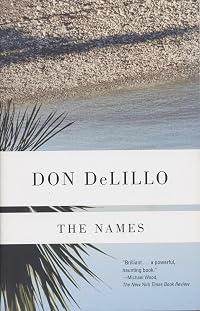
The Names
by Don DeLillo
On This Page
Description
Set against the backdrop of a lush and exotic Greece, The Names is considered the book which began to drive "sharply upward the size of his readership" (Los Angeles Times Book Review). Among the cast of DeLillo's bizarre yet fully realized characters in The Names are Kathryn, the narrator's estranged wife; their son, the six-year-old novelist; Owen, the scientist; and the neurotic narrator obsessed with his own neuroses. A thriller, a mystery, and still a moving examination of family, loss, show more and the amorphous and magical potential of language itself, The Names stands with any of DeLillo's more recent and highly acclaimed works. show lessTags
Recommendations





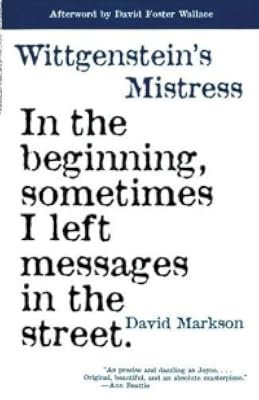





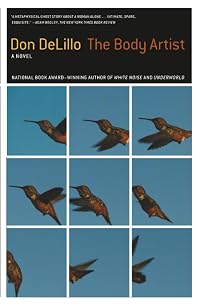
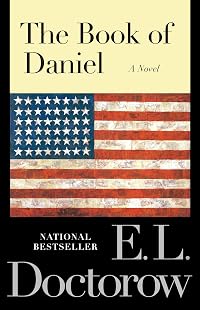


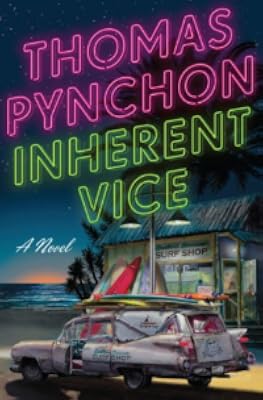
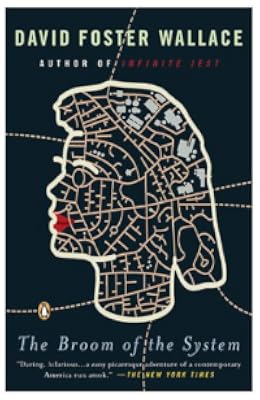

Member Recommendations
fishersnap Farflung and global, atmospheric and strange. The Cylist is reminiscent of early Dellilo with chapters on Beirut, though
Berberian is more dreamy and surreal in his depiction of political
violence. Both obsessed with the archeology of language and violence.
Member Reviews
Like looking into the face of God. What can you possibly say? How the hell do you describe the pieces? Describe the fit? It's a weird alchemy. Delillo's prose is (as always) weirdly flat-footed and purposefully awkward, but somehow, he cuts it in a way that's searing and prophetic and Old Testament and just gorgeous in its steady, matter-of-fact pacing.
Reading THE NAMES is like reading the original template for the world. It's the Rosetta Stone for, y'know, civilization as we know it, NBD. Delillo has this insane, skull-pounding virtuoso talent for distilling into a single, effortless throw-away parenthetical observation a topic that's amassed an electron cloud of buzzing contradictory arguments and thoughts and pages and articles and show more column inches.
And that talent is humbling and catastrophic and you turn the last page and it feels like a privilege. A grand unearned privilege to sit and bask in the interrogation-lamp brilliance of this book and watch Delillo just peel away skein after skein of, well, what DOESN'T this book cover? Of every layer of human interaction: love, affairs, children, terrorism, tourism, money, murder, marriage, death. All of it. Just atomized and scrutinized then blown away. For you. Jesus Christ, this was good good good. show less
Reading THE NAMES is like reading the original template for the world. It's the Rosetta Stone for, y'know, civilization as we know it, NBD. Delillo has this insane, skull-pounding virtuoso talent for distilling into a single, effortless throw-away parenthetical observation a topic that's amassed an electron cloud of buzzing contradictory arguments and thoughts and pages and articles and show more column inches.
And that talent is humbling and catastrophic and you turn the last page and it feels like a privilege. A grand unearned privilege to sit and bask in the interrogation-lamp brilliance of this book and watch Delillo just peel away skein after skein of, well, what DOESN'T this book cover? Of every layer of human interaction: love, affairs, children, terrorism, tourism, money, murder, marriage, death. All of it. Just atomized and scrutinized then blown away. For you. Jesus Christ, this was good good good. show less
DeLillo scrive questo tomo dopo anni passati nelle stesse zone descritte nel testo: Medio Oriente, India, Grecia. Passa attraverso quei luoghi con occhi che spesso potrebbero ricordare le sequenze silenziose e profonde di Malick; descrive paesaggi e stati d'animo con la grazia di un illuminato; affronta un tema assolutamente improbabile per la razionalita' occidentale, ma del tutto coerente con quelle terre medio-orientali (l'uso di Google Maps per cercare quei luoghi nel mondo è stato illuminante).
Non mi è parso un thriller nell'accezione comune del termine, ma lascia ad ogni modo un senso di inquietudine, di sprazzi di verità paurose - verita' malate, ma non per questo false.
Testo lento, avvolto su se' stesso, difficile.
Polvere che show more copre un rubino, che a volte si raggruma e va tolta con il bulino, a volte basta un soffio.
A volte cosi' attaccata che ci vorrebbe lo stesso sguardo di DeLillo per riconoscere questa scoria come rubino stesso. show less
Non mi è parso un thriller nell'accezione comune del termine, ma lascia ad ogni modo un senso di inquietudine, di sprazzi di verità paurose - verita' malate, ma non per questo false.
Testo lento, avvolto su se' stesso, difficile.
Polvere che show more copre un rubino, che a volte si raggruma e va tolta con il bulino, a volte basta un soffio.
A volte cosi' attaccata che ci vorrebbe lo stesso sguardo di DeLillo per riconoscere questa scoria come rubino stesso. show less
I like DeLillo quite a bit, and I don't mind "plotless" books. But man, I had to drop this one. The writing, while great, bordered on rambling in spots, and DeLillo's knack for making all of his characters (including a child) all sound exactly the same really stuck out here. I'll hopefully go back to this sometime down the road, but not any time soon.
First DeLillo book on recommendation by a friend. I enjoyed the writing style. I also enjoyed the ambling-ness of the story. It has a strange obsessive-nostalgic element to it that works well.
It has been a long time since I read this book so perhaps I shouldn't review it, but the negative review posted gave me pause and I felt like including a bit of a counterbalance. A very uncomfortable, foreboding, experience which I can still relive some 15 or so years later. An exploration into magical thinking which is at the core of all religions and most pathologies. Like going through survival training. Glad I did it but wouldn't necessarily want to repeat it. I would suggest trying "White Noise" for an equally profound but less difficult read.
A series of deep observations on various aspects of the human experience...a difficult but rewarding read.
Reason read: 1001 special event; word of the month, May 2024
This was not my favorite DeLillo novel. I had a hard time finding a reason to like this one. It is a story that had potential and I liked some aspects but mostly I did not like this one. There are themes of language, marriage, religion, politics, writing. There is a bit of mystery but it’s not enough. This just wan’t my thing. I d think the “politics” was spot on.
This was not my favorite DeLillo novel. I had a hard time finding a reason to like this one. It is a story that had potential and I liked some aspects but mostly I did not like this one. There are themes of language, marriage, religion, politics, writing. There is a bit of mystery but it’s not enough. This just wan’t my thing. I d think the “politics” was spot on.
Members
- Recently Added By
Published Reviews
ThingScore 50
The central motif here, then, is the essentially semantic nature of reality; and the larger theme is, as usual with DeLillo, the foulness of modern life—its sullying, cheapening progress. But while other DeLillo books (even the weaker ones) have presented that theme with an insistent, disturbing blade of glittering scorn, this time there's more somber meditation . . . while only a few scenes show more flare. And so, though a great talent remains on display in those glimpses of plastic/expatriate lifestyle, this ambitious essay-novel is characteristically uneven—and un-characteristically dullish as well. show less
added by Richardrobert
Lists

1001 Books You Must Read Before You Die
1,448 works; 1,136 members

Favourite Books
1,820 works; 316 members
Books That Changed Me
158 works; 47 members

The American novels that should have won the Booker prize
16 works; 3 members

Don DeLillo books
19 works; 1 member
Author Information

54+ Works 49,122 Members
Don DeLillo was born in the Bronx, New York on November 20, 1936. He received a bachelor's degree in communication arts from Fordham University in 1958. After graduation, he was a copywriter for an advertising company and wrote short stories on the side. His first story, The River Jordan, was published two years later in Epoch, the literary show more magazine of Cornell University. His first novel, Americana, was published in 1971. His other works include Ratner's Star, The Names, Libra, Underworld, The Body Artist, Cosmopolis, Falling Man, Point Omega, and The Angel Esmeralda, a collection of short stories. He won several awards including the National Book Award for fiction in 1985 for White Noise, the PEN/Faulkner Award in 1992 for Mao II, the PEN/Saul Bellow Award for Achievement in American Fiction in 2010, and the inaugural Library of Congress Prize for American Fiction in 2013. (Bowker Author Biography) show less
Some Editions
Awards and Honors
Distinctions
Notable Lists
Series
Belongs to Publisher Series
Work Relationships
Common Knowledge
- Original publication date
- 1982
- People/Characters
- James Axton
- Important places
- Kouros, Cyclades, Greece; Athens, Greece; Mani, Greece; Thar Desert, Rajasthan, India
- First words
- For a long time I stayed away from the Acropolis.
- Last words
- (Click to show. Warning: May contain spoilers.)It was the nightmre of real things, the fallen wonder of the world.
- Blurbers
- Michael Wood; Gene Lyons; Chicago Sun-Times; Philadelphia Inquirer; Village Voice Literary Supplement; Christopher Lehmann-Haupt (show all 10); San Francisco Chronicle; Dan Cryer; Los Angeles Times Book Review.; The New Yorker
Classifications
Statistics
- Members
- 1,539
- Popularity
- 15,006
- Reviews
- 15
- Rating
- (3.76)
- Languages
- 8 — Dutch, English, French, German, Italian, Polish, Portuguese, Spanish
- Media
- Paper, Audiobook, Ebook
- ISBNs
- 34
- ASINs
- 9