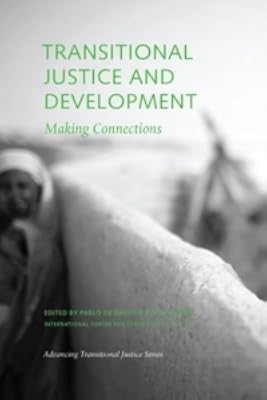
Transitional Justice and Development: Making Connections (Advancing Transitional Justice)
by Pablo De Greiff
On This Page
Description
As developing societies emerge from legacies of conflict and authoritarianism, they are frequently beset by poverty, inequality, weak institutions, broken infrastructure, poor governance, insecurity, and low levels of social capital. These countries also tend to propagate massive human rights violations, which displace victims who are marginalized, handicapped, widowed, and orphaned--in other words, people with strong claims to justice. Those who work with others to address development and show more justice often fail to supply a coherent response to these concerns. The essays in this volume confront the intricacies--and interconnectedness--of transitional governance issues head on, mapping the relationship between two fields that, academically and in practice, have grown largely in isolation of one another. The result of a research project conducted by the International Center for Transitional Justice (ICTJ), this book explains how justice and recovery can be aligned not only in theory but also in practice, among both people and governments as they reform. show lessTags
Members
- Recently Added By
Author Information
6 Works 51 Members
Classifications
- Genres
- Economics, Nonfiction, Politics and Government
- DDC/MDS
- 338.9 — Society, government, & culture Economics Production Economic Development And Growth
- LCC
- JC571 .T699 — Political Science Political theory Political theory. The state. Theories of the state Purpose, functions, and relations of the state
- BISAC
Statistics
- Members
- 6
- Popularity
- 3,041,807
- Languages
- English
- Media
- Paper
- ISBNs
- 1