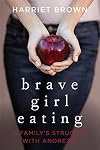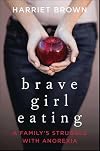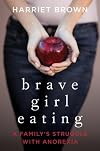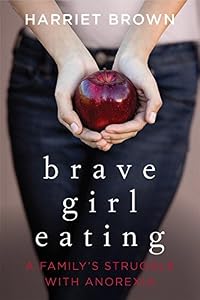
Brave Girl Eating: A Family's Struggle with Anorexia
by Harriet Brown 
On This Page
Description
"One of the most up to date, relevant, and honest accounts of one family's battle with the life threatening challenges of anorexia. Brown has masterfully woven science, history, and heart throughout this compelling and tender story." -Lynn S. Grefe, Chief Executive Officer, National Eating Disorders Association "As a woman who once knew the grip of a life-controlling eating disorder, I held my breath reading Harriet Brown's story. As a mother of daughters, I wept for her. Then cheered." show more -Joyce Maynard, author of Labor Day In Brave Girl Eating, the chronicle of a family's struggle with anorexia nervosa, journalist, professor, and author Harriet Brown recounts in mesmerizing and horrifying detail her daughter Kitty's journey from near-starvation to renewed health. Brave Girl Eating is an intimate, shocking, compelling, and ultimately uplifting look at the ravages of a mental illness that affects more than 18 million Americans. show lessTags
Recommendations



















Member Reviews
Review One
This is a book written by a mother for mothers. It is the story of a loving, well-educated and unusually sensible mother.
Review Two
This is the story of a mother who finds herself in a situation no mother wants. Brown is the mother of a daughter who won't eat, the mother of a daughter who is at risk of dying from anorexia nervosa. She is also a mother who discovers the medical profession and in particular the psychiatric profession is ill-equipped to step in and provide her and her family with what they so desperately need - effective and compassionate treatment.
Review Three
This is the story of a mother who on making this 'discovery' is forced to read all the literature available and take 'therapy' into her own hands. In show more Brown's case this means refusing to hand over her daughter to 'experts', refusing to send her daughter away to a distant inpatient program. And instead wisely electing to embark on a "home-based" re-feeding program.
Her decision - informed by the works of Salvador Minuchin, Chris Dare and Ivan Eisler and advocated by groups such as the Maudsley Parents - requires her, requires parent/parents set limits. Set firm and consistent psychological and physical boundaries.
It is an approach which understands that no matter how stressful (and as Brown describes so well - it is deeply distressing and stressful for all concerned) it is vital the person with the condition feels safe, loved and knows that no matter how hard the journey is going to be their parents are not going to give up, not going to disappear, but rather insist that they eat.
Review Four
This book powerfully illuminates how the current push towards a primarily biological and genetic based understanding of mentall ilness has significantly de-skilled the practice of medicine, the art of medicine. An art well-understood by psychiatric professionals such as Salvador Munichin who pioneered the family-based treatment approach to eating disorders.
This art has been lost in part because of a heavy reliance these days on 'recipe-based', on 'cookbook', on 'insurance-like manuals' such as the DSM IV TR. These books with their on focus diagnostic tools which resemble a tick-a-box mentality have created a climate in which professionals are discouraged from understanding the context in which a mental illness occurs. The psychological context in which treatment must occur.
In other words the current focus on the 'biological' signs and understandings of anorexia nervosa have led to a therapeutic nihilism - a therapeutic desert. With many professionals unaware the illness needs to be treated in a holistic manner - that it is imperative any 'biological' understandings are incorporated within a psychological understanding of how best to treat.
Review Four
The majority of interactions between Brown, her daughter Kitty and the medical profession as described by Brown are disappointing. And further illustrate how the push towards biological certainty, to brain scans and blood tests to determine the 'cause' of anorexia nervosa has whittled away the profession's competence and understanding of the psychological aspects of treatment. In Brown's case it is only a psychotherapeutically-trained nurse and a gentle family pediatrician who are capable of providing Brown and her daughter with what they need - support and an understanding of what they are trying to achieve.
Review Six
This book takes aim at the "psychodynamic" understandings of anorexia nervosa, particularly the work of Hilde Bruch. Brown understandably and wisely wants to focus on recovery rather than play the blame game. However at times her determination to see and understand anorexia nervosa as primarily a 'biological disorder' as something that can appear out of the blue blinds her to the important contributions authors such as Bruch have made. Bruch was not interested in assigning blame but rather in understanding the psychological context of the illness and how recovery is all about putting in place a psychological framework that will enable the person with the illness to fully recover. A framework Brown herself, so wisely put in place. show less
This is a book written by a mother for mothers. It is the story of a loving, well-educated and unusually sensible mother.
Review Two
This is the story of a mother who finds herself in a situation no mother wants. Brown is the mother of a daughter who won't eat, the mother of a daughter who is at risk of dying from anorexia nervosa. She is also a mother who discovers the medical profession and in particular the psychiatric profession is ill-equipped to step in and provide her and her family with what they so desperately need - effective and compassionate treatment.
Review Three
This is the story of a mother who on making this 'discovery' is forced to read all the literature available and take 'therapy' into her own hands. In show more Brown's case this means refusing to hand over her daughter to 'experts', refusing to send her daughter away to a distant inpatient program. And instead wisely electing to embark on a "home-based" re-feeding program.
Her decision - informed by the works of Salvador Minuchin, Chris Dare and Ivan Eisler and advocated by groups such as the Maudsley Parents - requires her, requires parent/parents set limits. Set firm and consistent psychological and physical boundaries.
It is an approach which understands that no matter how stressful (and as Brown describes so well - it is deeply distressing and stressful for all concerned) it is vital the person with the condition feels safe, loved and knows that no matter how hard the journey is going to be their parents are not going to give up, not going to disappear, but rather insist that they eat.
Review Four
This book powerfully illuminates how the current push towards a primarily biological and genetic based understanding of mentall ilness has significantly de-skilled the practice of medicine, the art of medicine. An art well-understood by psychiatric professionals such as Salvador Munichin who pioneered the family-based treatment approach to eating disorders.
This art has been lost in part because of a heavy reliance these days on 'recipe-based', on 'cookbook', on 'insurance-like manuals' such as the DSM IV TR. These books with their on focus diagnostic tools which resemble a tick-a-box mentality have created a climate in which professionals are discouraged from understanding the context in which a mental illness occurs. The psychological context in which treatment must occur.
In other words the current focus on the 'biological' signs and understandings of anorexia nervosa have led to a therapeutic nihilism - a therapeutic desert. With many professionals unaware the illness needs to be treated in a holistic manner - that it is imperative any 'biological' understandings are incorporated within a psychological understanding of how best to treat.
Review Four
The majority of interactions between Brown, her daughter Kitty and the medical profession as described by Brown are disappointing. And further illustrate how the push towards biological certainty, to brain scans and blood tests to determine the 'cause' of anorexia nervosa has whittled away the profession's competence and understanding of the psychological aspects of treatment. In Brown's case it is only a psychotherapeutically-trained nurse and a gentle family pediatrician who are capable of providing Brown and her daughter with what they need - support and an understanding of what they are trying to achieve.
Review Six
This book takes aim at the "psychodynamic" understandings of anorexia nervosa, particularly the work of Hilde Bruch. Brown understandably and wisely wants to focus on recovery rather than play the blame game. However at times her determination to see and understand anorexia nervosa as primarily a 'biological disorder' as something that can appear out of the blue blinds her to the important contributions authors such as Bruch have made. Bruch was not interested in assigning blame but rather in understanding the psychological context of the illness and how recovery is all about putting in place a psychological framework that will enable the person with the illness to fully recover. A framework Brown herself, so wisely put in place. show less
"Brave Girl Eating" is the story of Harriet Brown's struggle to help her daughter beat anorexia. It was a moving portrayal of what this disease does to a family and how it affects each member differently. I thought this book was well written and provided a good bit of factual information about the disease. As I read it I thought of my own daughter who at the age of 7 has a healthy relationship with food but this book illustrated to me how quickly and unexpectedly that can change. I ...more "Brave Girl Eating" is the story of Harriet Brown's struggle to help her daughter beat anorexia. It was a moving portrayal of what this disease does to a family and how it affects each member differently. I thought this book was well written and show more provided a good bit of factual information about the disease. As I read it I thought of my own daughter who at the age of 7 has a healthy relationship with food but this book illustrated to me how quickly and unexpectedly that can change. I hope that I will never have to use the tips I learned in this book to help my own child, but I am grateful to Harriet Brown for sharing them with me. show less
Well written memoir about the author's family's experience with anorexia; also a good primer on the state of diagnosis/causality and treatment for eating disorders.
Heartbreaking and groundbreaking. I don't even know why I grabbed it from the shelf but I am glad I did.
If I ever have a friend or family member or anyone I know who is dealing with this insidious disease, I would tell them to run, don't walk, and get this book.
If I ever have a friend or family member or anyone I know who is dealing with this insidious disease, I would tell them to run, don't walk, and get this book.
I didn't mind this book in the beginning, but the more I read it the more I got irritated with the author. It's all poor me. boo hoo. I wanted to read more about the daughter and her struggles. REAL struggles and day to day life. Not the crap vomited about by a mother who wants attention. That is what it feels like while reading this.
I wish this book was written by Kitty's point of view. I think it would have been more interesting and much more real. But, I'm sure she is just as irritating as her mother. From her mothers descriptions she sure sounds like it.
I'm pretty sure I read the same information regurgitated multiple times through out this book. Just with a different combination of big words she used to try and sound smart. I show more could really care less about doctors studies from the 60's. Tell me about now. Things change.
Why would you deny your daughter treatment? Especially when she asked for it!? And what the hell kind of name is Kitty. Seriously. You're just asking for her to be a stripper.
oh. And why the hell do you refer to your daughter as a demon?! Who does that?? A crazy person does! She is not a demon, she is your goddamn child. Treat her like one. Teenagers are moody. Get over it. Don't treat her like she's a piece of shit you smeared with your shoe. She is a person. A living, breathing person with feelings. Not a freakin demon. Get over yourself.
There is so much about this book that just frustrates the crap out of me. I can't stand it.
I wouldn't recommend this book. Not unless you want to be pissed off by the end of it. show less
I wish this book was written by Kitty's point of view. I think it would have been more interesting and much more real. But, I'm sure she is just as irritating as her mother. From her mothers descriptions she sure sounds like it.
I'm pretty sure I read the same information regurgitated multiple times through out this book. Just with a different combination of big words she used to try and sound smart. I show more could really care less about doctors studies from the 60's. Tell me about now. Things change.
Why would you deny your daughter treatment? Especially when she asked for it!? And what the hell kind of name is Kitty. Seriously. You're just asking for her to be a stripper.
oh. And why the hell do you refer to your daughter as a demon?! Who does that?? A crazy person does! She is not a demon, she is your goddamn child. Treat her like one. Teenagers are moody. Get over it. Don't treat her like she's a piece of shit you smeared with your shoe. She is a person. A living, breathing person with feelings. Not a freakin demon. Get over yourself.
There is so much about this book that just frustrates the crap out of me. I can't stand it.
I wouldn't recommend this book. Not unless you want to be pissed off by the end of it. show less
Good, fast read. We don't know if the girl actually recovered.
Should be required reading for anyone with a young daughter.
Members
- Recently Added By
Published Reviews
ThingScore 100
Review One
This is a book written by a mother for mothers. It is the story of a loving, well-educated and unusually sensible mother.
Review Two
This is the story of a mother who finds herself in a situation no mother wants. Brown is the mother of a daughter who won't eat, the mother of a daughter who is at risk of dying from anorexia nervosa. She is also a mother who discovers the medical show more profession and in particular the psychiatric profession is ill-equipped to step in and provide her and her family with what they so desperately need - effective and compassionate treatment. show less
This is a book written by a mother for mothers. It is the story of a loving, well-educated and unusually sensible mother.
Review Two
This is the story of a mother who finds herself in a situation no mother wants. Brown is the mother of a daughter who won't eat, the mother of a daughter who is at risk of dying from anorexia nervosa. She is also a mother who discovers the medical show more profession and in particular the psychiatric profession is ill-equipped to step in and provide her and her family with what they so desperately need - effective and compassionate treatment. show less
added by FionaPlace
Lists

HarperCollins Publishers
144 works; 3 members

Featured in Fat Talk by Virginia Sole-Smith
103 works; 1 member
Author Information

17+ Works 1,184 Members
Harriet Brown is a LibraryThing Author, an author who lists their personal library on LibraryThing.
Awards and Honors
Awards
Classifications
- Genres
- Nonfiction, Biography & Memoir, General Nonfiction
- DDC/MDS
- 616.85262 — Technology Medicine & health Diseases Diseases of nervous system and mental disorders Miscellaneous Neuroses Eating disorders
- LCC
- RC552 .A5 .B76 — Medicine Internal medicine Internal medicine Neurosciences. Biological psychiatry. Neuropsychiatry Psychiatry Psychopathology Neuroses
- BISAC
Statistics
- Members
- 218
- Popularity
- 148,939
- Reviews
- 7
- Rating
- (3.92)
- Languages
- English, German
- Media
- Paper, Ebook
- ISBNs
- 6
- ASINs
- 5