The Function of Reason
by Alfred North Whitehead
On This Page
Description
Whitehead presented these three lectures at Princeton University in 1929. Although 85 years have passed, his central thesis and his analysis remain remarkably current. The scientific materialism that Whitehead opposed with such vigor continues to dominate in academic circles, and even now those who question that worldview are often accused of being anti-scientific. This is especially true in discussions of the nature of the human mind and its relation to the body (particularly the brain). It show more is hard to find a contemporary thinker with a better perspective on the nature and role of natural science than Whitehead who, with Bertrand Russell, published the Principia Mathematica in 1910; who taught logic and mathematics at Trinity College of Cambridge University; who taught philosophy of science at University College London; and who was professor of philosophy at Harvard University beginning in 1924. Whitehead's cosmology is far from anti-scientific, but he does explain why scientific method and technological practice alone are not able to provide a comprehensive understanding of the full range of human thought and experience. This work explains what we must do to achieve such a comprehensive understanding. show lessTags
Recommendations





























Member Reviews
A razão surge nessas três palestras como a contra-tendência de complexificação no universo cuja função é promover a arte da boa vida. Assim, Whitehead exulta-nos a considerar a ideia de finalidade como tendo tanta substância quanto a de acaso, circunstancialidade. A razão afinal, atesta ela mesma que possui essa potência e precisa se colocar como parte dos fatos a serem analisados, quando da evolução das espécies ou da fabricação de mundos e de fatos em geral. Assim, as ideias embarcam em aventuras, por não apenas reportarem-se a métodos e evidências, mas por constituirem especulativamente os mesmos, quando a razão, pelo seu impulso criativo a desdobrar-se em modos de viver e construir vivências, se lança sobre a show more existência. Ademais Whitehead insiste no papel da metafísica como cosmologia, isto é uma metafísica imbricada nas decisões científico-filosóficas e nos alerta contra um predomínio acrítico (dogmático no vocabulário dele) de concepções excessivamente abstratas da realidade (como o materialismo e várias posições científicas duras que não percebem que fatos são construídos ou aparecem em meio a processos que possuem componente intencionais e especulativos). show less
Ratings
Members
- Recently Added By
Author Information

64+ Works 6,240 Members
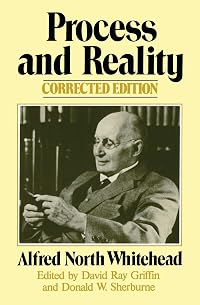
Alfred North Whitehead, who began his career as a mathematician, ranks as the foremost philosopher in the twentieth century to construct a speculative system of philosophical cosmology. After his graduation from Cambridge University, he lectured there until 1910 on mathematics. Like Bertrand Russell (see also Vol. 5), his most brilliant pupil, show more Whitehead viewed philosophy at the start from the standpoint of mathematics, and, with Russell, he wrote Principia Mathematica (1910--13). This work established the derivation of mathematics from logical foundations and has transformed the philosophical discipline of logic. From his work on mathematics and its logical foundations, Whitehead proceeded to what has been regarded as the second phase of his career. In 1910 he left Cambridge for the University of London, where he lectured until he was appointed professor of applied mathematics at the Imperial College of Science and Technology. During his period in London, Whitehead produced works on the epistemological and metaphysical principles of science. The major works of this period are An Enquiry Concerning the Principles of Natural Knowledge (1919), The Concept of Nature (1920), and The Principles of Relativity (1922). In 1924, at age 63, Whitehead retired from his position at the Imperial College and accepted an appointment as professor of philosophy at Harvard University, where he began his most creative period in speculative philosophy. In Science and the Modern World (1925) he explored the history of the development of science, examining its foundations in categories of philosophical import, and remarked that with the revolutions in biology and physics in the nineteenth and early twentieth centuries a revision of these categories was in order. Whitehead unveiled his proposals for a new list of categories supporting a comprehensive philosophical cosmology in Process and Reality (1929), a work hailed as the greatest expression of process philosophy and theology. Adventures of Ideas (1933) is an essay in the philosophy of culture; it centers on what Whitehead considered the key ideas that have shaped Western culture. (Bowker Author Biography) show less
Common Knowledge
- Original publication date
- 1929
- First words
- The topic here considered -- The Function of Reason -- is one of the oldest topics for philosophical discussion.
Classifications
- Genres
- Philosophy, Nonfiction, History, Science & Nature
- DDC/MDS
- 120 — Philosophy & psychology Epistemology (how do you know what you know?) Epistemology, causation, humankind
- LCC
- BD41 .W5 — Philosophy, Psychology and Religion Speculative philosophy Speculative philosophy General philosophical works
- BISAC
Statistics
- Members
- 197
- Popularity
- 166,621
- Reviews
- 1
- Rating
- (3.45)
- Languages
- 6 — English, French, German, Portuguese, Spanish, Turkish
- Media
- Paper, Audiobook, Ebook
- ISBNs
- 14
- UPCs
- 1
- ASINs
- 11