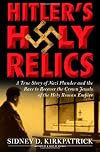
Hitler's holy relics : a true story of Nazi plunder and the race to recover the crown jewels of the Holy Roman Empire
by Sidney Kirkpatrick
On This Page
Description
Had Hitler succeeded in conquering Europe, he would have crowned himself Holy Roman Emperor. The Nazis had in their possession priceless artifacts that would give Hitler legitimacy in his subjects' eyes: the Crown Jewels of the Holy Roman Empire including the Spear of Destiny, alleged to have pierced Christ's side at the Crucifixion. Looted from the royal treasury in Vienna, Austria, the Crown Jewels were hidden in a secret bunker deep beneath Nürnberg castle, known to few but Heinrich show more Himmler, his staff-and a captured German soldier whose family lived above it. As luck would have it, the officer in charge of interrogating the soldier was First Lieutenant Walter Horn, art history professor. Following his report to General Patton, Horn would be assigned to recover this ancient treasure. Would he find it before covert Nazi agents could use it to revive the defeated regime? Based on recently discovered and previously unpublished documents and interviews with all remaining living participants, this is a tale that surpasses fiction: part thriller, part detective story, all true. True Crime. Nonfiction. History. show lessTags
Recommendations









Member Reviews
I've never read Dan Brown but I'm guessing that "Hitler's Holy Relics" is the type of book he'll read before knocking off another best selling tome. "Hitler's Holy Relics" covers the end of World War II when a team of allied officials led by scholar Walter Horn began searching for relics stolen by the Nazis, they realise that some relics were hidden so the upcoming Fourth Reich could use them. Some good detective work later, (Spoiler) we can rest assured that any Fourth Reich would need to come to fruition without Charlemagne's Imperial Regalia.
A well-written piece on one of the lesser known moments of World War II.
A well-written piece on one of the lesser known moments of World War II.
“You’ve got to read this!” is the most common phrase in any conversation of which I am a part. Frequently recommended to me are books of which I’m unaware or titles that wouldn’t usually interest me. I tend to read a lot in the SF, mystery, horror and contemporary lit genres, so it always surprises and occasionally delights me when someone tells me I have to read, say, a regency romance. I’ve made it a mission to read some of these recommended books.
Sue enjoyed Sidney D. Kirkpatrick’s Hitler’s Holy Relics, and though I don’t read a lot of nonfiction, I did too.
The Nazis were notorious plunderers of art and collectors of religious and occult artifacts. Under the direction of Heinrich Himmler, a gigantic vault was show more constructed beneath Nurnberg castle to house various treasures including the crown jewels of the Holy Roman Empire. Just prior to the invasion of Nurnberg by the Allies in 1945, the jewels vanished from the vault. The central character of this book, Walter Horn, was an Allied interrogator originally charged with extracting information from German POWs. During the course of a routine interview with a German soldier, Horn learned of the vault and the antiquities it contained and filed a report, expecting it to be buried. He was surprised when orders coming directly from Eisenhower tasked him with recovering the jewels.
As the story progresses it becomes apparent to Horn that the importance of the Crown Jewels lies not in their value as works of art but rather as symbols which could potentially motivate a postwar Nazi resistance. This book is filled with fascinating stuff, not just about the aftermath of World War 2 but about the Holy Roman Empire as well. Particularly striking to me were the postwar conditions civilians were forced to endure and the deals the Allies had to cut with some very bad people to maintain order. The writing is sometimes dryly academic, but Walter Horn is a sympathetic protagonist and the period of history detailed is often ignored in favor of the more crowd-pleasing focus on individual battles. -Scott show less
Sue enjoyed Sidney D. Kirkpatrick’s Hitler’s Holy Relics, and though I don’t read a lot of nonfiction, I did too.
The Nazis were notorious plunderers of art and collectors of religious and occult artifacts. Under the direction of Heinrich Himmler, a gigantic vault was show more constructed beneath Nurnberg castle to house various treasures including the crown jewels of the Holy Roman Empire. Just prior to the invasion of Nurnberg by the Allies in 1945, the jewels vanished from the vault. The central character of this book, Walter Horn, was an Allied interrogator originally charged with extracting information from German POWs. During the course of a routine interview with a German soldier, Horn learned of the vault and the antiquities it contained and filed a report, expecting it to be buried. He was surprised when orders coming directly from Eisenhower tasked him with recovering the jewels.
As the story progresses it becomes apparent to Horn that the importance of the Crown Jewels lies not in their value as works of art but rather as symbols which could potentially motivate a postwar Nazi resistance. This book is filled with fascinating stuff, not just about the aftermath of World War 2 but about the Holy Roman Empire as well. Particularly striking to me were the postwar conditions civilians were forced to endure and the deals the Allies had to cut with some very bad people to maintain order. The writing is sometimes dryly academic, but Walter Horn is a sympathetic protagonist and the period of history detailed is often ignored in favor of the more crowd-pleasing focus on individual battles. -Scott show less
If you crossed the Da Vinci Code with real life Nazi conspiracies, you'd get a story like this.A look at the history of the traditions that Hitler and his men claimed to succeed, told through the personal story and investigations of one U.S.-German army lieutenant who was an expert in German art history.
Huuhaalta ensi alkuun vaikuttava, mutta ilmeisesti kuitenkin tosiasioihin perustuva kiehtova seikkailu vuoden 1945 kesältä yhdysvaltalaisten ja liittolaisten miehittämässä Saksassa. Jos saksalais-yhdysvaltalaisen taidehistorioitsija-tiedustelu-upseeri Walter Hornin teoriat Hitlerin - ja varsinkin Himmlerin - suunnitelmista sekä Ahnenerben toiminnoista pitävät paikkansa, on kyseessä merkittävä teos, joka tekee Kolmannen valtakunnan hirmuteot tietyssä mielessä ymmärrettävimmäksi, mutta sitäkin mielettömimmiksi.
Natsien uskonnollinen puoli jätetään yleensä vähemmälle yleisesityksissä, joten kertomus avaa mielenkiintoisen näkymän sekä natsien mystiseen maailmankatsomukseen että oikeastaan feodalistiseen show more yhteiskuntajärjestykseen, jossa vahvat miehet tiukkoine, johtajakeskisine, lahkoja muistuttavine järjestöineen puuhailivat mielin määrin mitä halusivat.
Kirjailija-elokuvaohjaaja Kirkpatrick vie erinomaisesti tarinaa eteen päin, niin ettei opusta meinaa malttaa jättää käsistä ennen kuin keskiaikaisten kulttiesineiden kohtalo maailmankuuluun oikeudenkäyntiin valmistuvan Nürnbergin kaupungin raunioiden keskellä selviää. Kari Kosken käännöstyökin on varsin onnistunutta - jopa kirjan nimen muuttaminen Hitlerin pyhästä aarteesta sisältöä paremmin kuvaavaksi Natsien pyhäksi aarteeksi.
Tarina on kaiken kaikkiaan sen verran "fantastinen", etteivät kirjan valokuvat ja runsaat lähdetiedotkaan meinaa vakuuttaa tarinan aitoudesta. Päähenkilö taidehistorioitsija Walter Horn (1908-1995) näyttää kuitenkin oikeasti olleen oikea kenkilkö. Hän palveli wikipediatietojen mukaan Pattonin miehitysjoukoissa kuten opus kertoo. Ehkä tarina todellakin paljastaa sen, miten Saksalais-roomalaisen keisarikunnan aarteet ovat päätyneet nähtäville Wienin Hofsburgin vitriineihin. Täytynee käydä ensi kerralla katsomassa museo uudelleen, sillä parin vuoden takaiselta käynniltä ei muistijälkiä aarteista ole. Tämän tarinan jälkeen varmasti tulee olemaan!
Alkuperäiskielisen painoksen etukannessa tarinan vakuutetaan olevan tosi. show less
Natsien uskonnollinen puoli jätetään yleensä vähemmälle yleisesityksissä, joten kertomus avaa mielenkiintoisen näkymän sekä natsien mystiseen maailmankatsomukseen että oikeastaan feodalistiseen show more yhteiskuntajärjestykseen, jossa vahvat miehet tiukkoine, johtajakeskisine, lahkoja muistuttavine järjestöineen puuhailivat mielin määrin mitä halusivat.
Kirjailija-elokuvaohjaaja Kirkpatrick vie erinomaisesti tarinaa eteen päin, niin ettei opusta meinaa malttaa jättää käsistä ennen kuin keskiaikaisten kulttiesineiden kohtalo maailmankuuluun oikeudenkäyntiin valmistuvan Nürnbergin kaupungin raunioiden keskellä selviää. Kari Kosken käännöstyökin on varsin onnistunutta - jopa kirjan nimen muuttaminen Hitlerin pyhästä aarteesta sisältöä paremmin kuvaavaksi Natsien pyhäksi aarteeksi.
Tarina on kaiken kaikkiaan sen verran "fantastinen", etteivät kirjan valokuvat ja runsaat lähdetiedotkaan meinaa vakuuttaa tarinan aitoudesta. Päähenkilö taidehistorioitsija Walter Horn (1908-1995) näyttää kuitenkin oikeasti olleen oikea kenkilkö. Hän palveli wikipediatietojen mukaan Pattonin miehitysjoukoissa kuten opus kertoo. Ehkä tarina todellakin paljastaa sen, miten Saksalais-roomalaisen keisarikunnan aarteet ovat päätyneet nähtäville Wienin Hofsburgin vitriineihin. Täytynee käydä ensi kerralla katsomassa museo uudelleen, sillä parin vuoden takaiselta käynniltä ei muistijälkiä aarteista ole. Tämän tarinan jälkeen varmasti tulee olemaan!
Alkuperäiskielisen painoksen etukannessa tarinan vakuutetaan olevan tosi. show less
Jul 1, 2014 (Edited)Finnish
Ratings
Members
- Recently Added By
Published Reviews
ThingScore 75
Despite its occasional bursts of sensationalism, "Hitler’s Holy Relics" is a valuable look at the challenges of dealing with art and archæology in Nazi and post-Nazi Germany, as well as at the ways in which governments manipulate the past to spread their messages. Horn’s story is compelling, and told in a clear and readable, if sometimes a little pedestrian, narrative.
added by MiaCulpa
Author Information

10+ Works 825 Members
Sidney D. Kirkpatrick is the critically acclaimed author of A Cast of Killers and other nonfiction books, including Edgar Cayce and The Revenge of Thomas Eakins. An award-winning filmmaker whose work has been featured on HBO, the History Channel, the Discovery Channel, and AE Television Network, he lives in Stony Brook, New York, and Pasadena, show more California. show less
Awards and Honors
Distinctions
Common Knowledge
- Canonical title
- Hitler's holy relics : a true story of Nazi plunder and the race to recover the crown jewels of the Holy Roman Empire
- Original publication date
- 2010
- People/Characters
- Adolf Hitler; Walter Horn
- Epigraph
- Man thirsts more for glory than for virtue. Armor of an enemy, his broken helmet, the flag ripped from a conquered ship, were treasures valued beyond all human riches. It is to obtain these tokens of glory that generals, be... (show all) they Roman, Greek or barbarian, brave thousands of perils and endure a thousand exertions. - Decimus Iunius Iuvenalis, Roman poet of the second century C.E.
- Dedication
- To Alexander Kirkpatrick
- First words
- Every morning, like clockwork, Allied bombers would darken the skies over Namur, Belgium.
- Last words
- (Click to show. Warning: May contain spoilers.)How they came to be in the museum, however, was the greater story.
(Click to show. Warning: May contain spoilers.)(Epilogue) How they came to be in the museum, however, was the greater story. - Blurbers
- Applegate, Debby; Blum, Howard; Diehl, Digby; Kershaw, Alex; Alford, Kenneth D
Classifications
Statistics
- Members
- 182
- Popularity
- 179,869
- Reviews
- 4
- Rating
- (3.50)
- Languages
- 5 — English, Finnish, French, Polish, Portuguese
- Media
- Paper, Audiobook, Ebook
- ISBNs
- 14
- ASINs
- 10