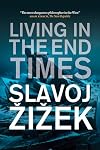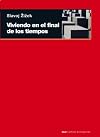
Living in the End Times
by Slavoj Žižek
On This Page
Description
There should no longer be any doubt: global capitalism is fast approaching its terminal crisis. Slavoj Zizek has identified the four horsemen of this coming apocalypse: the worldwide ecological crisis; imbalances within the economic system; the biogenetic revolution; and exploding social divisions and ruptures. But, he asks, if the end of capitalism seems to many like the end of the world, how is it possible for Western society to face up to the end times? In a major new analysis of our show more global situation, Slavok Zizek argues that our collective responses to economic Armageddon correspond to the stages of grief: ideological denial, explosions of anger and attempts at bargaining, followed by depression and withdrawal. After passing through this zero-point, we can begin to perceive the crisis as a chance for a new beginning. Or, as Mao Zedong put it, "There is great disorder under heaven, the situation is excellent." Slavoj Zizek shows the cultural and political forms of these stages of ideological avoidance and political protest, from New Age obscurantism to violent religious fundamentalism. Concluding with a compelling argument for the return of a Marxian critique of political economy, Zizek also divines the wellsprings of a potentially communist culture--from literary utopias like Kafka's community of mice to the collective of freak outcasts in the TV series Heroes. show lessTags
Recommendations














Member Reviews
[T]he way to rid ourselves of our masters is not for humankind itself to become a collective master over nature, but to recognize the imposture in the very notion of the Master.
Inexplicably the last week has been one of Žižek. I struggled, slipped and regrouped to push through Living in the End Times. I find it increasingly interesting that the Slovene so often adopts theological motifs especially towards a Marxist Future: one can almost sense a crescendo of trumpets. I'm not sure of much, but this is exhilarating reading except when broaching the nuances of either Lacan or Marx; it then becomes rather numbing. This intimidating tome borrows the cycle of grief from Kubler-Ross (denial/anger/bargaining/depression/acceptance)and thusly show more explores the banking crisis, the viability of multiculturalism, the ethics of Hollywood, the threat of both a virtual post-humanity as well as the bio-genetic organic possibility: architecture and film receive even treatments and there's even an examination of Joself Fritzl through a parsing of Sound of Music. What, you say? The Austrian who abducted, raped and impregnated his daughter and then kept the brood underground for years, that guy? Yep. It isn't pretty. I think the postmodern possibilities where everything is plastic and differences become relative is a threatening soil. Irony can be ignored and the glib becomes noisome. show less
Inexplicably the last week has been one of Žižek. I struggled, slipped and regrouped to push through Living in the End Times. I find it increasingly interesting that the Slovene so often adopts theological motifs especially towards a Marxist Future: one can almost sense a crescendo of trumpets. I'm not sure of much, but this is exhilarating reading except when broaching the nuances of either Lacan or Marx; it then becomes rather numbing. This intimidating tome borrows the cycle of grief from Kubler-Ross (denial/anger/bargaining/depression/acceptance)and thusly show more explores the banking crisis, the viability of multiculturalism, the ethics of Hollywood, the threat of both a virtual post-humanity as well as the bio-genetic organic possibility: architecture and film receive even treatments and there's even an examination of Joself Fritzl through a parsing of Sound of Music. What, you say? The Austrian who abducted, raped and impregnated his daughter and then kept the brood underground for years, that guy? Yep. It isn't pretty. I think the postmodern possibilities where everything is plastic and differences become relative is a threatening soil. Irony can be ignored and the glib becomes noisome. show less
I am very proud of myself for finishing a book by Slavoj Žižek, as this has been an ambition for some while. (I’ve also learned from a friend that his name should be pronounced approximately Slav-osh His-ek. [EDIT: Correction to this in a comment below.]) This has been an ambition for years because much of what he writes is incredibly dense and difficult to read, unless you have a friendly familiarity with Hegel, Heidegger, Kant, et al. It isn’t merely that he references all these authors work, he uses their language and, in particular, Lacan’s. That is why it took me months to read this book - I periodically got bogged down in sentences like this:
I mean, come on. To be fair, though, on a number of occasions I tried to read this book at 5am when suffering from insomnia. That is evidently not the way to get the best from it. Nonetheless I persisted, because these philosophical quagmires are interspersed with fascinating and entirely comprehensible analysis of capitalism and its structural weaknesses. Moreover, Žižek throws in entertaining commentary on the ideological themes of films such as ‘Kung Fu Panda’ and ‘Eagle Eye’. In short, this is a digressive and erratic book, covering an immense amount of ground. It approaches its theme of capitalism in crisis from many oblique directions, some of which work better for me than others. The arduous discussion of Hegelian Spirit quoted above is followed by an incisive summary of the Citizen’s Income concept.
Despite my complaints that I don’t know enough philosophy to understand swathes of ‘Living in the End Times’, overall the effort proved worth it. I found it largely thought-provoking and satisfying. It was quite unlike any other book I’ve read. Here are a few memorable bits:
This is an important critique of economics as a discipline, which reduces decisions to utility functions that are allegedly neutral.
I was interested in this as it implies that I’ve been taking Freud’s approach to sexuality far too literally.
This passage and subsequent pages brought to mind [b:On Offence: The Politics of Indignation|18400555|On Offence The Politics of Indignation|Richard King|https://images.gr-assets.com/books/1401663168s/18400555.jpg|26031205] by Richard King. Žižek is talking of capitalism’s moral vacuum, which seems to provide an explanation for the reflexive offence-taking that [b:On Offence: The Politics of Indignation|18400555|On Offence The Politics of Indignation|Richard King|https://images.gr-assets.com/books/1401663168s/18400555.jpg|26031205] deals with. King’s book comments that politics is experienced, 'as a clash of identities, as an expression of (or assault on) our individuality'. Without shared ethics or habitual civility, such politics will inevitably be acrimonious and, according to Žižek, useless at shifting power relations.
I also appreciated Žižek on climate change in the chapter titled 'Apocalypse at the Gates', in which he notes that ecological disaster has become normalised as something known but not believed. A contrast is drawn between the failure of the 2009 Copenhagen climate change talks and the immediate, radical response to the financial crisis of 2008. We can afford to save the banks but not the climate. As he puts it, 'We may worry as much as we like about global realities, but it is Capital which is the Real of our lives'.
Despite the often baffling jumps from theme to theme and poetry to cinema to philosophy throughout, I managed to find my bearings by picking out what interested me most. If there was an overriding ideology buried in here, it escaped me. A great deal of the book went completely over my head, but what I understood I enjoyed. As a final example, this passage embroidered on points I’ve come across before about the condition of constant ambivalence in late capitalism.
Maybe one day I’ll even finish [b:In Defense of Lost Causes|18925|In Defense of Lost Causes|Slavoj Žižek|https://images.gr-assets.com/books/1373997836s/18925.jpg|941771]. show less
If, then, ‘it is only as a result of itself that it is spirit’, this meansshow more
that the standard discourse of Hegelian Spirit which alienates itself, and then recognises itself in its otherness and thus reappropriates its content, is deeply misleading: the self to which Spirit returns is produced in the very movement of this return, or, in other words, that to which the process of returning is returning is produced by the very process of returning.
I mean, come on. To be fair, though, on a number of occasions I tried to read this book at 5am when suffering from insomnia. That is evidently not the way to get the best from it. Nonetheless I persisted, because these philosophical quagmires are interspersed with fascinating and entirely comprehensible analysis of capitalism and its structural weaknesses. Moreover, Žižek throws in entertaining commentary on the ideological themes of films such as ‘Kung Fu Panda’ and ‘Eagle Eye’. In short, this is a digressive and erratic book, covering an immense amount of ground. It approaches its theme of capitalism in crisis from many oblique directions, some of which work better for me than others. The arduous discussion of Hegelian Spirit quoted above is followed by an incisive summary of the Citizen’s Income concept.
Despite my complaints that I don’t know enough philosophy to understand swathes of ‘Living in the End Times’, overall the effort proved worth it. I found it largely thought-provoking and satisfying. It was quite unlike any other book I’ve read. Here are a few memorable bits:
We should add here that, in our everyday lives, ideology is at work especially in the apparently innocent reference to pure utility - one should never forget that, in the symbolic universe, ‘utility’ functions as a reflexive notion, that is, it always involves the assertion of utility as meaning.
This is an important critique of economics as a discipline, which reduces decisions to utility functions that are allegedly neutral.
Freudian ‘sexuality’ designates not merely a constrained content (sexual practices), but the very formal structure of the relationship between Outside and Inside, between the external incident/accident and its Aufhebung/integration into the internal libidinal process it triggers.
I was interested in this as it implies that I’ve been taking Freud’s approach to sexuality far too literally.
Civility stands for custom (or rather, what remains of custom) after the fall of the big Other: it assumes key role when subjects encounter a lack of substantial ethics, in other words when they find themselves in predicaments which cannot be resolved by way of relying on the existing ethical substance. [...] The more the ‘deep’ substantial ethical background is missing, the more a ‘superficial’ civility is needed.
This passage and subsequent pages brought to mind [b:On Offence: The Politics of Indignation|18400555|On Offence The Politics of Indignation|Richard King|https://images.gr-assets.com/books/1401663168s/18400555.jpg|26031205] by Richard King. Žižek is talking of capitalism’s moral vacuum, which seems to provide an explanation for the reflexive offence-taking that [b:On Offence: The Politics of Indignation|18400555|On Offence The Politics of Indignation|Richard King|https://images.gr-assets.com/books/1401663168s/18400555.jpg|26031205] deals with. King’s book comments that politics is experienced, 'as a clash of identities, as an expression of (or assault on) our individuality'. Without shared ethics or habitual civility, such politics will inevitably be acrimonious and, according to Žižek, useless at shifting power relations.
I also appreciated Žižek on climate change in the chapter titled 'Apocalypse at the Gates', in which he notes that ecological disaster has become normalised as something known but not believed. A contrast is drawn between the failure of the 2009 Copenhagen climate change talks and the immediate, radical response to the financial crisis of 2008. We can afford to save the banks but not the climate. As he puts it, 'We may worry as much as we like about global realities, but it is Capital which is the Real of our lives'.
Despite the often baffling jumps from theme to theme and poetry to cinema to philosophy throughout, I managed to find my bearings by picking out what interested me most. If there was an overriding ideology buried in here, it escaped me. A great deal of the book went completely over my head, but what I understood I enjoyed. As a final example, this passage embroidered on points I’ve come across before about the condition of constant ambivalence in late capitalism.
The problem is rather that we are forced to choose without having at our disposal the kind of knowledge that would enable us to make a proper choice - more precisely, what renders us unable to act is not the fact that we ‘don’t yet know enough’ (about whether, say, human industry is responsible for global warming, and so on) but, on the contrary, the fact that we know too much while not knowing what to do with this mass of inconsistent knowledge, not knowing how to subordinate it to a Master-Signifier.
Maybe one day I’ll even finish [b:In Defense of Lost Causes|18925|In Defense of Lost Causes|Slavoj Žižek|https://images.gr-assets.com/books/1373997836s/18925.jpg|941771]. show less
I confess I haven't finished this book. I was fully determined to, but was unable to renew it at the library as someone else had it on hold. I hope they have better luck with it than I did.
It started off well. Zizek has a nice turn of phrase and goes at his subjects head on (whilst bringing in support from the flanks). At first he seemed to be writing with a clarity and wit that would make the book, if not easy going, than enjoyable, enlightening and mind expanding. However, by the end of the first section he had regressed into the sort of jargon- and reference-laden language and semiotic hair-splitting that - while I am sure is entirely valid and necessary within the field - can make reading works of philosophy so very hard for the show more layman.
I do plan to revisit the work; hopefully the rest of the book is more transparent than opaque - but in the mean time I think my non-fiction reading may stay in the more easily grasped realms of physics, biology and multi-dimensional mathematics. show less
It started off well. Zizek has a nice turn of phrase and goes at his subjects head on (whilst bringing in support from the flanks). At first he seemed to be writing with a clarity and wit that would make the book, if not easy going, than enjoyable, enlightening and mind expanding. However, by the end of the first section he had regressed into the sort of jargon- and reference-laden language and semiotic hair-splitting that - while I am sure is entirely valid and necessary within the field - can make reading works of philosophy so very hard for the show more layman.
I do plan to revisit the work; hopefully the rest of the book is more transparent than opaque - but in the mean time I think my non-fiction reading may stay in the more easily grasped realms of physics, biology and multi-dimensional mathematics. show less
I think this book is entirely worth the read for it dares to unabashedly go places that other cultural and philosophical books dare to go - criticism and application. There is so much scope that is covered though that I feel that Zizek got lost in his thesis. His general structure remained consistent as a whole, but only on the grounds that one paid careful attention to the hermeneutical explication of the books progression. I am always astounded, though not always in accordance with, the "sideways reflections" of this philosopher. It is in this regard that he is worth every word. Unlike prior "dangerous" philosophers - Zizek doesn't confine himself to rear-view controversial evaluations of human discourse (e.g. Foucault and to some show more extent even Deleuze), but comes at it with a full frontal attack, using history as a source of criticism for contemporary issues rather than applying contemporary theory to historical issues in a retrospective way. Not to say that those methods aren't of great genius and value to 20th and 21st century thought, for it allows us to look around with new eyes - but only under the condition of a clear sky. Agree with him or not, Zizek is always a stimulating read that leaves much to be mulled over in its entirely unapologetic antagonism. show less
a very accessible text which suffers from what I believe is an overall lack of focus in Zizek's recent writing but Zizek is as effortlessly engaging, insightful and entertaining as ever. his feverish comparative readings of such a broad range of topics rarely suffer from the shallowness one might expect from such a wide scatter-shot of ideas. read it in sections in between reading other books simply because of its length. I plan to read Less Than Nothing soon in a similar way.
I find the same problem with Zizek that I have with Jameson--wandering. Here, there are moments of dazzling, laser-like focus, but they only last for a handful of pages, then he wanders off again. Ultimately, a third of this book will be useful to people who want interesting ways to think about representations of apocalypse (the reason I wanted the book), a third of the book will be interesting to people who want to think about contemporary real world examples of communism (not in any way my interest), and a third of the book will be interesting to those who want discussion of how various philosophers can be read together and in opposition to one another (somewhat interesting to me). For me, the three different parts never melded, and show more that made the book a tough read. show less
I ate the whole thing without a background in philosophy. I probably shouldn't have done that. I probably should not be writing a review at all, but I have to comment on the ride. I could have used more bathroom breaks, but the driver was very fussy about gas stations. He didn't want any of those places where you have to beg the man for that tiny washroom key tied to a 2 x 4. The end times are distrustful times, so the log of shame knows no bounds. This meant I had to hold my pee a lot.
He likes to pass trucks a little too close. Smokes like a euro. I think he's some kind of communist.
In order to keep myself from being kicked out of the car, I had to do some things I'm not proud of: find a copy of 'Kung-Fu Panda'; read a story by Kafka; show more talk to the taxman about his poetry.
That's what I get for hitch-hiking alone. show less
He likes to pass trucks a little too close. Smokes like a euro. I think he's some kind of communist.
In order to keep myself from being kicked out of the car, I had to do some things I'm not proud of: find a copy of 'Kung-Fu Panda'; read a story by Kafka; show more talk to the taxman about his poetry.
That's what I get for hitch-hiking alone. show less
Members
- Recently Added By
Lists

Filosofía - Clásicos
217 works; 1 member

culture
320 works; 1 member
Author Information

324+ Works 17,962 Members
Slavoj Zizek is a Hegelian philosopher, Lacanian psychoanalyst, and political activist. He is international director of the Birkbeck Institute for the Humanities, and Global Distinguished Professor of German at New York University. He is the author of numerous books on dialectical materialism, as well as critique of ideology and art, including show more Event, and Trouble in Paradise, both published by Melville House. show less
Awards and Honors
Notable Lists
Series
Belongs to Publisher Series
Common Knowledge
- Original publication date
- 2010
- First words
- The twentieth anniversary of the fall of the Berlin Wall should have been a time for reflection. It has become a cliche to emphasize the "miraculous" nature of the fall of the Wall: it was like a dream come true. With the dis... (show all)integration of the Communist regimes, which collapsed like a house of cards, something unimaginable happened, something one would not have considered possible even a couple of months earlier. Who in Poland could have imagined the arrival of free elections or Lech Walesa as president? We should, however, note that an even greater "miracle" was to occur only a few years later: namely, the return of the ex-Communists to power through free democratic elections, and the total marginalization of Walesa who had become even more unpopular than the man who, a decade and a half earlier, had attempted to crush Solidarnosc in a miliary coup -General Wojciech Jaruzelski. -Introduction: "The Spiritual Wickedness in the Heavens"
Against the Tartar-Lovers
What is ideology? In January 2010 Jean-Francois Cope, the parliamentary leader of the Union pour un Mouvement Poulaire, the ruling French party, proposed the draft of a law which ban... (show all)s the full-body veil from French streets and all other public places. This announcement came after an anguished six-month debate on the burqa and its Arab equivalent, the niqab, which cover the woman's face, except for a small slit for the eyes. All main political parties expressed their rejection of the burqa: the main opposition party, the Parti Socialiste, said it is "totally opposed to the burqa" which amounted to a "prison for women." ... The underlying idea is that the burqa or niqab are contrary to French traditions of freedom and laws on women's rights, or, to quote Cope: "We can measure the modernity of a society by the way it treats and respects women." The new legislation is thus intended to protect the dignity and security of women - and what could be less problematic than such a struggle against an ideology (and a practice) which subjugates women to the most ruthless male domination? -Chapter 1, Denial: The Liberal Utopia - Quotations
- "I will tell you the truth now...Bullsh*t. Some more bullsh*t. Blah, blah, blah. Chapter 3, where I try to read Marx anew, is maybe OK. I like this part where I analyse Kafka's last story and here where I use the community of... (show all) outcasts in the TV series Heroes as a model for the communist collective. But, this section, the Architectural Parallax, this is pure bluff. Also the part where I analyse Avatar, the movie, that is also pure bluff. When I wrote it, I had not even seen the film, but I am a good Hegelian. If you have a good theory, forget about the reality." - Excerpt from an interview with Slavoj Zizek
- Canonical DDC/MDS
- 306.3
- Canonical LCC
- HM548 .Z59
Classifications
- Genres
- Philosophy, Nonfiction, Economics, General Nonfiction, Politics and Government
- DDC/MDS
- 306.3 — Society, Government, and Culture Social sciences, sociology & anthropology Social Behavior - Dating, Marriage, Divorce Economic institutions
- LCC
- HM548 .Z59 — Social sciences Sociology (General) Sociology Theory. Method. Relations to other subjects
- BISAC
Statistics
- Members
- 738
- Popularity
- 38,057
- Reviews
- 8
- Rating
- (3.54)
- Languages
- 6 — English, French, Italian, Portuguese, Spanish, Turkish
- Media
- Paper, Ebook
- ISBNs
- 14
- ASINs
- 6