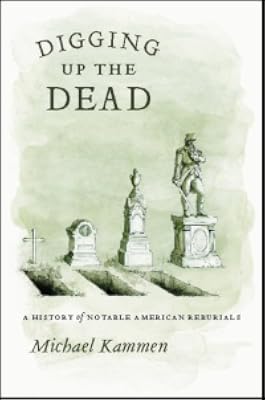
Digging Up the Dead: A History of Notable American Reburials
by Michael Kammen
On This Page
Description
With Digging Up the Dead, Pulitzer Prize-winning historian Michael Kammen reveals a treasure trove of fascinating, surprising, and occasionally gruesome stories of exhumation and reburial throughout American history. Taking us to the contested grave sites of such figures as Sitting Bull, John Paul Jones, Frank Lloyd Wright, Daniel Boone, Jefferson Davis, and even Abraham Lincoln, Kammen explores how complicated interactions of regional pride, shifting reputations, and evolving burial show more practices led to public and often emotional battles over the final resting places of famous figures. Grave-robbing, skull-fondling, cases of mistaken identity, and the financial lures of cemetery tourism all come into play as Kammen delves deeply into this little-known-yet surprisingly persistent-aspect of American history. Simultaneously insightful and interesting, masterly and macabre, Digging Up the Dead reminds us that the stories of American history don't always end when the key players pass on. Rather, the battle-over reputations, interpretations, and, last but far from least, possession of the remains themselves-is often just beginning. show lessTags
Recommendations
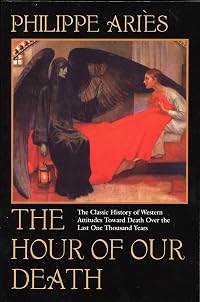

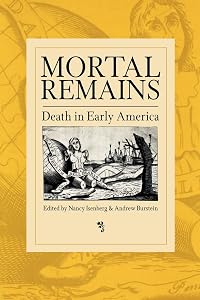
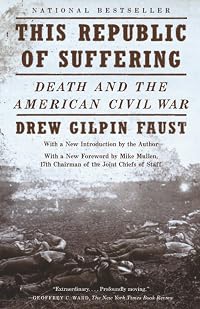
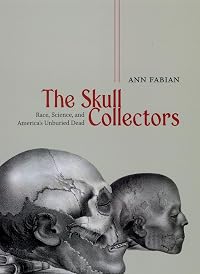









Member Recommendations

Member Reviews
Michael Kammen's latest book is Digging Up the Dead: A History of Notable American Reburials (University of Chicago Press, 2010). Sort of a macabre subject, but Kammen offers up a wide selection of reburial case studies loosely organized around several major themes, all centering around some form or another of pride: national, sectional, regional, ethnic/racial, reputational, &c. As Kammen writes in the introduction, "Although I will touch upon different cultures, different eras, even different countries, most of the episodes that I explore clearly involve the desire to enhance respect for someone deceased, the variability of reputations, and the complexity of restitution or repatriation. Intensely felt sentiments of pride emerge on show more multiple levels. And they reveal that the symbolic significance of possessing 'sacred relics,' even in secular settings, has incalculable potency - yet often provides pleasure as well" (p. 10).
Kammen's first chapter touches on the history of reburial through history (but particularly in America), and lays out some points of comparison between American and European trends (which he revisits in the final chapter, noting that American moments of reburial tend to be less ideological than many in Europe have been).
The second chapter highlights reburials of important Revolutionary figures, which (I was somewhat surprised to learn) continued well into the 20th century. Kammen profiles the various scenarios that resulted in reinterments of such folks as Joseph Warren (moved three times by 1856), Charles Thomson (plucked secretly from his grave in 1838 and moved to Philadelphia's Laurel Hill), Richard Montgomery (returned from Canada in 1818), John Trumbull, Nathaniel Greene, Button Gwinnett, &c.
Kammen's third chapter focuses on sectional and national pride, with its case studies beginning with James Monroe's removal from New York to Virginia in 1858 but mostly centered around Civil War reburials (including the mass repatriation of Confederate dead from northern cemeteries, the many efforts to get and keep Lincoln in the ground, and Jefferson Davis' post-mortem journey from New Orleans to Richmond). Next he tackles non-political/military leaders in a chapter called "Problematic Graves, Tourism, and the Wishes of Survivors," recounting the posthumous peregrinations of Daniel Boone, Edgar Allan Poe, Jesse James, D.H. Lawrence, Frank Lloyd Wright and F. Scott Fitzgerald (these last were just plain strange, I found).
Before his final, comparative chapter, Kammen also touches on religious reburials, including the long trend of burials of American Indians remains from the collections of museums. Case studies here include George Whitefield, Roger Williams, Marcus and Narcissa Whitman, Matthew Henson, and Sitting Bull.
Exploring the various reasons for these historical reburials made for very interesting reading, and Kammen's comparison of American trends with those in Europe (which he notes have been colored by an "ongoing ideological edge and intensity") was well drawn. I enjoyed the book, and recommend it to anyone with an interest in death customs (and/or the slightly bizarre).
http://philobiblos.blogspot.com/2010/08/book-review-digging-up-dead.html show less
Kammen's first chapter touches on the history of reburial through history (but particularly in America), and lays out some points of comparison between American and European trends (which he revisits in the final chapter, noting that American moments of reburial tend to be less ideological than many in Europe have been).
The second chapter highlights reburials of important Revolutionary figures, which (I was somewhat surprised to learn) continued well into the 20th century. Kammen profiles the various scenarios that resulted in reinterments of such folks as Joseph Warren (moved three times by 1856), Charles Thomson (plucked secretly from his grave in 1838 and moved to Philadelphia's Laurel Hill), Richard Montgomery (returned from Canada in 1818), John Trumbull, Nathaniel Greene, Button Gwinnett, &c.
Kammen's third chapter focuses on sectional and national pride, with its case studies beginning with James Monroe's removal from New York to Virginia in 1858 but mostly centered around Civil War reburials (including the mass repatriation of Confederate dead from northern cemeteries, the many efforts to get and keep Lincoln in the ground, and Jefferson Davis' post-mortem journey from New Orleans to Richmond). Next he tackles non-political/military leaders in a chapter called "Problematic Graves, Tourism, and the Wishes of Survivors," recounting the posthumous peregrinations of Daniel Boone, Edgar Allan Poe, Jesse James, D.H. Lawrence, Frank Lloyd Wright and F. Scott Fitzgerald (these last were just plain strange, I found).
Before his final, comparative chapter, Kammen also touches on religious reburials, including the long trend of burials of American Indians remains from the collections of museums. Case studies here include George Whitefield, Roger Williams, Marcus and Narcissa Whitman, Matthew Henson, and Sitting Bull.
Exploring the various reasons for these historical reburials made for very interesting reading, and Kammen's comparison of American trends with those in Europe (which he notes have been colored by an "ongoing ideological edge and intensity") was well drawn. I enjoyed the book, and recommend it to anyone with an interest in death customs (and/or the slightly bizarre).
http://philobiblos.blogspot.com/2010/08/book-review-digging-up-dead.html show less
An interesting array of trivia about famous people whose remains have been exhumed and reburied elsewhere. There is no great thesis underlying Digging up the Dead, just "here's someone famous, they died, were buried and then later, for a range of reasons, were dug up and planted somewhere else." That's not necessarily a bad thing, though.
Ratings
Members
- Recently Added By
Lists

Books Cited in Digging Up the Dead by Michael Kammen
183 works; 1 member
Author Information

32+ Works 1,593 Members
Michael Gedaliah Kammen was born in Rochester, New York on October 25, 1936. He received a bachelor's degree in history from George Washington University and master's and doctoral degrees in history from Harvard University. He was a professor of American history and culture at Cornell University since 1965. He wrote numerous books including A show more Season of Youth, A Machine That Would Go of Itself, Mystic Chords of Memory: The Transformation of Tradition in American Culture, Visual Shock, and Digging Up the Dead: A History of Notable American Reburials. He received the 1973 Pulitzer Prize for history for People of Paradox: An Inquiry Concerning the Origins of American Civilization. He died on November 29, 2013 at the age of 77. (Bowker Author Biography) show less
Common Knowledge
- People/Characters
- Frank Lloyd Wright; George Washington; Edgar Allan Poe; Imre Nagy; Benito Mussolini
- Important places
- USA; Hungary
- Important events
- Hungarian Revolution of 1956
- Epigraph
- In pride, in reas'ming pride, our error lies,
All quit their sphere, and rush into the skies!
Pride is still aiming at the blessed abodes,
Men would be Angels, Angels would be Gods.
Alexander Pope, An Essay on... (show all) Man, epistle 1. - Dedication
- For Carol
with enduring love because her dedications are the ones that have really mattered - Original language
- English
Classifications
- Genres
- Nonfiction, History, General Nonfiction, Politics and Government
- DDC/MDS
- 393.10973 — Society, government, & culture Customs, etiquette & folklore Death customs Earth burial
- LCC
- GT3203 .K365 — Geography, Anthropology and Recreation Manners and customs (General) Manners and customs (General) Customs relative to private life
- BISAC
Statistics
- Members
- 72
- Popularity
- 438,137
- Reviews
- 2
- Rating
- (2.88)
- Languages
- English
- Media
- Paper, Ebook
- ISBNs
- 4
- ASINs
- 1