How to Read the Air
by Dinaw Mengestu
On This Page
Description
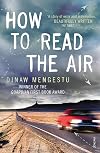
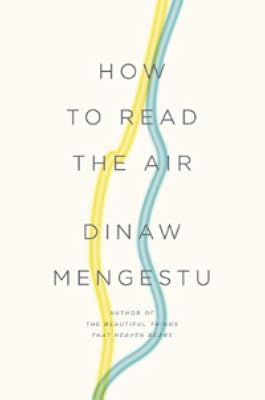
Leaving behind his marriage and job in New York, Jonas, the son of Ethiopian immigrants, sets out to retrace his mother and father's trip and weave together a family history that will take him from the war-torn Ethiopia of his parents' youth to his life in the America of today.Tags
Recommendations

































Member Recommendations
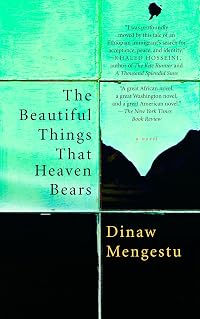
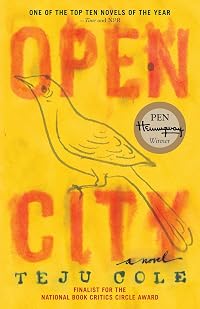
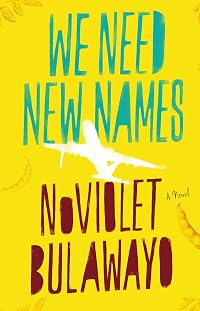
Limelite African and African American views on topics of race, marriage, work, education and family are contrasted from the pov of a Nigerian immigrant.
Member Reviews
Beautifully crafted story with rich language - almost poetic at times, I was highlighting every other page. The stories of two generations are told here - Mariam and Yosef Woldemariam are immigrants from Ethiopia - Yosef coming to America first through Sudan then Europe in the 1970s, Mariam coming three years later, hoping (but not) that they are still married. Their tenuous relationship will need to navigate new American customs and expectations in Peoria, IL and also survive the trauma they left behind. Much of this is recounted by their son, Jonas, living in roughly present-day NYC who is in a tenuous relationship of his own with his lawyer wife Angela. They met while working at an immigration intake center. Jonas with a degree in show more English lit from Columbia is great at embellishing the intake forms to capture the dire circumstances the immigrants and refugees fled; it also is a reflection of his ability to lie and re-create truth to suit his needs. This is a need for his childhood too - and it is one Angela shares, growing up poor with an incompetent single mother. So the theme becomes how much of what happened to all of them is true and what are the lasting scars that may be the truest part of their stories? One of the strains on Mariam and Yosef's marriage is subtle bids for control, mostly won by Yosef with physical dominance. This is reflected in a singular story used to illustrate their marriage - a road trip they begin from IL to TN when Mariam is pregnant with Jonas. One of the strains on Jonas and Angela's marriage is Jonas' underemployment and emotional distance, which also manifests as a need for control. Neither union has the resilience needed to survive, but there is much learned and understood in the process of disintegration, all of it captured in breathtaking prose: "...he [my father] felt the abrupt and dramatic shift in the air that precedes violent confrontation. Something vibrated, buzzed. If there was a way to narrate it, he would have described it as the tiniest particles that make up the air we breathe becoming suddenly charged and electrified with a palpable life all their own. The world around us is alive, he would have said, with our emotions and thoughts, and the space between any two people contains them all. He had learned early in his life that before any violent gesture there is a moment when the act is born, not as something that can be seen or felt, but by the change it precipitates in the air." I think this captures the violence he fled from, but unfortunately, sometimes a change in scenery does not change the individual; violence perpetuates itself. And yet there is a slim note of hope at the end. show less
“We accumulate memories and in doing so begin to make our first tentative steps backward in time, to say things such as ‘I remember when I was.’ And from there our lives grow into multiple dimensions until eventually we learn to regret and finally to imagine.” Dinaw Mengestu’s “How to Read the Air” explores the belief that memory is the story of what has been, might have been, or never was. If two people experience an event, whose memory of the time is real? Can the telling of a memory enlarge and change it’s very shape? Jonas, a teacher, is a memory teller. He tells the story of his own life with his wife, Angela, and that of his parents via his memory, with his interpretations and embroideries. He speaks of his show more childhood memories of his home life: “…it was easy for terrible things to happen to women when they were out of sight. They took hard hits, and then later slept in your bed where you could protect them.” He tells his students of his father’s flight from Ethiopia: “And while this part of the story wasn’t true to anything I, or anyone I knew had ever experienced, it had an air of serendipitous salvation that struck me as being so unlikely that one had to believe it had occurred that way.” He ruins his marriage to Angela with his embellished memories and outright lies. He is a great storyteller; and he is a superb liar. He is lost emotionally because he has lost his family; knowing them mostly through memory rather than contact. Mengestu employs descriptive prose that is powerful and believable; sometimes realistic and sometimes almost mystical as he explores the concept of memory. “We persist and linger longer than we think, leaving traces of ourselves wherever we go. If you take that away, then we all simply vanish.” This book is a wonderful read that keeps you contemplating it's themes for days. show less
 This review was written for LibraryThing Early Reviewers.
Jonas Woldemariam, the American born son of Ethiopian immigrants, has recently lost his teaching job in Manhattan and separated from his wife. He seeks to recreate his late parents' journey from Peoria, Illinois to Nashville, Tennessee, in an effort to learn about their lives and to understand his own confused and troubled past.
Jonas was born in the Midwest, not quite American nor fully African, and he is ostracized and treated as an exotic by his classmates and neighbors. His home is not a sanctuary, due to his father's violent outbursts towards him and his mother, and he copes by internalizing his thoughts and feelings, and making himself as invisible as possible to his father. He obtains a bachelor's degree in literature, moves to show more New York, and takes on a series of odd jobs. While working at a center that provides legal aid to recent immigrants he meets Angela, an African-American law student, and the two eventually marry.
Angela loves Jonas, and through her connections at work she is able to get him a job teaching English literature at a private Upper East Side school. On the surface it would seem as though Jonas would be content; however, his self isolation and inability to express or articulate his feelings and his frequent tendency to lie or spout half-truths frustrate Angela, who throws herself into her work and spends less time with her husband as a result.
After the couple separate, Jonas finds himself completely alone, as he has no friends or family. He has no clear sense of who he is or what he should do now that he is completely free. He realizes that he must go back to the past, to recreate his parents' journeys and lives as best he can, in order to determine what he should do with his life.
[How to Read the Air] has some roots in the author's past, as he did grow up in Peoria, but it is far from an autobiographical novel. On my initial reading I was somewhat lukewarm toward this book, despite its beautiful writing and richly portrayed characters, mainly because I could not identify or understand Jonas. However, after reading several recent interviews of Mengestu and thinking about the book over the past few days, I have come to appreciate it much more, as I find that this book, and its protagonist, have a lot to say about the life of an immigrant to America, along with anyone who finds himself caught between cultures or engaged in a struggle of self discovery. The book is filled with melancholy, yet it ends on a hopeful note, as Jonas is a sympathetic character despite his many flaws and shortcomings. show less
Jonas was born in the Midwest, not quite American nor fully African, and he is ostracized and treated as an exotic by his classmates and neighbors. His home is not a sanctuary, due to his father's violent outbursts towards him and his mother, and he copes by internalizing his thoughts and feelings, and making himself as invisible as possible to his father. He obtains a bachelor's degree in literature, moves to show more New York, and takes on a series of odd jobs. While working at a center that provides legal aid to recent immigrants he meets Angela, an African-American law student, and the two eventually marry.
Angela loves Jonas, and through her connections at work she is able to get him a job teaching English literature at a private Upper East Side school. On the surface it would seem as though Jonas would be content; however, his self isolation and inability to express or articulate his feelings and his frequent tendency to lie or spout half-truths frustrate Angela, who throws herself into her work and spends less time with her husband as a result.
After the couple separate, Jonas finds himself completely alone, as he has no friends or family. He has no clear sense of who he is or what he should do now that he is completely free. He realizes that he must go back to the past, to recreate his parents' journeys and lives as best he can, in order to determine what he should do with his life.
[How to Read the Air] has some roots in the author's past, as he did grow up in Peoria, but it is far from an autobiographical novel. On my initial reading I was somewhat lukewarm toward this book, despite its beautiful writing and richly portrayed characters, mainly because I could not identify or understand Jonas. However, after reading several recent interviews of Mengestu and thinking about the book over the past few days, I have come to appreciate it much more, as I find that this book, and its protagonist, have a lot to say about the life of an immigrant to America, along with anyone who finds himself caught between cultures or engaged in a struggle of self discovery. The book is filled with melancholy, yet it ends on a hopeful note, as Jonas is a sympathetic character despite his many flaws and shortcomings. show less
This review was written for LibraryThing Early Reviewers.I was torn- I would give Mengestu's writing style 5 stars but the story 3, so I averaged out at 4. The book was enjoyable to read because the writing flowed so poetically. Mengestu shares the stories of Jonas and his Ethiopian Immigrant parents, intertwining the stories to explore themes like identity and the relationship of the past to the present.
Like several other reviewers, I had trouble getting attached to the main character. Jonas struck me as a weak and passive. I found the end interesting, but a bit unfulfilling. All in all, I loved the writing but I had to push myself to finish because I didn't grow attached to the story.
Like several other reviewers, I had trouble getting attached to the main character. Jonas struck me as a weak and passive. I found the end interesting, but a bit unfulfilling. All in all, I loved the writing but I had to push myself to finish because I didn't grow attached to the story.
This review was written for LibraryThing Early Reviewers.Ever had a main character that just needed a good shaking, or perhaps a slap upside the head? Jonas certainly qualifies in my estimation. The only son of Ethopian refugees, he is raised within a highly abusive marriage by individuals who are damaged by their refugee experience. Jonas manages to screw up his life and his marriage by never fully committing to ANYTHING. This is the antithesis of the immigrant boot-strap story we've come to expect. I guess its good to be reminded that not everything is sweetness and light, but I found Jonas annoying. I was hoping he'd get his stuff in a pile, but he never did and I was left disappoined by the lack of a happy ending.
Mengestu's second novel explores themes of the immigrant experience in America. The protagonist, Jonas, is the son of Ethiopian immigrants. Out of contact with his parents and disconnected from his roots, Jonas struggles to construct an identity for himself, often inventing stories about himself and his family, to the point that fact and fiction become entangled.
There are several separate stories here: Jonas' father's exodus to America; Jonas' parents' road trip through the Midwest; Jonas' present-day retracing of that trip; and the recently past storyline of Jonas' rocky relationship with his wife, Angela. There is the potential for this to be somewhat disorienting to the reader but the author handles the multiple threads well. For the show more reader, it becomes difficult to tell what's real and what is not in the narrative, thereby not just telling but showing the reader about the disorienting experience of immigration. The author captures the psychological impact of being an immigrant--the shaky identity, the past with gaping holes, the difficulty connecting in a solid way to people around you or even to your own future.
This was a very interesting read that was hard to put down, and a very worthy addition to any collection of literary fiction that focuses on the immigrant experience. show less
There are several separate stories here: Jonas' father's exodus to America; Jonas' parents' road trip through the Midwest; Jonas' present-day retracing of that trip; and the recently past storyline of Jonas' rocky relationship with his wife, Angela. There is the potential for this to be somewhat disorienting to the reader but the author handles the multiple threads well. For the show more reader, it becomes difficult to tell what's real and what is not in the narrative, thereby not just telling but showing the reader about the disorienting experience of immigration. The author captures the psychological impact of being an immigrant--the shaky identity, the past with gaping holes, the difficulty connecting in a solid way to people around you or even to your own future.
This was a very interesting read that was hard to put down, and a very worthy addition to any collection of literary fiction that focuses on the immigrant experience. show less
To me this was a beautifully written, multi-layered story of survival and self-discovery and one I will go back to to re-read all the passages I've marked.
When we first meet Jonas Woldemariam, he’s at the beginning of retracing a trip his parents took across the Midwest 30 years ago, just before he was born. During this journey, he recalls a number of unfortunate recent events in his life--his father’s death, his failing marriage and the loss of his job, which is related to the story of his father’s tortuous immigration to the United States from Ethiopia.
Pretty quickly you realize that Jonas is good at making things up and so you’re not really sure how much of what he’s telling you is true. The narrative jumps around a lot show more chronologically and that can also be disorienting. But eventually I realized that the main journey is the one Jonas is making emotionally.
His father was an angry man who lashed out verbally and physically and Jonas perfected the art of “blending into the background” as a child so as not to be noticed by his father. “I had always suspected that at some early point in my life, while still living with my parents and their daily battles, I had gone numb as a tactical strategy.” Unfortunately, his childhood coping skills have become a major problem for him as an adult.
Mengestu’s writing has a melancholy tone and the story was occasionally almost too painful to continue reading. But I loved the ending and was glad I finished Jonas’ journey. Early on Jonas is thinking about his father and says: “He had realized at a young age . . . that the world was a cruel and unfair place, and yet despite that, he . . . couldn’t stand to see some days end.” You’re never sure whether his father ever actually said this but by the end you know that Jonas could have and that he’s finally arrived at a better place.
Highly recommended--4 ½ stars. show less
When we first meet Jonas Woldemariam, he’s at the beginning of retracing a trip his parents took across the Midwest 30 years ago, just before he was born. During this journey, he recalls a number of unfortunate recent events in his life--his father’s death, his failing marriage and the loss of his job, which is related to the story of his father’s tortuous immigration to the United States from Ethiopia.
Pretty quickly you realize that Jonas is good at making things up and so you’re not really sure how much of what he’s telling you is true. The narrative jumps around a lot show more chronologically and that can also be disorienting. But eventually I realized that the main journey is the one Jonas is making emotionally.
His father was an angry man who lashed out verbally and physically and Jonas perfected the art of “blending into the background” as a child so as not to be noticed by his father. “I had always suspected that at some early point in my life, while still living with my parents and their daily battles, I had gone numb as a tactical strategy.” Unfortunately, his childhood coping skills have become a major problem for him as an adult.
Mengestu’s writing has a melancholy tone and the story was occasionally almost too painful to continue reading. But I loved the ending and was glad I finished Jonas’ journey. Early on Jonas is thinking about his father and says: “He had realized at a young age . . . that the world was a cruel and unfair place, and yet despite that, he . . . couldn’t stand to see some days end.” You’re never sure whether his father ever actually said this but by the end you know that Jonas could have and that he’s finally arrived at a better place.
Highly recommended--4 ½ stars. show less
This review was written for LibraryThing Early Reviewers.Members
- Recently Added By
Published Reviews
ThingScore 75
"How to Read the Air," the melancholy second novel from critically acclaimed writer Dinaw Mengestu, follows the constant evolution of identity: Its discovery, its unraveling, its reinvention. His characters sag beneath the weight of alienation, of continual adaptation so far from all they know. Through Jonas and his wife, Angela, Mengestu reflects the emptiness inherited by the next show more generation.
Jonas is equal parts liar and elegant storyteller, a survival skill acquired from his mother which he relies upon to cope with his stagnant marriage and career. The death of his father spurs him to retrace the geography and events that brought his parents together and ultimately drove them apart. Undaunted by missing facts within the narrative, he fills in the blanks with imagined scenarios, finding comfort in this freedom to add context and motive, to lend his battered mother strength and choices, even if it is only make-believe. show less
Jonas is equal parts liar and elegant storyteller, a survival skill acquired from his mother which he relies upon to cope with his stagnant marriage and career. The death of his father spurs him to retrace the geography and events that brought his parents together and ultimately drove them apart. Undaunted by missing facts within the narrative, he fills in the blanks with imagined scenarios, finding comfort in this freedom to add context and motive, to lend his battered mother strength and choices, even if it is only make-believe. show less
added by kidzdoc
Admittedly, “How to Read the Air” feels weaker than “The Beautiful Things That Heaven Bears.” Mengestu’s first novel was a pithy portrayal of immensely different worlds colliding. His second is like a baggy reprise. Jonas’s interiority both illuminates and fatigues; variations on his emotional injuries are rendered too often, becoming clichés of Mengestu’s careful initial show more depictions. At times Mengestu doesn’t seem to trust his reader to get his point, while the momentum of poetic prose, of a well-turned phrase or astute observation, often continues two clicks too long, detracting from the narrative’s velocity. show less
added by kidzdoc
Lists

Top Five Books of 2013
1,562 works; 715 members

The Immigrant's Stories
74 works; 19 members

Books recommended by Barack Obama
295 works; 28 members

This is the Canon: Decolonize Your Bookshelf in 50 Books
51 works; 5 members

Barack Obama's Summer Reading List 2019
10 works; 2 members
Author Information

6+ Works 2,385 Members
Dinaw Mengestu was born in Addis Ababa, Ethiopia in 1978. In 1980, he, his mother, and his sister immigrated to the United States to join his father, who fled Ethiopia during the Red Terror. He graduated from Georgetown University and Columbia University's MFA program in fiction. He is the author of The Beautiful Things That Heaven Bears and How show more to Read the Air. He has also written for several publications including Rolling Stone and Harper's. (Bowker Author Biography) show less
Some Editions
Awards and Honors
Awards
Common Knowledge
- Original title
- How to Read the Air
- Original publication date
- 2010
- Important places
- Ethiopia
- Epigraph*
- Weet je het nóg niet? Werp de leegte uit je armen
de ruimte in die wij ademen - misschien dat de vogels
de verruimde lucht voelen met inniger vlucht.
- Rainer Maria Rilke, De elegieën van Duino - Dedication*
- Voor Anne-Emanuelle
pour toutes les belles choses - First words*
- Het was zevenhonderdvierenzeventig kilometer van het huis van mijn ouders in Peoria, Illinois, naar Nashville, Tennessee, een afstand die in een zeven jaar oude rode Monte Carlo die ongeveer negentig kilometer per uur reed in... (show all) acht tot twaalf uur kon worden afgelegd, afhankelijk van bepaalde variabelen, zoals het aantal borden langs de weg dat uitstapjes aanbood naar historische bezienswaardigheden en hoe vaak Mariam, mijn moeder, naar het toilet zou moeten.
- Last words*
- (Click to show. Warning: May contain spoilers.)Als Angela, mijn moeder, of zelfs mijn vader hier zou zijn zou ik ze dicht tegen me aan drukken, zodat ik ze duidelijk kon maken dat ik, ondanks wat we hebben doorstaan, en ondanks onze uiterste inspanningen aan elkaar te ontsnappen, er absoluut zeker van ben dat als er één ding is dat waar moet zijn, dan is het dit.
*Some information comes from Common Knowledge in other languages. Click "Edit" for more information.
Classifications
Statistics
- Members
- 532
- Popularity
- 56,241
- Reviews
- 44
- Rating
- (3.50)
- Languages
- 8 — Danish, Dutch, English, French, German, Italian, Spanish, Swedish
- Media
- Paper, Audiobook, Ebook
- ISBNs
- 21
- ASINs
- 6