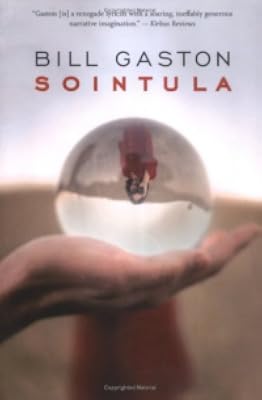
Sointula
by Bill Gaston
On This Page
Description
At the heart of Sointula is Evelyn, a middle-aged woman who abandons her privileged existence. She throws away the trappings of her civilized life-her antidepressants and her air ticket home, her wallet and most of the clothes off her back-steals a kayak and embarks on a quest that takes her deep into the wilderness. The goal: to find Tom-her strange, damaged son-in the remote village of Sointula. Equal parts light and dark, compassion and irony, this is Gaston's most mature work."Gaston is show more a writer of great empathy, capable, it seems, of getting beneath the skin of anybody ... His language is pure, his concerns humane." -2002 Giller Prize Jury"Gaston is one of this country's outstanding literary treasures." -Globe and Mail show lessTags
Recommendations




















Member Reviews
The real Sointula is a failed Utopian community off the coast of northern Vancouver Island. It was founded in the early 20th century by a group of Finnish settlers, and its name means “harmony.” The Sointula of the novel, I suppose, has more of a symbolic meaning that anything else. In some ways, it is about a search for harmony, or inner peace. Or maybe not. Either way, not much of the book is actually set there, and it certainly isn’t a piece of historical fiction retelling the village’s story.
Instead it is the story of Tom Poole, a 26 year old with a dodgy past,who lives on a beach near Sointula working as a whale researcher. He may or may not be a sociopath, autistic, or a drug dealer. And it’s the story of Evelyn, his show more mother, who abandons her comfortable life in Ontario to be at the deathbed of Tom’s father, Claude. Her story begins 460 km south, at the other end of Vancouver Island, where she suddenly decides to drop her depression medication, live like a homeless person, and steal a kayak. And finally, it’s the story of British-American ex-high school biology teacher Peter, who wants to travel the Island and write a book about the experience (despite his frequent gall bladder attacks). He soon meets up with Evelyn and they decide to kayak to Sointula to find Tom, a journey for which they are in no way prepared.
What I didn’t like: None of the characters are particularly likeable, although they are sympathetic. Just when I was warming to one of them, they’d do something dumb, or selfish, or morally questionable. They were all a bit too quick to act like hobos. I found the frequent discussion of their dirty, smelly, starving bodies a bit tiresome---after all, like George Orwell in Down and Out in Paris and London, they could make it all go away in a phone call. I often felt trapped in the kayak , tent, or isolated beach right along with them, but then I think this feeling of being trapped is one of the author’s points. However, at times I found it made me feel a bit too claustrophobic.
What I liked: A lot. The writing is excellent and the book is well structured. The characters and situations were different, and right to the end there was nothing predictable or too coincidental. I appreciate that there is a map, even though I know the Island quite well and would have had a good idea where they were without it, I found myself flipping to it frequently. Gaston is one of those writers who weaves in bits of history, biology, and geography, and I love to learn while I read. But my favourite thing about the book is the author’s excellent sense of place—I personally love Vancouver Island and the Gulf Islands, and I can tell he does too.
Recommended for: Readers who like unusual literary fiction, anyone who is interested in Vancouver Island or the great outdoors of the Pacific Northwest. Not recommended for people who are uncomfortable when reading about bodily functions. show less
Instead it is the story of Tom Poole, a 26 year old with a dodgy past,who lives on a beach near Sointula working as a whale researcher. He may or may not be a sociopath, autistic, or a drug dealer. And it’s the story of Evelyn, his show more mother, who abandons her comfortable life in Ontario to be at the deathbed of Tom’s father, Claude. Her story begins 460 km south, at the other end of Vancouver Island, where she suddenly decides to drop her depression medication, live like a homeless person, and steal a kayak. And finally, it’s the story of British-American ex-high school biology teacher Peter, who wants to travel the Island and write a book about the experience (despite his frequent gall bladder attacks). He soon meets up with Evelyn and they decide to kayak to Sointula to find Tom, a journey for which they are in no way prepared.
What I didn’t like: None of the characters are particularly likeable, although they are sympathetic. Just when I was warming to one of them, they’d do something dumb, or selfish, or morally questionable. They were all a bit too quick to act like hobos. I found the frequent discussion of their dirty, smelly, starving bodies a bit tiresome---after all, like George Orwell in Down and Out in Paris and London, they could make it all go away in a phone call. I often felt trapped in the kayak , tent, or isolated beach right along with them, but then I think this feeling of being trapped is one of the author’s points. However, at times I found it made me feel a bit too claustrophobic.
What I liked: A lot. The writing is excellent and the book is well structured. The characters and situations were different, and right to the end there was nothing predictable or too coincidental. I appreciate that there is a map, even though I know the Island quite well and would have had a good idea where they were without it, I found myself flipping to it frequently. Gaston is one of those writers who weaves in bits of history, biology, and geography, and I love to learn while I read. But my favourite thing about the book is the author’s excellent sense of place—I personally love Vancouver Island and the Gulf Islands, and I can tell he does too.
Recommended for: Readers who like unusual literary fiction, anyone who is interested in Vancouver Island or the great outdoors of the Pacific Northwest. Not recommended for people who are uncomfortable when reading about bodily functions. show less
“Fog disgorges a yacht, which overtakes and passes their kayak. A monstrous kitchen applicance, too-white fibreglass and chrome. In a fog-held world, nature quietly pure, here comes a fat plastic condo. An outsize American flag hangs off its wide-ass end, which rumbles and farts and bubbles.” (P 175)Aaaahhh, what a pleasure….
“Fog disgorges a yacht, which overtakes and passes their kayak. A monstrous kitchen applicance, too-white fibreglass and chrome. In a fog-held world, nature quietly pure, here comes a fat plastic condo. An outsize American flag hangs off its wide-ass end, which rumbles and farts and bubbles.” (P 175)
Aaaahhh, what a pleasure….
Aaaahhh, what a pleasure….
Quite a good despite the smut. The difference between Modern fiction and Classic fiction being you get to follow people into the bathroom and bedroom, not an improvement.
I don't know that I would want to spend time with any of the characters but I was cheering for each of them to find some kind of peace. Full review: http://www.canadianauthors.net/g/gaston_bill/sointula.php
Ratings
Members
- Recently Added By
Published Reviews
ThingScore 83
In addition to a riveting plot and characters that intrigue and often anger, the language urges you to languish even as you speed along to that unimaginable ending, that inevitable final paragraph that seems so right in retrospect.
added by Nickelini
Gaston is a hugely skilled storyteller, but describing the technical tools he uses here--Gore as historical commentator, thematic balance of past/present, wild/tamed, et cetera--would feel like explaining a magic trick, and equally disloyal to his art.
added by Nickelini
Thankfully, Gaston really gets Vancouver Island. He gets it more than any other living Canadian writer, and his love of the place seeps into the pages of Sointula. Here’s a place where the evening glow from a pulp mill can be one of the most beautiful sights. From the prissiness of Victoria’s Empress Hotel to the rough, closed-in darkness of Sointula, the length of the island provides its show more own dramatic arc. Gaston utilizes the arc’s potential: people with the best intentions in Victoria may have lost them by the time they reach Nanaimo, and things can get really weird and wild by the time they hit Sointula. show less
added by Nickelini
Lists

Canada
42 works; 3 members
Author Information
21+ Works 354 Members
Awards and Honors
Awards
Common Knowledge
- Original publication date
- 2004
- Important places
- Vancouver Island, British Columbia, Canada; Sointula, British Columbia, Canada; British Columbia, Canada; Victoria, British Columbia, Canada; Gulf Islands, British Columbia, Canada
Classifications
Statistics
- Members
- 86
- Popularity
- 372,938
- Reviews
- 5
- Rating
- (3.88)
- Languages
- English, French
- Media
- Paper, Ebook
- ISBNs
- 7
- ASINs
- 1