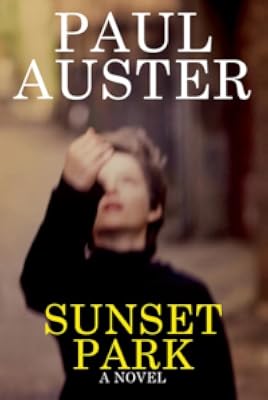
Sunset Park
by Paul Auster
On This Page
Description
Luminous, passionate, expansive, an emotional tour de force Sunset Park follows the hopes and fears of a cast of unforgettable characters brought together by the mysterious Miles Heller during the dark months of the 2008 economic collapse. An enigmatic young man employed as a trash-out worker in southern Florida obsessively photographing thousands of abandoned objects left behind by the evicted families. A group of young people squatting in an apartment in Sunset Park, Brooklyn. The Hospital show more for Broken Things, which specializes in repairing the artifacts of a vanished world. William Wyler's 1946 classic The Best Years of Our Lives. A celebrated actress preparing to return to Broadway. An independent publisher desperately trying to save his business and his marriage. These are just some of the elements Auster magically weaves together in this immensely moving novel about contemporary America and its ghosts. Sunset Park is a surprising departure that confirms Paul Auster as one of our greatest living writers. show lessTags
Recommendations

























Member Reviews
This book really drew me in – and I can’t quite put my finger on why…. I didn’t find this to be a larger than life book – it’s about average people with pretty average lives – dealing with average problems, joys and grief.
The main character, Miles, provided the anchor to the story. His voice was the strongest for me and flowed through the way all of the other characters were described. His view of the world and of his world, is not one that I share but it is one that was compelling to me.
“He finds it soothing to talk about these things with Eduardo Martinez in the late afternoon light of this Thanksgiving Thursday, and even if the subject matter could be considered somewhat grim – stories about failure, disappointment, show more and death – baseball is a universe as large as life itself, and therefore all things in life, whether good or bad, whether tragic or comic, fall within its domain. Today they are examining instances of despair and blighted hope, but the next time they meet (assuming they meet again), they could fill an afternoon with scores of funny anecdotes that would make their stomachs hurt from laughing so hard.”
Miles is in a cycle of running from parts of his life, and eventually finds himself living in an abandoned house with other people, most of whom seem to be in a sort of “paused” part of their life. They are waiting to finish something or start something or waiting for someone else. This creates a very interesting atmosphere in the house…a certain feeling of hesitation that colors all that I read about the characters. Or maybe it’s more of a feeling of reflection – comparison of the current state of the world to the past…their own pasts or the collective past.
Alice, who moves into the house while she tried to finish her dissertation, finds herself comparing her generation to the Greatest Generation as she immerses herself in the time period following World War II.
“…when she thinks of that generation of silent men, the boys who lived through the Depression and grew up to become soldiers or not-soldiers in the war, she doesn’t blame them for refusing to talk, for not wanting to go back into the past, but how curious it is, she thinks, how sublimely incoherent that her generation, which doesn’t have much of anything to talk about yet, has produced men who never stop talking…”
“…whereas with the silent men, the old men, the ones who are nearly gone now, she would give anything to hear what they have to say.”
The one jarring note (other than the odd coincidence of all of the main characters watching the same 64-years old movie within a short period of time) was that when the events in the house finally, slowly, started to move forward, the story took a crashing, disastrous, game changing turn. One that could be foreseen, and one that made sense in the context of the story, but one that had me shaking my head as I turned the last page. Such a change in mood and so many questions being asked before bringing everything to a halt was unexpected to say the least.
I feel a part of me is still waiting for the answers, waiting for the story to begin again. show less
The main character, Miles, provided the anchor to the story. His voice was the strongest for me and flowed through the way all of the other characters were described. His view of the world and of his world, is not one that I share but it is one that was compelling to me.
“He finds it soothing to talk about these things with Eduardo Martinez in the late afternoon light of this Thanksgiving Thursday, and even if the subject matter could be considered somewhat grim – stories about failure, disappointment, show more and death – baseball is a universe as large as life itself, and therefore all things in life, whether good or bad, whether tragic or comic, fall within its domain. Today they are examining instances of despair and blighted hope, but the next time they meet (assuming they meet again), they could fill an afternoon with scores of funny anecdotes that would make their stomachs hurt from laughing so hard.”
Miles is in a cycle of running from parts of his life, and eventually finds himself living in an abandoned house with other people, most of whom seem to be in a sort of “paused” part of their life. They are waiting to finish something or start something or waiting for someone else. This creates a very interesting atmosphere in the house…a certain feeling of hesitation that colors all that I read about the characters. Or maybe it’s more of a feeling of reflection – comparison of the current state of the world to the past…their own pasts or the collective past.
Alice, who moves into the house while she tried to finish her dissertation, finds herself comparing her generation to the Greatest Generation as she immerses herself in the time period following World War II.
“…when she thinks of that generation of silent men, the boys who lived through the Depression and grew up to become soldiers or not-soldiers in the war, she doesn’t blame them for refusing to talk, for not wanting to go back into the past, but how curious it is, she thinks, how sublimely incoherent that her generation, which doesn’t have much of anything to talk about yet, has produced men who never stop talking…”
“…whereas with the silent men, the old men, the ones who are nearly gone now, she would give anything to hear what they have to say.”
The one jarring note (other than the odd coincidence of all of the main characters watching the same 64-years old movie within a short period of time) was that when the events in the house finally, slowly, started to move forward, the story took a crashing, disastrous, game changing turn. One that could be foreseen, and one that made sense in the context of the story, but one that had me shaking my head as I turned the last page. Such a change in mood and so many questions being asked before bringing everything to a halt was unexpected to say the least.
I feel a part of me is still waiting for the answers, waiting for the story to begin again. show less
The 2008 recession touched the US in a way that it did not the rest of the world, including Canada despite being linked so closely. It always surprises me just how deeply felt it was. Auster recounts an already fragmented family to illustrate how the crash destroyed so many families, from housed to homeless and wandering. Such is Miles, uprooted, living in a squat, finding it difficult to reconnect with his family, realizing the weight of his responsibilities. It's a hopeless novel where the future holds no solace, a decisive break from the American dream of yore. Poignant, engrossing and subtle, this novel carries the themes of loss, love and family brilliantly.
The first thing that struck me about this book is how concerned it is with the time it was written and set. The recession is always in the background; the central character's job is clearing abandoned belongings out of repossessed homes, later several characters live squatting in an abandoned house. A peripheral character is married to a soldier who is in Iraq, at one point a character idly imagines President Bush and Dick Cheney lined up and shot. These are all background details however: Sunset Park is not overtly political, it is more concerned with its characters.
Auster's characters are very unhappy. They are by degrees lonely, depressed, bored, wounded, suicidal, delusional, stuck, drifting, trapped in the past, or worried about show more the future. For all that though, they are lovable and believable, and though Auster relates their stories in his bleak, somewhat detached voice, he does love his created people, and their struggles are never simply depressing. They are too interesting and well drawn for that.
This book is about how much people need each another. It shows what happens when they are unable to make connections, the consequences when these connections are actively severed and avoided, and what happens when communication is sought and allowed to resume.
Throughout the book is the insistent reminder that time is not endless, that life is grinding the characters down to their inevitable end: references to Samuel Beckett, funerals, the abandoned house in "Sunset" Park across from the omnipresent cemetery, and the litany of baseball players, some who had lucky lives and some unlucky, whose deaths mark the passage of time throughout the story.
Auster plays just a bit with narrative convention, in fun and interesting ways. The story is told in present tense with no quotation marks, third person from multiple limited points of view that rotate throughout the story. One section is diary entries in second person, and one enticingly takes on the form of a play, adding stage directions halfway through, and eliminating everything else but dialogue. It may only be because one of the characters is an actor, but it also highlights the sad artifice and distance in the conversation.
This is something of a sad novel, though not depressing or manipulative. The inner lives of the characters are fascinating and real, and orbit each other and touch in small and significant ways. I read it in two sittings, and it probably would have been one if I had started earlier in the day. show less
Auster's characters are very unhappy. They are by degrees lonely, depressed, bored, wounded, suicidal, delusional, stuck, drifting, trapped in the past, or worried about show more the future. For all that though, they are lovable and believable, and though Auster relates their stories in his bleak, somewhat detached voice, he does love his created people, and their struggles are never simply depressing. They are too interesting and well drawn for that.
This book is about how much people need each another. It shows what happens when they are unable to make connections, the consequences when these connections are actively severed and avoided, and what happens when communication is sought and allowed to resume.
Throughout the book is the insistent reminder that time is not endless, that life is grinding the characters down to their inevitable end: references to Samuel Beckett, funerals, the abandoned house in "Sunset" Park across from the omnipresent cemetery, and the litany of baseball players, some who had lucky lives and some unlucky, whose deaths mark the passage of time throughout the story.
Auster plays just a bit with narrative convention, in fun and interesting ways. The story is told in present tense with no quotation marks, third person from multiple limited points of view that rotate throughout the story. One section is diary entries in second person, and one enticingly takes on the form of a play, adding stage directions halfway through, and eliminating everything else but dialogue. It may only be because one of the characters is an actor, but it also highlights the sad artifice and distance in the conversation.
This is something of a sad novel, though not depressing or manipulative. The inner lives of the characters are fascinating and real, and orbit each other and touch in small and significant ways. I read it in two sittings, and it probably would have been one if I had started earlier in the day. show less
 This review was written for LibraryThing Early Reviewers.
Questo romanzo mi è piaciuto tantissimo.
Mi è piaciuta la forma, il modo di raccontare come un lungo flusso di coscienze. Mi è piaciuta la caratterizzazione dei personaggi, soggetti ben distinti l'uno dall'altro, ognuno con il suo carattere, il suo temperamento, le sue frustrazioni, il suo passato e presente. Mi è piaciuto il modo in cui questi personaggi interagiscono, mi sono piaciuti i dialoghi. Pochi, i dialoghi, perché tutto il resto è raccontato magistralmente; e anche se i dialoghi non ci sono, te li immagini con facilità. Mi è piaciuto il modo di descrivere, per ognuno, il proprio disagio interiore, che origina nel passato ed evolve fino al presente. E mi è piaciuto il finale, che non è "monco", come alcuni hanno show more scritto, ma è l'unico finale che rende onore a questo romanzo meraviglioso: ancora aperto all'incerto, perché il futuro non è mai scritto, ma dipende spesso, come il romanzo ci insegna, dalle scelte che facciamo momento per momento. Meraviglioso, davvero. show less
Mi è piaciuta la forma, il modo di raccontare come un lungo flusso di coscienze. Mi è piaciuta la caratterizzazione dei personaggi, soggetti ben distinti l'uno dall'altro, ognuno con il suo carattere, il suo temperamento, le sue frustrazioni, il suo passato e presente. Mi è piaciuto il modo in cui questi personaggi interagiscono, mi sono piaciuti i dialoghi. Pochi, i dialoghi, perché tutto il resto è raccontato magistralmente; e anche se i dialoghi non ci sono, te li immagini con facilità. Mi è piaciuto il modo di descrivere, per ognuno, il proprio disagio interiore, che origina nel passato ed evolve fino al presente. E mi è piaciuto il finale, che non è "monco", come alcuni hanno show more scritto, ma è l'unico finale che rende onore a questo romanzo meraviglioso: ancora aperto all'incerto, perché il futuro non è mai scritto, ma dipende spesso, come il romanzo ci insegna, dalle scelte che facciamo momento per momento. Meraviglioso, davvero. show less
New Yorker book critic James Wood wrote an article about author Paul Auster last year that masqueraded as a synopsis of a new novel before revealing itself as a parody using the tropes that Auster is known for. Intellectual male protagonist with a dark sense of loss? Check. Violent accident? Check. Doppelgangers akimbo? Check. Check.
The back-and-forth argument as to whether Auster is merely doing what postmodernist writers do—i.e., borrow liberally from popular culture as to point out the foibles of modern life and paucity of new ideas in the face of existential crisis—or has succumbed to the greasy but comforting business of slinging familiar fare like a grizzled line cook on the graveyard shift had all but killed my desire to read show more another Auster novel ever since. That was a shame.
I discovered Auster a few years ago and had jumped into the deep end quite quickly, devouring In the Country of Last Things, Leviathan, The Book of Illusions, and Oracle Night in short order. Maybe Wood was right, and Auster had become somewhat of a one-trick pony, but if it’s a good trick, what the hell? The weird thing? Wood’s parody actually sounded pretty good. Which brings us to Sunset Park.
Auster’s latest starts out like a parody of the parody, sort of a literary “fuck you” to the critics. We find twenty-eight-year-old Miles Heller mucking out foreclosures in Florida in his seventh year of self-imposed exile from his family after dropping out of college. Heller’s dark sense of loss stems from accidentally pushing his stepbrother in front of a speeding car while arguing on the side of a winding road in the Berkshires.
Heller is pretty screwed up, and although characters male and female seem to be powerless before his supposed charms, he’s not a sympathetic enough protagonist to hang a novel upon. He may have actually offed his brother on purpose, and he is carrying on with—that is to say, sodomizing—a seventeen-year-old Cuban girl.
It’s easy to see how Heller could have been emotionally stunted by his brother’s death, and the girl, Pilar Sanchez, is about the same age as he was when the break occurred. As hard as Auster tries to give their relationship credibility, gifting Sanchez with above-average intelligence and insatiable curiosity, it is still a little unseemly when she refers to her various orifices as the off-limits mommy hole, and the A-OK funny hole.
Given that this is an Auster book, this strange relationship is mirrored in the backstory of one of Heller’s roommates once he’s forced to retreat back to New York by a greedy, and possibly jealous, older Sanchez girl upon threat of incarceration for statutory rape. An old friend of Heller’s, the bearish Bing Nathan, and a group of like-minded twenty-somethings have opened up a squat in the seedy Sunset Park district just in time for Heller’s exile.
Ellen Brice, a woman who “projected an aura of anxiety and defeat,” had been impregnated at twenty by a sixteen-year-old who she had supposed to be watching. Brice, while physically and emotionally understated, is perhaps the key to Sunset Park. Auster’s novel is ultimately about depression, both national and personal, and the poor judgment that can arise from being in that state of mind. He has placed his box of broken characters smack down in the financial meltdown of 2008; the national malaise mirrors the feeling of Heller’s peers who have burned through their initial promise, and are now adrift.
The third squatmate, Alice Bergstrom, is neck deep in her dissertation for Columbia. She has become obsessed by William Wyler’s 1946 film The Best Years of Our Lives; a film that examines the difficulties soldiers returning from WWII had relating to domestic life once again. Heller and company don’t have the monolithic bummer of a world at war, but they do have the collapse of a system that was to provide each and every one of them a chance at the American Dream. It is interesting that among his peers, only the vindictive Sanchez sister, a recent immigrant, has the balls to grab ahold and squeeze what she can out of what little she is presented with.
Within all this, Auster weaves a thematic thread involving baseball pitchers; especially those who showed great promise then flamed out, often tragically. For my money, if you’re a New York author and you’re going to use baseball as a metaphor to describe the human condition, then you’re going to have to go up against Don DeLillo’s masterful set piece that opens Underworld. That bit transcended any interest one might, or might not have, in the detailed ephemera of the national sport. In the shadow of DeLillo’s big game, Auster’s latest pitch falls low and outside. Or maybe that’s the point. show less
The back-and-forth argument as to whether Auster is merely doing what postmodernist writers do—i.e., borrow liberally from popular culture as to point out the foibles of modern life and paucity of new ideas in the face of existential crisis—or has succumbed to the greasy but comforting business of slinging familiar fare like a grizzled line cook on the graveyard shift had all but killed my desire to read show more another Auster novel ever since. That was a shame.
I discovered Auster a few years ago and had jumped into the deep end quite quickly, devouring In the Country of Last Things, Leviathan, The Book of Illusions, and Oracle Night in short order. Maybe Wood was right, and Auster had become somewhat of a one-trick pony, but if it’s a good trick, what the hell? The weird thing? Wood’s parody actually sounded pretty good. Which brings us to Sunset Park.
Auster’s latest starts out like a parody of the parody, sort of a literary “fuck you” to the critics. We find twenty-eight-year-old Miles Heller mucking out foreclosures in Florida in his seventh year of self-imposed exile from his family after dropping out of college. Heller’s dark sense of loss stems from accidentally pushing his stepbrother in front of a speeding car while arguing on the side of a winding road in the Berkshires.
Heller is pretty screwed up, and although characters male and female seem to be powerless before his supposed charms, he’s not a sympathetic enough protagonist to hang a novel upon. He may have actually offed his brother on purpose, and he is carrying on with—that is to say, sodomizing—a seventeen-year-old Cuban girl.
It’s easy to see how Heller could have been emotionally stunted by his brother’s death, and the girl, Pilar Sanchez, is about the same age as he was when the break occurred. As hard as Auster tries to give their relationship credibility, gifting Sanchez with above-average intelligence and insatiable curiosity, it is still a little unseemly when she refers to her various orifices as the off-limits mommy hole, and the A-OK funny hole.
Given that this is an Auster book, this strange relationship is mirrored in the backstory of one of Heller’s roommates once he’s forced to retreat back to New York by a greedy, and possibly jealous, older Sanchez girl upon threat of incarceration for statutory rape. An old friend of Heller’s, the bearish Bing Nathan, and a group of like-minded twenty-somethings have opened up a squat in the seedy Sunset Park district just in time for Heller’s exile.
Ellen Brice, a woman who “projected an aura of anxiety and defeat,” had been impregnated at twenty by a sixteen-year-old who she had supposed to be watching. Brice, while physically and emotionally understated, is perhaps the key to Sunset Park. Auster’s novel is ultimately about depression, both national and personal, and the poor judgment that can arise from being in that state of mind. He has placed his box of broken characters smack down in the financial meltdown of 2008; the national malaise mirrors the feeling of Heller’s peers who have burned through their initial promise, and are now adrift.
The third squatmate, Alice Bergstrom, is neck deep in her dissertation for Columbia. She has become obsessed by William Wyler’s 1946 film The Best Years of Our Lives; a film that examines the difficulties soldiers returning from WWII had relating to domestic life once again. Heller and company don’t have the monolithic bummer of a world at war, but they do have the collapse of a system that was to provide each and every one of them a chance at the American Dream. It is interesting that among his peers, only the vindictive Sanchez sister, a recent immigrant, has the balls to grab ahold and squeeze what she can out of what little she is presented with.
Within all this, Auster weaves a thematic thread involving baseball pitchers; especially those who showed great promise then flamed out, often tragically. For my money, if you’re a New York author and you’re going to use baseball as a metaphor to describe the human condition, then you’re going to have to go up against Don DeLillo’s masterful set piece that opens Underworld. That bit transcended any interest one might, or might not have, in the detailed ephemera of the national sport. In the shadow of DeLillo’s big game, Auster’s latest pitch falls low and outside. Or maybe that’s the point. show less
The Short of It:
Mesmerizing prose with angst at its core. Auster’s skill as a writer somehow conveys all of the insecurities we feel as adults and reminds us that we are vulnerable, fragile individuals.
The Rest of It:
Miles Heller is twenty-eight-years-old and educated, but can’t seem to find the motivation to do anything. Just a few credits shy of getting his degree, he’d rather take odd jobs and ponder life and love than become a productive member of society.
After floundering around for what seems like quite a long time, Miles falls in love with Pilar. Pilar is not yet eighteen which makes her a dangerous obsession. Especially in the eyes of her family, who see the relationship as doomed from day one. After a run-in with show more Pilar’s sister, Miles escapes to Brooklyn, thinking it would be good to wait until Pilar hits legal age. Then, and only then, will he ask her to marry him.
In Brooklyn, he joins a group of young squatters who are holed up in an abandoned building in an area known as Sunset Park. Living rent-free, they go about their lives, knowing that at any moment, they could be forcibly removed. The precarious nature of their living arrangement is a constant reminder that the future is always moving forward and change is just around the corner.
Set during the 2008 economic collapse, this is a story of love, loss and regret and what it means to be a part of something; be it big or small. The story is mainly character-driven, no huge plot points to speak of, but after just a few pages, I found that I liked Miles quite a bit. He is technically, a good guy. A bit confused and struggling to find himself, but essentially good. Although my life experiences differ from his, I found that I could easily relate to what he was feeling at any given point. I attribute that to Auster’s writing style.
That said, I was completely taken aback by the ending. The ending was appropriate, but it was sudden. There I was, hanging on Auster’s every word, and then poof, the novel ended. What occurred to me later is that although the novel ended, the story continued. Those characters are left to continue on with their lives and as a reader, all I could do was wish them well.
I’ve read one other Auster book, Invisible and I recall a similar feeling with that one, but I liked it very much and I can say the same for this one. Sunset Park wasn’t at all what I expected it to be, but it was well worth the read and to be honest, it’s nice to be surprised once in a while.
For more reviews, visit my blog: Book Chatter show less
Mesmerizing prose with angst at its core. Auster’s skill as a writer somehow conveys all of the insecurities we feel as adults and reminds us that we are vulnerable, fragile individuals.
The Rest of It:
Miles Heller is twenty-eight-years-old and educated, but can’t seem to find the motivation to do anything. Just a few credits shy of getting his degree, he’d rather take odd jobs and ponder life and love than become a productive member of society.
After floundering around for what seems like quite a long time, Miles falls in love with Pilar. Pilar is not yet eighteen which makes her a dangerous obsession. Especially in the eyes of her family, who see the relationship as doomed from day one. After a run-in with show more Pilar’s sister, Miles escapes to Brooklyn, thinking it would be good to wait until Pilar hits legal age. Then, and only then, will he ask her to marry him.
In Brooklyn, he joins a group of young squatters who are holed up in an abandoned building in an area known as Sunset Park. Living rent-free, they go about their lives, knowing that at any moment, they could be forcibly removed. The precarious nature of their living arrangement is a constant reminder that the future is always moving forward and change is just around the corner.
Set during the 2008 economic collapse, this is a story of love, loss and regret and what it means to be a part of something; be it big or small. The story is mainly character-driven, no huge plot points to speak of, but after just a few pages, I found that I liked Miles quite a bit. He is technically, a good guy. A bit confused and struggling to find himself, but essentially good. Although my life experiences differ from his, I found that I could easily relate to what he was feeling at any given point. I attribute that to Auster’s writing style.
That said, I was completely taken aback by the ending. The ending was appropriate, but it was sudden. There I was, hanging on Auster’s every word, and then poof, the novel ended. What occurred to me later is that although the novel ended, the story continued. Those characters are left to continue on with their lives and as a reader, all I could do was wish them well.
I’ve read one other Auster book, Invisible and I recall a similar feeling with that one, but I liked it very much and I can say the same for this one. Sunset Park wasn’t at all what I expected it to be, but it was well worth the read and to be honest, it’s nice to be surprised once in a while.
For more reviews, visit my blog: Book Chatter show less
This was another of those books that I would have been happy to go on reading whether it had a plot or not. And that's quite a good job, because what plot it does have is concentrated at the beginning and the end of the book, leaving the middle free for some in depth analysis of the characters. It was curious the way it unfolded - first there was Miles, estranged from his family and in a slightly icky relationship with an underage girl, and then suddenly there are other characters - his family, his dead grandparents, his eventual housemates, all with their own back-stories, fanning out like petals from the centre. I assumed the central character was Miles but it sometimes seemed as though even that assumption might have been incorrect, show more as the 'camera' panned across the characters. The lack of clear focus was one of the things I liked about the book - I never knew where it was going - and its pefect blend of intelligence and accessibility was another. I wasn't so keen on the ending, but you can't have everything, can you. show less
Members
- Recently Added By
Published Reviews
ThingScore 50
Visst finns det briljanta stycken i ”Sunset Park”, och som vanligt vimlar det av intrikata dubbelgångarteman och dolda litterära referenser, men boken är roligare att analysera än att läsa.
added by Jannes
Visst finns det briljanta stycken i ”Sunset Park”, och som vanligt vimlar det av intrikata dubbelgångarteman och dolda litterära referenser, men boken är roligare att analysera än att läsa.
added by Jannes
Samtidigt framstår romanen som helhet som alltför tillrättalagd och lättsmält för att lämna några djupare avtryck.
added by Jannes
Lists

1001 Books You Must Read Before You Die
1,448 works; 1,134 members

Books Read in 2017
4,249 works; 130 members

Llibres que he llegit el 2021
54 works; 1 member
Author Information

102+ Works 64,936 Members
Paul Auster was born on February 3, 1947, in Newark, New Jersey. He received a B.A. and a M.A. in English and Comparative Literature from Columbia University. In addition to his career as a writer, Auster has been a census taker, tutor, merchant seaman, little-league baseball coach, and a telephone operator. He started his writing career as a show more translator. He soon gained popularity for the detective novels that make up his New York Trilogy. His other works include The Invention of Solitude; Leviathan; Moon Palace; Facing the Music; In the Country of Last Things; The Music of Chance; Mr. Vertigo; and The Brooklyn Follies. His latest novels are entitled, Invisible and Sunset Park. In addition to his novels, Auster has written screenplays and directed several films. He is the recipient of a fellowship from the National Endowment for the Arts and a French Prix Medicis for Foreign Literature. (Bowker Author Biography) show less
Awards and Honors
Awards
Distinctions
Series
Belongs to Publisher Series
Common Knowledge
- Canonical title
- Sunset Park
- Original title
- Sunset Park
- Original publication date
- 2010
- People/Characters
- Miles Heller; Morris Heller; Willa Heller; Mary-Lee Swan; Alice Bergstrom; Ellen Brice (show all 8); Nathan Bing; Pilar
- Important places
- Sunset Park, Brooklyn, New York, New York, USA
- Important events
- 2008 global recession
- First words
- For most of the year now he has been taking photographs of abandoned things.
GB edition: For almost a year now, he has been taking photographs of abandoned things. - Last words
- (Click to show. Warning: May contain spoilers.)... he tells himself, he will stop hoping for anything and live only for now, this moment, the now that is here and then not here, the now that is gone forever.
- Original language
- English
Classifications
Statistics
- Members
- 1,599
- Popularity
- 14,218
- Reviews
- 69
- Rating
- (3.64)
- Languages
- 21 — Basque, Catalan, Chinese, Danish, Dutch, English, Finnish, French, German, Galician, Greek, Hebrew, Italian, Norwegian (Bokmål), Farsi/Persian, Polish, Portuguese, Romanian, Spanish, Swedish, Turkish
- Media
- Paper, Audiobook, Ebook
- ISBNs
- 73
- ASINs
- 10
