On This Page
Description
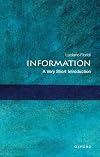
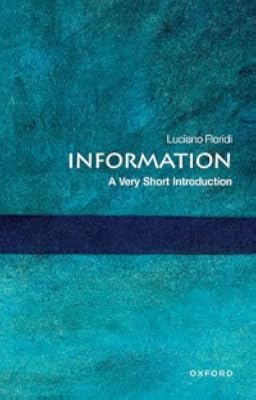
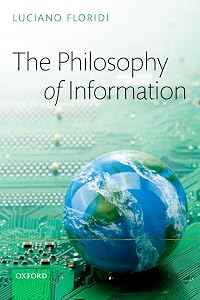
We live an information-soaked existence - information pours into our lives through television, radio, books, and of course, the Internet. Some say we suffer from 'infoglut'. But what is information? The concept of 'information' is a profound one, rooted in mathematics, central to whole branches of science, yet with implications on every aspect of our everyday lives: DNA provides the information to create us; we learn through the information fed to us; we relate to each other show more throughinformation transfer - gossip, lectures, reading. Information is not only a mathematically powerful concept, but its critical role in society raises wider ethical issues: who owns information? Who controls its dissemination? Who has access to information?Luciano Floridi, a philosopher of information, cuts across many subjects, from a brief look at the mathematical roots of information - its definition and measurement in 'bits'- to its role in genetics (we are information), and its social meaning and value. He ends by considering the ethics of information, including issues of ownership, privacy, and accessibility; copyright and open source. For those unfamiliar with its precise meaning and wide applicability as a philosophical concept, 'information' may seem a bland or mundane topic. Those who have studied some science or philosophy or sociology will already be aware of its centrality and richness. But for all readers, whether from the humanities or sciences, Floridi gives a fascinating and inspirational introduction to this most fundamental of ideas. show lessTags
Recommendations














Member Reviews
Presents the connections between information theory and entropy/thermodynamics in unclear way. I learned a lot but I still don't understand information in its most fundamental essence, that of physics and mathematics. Easily 4 stars if only that one thing was clarified.
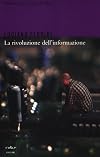
Luciano Floridi, nel suo libro "La rivoluzione dell'informazione", propone un'analisi profonda delle trasformazioni che le società occidentali hanno subito negli ultimi decenni a causa dell'avvento delle tecnologie dell'informazione e della comunicazione (ICT). Questo lavoro è considerato una quarta rivoluzione, parallela a quelle copernicana, darwiniana e freudiana, che ha modificato radicalmente la nostra comprensione dell'uomo e del suo ambiente.
Floridi sostiene che l'informazione non è solo un elemento accessorio della vita moderna, ma il protagonista di questa rivoluzione. Le ICT hanno reso l'informazione un bene fondamentale, influenzando ogni aspetto della vita quotidiana, dalla finanza all'istruzione, fino alla salute. Questa show more nuova era è caratterizzata da un'interconnessione costante tra individui e sistemi informativi, creando un ecosistema complesso in cui il confine tra reale e virtuale è sempre più sfumato.
Un aspetto centrale del libro è l'analisi delle implicazioni etiche legate all'informazione. Floridi introduce il concetto di "etica dell'informazione", sostenendo che ogni entità informazionale ha il diritto di esistere e prosperare. Questo implica una responsabilità morale da parte degli individui nel contribuire a un'infosfera sana e sostenibile. L'autore esplora anche come le ICT possano essere utilizzate per affrontare le sfide ambientali, suggerendo che possono diventare strumenti per combattere la distruzione delle risorse naturali.
Floridi invita a considerare la rivoluzione dell'informazione come un cambiamento di paradigma che richiede una riconsiderazione delle teorie esistenti su cosa significhi essere umani in un mondo sempre più interconnesso. L'autore propone una metafisica informazionale, in cui il mondo materiale viene reinterpretato attraverso le lenti dell'informazione24. Questo approccio non solo modifica la nostra concezione di identità e interazione sociale, ma richiede anche nuovi strumenti interpretativi per comprendere la realtà contemporanea.
"La rivoluzione dell'informazione" di Luciano Floridi non è solo un'analisi delle tecnologie moderne, ma una riflessione profonda su come queste influenzano la nostra esistenza e le nostre relazioni con il mondo circostante. show less
Floridi sostiene che l'informazione non è solo un elemento accessorio della vita moderna, ma il protagonista di questa rivoluzione. Le ICT hanno reso l'informazione un bene fondamentale, influenzando ogni aspetto della vita quotidiana, dalla finanza all'istruzione, fino alla salute. Questa show more nuova era è caratterizzata da un'interconnessione costante tra individui e sistemi informativi, creando un ecosistema complesso in cui il confine tra reale e virtuale è sempre più sfumato.
Un aspetto centrale del libro è l'analisi delle implicazioni etiche legate all'informazione. Floridi introduce il concetto di "etica dell'informazione", sostenendo che ogni entità informazionale ha il diritto di esistere e prosperare. Questo implica una responsabilità morale da parte degli individui nel contribuire a un'infosfera sana e sostenibile. L'autore esplora anche come le ICT possano essere utilizzate per affrontare le sfide ambientali, suggerendo che possono diventare strumenti per combattere la distruzione delle risorse naturali.
Floridi invita a considerare la rivoluzione dell'informazione come un cambiamento di paradigma che richiede una riconsiderazione delle teorie esistenti su cosa significhi essere umani in un mondo sempre più interconnesso. L'autore propone una metafisica informazionale, in cui il mondo materiale viene reinterpretato attraverso le lenti dell'informazione24. Questo approccio non solo modifica la nostra concezione di identità e interazione sociale, ma richiede anche nuovi strumenti interpretativi per comprendere la realtà contemporanea.
"La rivoluzione dell'informazione" di Luciano Floridi non è solo un'analisi delle tecnologie moderne, ma una riflessione profonda su come queste influenzano la nostra esistenza e le nostre relazioni con il mondo circostante. show less
Nov 16, 2024Italian
Ratings
Members
- Recently Added By
Author Information

34+ Works 938 Members
Luciano Floridi is Professor of Philosophy and Ethics of Information, Oxford Internet Institute, University of Oxford, UK.
Series

Common Knowledge
- Canonical title
- Information: A Very Short Introduction
- Original title
- Information: A Very Short Introduction
- Original publication date
- 2010
- First words
- The goal of this volume is to provide an outline of what information is, of its manifold nature, of the roles that it plays in several scientific contexts, and of the social and ethical issues raised by its growing importance... (show all).
- Last words
- (Click to show. Warning: May contain spoilers.)The turning point in this process of self-understanding is what I have defined in Chapter 1 as the fourth revolution.
- Blurbers
- Jardine, Lisa; Lezard, Nicholas
- Original language
- English
Classifications
- Genres
- Sociology, Nonfiction, Philosophy, Science & Nature, General Nonfiction
- DDC/MDS
- 306.42 — Society, government, & culture Social sciences, sociology & anthropology Social Behavior - Dating, Marriage, Divorce Specific aspects of culture Sociology of knowledge
- LCC
- BD175 .F56 — Philosophy, Psychology and Religion Speculative philosophy Speculative philosophy Epistemology. Theory of knowledge
- BISAC
Statistics
- Members
- 344
- Popularity
- 91,533
- Reviews
- 2
- Rating
- (3.46)
- Languages
- Dutch, English, Italian
- Media
- Paper, Ebook
- ISBNs
- 8
- ASINs
- 7