On This Page
Description
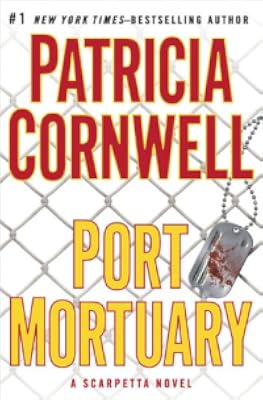
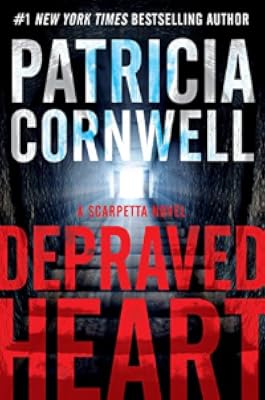
When Scarpetta examines a young man's body, she discovers stunning indications that he may have been alive when he was zipped inside a pouch and locked inside the cooler of her new Cambridge Forensic Center in Massachusetts. Various 3-D radiology scans reveal more shocking details about internal injuries unlike any Scarpetta has ever seen. These suggest the possibility of a conspiracy to cause mass casualties, and she races against time to discover who and why before more people die.Tags
Recommendations









Member Reviews
Bit of history first. I loved the Scarpetta novels, I mean really loved them - had them all - hardbacks the minute they came out. Brilliant plots, watching Lucy grow up, loving every minute of her slowly-slowly relationship with Benton. Living every agonising second of her complete and utter grief at his appalling death and then...he comes back to life...just like that. Big emotional event?...nah...if memory serves she passes him on the stairs - no big deal. That is the moment I fell out with Cornwell. I distinctly remember sitting there just open mouthed, re-reading the same bit over and over.
So, it was with some trepidation that I bought Port Mortuary. Thought for old times sake I'd give her another go.
Dear God - how completely and show more utterly boring is this book? The interminable car journey where Benton and Scarpetta talk to each other as if (a) they barely know each other and (b) English is their third language. I continued reading purely because I wanted to find out what had caused the victims injuries as they seemed so bizarre. Page after page after page of Scarpetta whining on about she's in charge and the paranoia of everyone is hiding stuff from her got very very wearing. When she finally gets to her office, its *I* personally chose my eco elevator, *I* got this *I* arranged that. *My* titanium coated building (what???)
The never-ending disjointed conversation drove me up the wall "I realize I'm perserverating" Now there's a sentence you'll never hear spoken aloud!
Finally - Marino - relegated to the role of a giant labrador, always in the background, a bit dim and tends to jump up and put his muddy paws all over your white trousers.
I wish I'd kept the receipt - there is a sticker on the front saying I can have my money back if I don't love it! show less
So, it was with some trepidation that I bought Port Mortuary. Thought for old times sake I'd give her another go.
Dear God - how completely and show more utterly boring is this book? The interminable car journey where Benton and Scarpetta talk to each other as if (a) they barely know each other and (b) English is their third language. I continued reading purely because I wanted to find out what had caused the victims injuries as they seemed so bizarre. Page after page after page of Scarpetta whining on about she's in charge and the paranoia of everyone is hiding stuff from her got very very wearing. When she finally gets to her office, its *I* personally chose my eco elevator, *I* got this *I* arranged that. *My* titanium coated building (what???)
The never-ending disjointed conversation drove me up the wall "I realize I'm perserverating" Now there's a sentence you'll never hear spoken aloud!
Finally - Marino - relegated to the role of a giant labrador, always in the background, a bit dim and tends to jump up and put his muddy paws all over your white trousers.
I wish I'd kept the receipt - there is a sticker on the front saying I can have my money back if I don't love it! show less
I read Port Mortuary while travelling back home from Copenhagen by train. These books are becoming increasingly easier to polish off in a single sitting, even if they seem to be getting longer. Mostly, I suspect, that’s because I know the character of the protagonist, Dr Kay Scarpetta, pretty well now after 18 novels, and also probably because the plots are beginning to settle into something of a rut. Again, a puzzling murder is the springboard to a conspiracy to attack Scarpetta’s profile, credibility and relationships.
Scarpetta has spent six months at Dover Air Force Base, where US casualties from the invasion of Iraq are shipped. Shortly before this, she had set up a new forensic centre in Cambridge (Massachusetts), and left it show more under the command of Dr Jack Fielding, a character familiar from earlier books. But when a body appears to have bled out while in the freezer in this new centre, and Fielding has gone AWOL, Scarpetta is helicoptered in to fix things.
Unfortunately, nothing looks good. The centre is falling apart, things cannot, er, hold. The dead man in the fridge was murdered using some strange weapon which left pockets of air in his chest cavity. Benton is treating a young man on the spectrum, a near-genius working in the R&D department of a nearby defence contractor, who has confessed to murder a small boy by hammering nails into his head. Benton is convinced the man has been manipulated into confessing - but by whom?
Scarpetta is also having flashbacks to the autopsy of two young women she performed for the US military in South Africa, back at the beginning of her career. She knows their murders were staged, likely by government agents to foment hatred - Cornwell seems to think Afrikaaners were black South Africans, which is, well, the exact opposite - but has always regretted following the party-line.
The murder of the boy and the man who bled in the fridge turn out to be linked, and clues point back to the defence contractor’s R&D lab. Fielding is also involved somehow. It all slots together neatly - Cornwell has been doing this for a while - but it does, unfortunately, fall back on Cornwell’s favourite solution: the super-intelligent psychopath who manipulates everyone around them. And Cornwell throws in an ending she over-used in the first few books of the series, where the villain of the piece attacks Scarpetta at home and is defeated.
Port Mortuary has moved back to first person, and is far more introspective than earlier books. There are a lot of words on the process, and means, of discovering the facts surrounding the two murders. Plus, everyone seems to know what’s going on, but is deliberately keeping Scarpetta in the dark. It makes for a frustrating read at points.
I’m not sure where to rank Port Mortuary among the Scarpetta books I’ve read. Too much in it feels like retcon, and Cornwell’s changes in narrative style - we’re eighteen books into the series here! - make it hard to get a real purchase on the series arc. Lucy’s inconsistent aging notwithstanding - cf Sue Grafton’s Kinsey Millhone books, which stuck so rigorously to their internal chronology her last book, Y is for Yesterday published in 2017, was set in 1989. I do like the Scarpetta novels, I like their focus on the science and, increasingly, technology of forensic pathology. But they’re nowhere near as rigorous - perversely - than other series in the same space I like. show less
Scarpetta has spent six months at Dover Air Force Base, where US casualties from the invasion of Iraq are shipped. Shortly before this, she had set up a new forensic centre in Cambridge (Massachusetts), and left it show more under the command of Dr Jack Fielding, a character familiar from earlier books. But when a body appears to have bled out while in the freezer in this new centre, and Fielding has gone AWOL, Scarpetta is helicoptered in to fix things.
Unfortunately, nothing looks good. The centre is falling apart, things cannot, er, hold. The dead man in the fridge was murdered using some strange weapon which left pockets of air in his chest cavity. Benton is treating a young man on the spectrum, a near-genius working in the R&D department of a nearby defence contractor, who has confessed to murder a small boy by hammering nails into his head. Benton is convinced the man has been manipulated into confessing - but by whom?
Scarpetta is also having flashbacks to the autopsy of two young women she performed for the US military in South Africa, back at the beginning of her career. She knows their murders were staged, likely by government agents to foment hatred - Cornwell seems to think Afrikaaners were black South Africans, which is, well, the exact opposite - but has always regretted following the party-line.
The murder of the boy and the man who bled in the fridge turn out to be linked, and clues point back to the defence contractor’s R&D lab. Fielding is also involved somehow. It all slots together neatly - Cornwell has been doing this for a while - but it does, unfortunately, fall back on Cornwell’s favourite solution: the super-intelligent psychopath who manipulates everyone around them. And Cornwell throws in an ending she over-used in the first few books of the series, where the villain of the piece attacks Scarpetta at home and is defeated.
Port Mortuary has moved back to first person, and is far more introspective than earlier books. There are a lot of words on the process, and means, of discovering the facts surrounding the two murders. Plus, everyone seems to know what’s going on, but is deliberately keeping Scarpetta in the dark. It makes for a frustrating read at points.
I’m not sure where to rank Port Mortuary among the Scarpetta books I’ve read. Too much in it feels like retcon, and Cornwell’s changes in narrative style - we’re eighteen books into the series here! - make it hard to get a real purchase on the series arc. Lucy’s inconsistent aging notwithstanding - cf Sue Grafton’s Kinsey Millhone books, which stuck so rigorously to their internal chronology her last book, Y is for Yesterday published in 2017, was set in 1989. I do like the Scarpetta novels, I like their focus on the science and, increasingly, technology of forensic pathology. But they’re nowhere near as rigorous - perversely - than other series in the same space I like. show less
You may also read my review here: http://www.mybookishways.com/2012/08/port-mortuary-scarpetta-18-by-patricia-corn...
Kay Scarpetta has spent nearly 6 months at Dover Air Force Base, helping to develop technology for cutting edge virtual autopsies, when she is unexpectedly called back to Boston’s Cambridge Forensic Center. A young man has been killed under mysterious circumstances, and Kay must find out why a simple stabbing seems to have caused so much internal damage. The strange doesn’t stop there, though. Her second in command, Jack Fielding, is missing, and his behavior has been even more erratic than usual, a little boy has been brutally murdered, and a college football star was also sadistically tortured and killed. Believe it show more or not, everything is connected, and Kay, her husband Benton, niece Lucy, and Pete Marino must get to the bottom of things before someone else dies.
I shamelessly admit to being a huge fan of this series, and there were a few recent books that I felt were misses more than hits. However, Ms. Cornwell seems to have returned to form somewhat in Port Mortuary. I prefer Scarpetta’s voice in these novels, and Port Mortuary delivers there, although my favorite ME is quite self-conscious and even more serious than usual. She’s never been what you would call light hearted, but she gets downright bitter at times. She’s usually too smart and self-possessed for that, but since this case is so personal, considering her history with Jack, I can understand it. Also, I admit that Pete Marino is probably one of the most insufferable, frustrating characters in this series, but he’s one of my favorites too. He’s deeply flawed, yet he’s a very good investigator, and he would lay down his life for Kay. Ms. Cornwell has a talent for bringing her characters to life, and Port Mortuary is no exception to that. She never fails to pull me into her narrative, with the fascinating technical aspects of forensic science, and I have to see what happens next. I’ll be moving right on to Red Mist, and I can’t wait for her new Scarpetta novel, The Bone Bed, out later this year! show less
Kay Scarpetta has spent nearly 6 months at Dover Air Force Base, helping to develop technology for cutting edge virtual autopsies, when she is unexpectedly called back to Boston’s Cambridge Forensic Center. A young man has been killed under mysterious circumstances, and Kay must find out why a simple stabbing seems to have caused so much internal damage. The strange doesn’t stop there, though. Her second in command, Jack Fielding, is missing, and his behavior has been even more erratic than usual, a little boy has been brutally murdered, and a college football star was also sadistically tortured and killed. Believe it show more or not, everything is connected, and Kay, her husband Benton, niece Lucy, and Pete Marino must get to the bottom of things before someone else dies.
I shamelessly admit to being a huge fan of this series, and there were a few recent books that I felt were misses more than hits. However, Ms. Cornwell seems to have returned to form somewhat in Port Mortuary. I prefer Scarpetta’s voice in these novels, and Port Mortuary delivers there, although my favorite ME is quite self-conscious and even more serious than usual. She’s never been what you would call light hearted, but she gets downright bitter at times. She’s usually too smart and self-possessed for that, but since this case is so personal, considering her history with Jack, I can understand it. Also, I admit that Pete Marino is probably one of the most insufferable, frustrating characters in this series, but he’s one of my favorites too. He’s deeply flawed, yet he’s a very good investigator, and he would lay down his life for Kay. Ms. Cornwell has a talent for bringing her characters to life, and Port Mortuary is no exception to that. She never fails to pull me into her narrative, with the fascinating technical aspects of forensic science, and I have to see what happens next. I’ll be moving right on to Red Mist, and I can’t wait for her new Scarpetta novel, The Bone Bed, out later this year! show less
One of the risks of an author publishing novels that don't live up to past efforts is that she can lose her good readers, which seems to be what's happened in pretty good measure to Cornwell, if the LT and Amazon citizen "reviews" for this book are any indication. Plus, no less that three people here at LT whose opinions I respect very highly have said that they too have stopped reading her.
The readers who are left, at least some of the ones commenting, have some rather odd things to say about this book:
1. "Too focused on technology." / Since these books are about a forensic pathologist, if they didn't focus on "technology" or the science of forensics, then they would be rather superficial. Cornwell's ability to write about the science show more involved in her plots has always been a strong point.
2. This goes to the same point as #1 above: "Used jargon that I didn't understand." / One of the reasons I read--anything, be it novels or anything else--is to learn new things. I guess a person is either interested enough in the subject a writer is writing about, or they're not. If someone isn't moved to look up the things they don't understand, one can hardly fault the author or the book for that, and perhaps instead of writing a negative review, that reader ought to choose something else.
3. "No passion between Scarpetta and Benton." / Try a romance novel. I thought the back-and-forth between Scarpetta and her husband Wesley Benton was realistic and probably the best that Cornwell has done with these two characters for awhile. They work together, so they have to maintain a professional relationship as well as personal. The "passion" is there, it's just not the fall-into-bed "passion" of a couple of 20-year-olds.
4. "The fractured plot was too difficult to follow; the story had strange twists." / Huh? I don't know how to judge the exact reading level of a book, but I would say that if a reader can't follow this plot, then they either aren't interested in the forensic thriller genre, or they might need to practice on something less complex. An Alex Cross book by James Patterson comes to mind.
What I liked about the book:
Cornwell has gone back to writing in the first person from the point of view of Kay Scarpetta. I think that's a good choice for her, since she seems to be more solidly in control of her material when she's writing from inside of Kay's head.
Addtionally, Cornwell has some great scenes in this thing, including some wonderful business with a new young male assistant that is screamingly funny. There's another scene where Scarpetta is on a phone call with a patrician Boston mother of a young man with Asperger's; the mother's son is accused of murdering a six-year-old with a nail gun. Scarpetta is responding to this woman who is becoming increasingly voluble and agitated while at the same time Benton is listening to the conversation, responding to Kay. The scene demonstrates the narrative assurance of a pro.
Another thing I liked is that at the end of the book, Kay adopts a new dog named Sock, a rescue greyhound. I love it when writers include pets in their books, if they really do love animals, that is, and what Cornwell does between Scarpetta and this dog is very nice--very sweet--and has the effect of humanizing Kay a little bit. And she can use it.
And I guess finally the plot--I liked it; the story was good. If I find myself stealing time from things I should be doing in order to read a novel, then that's a pretty good indication the book is not only holding my attention, but it's also entertaining or thought-provoking or something beyond the run-of-the-mill. show less
The readers who are left, at least some of the ones commenting, have some rather odd things to say about this book:
1. "Too focused on technology." / Since these books are about a forensic pathologist, if they didn't focus on "technology" or the science of forensics, then they would be rather superficial. Cornwell's ability to write about the science show more involved in her plots has always been a strong point.
2. This goes to the same point as #1 above: "Used jargon that I didn't understand." / One of the reasons I read--anything, be it novels or anything else--is to learn new things. I guess a person is either interested enough in the subject a writer is writing about, or they're not. If someone isn't moved to look up the things they don't understand, one can hardly fault the author or the book for that, and perhaps instead of writing a negative review, that reader ought to choose something else.
3. "No passion between Scarpetta and Benton." / Try a romance novel. I thought the back-and-forth between Scarpetta and her husband Wesley Benton was realistic and probably the best that Cornwell has done with these two characters for awhile. They work together, so they have to maintain a professional relationship as well as personal. The "passion" is there, it's just not the fall-into-bed "passion" of a couple of 20-year-olds.
4. "The fractured plot was too difficult to follow; the story had strange twists." / Huh? I don't know how to judge the exact reading level of a book, but I would say that if a reader can't follow this plot, then they either aren't interested in the forensic thriller genre, or they might need to practice on something less complex. An Alex Cross book by James Patterson comes to mind.
What I liked about the book:
Cornwell has gone back to writing in the first person from the point of view of Kay Scarpetta. I think that's a good choice for her, since she seems to be more solidly in control of her material when she's writing from inside of Kay's head.
Addtionally, Cornwell has some great scenes in this thing, including some wonderful business with a new young male assistant that is screamingly funny. There's another scene where Scarpetta is on a phone call with a patrician Boston mother of a young man with Asperger's; the mother's son is accused of murdering a six-year-old with a nail gun. Scarpetta is responding to this woman who is becoming increasingly voluble and agitated while at the same time Benton is listening to the conversation, responding to Kay. The scene demonstrates the narrative assurance of a pro.
Another thing I liked is that at the end of the book, Kay adopts a new dog named Sock, a rescue greyhound. I love it when writers include pets in their books, if they really do love animals, that is, and what Cornwell does between Scarpetta and this dog is very nice--very sweet--and has the effect of humanizing Kay a little bit. And she can use it.
And I guess finally the plot--I liked it; the story was good. If I find myself stealing time from things I should be doing in order to read a novel, then that's a pretty good indication the book is not only holding my attention, but it's also entertaining or thought-provoking or something beyond the run-of-the-mill. show less
I started reading Scarpetta novels several years ago, in order. I discussed them generally with the friend who first suggested them to me. We both agreed that Scarpetta is a snob. I had difficulty getting past the details of the meals she made, the way she thought of others, particularly Marino, a way that said she is above it all, however much she pretends otherwise.
I haven't changed my mind. I don't like her. Yet I continue to read her books. I got a bit behind and have been catching up lately, and wondering why I keep reading. This book in particular made me wonder.
On the book flap I read that Cornwell has gone back to "the intimate way her fans loved in the early novels", that we return to Scarpetta's point-of-view. I hadn't show more noticed. What I noticed is that it is all me me me. I wanted more investigation and way less mea culpa and navel-gazing. I want a forensic procedural.
But to the story. The book is a bit mis-named because it begins with Kay Scarpetta returning from the Port Mortuary, where she had spent the last six months as part of a military team. Having been away, she tried to separate herself from her new position as head of the newly-formed Cambridge Forensic Center (CFC), tried to focus on her work and let her second-in-command run CFC. What she did at the Port Mortuary is train in CT-assisted virtual autopsy, a type of autopsy that allows investigation with less damage to the victim's body and therefore less chance to miss clues.
When she returns she immediately begins to feel that something is off. First, a man who had been pronounced dead was delivered to the CFC but then bled copiously overnight. Corpses do not bleed, as a rule, so Scarpetta needs to rule out the possibility that he was not dead to begin with. Next, her second-in-command does not show up for work. His situation becomes a matter of additional investigation as Scarpetta learns some aspects of the way he ran the center. She continuously wonders whether she did the right thing by, in the first place, helping him become a forensic scientist years ago, and later, by taking him under her wing.
It always seems odd to me, this inclination of Scarpatta's to take in others, to be loyal to those she clearly thinks are screw-ups. Including Marino, the detective who is devoted to her yet who comes from the wrong side of the tracks. Scarpetta acknowledges his detective abilities, yet is constantly being disgusted by his habits. I can't remember a sentence that reveals real affection for him. To me, she's a fake. Or more correctly, Cornwell doesn't create a believable caring individual in her.
The investigation of the young man's death leads to additional unusual forensic finds and additional suspicions about Jack Fielding, Scarpetta's second-in-command. Further, the dog, a rescue greyhound, that was with the young man who was killed is missing. Scarpetta believes the dog holds clues to the ultimate resolution of the mystery. show less
I haven't changed my mind. I don't like her. Yet I continue to read her books. I got a bit behind and have been catching up lately, and wondering why I keep reading. This book in particular made me wonder.
On the book flap I read that Cornwell has gone back to "the intimate way her fans loved in the early novels", that we return to Scarpetta's point-of-view. I hadn't show more noticed. What I noticed is that it is all me me me. I wanted more investigation and way less mea culpa and navel-gazing. I want a forensic procedural.
But to the story. The book is a bit mis-named because it begins with Kay Scarpetta returning from the Port Mortuary, where she had spent the last six months as part of a military team. Having been away, she tried to separate herself from her new position as head of the newly-formed Cambridge Forensic Center (CFC), tried to focus on her work and let her second-in-command run CFC. What she did at the Port Mortuary is train in CT-assisted virtual autopsy, a type of autopsy that allows investigation with less damage to the victim's body and therefore less chance to miss clues.
When she returns she immediately begins to feel that something is off. First, a man who had been pronounced dead was delivered to the CFC but then bled copiously overnight. Corpses do not bleed, as a rule, so Scarpetta needs to rule out the possibility that he was not dead to begin with. Next, her second-in-command does not show up for work. His situation becomes a matter of additional investigation as Scarpetta learns some aspects of the way he ran the center. She continuously wonders whether she did the right thing by, in the first place, helping him become a forensic scientist years ago, and later, by taking him under her wing.
It always seems odd to me, this inclination of Scarpatta's to take in others, to be loyal to those she clearly thinks are screw-ups. Including Marino, the detective who is devoted to her yet who comes from the wrong side of the tracks. Scarpetta acknowledges his detective abilities, yet is constantly being disgusted by his habits. I can't remember a sentence that reveals real affection for him. To me, she's a fake. Or more correctly, Cornwell doesn't create a believable caring individual in her.
The investigation of the young man's death leads to additional unusual forensic finds and additional suspicions about Jack Fielding, Scarpetta's second-in-command. Further, the dog, a rescue greyhound, that was with the young man who was killed is missing. Scarpetta believes the dog holds clues to the ultimate resolution of the mystery. show less
I have a whole new level of respect for how much thought and background that goes into these books on a scientific level. I enjoyed the book, thought the plot twist happening inside Scarpetta's circle was interesting as opposed to having an enemy "outside the circle." I also closed the book thinking that like in a TV show, this book was also a cliffhanger, a set up for the next book. Scarpetta's world has completely evolved into something that is wasn't before.
Wow! I've read some of the other reviews of this same book and can't figure out who was reading what. I was on page 278 and kept thinking - when is this story going to start? I also kept thinking - blah, blah, blah - cut to the chase. I kept skipping over passages because there were just TOO MANY WORDS. The relationships Dr. Scarpetta has with her husband and her niece in this book would drive me crazy. She doesn't answer any questions with a direct answer and neither do they. How can you sustain relationships like that? And Merino. If I was his boss and he went over my head as many times as he did in this book, he'd be the next one fired. Dr. Scarpetta came away as weak and lacking confidence. If I had read this book first in the show more series, I wouldn't have read any others. In my opinion, poorly done. show less
Members
- Recently Added By
Lists

Books About Murder
313 works; 7 members

Books Read in 2011
684 works; 19 members

Books - Cornwell, Patricia: Kay Scarpetta
29 works; 1 member
Author Information

198+ Works 136,638 Members
Patricia Cornwell was born in Miami, Florida on June 9, 1956. When she was nine years old, her mother tried to give her and her two brothers to evangelist Billy Graham and his wife to care for. For a while the children lived with missionaries since their mother was unable to care for them. After graduating from Davidson College in 1979, she worked show more for The Charlotte Observer eventually covering the police beat and winning an investigative reporting award from the North Carolina Press Association for a series of articles on prostitution and crime in downtown Charlotte. Her award-winning biography of Ruth Bell Graham, the wife of Billy Graham, A Time for Remembering, was published in 1983. From 1984 to 1990, she worked as a technical writer and a computer analyst at the Office of the Chief Medical Examiner in Richmond, Virginia. While working for the medical examiner, she began to write novels. Although the award-winning novel Postmortem was initially rejected by seven different publishers, once it was published in 1990 it became the only novel ever to win the Edgar, Creasey, Anthony, and Macavity awards as well as the French Prix du Roman d'Adventure, in one year. She is the author of the Kay Scarpetta series, the Andy Brazil series, and the Winston Garano series. She has also written two cookbooks entitled Scarpetta's Winter Table and Food to Die For; a children's book entitled Life's Little Fable; and non-fiction works like Portrait of a Killer: Jack the Ripper - Case Closed. (Bowker Author Biography) show less
Some Editions
Awards and Honors
Distinctions
Series

Common Knowledge
- Canonical title
- Port Mortuary
- Original title
- Port Mortuary
- Original publication date
- 2010
- People/Characters
- Kay Scarpetta; Pete Marino; Lucy Farinelli; Benton Wesley; Jack Fielding; Dawn Kincaid (show all 14); Johnny Donahue; Erica Donahue; Eli Goldman; Wally Jamison; Mark Bishop; Anne Mahoney; General John Briggs; Bryce Clark
- Important places
- Cambridge, Massachusetts, USA; Norton's Woods, Cambridge, Massachusetts, USA
- Dedication
- To Staci
You have to live with me
while I live it~ - First words
- Inside the changing room for female staff, I toss soiled scrubs into a biohazard hamper and strip off the rest of my clothes and medical clogs. I wonder if Col. Scarpetta stenciled in black on my locker will be remove... (show all)d the minute I return to New England in the morning. The thought hadn't entered my mind before now, and it bothers me. A part of me doesn't want to leave this place.
- Last words
- (Click to show. Warning: May contain spoilers.)"I need to explain up front that you only get canine cuisine; that's the rule of the house. I'm thinking quinoa and cod for you today." I continue talking as we go down the stairs. "That will be a nice change after all that chicken and rice from the Greek diner."
- Original language
- English
Classifications
Statistics
- Members
- 2,736
- Popularity
- 6,726
- Reviews
- 69
- Rating
- (3.18)
- Languages
- 12 — Czech, Danish, Dutch, English, Finnish, French, German, Italian, Korean, Portuguese, Spanish, Swedish
- Media
- Paper, Audiobook, Ebook
- ISBNs
- 68
- ASINs
- 25