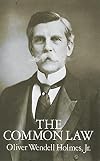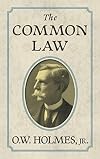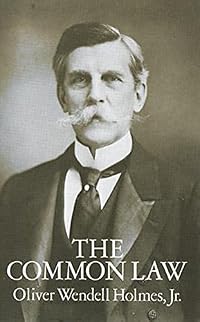
The Common Law
by Oliver Wendell Holmes
On This Page
Description
Much more than an historical examination of liability, criminal law, torts, bail, possession and ownership, and contracts, The Common Law articulates the ideas and judicial theory of one of the greatest justices of the Supreme Court. The John Harvard Library presents a text that is, with occasional corrections of typographical errors, identical to that found in the first and all subsequent printings by Little, Brown.Tags
Recommendations














Member Reviews
Originally I read this in 1971, just before going to law school. It was the most useful book I read as I prepared for the experience. Some of his discussion about the law is dated, but that doesn't matter. What is most useful about the book is that it helps you learn how the system of common law works -- as opposed to what the law is on any given subject.
Highly recommended for pre-law students and intellectually curious non-lawyers.
Highly recommended for pre-law students and intellectually curious non-lawyers.
Holmes spent the first ten years of his service on the Supreme Court known as "The Dissenter", and for most of the chamber discussion was literally holding his head in his hands in utter despondency.
As for "Negligence", he reminds us that "like ownership, [it] is "a complex conception". [115] Importantly, he finds the element of "public policy" in the concept. In other words, liability flows not merely from breach of a standard of care of the tortfeasor (fault), but upon public policy. 115. A "stricter rule" applies if damage is caused "by a pistol, in view of the danger to the public". 116. In other words, we analyze the burden on the victim in light of the benefit to the public. As Justice Traynor suggested, the necessity of show more "spreading the burden among those who benefit", arises from this public policy analysis. Unfortunately, jurors today (and in spite of Holmes and Traynor's best efforts) still find little help for applying this leg of liability. show less
As for "Negligence", he reminds us that "like ownership, [it] is "a complex conception". [115] Importantly, he finds the element of "public policy" in the concept. In other words, liability flows not merely from breach of a standard of care of the tortfeasor (fault), but upon public policy. 115. A "stricter rule" applies if damage is caused "by a pistol, in view of the danger to the public". 116. In other words, we analyze the burden on the victim in light of the benefit to the public. As Justice Traynor suggested, the necessity of show more "spreading the burden among those who benefit", arises from this public policy analysis. Unfortunately, jurors today (and in spite of Holmes and Traynor's best efforts) still find little help for applying this leg of liability. show less
This book presents a series of twelve lectures by the author on the nature, and history of law; and the judicial process.
Ratings
Members
- Recently Added By
Author Information

24+ Works 1,060 Members
All Editions
Series
Belongs to Publisher Series
Work Relationships
Common Knowledge
- Original publication date
- 1881
Classifications
Statistics
- Members
- 584
- Popularity
- 50,099
- Reviews
- 3
- Rating
- (4.00)
- Languages
- English, German, Spanish
- Media
- Paper, Audiobook, Ebook
- ISBNs
- 47
- UPCs
- 1
- ASINs
- 21