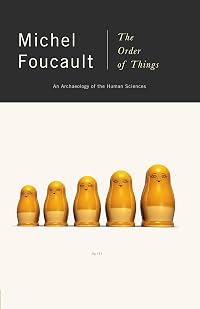
The order of things: an archaeology of the human sciences
by Michel Foucault
On This Page
Description
When one defines "order" as a sorting of priorities, it becomes beautifully clear as to what Foucault is doing here. With virtuoso showmanship, he weaves an intensely complex history of thought. He dips into literature, art, economics and even biology in The Order of Things, possibly one of the most significant, yet most overlooked, works of the twentieth century. Eclipsed by his later work on power and discourse, nonetheless it was The Order of Things that established Foucault's reputation show more as an intellectual giant. Pirouetting around the outer edge of language, Foucault unsettles the surface of literary writing. In describing the limitations of our usual taxonomies, he opens the door onto a whole new system of thought, one ripe with what he calls "exotic charm". Intellectual pyrotechnics from the master of critical thinking, this book is crucial reading for those who wish to gain insight into that odd beast called Postmodernism, and a must for any fan of Foucault. show lessTags
Recommendations










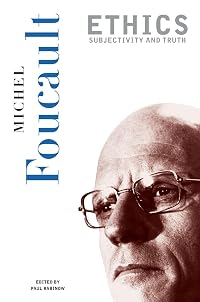
Member Recommendations
Member Reviews
The Order of Things is Foucault at his most Foucauldian, a grand tour through the history of orderings, discourses, scientific methods, and ultimately Man Himself from the 16th century through the 19th century. He's at his best when he's making the incommensurable theological commentaries of the 16th century readable and relateable for modern eyes. His discussion of the rise of Classical era human sciences of difference, biology, economics, and philology, is deeply read and insightful. The conclusion is the radical claim that prior to the 19th century, Man did not exist as an element of analysis, and that modern (and post-modern) ways of knowing are in fact highly divergent from their predecessors.
My problem is one of style. Clarity is show more not Foucault's thing, and I get that, but The Order of Things felt noticeably less clear than Discipline and Punish , The Birth of the Clinic, Madness and Civilization, or The History of Sexuality Vol. 1. The theory is thick here, the strands of argument tangled, and often for no apparent reason. My most common experience reading this was seeing a long series of negative statements ("The science of economics is not this, or this, or this...") that would take pages to resolve into an affirmative of what the thing is. The sentences are amazing: I took to reading them out loud like a Shakespearean soliloquy, and just admiring the rollicking flow of clauses and phrases. But at the end of one of these titanic discursive flows I'd be left with very little, just a philosophical laugh of "Lol wut?"
Some ideas demand density in argumentation, and a lot of intelligent commentators have read very smart things into The Order of Things. But if every reader finds a different meaning, is there a text? Is there actually an order to things? show less
My problem is one of style. Clarity is show more not Foucault's thing, and I get that, but The Order of Things felt noticeably less clear than Discipline and Punish , The Birth of the Clinic, Madness and Civilization, or The History of Sexuality Vol. 1. The theory is thick here, the strands of argument tangled, and often for no apparent reason. My most common experience reading this was seeing a long series of negative statements ("The science of economics is not this, or this, or this...") that would take pages to resolve into an affirmative of what the thing is. The sentences are amazing: I took to reading them out loud like a Shakespearean soliloquy, and just admiring the rollicking flow of clauses and phrases. But at the end of one of these titanic discursive flows I'd be left with very little, just a philosophical laugh of "Lol wut?"
Some ideas demand density in argumentation, and a lot of intelligent commentators have read very smart things into The Order of Things. But if every reader finds a different meaning, is there a text? Is there actually an order to things? show less
I think this might be Foucault's Foucaultest book (that I've read), which is to say he just kind of goes, "What is science?" and freewheels from there; it's a lot less focused than some of his other work like The Birth of the Clinic or Discipline and Punish, and less readable as a result. I find it easiest to work with Foucault on the level of individual parts, so I hope you'll forgive me if I don't address any "big picture" issues except as they come up in random points of individual interest: (this approach is perhaps ironic given that The Order of Things is in part about our tendency to break complicated things into parts at least in part)
- Foucault says (I think) that the study of language had to take something that really functions
- in terms of relationships and break it down into objects in order to make analysis possible: "it was a matter of dividing nature up by means of a constant table of identities and differences for which language provided a primary, approximative, and rectifiable grid" (296). That is to say, such an activity is artificial when it comes to complicated, living things, but necessary regardless if one is to analyze them.
- Related to this, he also argues that one has to fix everything in place and imagine its transformation... at the same time: "The solidity, without gaps, of a network of species and genera, and the series of events that have blurred that network, both belong, at the same level, to the epistemological foundation that made a body of knowledge like natural history possible [...]. They are not two ways of perceiving nature, radically opposed [...]; they are two simultaneous requirements in the archaeological network that defines the knowledge of nature [...]. [T]hese two requirements are complementary" (150). I think here that Foucault demonstrates are more nuanced understanding of the classificatory vision of science than many others who would study science (or demean/caricature it).
- One of Foucault's conclusions from all this is that the big change in science in the nineteenth century (my period of special study) is that way that fixed classifications were merged with evolution-based explanations: "the analysis of production, as the new project of the 'political economy', has as its essential role the analysis of the relation between value and prices; the concepts of organisms and organic structure, the methods of comparative anatomy – in short, all the themes of the 'biology' – explain how structures observable in individuals can have validity as general characters for genera, families, sub-kingdoms; and lastly, in order to unify the formal arrangements of a language (its ability to establish prepositions) and the meaning belonging to words, 'philology' would no longer study the representative functions of discourse, but a totality of morphological constants subject to a history. Philology, biology, and political economy were established, not in the places formerly occupied by general grammar, natural history, and the analysis of wealth, but in an area where those forms of knowledge did not exist" (207). Phew. Previously science looked at what things were like (classification), but the new sciences of the nineteenth century didn't replace the old ones, but supplemented them by looking at the same objects (words, life, money) from a new angle: by asking how things came to be arranged the way they were. So, weirdly, biology is more interested in history than natural history is.
- This leads to a further change in ways of thinking, in that classification itself is changed: "the link between one organic structure and another can no longer, in fact, be the identity of one or several elements (a relation in which visibility no longer plays a role) and of the functions they perform; moreover, if these organic structures happen to be adjacent to one another, on account of a particularly high density of analogies, it is not because they occcupy proximate places within an area of classification; it is because they have both been formed at the same time, and the one immediately after the other in the emergence of the successions" (218). Right, so I know the most about biology because my wife is a biologist, and I know that organisms get reclassified on the genetic tree all the time because DNA and such can reveal the evolutionary logic underlying the classification, and now we prioritize that over the visual understanding of resemblances that gave rise to the original tree of life to begin with. (Probably you could analogize this to the reclassification of planetary sciences that dislodged Pluto from its place in the pantheon, but someone else can pursue that if they want.)
- Foucault is (probably predictably) interested in those moments where consciousness must work to analyze itself, and this is reflected in his particular definition of the "human sciences": "a 'human science' exists, not wherever man is in question, but wherever there is analysis [...] of norms, rules, and signifying totalities which unveil to consciousness the conditions of its forms and contents. To speak of 'sciences of man' in any other case is simply an abuse of language" (364-65). Strongly worded, perhaps, but I take his point, which is that if you're not dealing with consciousness studying consciousness (or unconsciousness), what sets it apart from consciousness studying anything?
I've already said much of what I had to say about The Order of Things in reviews of several articles of Foucault's in which he chews the same fat, so perhaps I'll let myself learn from his example and keep this fairly succinct. This is the book that made F.'s name and inaugurated his "genealogy of knowledge"; the idea is to develop a theory of the changing episteme of the West--what kind of conceptions of knowledge are possible and impossible, and how they mutate, and why, with a particular descriptive focus on the 18th century. Why the 18th century? Because it is when our move from a framework of relations based on similarity--a Great Chain of Being--to a framework based on difference--a taxonomy--is complete. When we are Linnaeans in show more natural history and Adam Smithians in the study of wealth and budding philologers in language. And each of these fields of study is moving from a static descriptive mode to a dynamic science that concerns itself with origins and change over time. Marx is becoming possible, and Darwin, and the reconstruction of proto-Indo-European.
Not so bad, right? Foucault takes as a kind of epigraph the Chinese Encyclopedia thing from Borges where animals are divisible into "those that belong to the emperor; (b) embalmed ones; (c) those that are trained; (d) suckling pigs; (e) mermaids; (f) fabulous ones; (g) stray dogs; (h) those that are included in this classification; (i) those that tremble as if they were mad; (j) innumerable ones; (k) those drawn with a very fine camel's-hair brush; (l) etcetera; (m) those that have just broken the flower vase; (n) those that at a distance resemble flies." He starts by treating our own divisions as though they make just as little sense and saying why. This is cricket--good clean intellectual enquiry.
He gets Foucauldian, and even, like meta-Foucauldian, later on, but for once perhaps we'll just let that pass, yes? It's reflected in the rating and I don't have much to say about it except that there are large skippable swaths ("Man and His Doubles") near the end and it's Foucault and if you don't know what you're getting into try The History of Sexuality or Discipline and Punish or something a little more concrete/less rarefied.
So a Great Chain implies quantitative otherness, and a taxonomy implies qualitative Otherness--"heterocliticity"--and the dynamic or progressive approach squares the circle: think of the way labour conceived as a constant gives us a foundation for economics, as distinct from "the study of wealth". Think of the way William Jones's Indo-European hypothesis gives what had once been (and would be again, with the essentialist, nationalist 19th century) radically separate languages a place to meet: philology becoming linguistics. Fine, fine.
That's as far as you can really go with that intriguing argument, of course, unless you're prepared to engage with the structuralist aridity of most of the second half of the book. I would have preferred a much closer attention to sources, examples, and the 18th-century lifeworld as actually expressed in the 18th century--Foucault may have seen himself as an anti-humanist, but only a really old-timey conception of humanism can't take into account a historian that tries to see history from the outside.
So yeah, I guess I recommend reading carefully for a while, mulling the argument and deciding how you feel about it, and then skimming and extracting the gems: Don Quixote as the "hero of absolute signification" the character for whom there is no difference between words and reality; Descartes as introducing a naturalism that is not mimesis, a correspondence between language and the world rooted in the brain and not God--for me this was the basis for much closer engagement with the part of this that's about language, with reference to theorists like Condillac and mystics like Rousseau and Herder and Coleridge, but when I go over those notes now they seem unfruitful. Plenty to like here, and it was of course an important chapter in the history of the intellectual world the humanities now exist in (I fret so about the mode of expression and the sincerity of the ideas in this kind of book partially because I feel implicated, of course). But you wish someone had told him "Just the facts, man." show less
Not so bad, right? Foucault takes as a kind of epigraph the Chinese Encyclopedia thing from Borges where animals are divisible into "those that belong to the emperor; (b) embalmed ones; (c) those that are trained; (d) suckling pigs; (e) mermaids; (f) fabulous ones; (g) stray dogs; (h) those that are included in this classification; (i) those that tremble as if they were mad; (j) innumerable ones; (k) those drawn with a very fine camel's-hair brush; (l) etcetera; (m) those that have just broken the flower vase; (n) those that at a distance resemble flies." He starts by treating our own divisions as though they make just as little sense and saying why. This is cricket--good clean intellectual enquiry.
He gets Foucauldian, and even, like meta-Foucauldian, later on, but for once perhaps we'll just let that pass, yes? It's reflected in the rating and I don't have much to say about it except that there are large skippable swaths ("Man and His Doubles") near the end and it's Foucault and if you don't know what you're getting into try The History of Sexuality or Discipline and Punish or something a little more concrete/less rarefied.
So a Great Chain implies quantitative otherness, and a taxonomy implies qualitative Otherness--"heterocliticity"--and the dynamic or progressive approach squares the circle: think of the way labour conceived as a constant gives us a foundation for economics, as distinct from "the study of wealth". Think of the way William Jones's Indo-European hypothesis gives what had once been (and would be again, with the essentialist, nationalist 19th century) radically separate languages a place to meet: philology becoming linguistics. Fine, fine.
That's as far as you can really go with that intriguing argument, of course, unless you're prepared to engage with the structuralist aridity of most of the second half of the book. I would have preferred a much closer attention to sources, examples, and the 18th-century lifeworld as actually expressed in the 18th century--Foucault may have seen himself as an anti-humanist, but only a really old-timey conception of humanism can't take into account a historian that tries to see history from the outside.
So yeah, I guess I recommend reading carefully for a while, mulling the argument and deciding how you feel about it, and then skimming and extracting the gems: Don Quixote as the "hero of absolute signification" the character for whom there is no difference between words and reality; Descartes as introducing a naturalism that is not mimesis, a correspondence between language and the world rooted in the brain and not God--for me this was the basis for much closer engagement with the part of this that's about language, with reference to theorists like Condillac and mystics like Rousseau and Herder and Coleridge, but when I go over those notes now they seem unfruitful. Plenty to like here, and it was of course an important chapter in the history of the intellectual world the humanities now exist in (I fret so about the mode of expression and the sincerity of the ideas in this kind of book partially because I feel implicated, of course). But you wish someone had told him "Just the facts, man." show less
I keep this book around. I can't adequately explain this, since I'm sure MF goes mostly over my head. My head is not that high. Still, I have fond memories of being in grad school and getting stuck on that damned first paragraph, the one about the Borges passage, for what seemed like forever. With that paragraph in hand I *think* I know what Foucault is trying to do here, and it has a deeply-dug feel. I also love the stuff about the Velazquez painting.
Oh, the stark impossibility of reviewing *this*.
Oh, the stark impossibility of reviewing *this*.
A bear of a read in terms of the historical data Foucault brings into play (my eyes glazed over a fair amount of it). I have to wonder how much more beneficial it was reading this than reading a good secondary account of Foucault's notion of the 'episteme', though then I would never know . . .
We are still trying to figure out our way forward from his conclusion about the elevation of language and the dissolution of 'man' as an object of study.
We are still trying to figure out our way forward from his conclusion about the elevation of language and the dissolution of 'man' as an object of study.
First of all, this book is... opaque. The writing style is very verbose, even flowery in places, full of rhetorical questions and repetition, etc. There may be no accounting for taste, and, true, styles change, but the style of this book leaves a lot to be asked for.
Didn't understand much of this when I read it in grad school decades ago, but it was clear Foucault was dealing with meta-concepts, pretty heavy stuff that made traditional philosophy seem just a bunch of cliches.
Members
- Recently Added By
Lists

Le Monde - Les 100 livres du siècle
121 works; 25 members

Filosofía - Clásicos
217 works; 1 member

Books referenced in History by Numbers by Pat Hudson
88 works; 1 member

Books Referenced by Said's Orientalism
21 works; 1 member

Biblioteca de não ficção
41 works; 1 member

Books in the Bibliography of Humans: A Monstrous History by Surekha Davies
346 works; 1 member
Author Information

351+ Works 49,867 Members
Michel Foucault was born on October 15, 1926, in Poitiers, France, and was educated at the Sorbonne, in Paris. He taught at colleges all across Europe, including the Universities of Lill, Uppsala, Hamburg, and Warsaw, before returning to France. There he taught at the University of Paris and the College of France, where he served as the chairman show more of History of Systems of Thought until his death. Regarded as one of the great French thinkers of the twentieth century, Foucault's interest was in the human sciences, areas such as psychiatry, language, literature, and intellectual history. He made significant contributions not just to the fields themselves, but to the way these areas are studied, and is particularly known for his work on the development of twentieth-century attitudes toward knowledge, sexuality, illness, and madness. Foucault's initial study of these subjects used an archaeological method, which involved sifting through seemingly unrelated scholarly minutia of a certain time period in order to reconstruct, analyze, and classify the age according to the types of knowledge that were possible during that time. This approach was used in Madness and Civilization: A History of Insanity in the Age of Reason, for which Foucault received a medal from France's Center of Scientific Research in 1961, The Birth of the Clinic, The Order of Things, and The Archaeology of Knowledge. Foucault also wrote Discipline and Punishment: The Birth of the Prison, a study of the ways that society's views of crime and punishment have developed, and The History of Sexuality, which was intended to be a six-volume series. Before he could begin the final two volumes, however, Foucault died of a neurological disorder in 1984. (Bowker Author Biography) An outstanding philosopher and intellectual figure on the contemporary scene, Foucault has been influential in both philosophy and the recent interpretation of literature. Trained in philosophy and psychology, he was named to a chair at the College de France in 1970. He also taught in various departments of French literature as a visiting professor in the United States. Until 1968 he was a major figure in the critical movement known as structuralism, a method of intellectual inquiry based on the idea that all human behavior and achievement arises from an innate ability to organize, or "structure," human experiences. In both The Order of Things (1966) and The Archaeology of Knowledge (1969) he was interested in the organization of human knowledge and in the transformations of intellectual categories. His influential history of the prison, Discipline and Punish (1975), contributed to the study of the relationship of power and various forms of knowledge, as did the several volumes of an unfinished History of Sexuality published just before his death. (Bowker Author Biography) show less
Awards and Honors
Series
Belongs to Publisher Series
Work Relationships
Common Knowledge
- Canonical title
- The order of things: an archaeology of the human sciences
- Original title
- Les mots et les choses
- Original publication date
- 1966
- First words*
- Este libro nació de un texto de Borges. De la risa que sacude, al leerlo, todo lo familiar al pensamiento —al nuestro: al que tiene nuestra edad y nuestra geografía—, trastornando todas las superficies ordenadas y todos... (show all) los planos que ajustan la abundancia de seres, provocando una larga vacilación e inquietud en nuestra práctica milenaria de lo Mismo y lo Otro. Este texto cita "cierta enciclopedia china" donde está escrito que "los animales se dividen en a] pertenecientes al Emperador, b] embalsamados, c] amaestrados, d] lechones, e] sirenas, f] fabulosos, g] perros sueltos, h] incluidos en esta clasificación, i] que se agitan como locos, j] innumerables, k] dibujados con un pincel finísimo de pelo de camello, l] etcétera, m] que acaban de romper el jarrón, n] que de lejos parecen moscas". En el asombro de esta taxinomia, lo que se ve de golpe, lo que, por medio del apólogo, se nos muestra como encanto exótico de otro pensamiento, es el límite del nuestro: la imposibilidad de pensar esto.
- Last words*
- (Click to show. Warning: May contain spoilers.)Si esas disposiciones desaparecieran tal como aparecieron, si, por cualquier acontecimiento cuya posibilidad podemos cuando mucho presentir, pero cuya forma y promesa no conocemos por ahora, oscilaran, como lo hizo, a fines del siglo XVIII el suelo del pensamiento clásico, entonces podría apostarse a que el hombre se borraría, como en los límites del mar un rostro de arena.
- Canonical DDC/MDS
- 901.9
- Canonical LCC
- BD312
*Some information comes from Common Knowledge in other languages. Click "Edit" for more information.
Classifications
- Genres
- Philosophy, Nonfiction, Sociology, Literature Studies and Criticism, History, General Nonfiction, Science & Nature
- DDC/MDS
- 901.9 — History & geography History Philosophy and theory of history
- LCC
- BD312 — Philosophy, Psychology and Religion Speculative philosophy Speculative philosophy Ontology
- BISAC
Statistics
- Members
- 4,289
- Popularity
- 3,526
- Reviews
- 22
- Rating
- (3.96)
- Languages
- 21 — Chinese, Czech, Danish, Dutch, English, Estonian, Finnish, French, German, Greek, Hebrew, Hungarian, Italian, Japanese, Norwegian (Bokmål), Polish, Portuguese, Russian, Slovak, Spanish, Turkish
- Media
- Paper, Ebook
- ISBNs
- 70
- ASINs
- 24