On This Page
Description
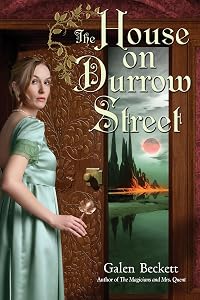
“A charming and mannered fantasy confection with a darker core of gothic romance” is how New York Times bestselling author Robin Hobb described Galen Beckett’s marvelous series opener, The Magicians and Mrs. Quent. Now Beckett returns to this world of dazzling magick and refined manners, where one extraordinary woman’s choice will put the fate of a nation—and all she cherishes—into precarious balance.Her courage saved the country of Altania and earned the love of a hero of the show more realm. Now sensible Ivy Quent wants only to turn her father’s sprawling, mysterious house into a proper home. But soon she is swept into fashionable society’s highest circles of power—a world that is vital to her family’s future but replete with perilous temptations.
Yet far greater danger lies beyond the city’s glittering ballrooms—and Ivy must race to unlock the secrets that lie within the old house on Durrow Street before outlaw magicians and an ancient ravening force plunge Altania into darkness forever. show less
Tags
Recommendations







Member Reviews
One of the traditional ways to create mystery and suspense is to leave the reader as much in the dark as the main character, discovering clues only as s/he does. Another method is to give the reader more information than the main character or make use of a genre's old chestnuts so that readers familiar with those chestnuts can anticipate what's coming while the character(s) move(s) blindly forward. Beckett has chosen the second method for this book. It made me feel as if I were back when 'slasher flicks' were so popular. Oh, the suspense I felt when a character did something I knew would end in a very messy death.
Because the chapters are each seen from the viewpoint of one of three main characters, Beckett is able to feed us plenty of show more clues while keeping Ivy, Rafferdy, and Eldyn in only partial knowledge of the HORROR THAT AWAITS. That means our lady and gentlemen get to be merely ignorant or innocent, not stupid. We can figure out who the villains are long before they do. The characters are worth caring about, so the suspense builds. Speaking for myself, I often wanted to be able to reach into the book, grab one of protagonists, and scream a warning. I longed for the equivalent of Discworld's Lord Vetinari or Sam Vimes to advise those poor young souls.
There were also times I wanted to smack the characters who were holders of Important Secrets. The lord inquisitor made the classic mistake of trying to keep his son away from dangerous influences without telling him enough to recognize the danger when he enountered one. The spell Mr. Lockwell used to safeguard his Important Secrets from falling into the wrong hands meant that Ivy wasn't getting enough information in good time. If those who knew a we-don't-want-to-talk-about-it dark secret had told Eldyn earlier, some lives might have been spared.
On the other hand, I can't complain that some secret holders forgot that others might not know everything they're talking about, since that happens in real life. Yeah, Man in Black, give a brief warning that includes a word that might have to be guessed at. Good thing for Altania that Ivy was able to guess correctly.
For lighter touches, there are the activities and personalities of Ivy's younger sisters, the Misses Lockwell. One thing said about Lily makes me wonder if Beckett has a career in mind for her when she's older. Will Rose be helping? For cat fans, sweet little Miss Mew is around.
I love the Lovecraftian touches in this sequel and eagerly look forward to The Master of Heathcrest Hall.
Warning: if you're a fellow sufferer of eyestrain, you might find yourself reading more at a time than you should. I did.
Because I needed this information myself when I wanted to check something this morning, here are some details mentioned in The House on Durrow Street:
Ch.5 The meaning of 'Siltheri' is given.
Two of the theaters on Durrow Street are named: the Theater of the Moon and the Theater of Doves.
Ch.10: Lockwell's journal, intro letter to Ivy.
Builder of the house on Durrow Street named and a few brief facts are given.
There are 17 parishes in Invarel.
Ch.12: The electric condenser is explained.
Madstones' authority over its patients explained
The 3 Lords of Am-Anaru are named.
a Lockwell journal entry
planets named: Ursentus, Anares, Baelthus (star?)
Tyberion and Arantus first mentioned
Ch.13: Theater of Emeralds mentioned
story of Lord Wilden's death given
Ch.16 Ivy's first party at Lady Crayford's
2nd Lockwell journal entry
planet mentioned: Loerus, stars: Murgon and Dalavar
ch.17 enter the Archdeacon
Ch.19 Murgon Prime is the brightest star in the constellation of Murgon
stars(?) mentioned: Andareon, Rikus, Castari, Dalavar
How the Eye of Ran-Yahgren was found
what d'waglu means
Ch.21: What Lord Rafferdy told his son
runes named: Targoth, Aegon, Saradir
a magicians' society named
ch.22 - the tragic tale of the lost colony of Marlstown
A brief explanation of the campaign at Aratuga
ch.23: The mordoth is explained
ch.24: the Tharosian myth of Cassephia and Hesper, Bull King of Belethon, & the sea god Ureyus given
passing mention of Vrais, god of battle
Who Tyberion and Arantus were.
Dalatair was master of fates and chance
Two more Lockwell journal entries, one partial
next-to-last page: the four names of the magicians Mr. Lockwell trusted most
ch.25: Reminder that Gauldren worked the Quelling on the Wyrdwood
Another nickname for Lady Shayde is given.
The High Order of the Golden Door is mentioned.
Ch.26: partial Lockwell journal entry
Mansford lies to the south of Invarel
Description of Viscount Crayford's garden
Tharosian Emperor Madiger's Wall was built to protect the outpost (fort) of Invarduin from the Wyrdwood. Ivarduin became Invarel.
Ch.27: Dercy's surname is mentioned.
The legend of St. Mirzan is described.
Reminder that Dercy was briefly a priest at St. Adaris.
Ch.28: a full Lockwell journal entry given
How the stunted hawthorn and chestnut trees at Ivy's house are doing.
Tharosian scuplture masterworks are displayed in the Royal Museum
Madiger's Wall is described.
Queen Beanore's bow was made of hazel wood.
A statue of St. Thadrus is mentioned
The Archbishop of Invarel, the Primate of the Church of Altania, gets his illness described.
Madiger's Wall has a stone with no moss on it
Ch. 29: Long ago, a magician wrote a history of Madiger's Wall
Why some magicians of think the language of magic is older than humanity
The three pillars of magick are described
Lord Eubrey explains what some sages think about how the Qwelling was done.
Ch.32: Loerus (planet) and Agnathon (star?) mentioned.
Another Mr. Lockwell journal entry. Jinkies!
ch.33 Colonel Daubrent's response to Lady Marsdel on the subject of commoners being granted titles. Heh!
Ch.36: Queen Elsadore, the second woman to rule Altania, mentioned.
Ch.37 Two methods by which saints became martyrs mentioned.
More about the mordoth
Extremely interesting news story in [i]The Swift Arrow[/i].
Ch.39: Letter from Mr. Samonds
reminder that Ivy and Mr. Samonds are both great-grandchildren of Rowan Addysen
Ch.40 A god called Ul'zulgul is mentioned
That witches used to be burned in Greenly Circle is implied
Ch.41 A god called Neth-Bragga is mentioned.
The gol-yagru are mentioned
I'm sorry I didn't think to bookmark this details until chapter 5. show less
Because the chapters are each seen from the viewpoint of one of three main characters, Beckett is able to feed us plenty of show more clues while keeping Ivy, Rafferdy, and Eldyn in only partial knowledge of the HORROR THAT AWAITS. That means our lady and gentlemen get to be merely ignorant or innocent, not stupid. We can figure out who the villains are long before they do. The characters are worth caring about, so the suspense builds. Speaking for myself, I often wanted to be able to reach into the book, grab one of protagonists, and scream a warning. I longed for the equivalent of Discworld's Lord Vetinari or Sam Vimes to advise those poor young souls.
There were also times I wanted to smack the characters who were holders of Important Secrets. The lord inquisitor made the classic mistake of trying to keep his son away from dangerous influences without telling him enough to recognize the danger when he enountered one. The spell Mr. Lockwell used to safeguard his Important Secrets from falling into the wrong hands meant that Ivy wasn't getting enough information in good time. If those who knew a we-don't-want-to-talk-about-it dark secret had told Eldyn earlier, some lives might have been spared.
On the other hand, I can't complain that some secret holders forgot that others might not know everything they're talking about, since that happens in real life. Yeah, Man in Black, give a brief warning that includes a word that might have to be guessed at. Good thing for Altania that Ivy was able to guess correctly.
For lighter touches, there are the activities and personalities of Ivy's younger sisters, the Misses Lockwell. One thing said about Lily makes me wonder if Beckett has a career in mind for her when she's older. Will Rose be helping? For cat fans, sweet little Miss Mew is around.
I love the Lovecraftian touches in this sequel and eagerly look forward to The Master of Heathcrest Hall.
Warning: if you're a fellow sufferer of eyestrain, you might find yourself reading more at a time than you should. I did.
Because I needed this information myself when I wanted to check something this morning, here are some details mentioned in The House on Durrow Street:
Ch.5 The meaning of 'Siltheri' is given.
Two of the theaters on Durrow Street are named: the Theater of the Moon and the Theater of Doves.
Ch.10: Lockwell's journal, intro letter to Ivy.
Builder of the house on Durrow Street named and a few brief facts are given.
There are 17 parishes in Invarel.
Ch.12: The electric condenser is explained.
Madstones' authority over its patients explained
The 3 Lords of Am-Anaru are named.
a Lockwell journal entry
planets named: Ursentus, Anares, Baelthus (star?)
Tyberion and Arantus first mentioned
Ch.13: Theater of Emeralds mentioned
story of Lord Wilden's death given
Ch.16 Ivy's first party at Lady Crayford's
2nd Lockwell journal entry
planet mentioned: Loerus, stars: Murgon and Dalavar
ch.17 enter the Archdeacon
Ch.19 Murgon Prime is the brightest star in the constellation of Murgon
stars(?) mentioned: Andareon, Rikus, Castari, Dalavar
How the Eye of Ran-Yahgren was found
what d'waglu means
Ch.21: What Lord Rafferdy told his son
runes named: Targoth, Aegon, Saradir
a magicians' society named
ch.22 - the tragic tale of the lost colony of Marlstown
A brief explanation of the campaign at Aratuga
ch.23: The mordoth is explained
ch.24: the Tharosian myth of Cassephia and Hesper, Bull King of Belethon, & the sea god Ureyus given
passing mention of Vrais, god of battle
Who Tyberion and Arantus were.
Dalatair was master of fates and chance
Two more Lockwell journal entries, one partial
next-to-last page: the four names of the magicians Mr. Lockwell trusted most
ch.25: Reminder that Gauldren worked the Quelling on the Wyrdwood
Another nickname for Lady Shayde is given.
The High Order of the Golden Door is mentioned.
Ch.26: partial Lockwell journal entry
Mansford lies to the south of Invarel
Description of Viscount Crayford's garden
Tharosian Emperor Madiger's Wall was built to protect the outpost (fort) of Invarduin from the Wyrdwood. Ivarduin became Invarel.
Ch.27: Dercy's surname is mentioned.
The legend of St. Mirzan is described.
Reminder that Dercy was briefly a priest at St. Adaris.
Ch.28: a full Lockwell journal entry given
How the stunted hawthorn and chestnut trees at Ivy's house are doing.
Tharosian scuplture masterworks are displayed in the Royal Museum
Madiger's Wall is described.
Queen Beanore's bow was made of hazel wood.
A statue of St. Thadrus is mentioned
The Archbishop of Invarel, the Primate of the Church of Altania, gets his illness described.
Madiger's Wall has a stone with no moss on it
Ch. 29: Long ago, a magician wrote a history of Madiger's Wall
Why some magicians of think the language of magic is older than humanity
The three pillars of magick are described
Lord Eubrey explains what some sages think about how the Qwelling was done.
Ch.32: Loerus (planet) and Agnathon (star?) mentioned.
Another Mr. Lockwell journal entry. Jinkies!
ch.33 Colonel Daubrent's response to Lady Marsdel on the subject of commoners being granted titles. Heh!
Ch.36: Queen Elsadore, the second woman to rule Altania, mentioned.
Ch.37 Two methods by which saints became martyrs mentioned.
More about the mordoth
Extremely interesting news story in [i]The Swift Arrow[/i].
Ch.39: Letter from Mr. Samonds
reminder that Ivy and Mr. Samonds are both great-grandchildren of Rowan Addysen
Ch.40 A god called Ul'zulgul is mentioned
That witches used to be burned in Greenly Circle is implied
Ch.41 A god called Neth-Bragga is mentioned.
The gol-yagru are mentioned
I'm sorry I didn't think to bookmark this details until chapter 5. show less
Summary: Ivy Quent, after discovering her own powers and driving off the magicians that were attempting to use her father's magical instruments for their own dark purposes, wants nothing more to settle down with her husband, restore her father's old house, and live a quiet life. Mr. Rafferdy wants a life of indolence and society, but is forced to participate in the government of Altania due to his father's illness, and becomes increasingly involved in magical studies of his own. Eldyn Garritt isn't sure what he wants: he's been drawn to the priesthood since he was a boy, and yet he finds himself increasingly drawn to the sinful realm of the theater... and to one young illusionist in particular. But none of them are seeking their desires show more in a vacuum; things are changing in Altania - the red planet has appeared in the sky, the almanacs can no longer predict the lengths of the ever-varying days and nights, and political unrest is growing throughout the country, particularly in places with stands of the ancient Wyrdwood - and these three young people will each have their parts to play in the coming turbulence, if they are to keep Altania from plunging into chaos and never-ending night.
Review: The House on Durrow Street was one of those strange cases where it's a really long book that never felt like it was dragging, but in which, in retrospect, not that much actually happened until the very end. That's not to say that this book was boring - far from it - but it's definitely character- rather than plot-driven, which makes summarizing the main story points somewhat difficult. The saving grace (and big attraction) of this book is how wonderful those characters are. Ivy, Eldyn, and Rafferdy are all so thoroughly charming that even their quotidian struggles become of vast importance, and worth reading about even when they don't directly advance the plot per se. In particular, while I was less interested in Eldyn's storyline in the first book, in this book I completely fell for him, and was cheering him on almost from his first chapter. Ivy, on the other hand... I still love her, but is it just me, or is she getting dumber? Ivy's smarts were her best feature, and while she's still quite clever, her intelligence did seem to desert her at some particularly crucial moments.
One of my issues with The Magicians and Mrs. Quent was that it felt like it just had too much crammed in there, and that it didn't all tie together as well as it should (Eldyn's storyline in particular seemed mostly unconnected to the rest of the storyline.) The House on Durrow Street does a better job with this, I think; while the three individual storylines actually overlap less than they did in the first book, they all tie together much more cohesively by the end. The plot did have some points that were fairly predictable (for me; see above for my comments about how predictable Ivy found them), but it also managed to throw in a fair number of surprises. And there was just the right mix of giving enough clues to figure out what's really going on in Altania, while still retaining enough of the mystery that I'm now itching for the third book to be published! 4 out of 5 stars.
Recommendation: The House on Durrow Street is not at all a stand-alone; it relies very heavily on the events of The Magicians and Mrs. Quent. I'd definitely recommend the series to fans of historical/regency fantasy who are looking for a book that's more complex in its worldbuilding and characterizations than the more typical "using magic to snare a wealthy husband" variety. show less
Review: The House on Durrow Street was one of those strange cases where it's a really long book that never felt like it was dragging, but in which, in retrospect, not that much actually happened until the very end. That's not to say that this book was boring - far from it - but it's definitely character- rather than plot-driven, which makes summarizing the main story points somewhat difficult. The saving grace (and big attraction) of this book is how wonderful those characters are. Ivy, Eldyn, and Rafferdy are all so thoroughly charming that even their quotidian struggles become of vast importance, and worth reading about even when they don't directly advance the plot per se. In particular, while I was less interested in Eldyn's storyline in the first book, in this book I completely fell for him, and was cheering him on almost from his first chapter. Ivy, on the other hand... I still love her, but is it just me, or is she getting dumber? Ivy's smarts were her best feature, and while she's still quite clever, her intelligence did seem to desert her at some particularly crucial moments.
One of my issues with The Magicians and Mrs. Quent was that it felt like it just had too much crammed in there, and that it didn't all tie together as well as it should (Eldyn's storyline in particular seemed mostly unconnected to the rest of the storyline.) The House on Durrow Street does a better job with this, I think; while the three individual storylines actually overlap less than they did in the first book, they all tie together much more cohesively by the end. The plot did have some points that were fairly predictable (for me; see above for my comments about how predictable Ivy found them), but it also managed to throw in a fair number of surprises. And there was just the right mix of giving enough clues to figure out what's really going on in Altania, while still retaining enough of the mystery that I'm now itching for the third book to be published! 4 out of 5 stars.
Recommendation: The House on Durrow Street is not at all a stand-alone; it relies very heavily on the events of The Magicians and Mrs. Quent. I'd definitely recommend the series to fans of historical/regency fantasy who are looking for a book that's more complex in its worldbuilding and characterizations than the more typical "using magic to snare a wealthy husband" variety. show less
I found The House on Durrow Street by Galen Beckett, sequel to The Magicians and Mrs. Quent, nearly as enjoyable as its predecessor.
In this book, all three of the main characters experience a change in status. Mr. Quent is granted a title, raising Ivy's social status and expanding her sphere of influence. She is soon befriended by an extremely fashionable and influential woman, and readers may find themselves wondering if the lady has a secret motive. Rafferdy begins attending the Assembly of Magnates since his father's health no longer permits him to do so, and finds it indescribably dull. He does meet a group of young lords who are, like himself, magicians. Willing or not, Rafferdy is gaining power in both the political and magical show more spheres. Eldyn finds himself leading a double life -- clerking for the Church by day, while working illusions in the Theatre of the Moon by night. He's determined to earn enough money for his sister's dowry, and for his own fee to enter the church as a priest, and the pay he earns at the theatre makes this possible (for reference, in the eyes of the Church this is a bit like a woman taking up prostitution in order to earn enough money to enter a convent). Each of the three characters is ignorant of a few key details of their situation, and though they rarely meet over the course of the novel, the three storylines converge at the end of the book.
Each of the three main characters managed to do things that I found extremely stupid over the course of the book, though it all worked out in the end. While the first book made several direct references to classic literature, I found less of those in this story, though of course the setting still evokes those works. There were a few stylistic quirks that grated -- for instance, multiple occurrences of the phrase "a grin split his beard" drove me up the wall, as the mental image that phrase conjures up in me is certainly not what the author had in mind. All in all, though, I really enjoyed this novel, and look forward to reading the next book in the series. show less
In this book, all three of the main characters experience a change in status. Mr. Quent is granted a title, raising Ivy's social status and expanding her sphere of influence. She is soon befriended by an extremely fashionable and influential woman, and readers may find themselves wondering if the lady has a secret motive. Rafferdy begins attending the Assembly of Magnates since his father's health no longer permits him to do so, and finds it indescribably dull. He does meet a group of young lords who are, like himself, magicians. Willing or not, Rafferdy is gaining power in both the political and magical show more spheres. Eldyn finds himself leading a double life -- clerking for the Church by day, while working illusions in the Theatre of the Moon by night. He's determined to earn enough money for his sister's dowry, and for his own fee to enter the church as a priest, and the pay he earns at the theatre makes this possible (for reference, in the eyes of the Church this is a bit like a woman taking up prostitution in order to earn enough money to enter a convent). Each of the three characters is ignorant of a few key details of their situation, and though they rarely meet over the course of the novel, the three storylines converge at the end of the book.
Each of the three main characters managed to do things that I found extremely stupid over the course of the book, though it all worked out in the end. While the first book made several direct references to classic literature, I found less of those in this story, though of course the setting still evokes those works. There were a few stylistic quirks that grated -- for instance, multiple occurrences of the phrase "a grin split his beard" drove me up the wall, as the mental image that phrase conjures up in me is certainly not what the author had in mind. All in all, though, I really enjoyed this novel, and look forward to reading the next book in the series. show less
The lackluster sequel to [b:The Magicians and Mrs. Quent|2582799|The Magicians and Mrs. Quent|Galen Beckett|http://photo.goodreads.com/books/1320441788s/2582799.jpg|2598824]. The first book was an uninspired mashup of Jane Eyre and Pride&Prejudice that became interesting near the end. This book didn't have the crutch of using another author's ideas, which I assume explains why the first hundred pages were so slow and repititious. I'm sure the plot eventually gets underway, but the first 100 pages are simply the following elements repeated ad nauseum:
--Mrs.Quent is vaguely puzzled by clearly magical happenings, but decides to focus on other things
--Garritt wonders whether he should pursue theatre work (and maybe lurve) or devote his show more life to the church
--Rafferdy thinks about how he's wasting his life and wonders what he should do with it, whilst moaning about how perfect Mrs.Quent is.
Presumably at some point something happens, but I didn't bother to read further to find out what. The dialog is cheesy and unnatural, the characters only half-formed, and the tone can't decide whether it will ape formal 19th century style or be breezy and ironic. show less
--Mrs.Quent is vaguely puzzled by clearly magical happenings, but decides to focus on other things
--Garritt wonders whether he should pursue theatre work (and maybe lurve) or devote his show more life to the church
--Rafferdy thinks about how he's wasting his life and wonders what he should do with it, whilst moaning about how perfect Mrs.Quent is.
Presumably at some point something happens, but I didn't bother to read further to find out what. The dialog is cheesy and unnatural, the characters only half-formed, and the tone can't decide whether it will ape formal 19th century style or be breezy and ironic. show less
After scanning a couple of previous reviews, I struggled with my own. I think this book was more solid in some ways -- I no longer had to wonder what the three main characters, Ivy, Rafferdy and Eldyn Garritt had to do with each other. I mean, certainly, they were all interrelated in some small way always, but not enough to write a lengthy tome around. But Garritt's presence becomes far more necessary, and in fact, more interesting, in this second novel.
I am highly irritated by the fashion, no doubt a deliberate copying of the tendency to use Mr. and Mrs. even amongst married couples. Lady Quent prefers to still call her husband Mr. Quent instead of Sir Quent? And then why is Rafferdy always called by his last name, but Eldyn almost show more always by his first? GRRRR!
OK, that little quibble aside, I think this book was more solid and had more reason for what happened, given the slightly scatty beginnings of the first book.
Both are gripping and do an excellent job of emulating Regency or Victorian fiction, but taking it beyond to the fantastic. I'm still slightly bewildered as to why it had to be set on another planet, other than to provide the support for the planets and how they so drastically affect both night and day as well as magic itself, to some extent. I don't think you can have it both ways: regency fantasy AND on another planet.
One thing that puzzles me about this book and the previous book is the relationship between Ivy and her husband. They are apart much more than they are ever together, and I don't know how they love each other as much as they do. Especially with her continued association with Rafferdy. What, because she's married, she's become safe to associate with? You'd think it'd be even worse...
Still, I am eagerly awaiting the next book. I'm torn on 3.5 stars or 4, but I guess I'll go with 4 because I enjoyed it much more than I should've. :) And it is well written, for all the quibbly stuff I said earlier. show less
I am highly irritated by the fashion, no doubt a deliberate copying of the tendency to use Mr. and Mrs. even amongst married couples. Lady Quent prefers to still call her husband Mr. Quent instead of Sir Quent? And then why is Rafferdy always called by his last name, but Eldyn almost show more always by his first? GRRRR!
OK, that little quibble aside, I think this book was more solid and had more reason for what happened, given the slightly scatty beginnings of the first book.
Both are gripping and do an excellent job of emulating Regency or Victorian fiction, but taking it beyond to the fantastic. I'm still slightly bewildered as to why it had to be set on another planet, other than to provide the support for the planets and how they so drastically affect both night and day as well as magic itself, to some extent. I don't think you can have it both ways: regency fantasy AND on another planet.
One thing that puzzles me about this book and the previous book is the relationship between Ivy and her husband. They are apart much more than they are ever together, and I don't know how they love each other as much as they do. Especially with her continued association with Rafferdy. What, because she's married, she's become safe to associate with? You'd think it'd be even worse...
Still, I am eagerly awaiting the next book. I'm torn on 3.5 stars or 4, but I guess I'll go with 4 because I enjoyed it much more than I should've. :) And it is well written, for all the quibbly stuff I said earlier. show less
The House on Durrow Street is the sequel to The Magicians & Mrs. Quent.
After saving Altania from evil, Ivy Quent is living happily with her two sisters and her new husband in her father’s old house. In the midst of restoring the house to its former glory, many odd things are found, but knowing her father was a magician, none of these things faze the rather unflappable Ivy. Soon, Ivy and Mr. Quent are swept into the high circles of Altania society, Ivy especially attending party after party. Nothing seems amiss in her world until she begins to experience a strange calling from the trees and finds out that the magic her father used to safeguard the house may not be as strong as she once thought.
Two things about these books: 1.) I like show more the world. It’s sort of an alternative Edwardian England with magic and it’s very appealing. And 2.) Ivy is a very likable character. Two more things about these books: 1.) Ivy somehow got a bit dense after she got married; and 2.) I still felt as if I was reading different books only tangentially tied together by a few characters that crossed paths every once in a while. I had this same complaint about the first book and that was not alleviated with the second. There are characters and sub-plots in this book that go nowhere and seem to have no ties to the ending. I do like these other characters and story lines and I especially liked the different look at the lives of those in Altania but having characters meet up in a bar doesn’t make the stories mesh. And, it moves slow. Very slow. In The Magicians & Mrs. Quent, I felt like the pace moved faster but in The House on Durrow Street I kept waiting for something to happen and it doesn’t until 550 pages in to the 602 page book.
I’m a sucker for a series (probably something I don’t have to state if you’ve been reading my reviews) but I’m not sure about this one. I so wanted to love it because I really like the world built by Beckett but I don’t feel as if the story is going anywhere. For me, the world can’t be everything and I think that’s the way I feel about this one. I still need things to happen and they don’t seem to be. Then again, maybe it’s me so feel free to ignore at will.
A third book in the series is planned --- The Master of Heathcrest Hall. While I wasn’t so enthralled with the first two, something still nags at me and tells me I’ll be reading the third wondering what’s going to happen with Altania even if I’m not sure that I’m totally invested anymore. Odd? No. Call me a book addict is all. show less
After saving Altania from evil, Ivy Quent is living happily with her two sisters and her new husband in her father’s old house. In the midst of restoring the house to its former glory, many odd things are found, but knowing her father was a magician, none of these things faze the rather unflappable Ivy. Soon, Ivy and Mr. Quent are swept into the high circles of Altania society, Ivy especially attending party after party. Nothing seems amiss in her world until she begins to experience a strange calling from the trees and finds out that the magic her father used to safeguard the house may not be as strong as she once thought.
Two things about these books: 1.) I like show more the world. It’s sort of an alternative Edwardian England with magic and it’s very appealing. And 2.) Ivy is a very likable character. Two more things about these books: 1.) Ivy somehow got a bit dense after she got married; and 2.) I still felt as if I was reading different books only tangentially tied together by a few characters that crossed paths every once in a while. I had this same complaint about the first book and that was not alleviated with the second. There are characters and sub-plots in this book that go nowhere and seem to have no ties to the ending. I do like these other characters and story lines and I especially liked the different look at the lives of those in Altania but having characters meet up in a bar doesn’t make the stories mesh. And, it moves slow. Very slow. In The Magicians & Mrs. Quent, I felt like the pace moved faster but in The House on Durrow Street I kept waiting for something to happen and it doesn’t until 550 pages in to the 602 page book.
I’m a sucker for a series (probably something I don’t have to state if you’ve been reading my reviews) but I’m not sure about this one. I so wanted to love it because I really like the world built by Beckett but I don’t feel as if the story is going anywhere. For me, the world can’t be everything and I think that’s the way I feel about this one. I still need things to happen and they don’t seem to be. Then again, maybe it’s me so feel free to ignore at will.
A third book in the series is planned --- The Master of Heathcrest Hall. While I wasn’t so enthralled with the first two, something still nags at me and tells me I’ll be reading the third wondering what’s going to happen with Altania even if I’m not sure that I’m totally invested anymore. Odd? No. Call me a book addict is all. show less
The first book was one of the best reads of 2008. This is still a great read also, but there is something lacking and something added. We have three protagonists, Mrs. Quent, Rafferdy and Garritt. Just as the first book, we had these three lead us along on adventure.
There are many elements of regency romance in these books and the dialogue is so well done that it adds to the richness of the story. One thing that is not well done is the passing of the responsibilities of the previous generation to the next. It is not very believable that Lord Rafferdy does not explain all to his son. With so much of importance happening and set to happen, his son surely needs to know or have someone to talk to. That the father is the CIA or the kingdom, show more seems more like a device to keep knowledge the son needs away from him.
That Mrs. Quent can not see the unrequited love of her friend, also is hard to believe. In a society where friendships are pretty well moderated, having a man be the kind of friend that Mrs. Quent now has, should be a clear sign that something is amiss.
The last quibble, and because the book is so rich, they are all quibbles, is that the enemy is fairly obvious by the time we reach him. Perhaps not all of his ties, but one subplot that involves us is very decipherable. Action also is somewhat lacking in this book until the end. A red herring, or just something to remind the heroes that they are heroic and did heroic acts in the previous book, and should not rest on their laurels or be on vacation, would have been nice.
This book definitely ends with plans for the next. One hopes it will arrive much sooner than this sequel did. show less
There are many elements of regency romance in these books and the dialogue is so well done that it adds to the richness of the story. One thing that is not well done is the passing of the responsibilities of the previous generation to the next. It is not very believable that Lord Rafferdy does not explain all to his son. With so much of importance happening and set to happen, his son surely needs to know or have someone to talk to. That the father is the CIA or the kingdom, show more seems more like a device to keep knowledge the son needs away from him.
That Mrs. Quent can not see the unrequited love of her friend, also is hard to believe. In a society where friendships are pretty well moderated, having a man be the kind of friend that Mrs. Quent now has, should be a clear sign that something is amiss.
The last quibble, and because the book is so rich, they are all quibbles, is that the enemy is fairly obvious by the time we reach him. Perhaps not all of his ties, but one subplot that involves us is very decipherable. Action also is somewhat lacking in this book until the end. A red herring, or just something to remind the heroes that they are heroic and did heroic acts in the previous book, and should not rest on their laurels or be on vacation, would have been nice.
This book definitely ends with plans for the next. One hopes it will arrive much sooner than this sequel did. show less
Members
- Recently Added By
Lists

Which house?
423 works; 16 members
Author Information

33+ Works 5,474 Members
Some Editions
Series

Common Knowledge
- Canonical title
- The House on Durrow Street
- Original publication date
- 2010-09-28
- People/Characters
- Ivy Lockwell (as Ivoleyn Lockwell Quent); Rose Lockwell (Ivy's younger sister); Lily Lockwell (Ivy's youngest sister); Alasdare Eulysis Quent (Ivy's husband, Baronet of Cairnbridge); Mr. Barbridge (builder in charge of repairing the Durrow Street house); Mrs. Seenly (Ivy's housekeeper) (show all 35); Dercy Fanewerthy (a Siltheri -- illusionist); Eldyn Garritt (Graychurch clerk, slighty trained illusionist); Sashie Garritt (Eldyn's younger sister); Lady Marsdel; Dashton Rafferdy (son of Lord Rafferdy, descendant of House Gauldren ); Sir Earnsley (elderly baronet); Lord Baydon (Lady Marsdel's brother); Mr. Baydon (son of Lord Baydon); Mrs. Baydon (wife of Mr. Baydon); Captain Branfort; Lawden (Ivy's driver); Miss Mew (the Lockwood sisters' little tortoiseshell cat); Father Gadby (rector of Graychurch); Mr. Seenly (Ivy's gardener); Lord Coulten (House of Myrrgon descendant); King Rothard, High Lord of Altania; Lord Valhaine (known as the King's Black Dog); Moorkirk; Lady Shayde (Ashaydea, known as the White Lady); Lady Lisenne Crayford of Armount Street (a viscountess); Lord Malhew (the king's steward); Mr. Gaustien O. Lockwood (Ivy, Rose, & Lily's father); Colonel Daubrent (Lady Crayford's brother); Lord Eubrey (descendant of House Gauldren); Lord Farrolbrook of the Magisters (House of Myrrgon descendant); Archdeacon Lemark; Lord Rafferdy (the lord inquisitor); Mr. Harclint (one of Lady Marsdel's nephews); Lord Bastellon (speaks for the Stouts)
- Important places
- Altania (fictional); Wyrdwood (fictional); Cerephus (the red planet - fictional); Torland (fictional); Jadi Hawalfa ('the hungry mouth' in the desert nomads' language, fictional); Invarel, Altania (fictional) (show all 7); the Evengrove (fictional)
- Dedication
- For my own sisters -- Victoria, Augusta, Elizabeth, and Margaret
- First words
- Ivy woke to the sound of voices.
- Last words
- (Click to show. Warning: May contain spoilers.)Instead, the celestial spheres continued to wheel, turning like the gears of a great clock, counting toward some soon impending hour.
Classifications
Statistics
- Members
- 318
- Popularity
- 100,752
- Reviews
- 14
- Rating
- (3.77)
- Languages
- English
- Media
- Paper, Ebook
- ISBNs
- 3
- ASINs
- 3