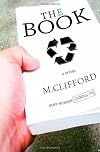
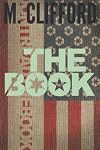
The Book
by M. Clifford 
On This Page
Description
It begins, "Don't read The Book." All information, past and present, is controlled by The Book, a handheld digital reading device that exists in a paperless, sustainable, dystopian future that looks shockingly similar to our own. Among the multitude of Book lovers, we find Holden Clifford, a simple sprinkler fitter who is content with his small life. Through his favorite story, The Catcher in the Rye, Holden discovers an inconsistency between the digital version and a rare paper page, show more preserved in the form of "recycled" wallpaper in the bathroom of his favorite Chicago bar, The Library. His quest for answers leads him quickly beyond the page to discover a secret library of books and a man named Winston who explains the subtle, potent censorship of every story ever written. Equipped with excerpts from unedited novels, alongside a group of like-minded readers called the Ex Libris, Holden dedicates himself to freeing the world from the grip of the Publishing House. His heroic mission draws him hastily into a dangerous scheme to overthrow the Editors of The Book and save the last remnant of printed words left on the earth. As his mission unfolds and a haunting reality about the government's capacity to outwit the minds of the public begins to reveal itself, Holden is forced to accept that the only way to succeed may be to sacrifice himself and the one thing they love more than life - books. show lessTags
Recommendations


















Member Recommendations
Member Reviews
I tend to think of books as being either plot driven or character driven. This one can better be described as driven by an interesting idea. Imagine a world where recycling means it is illegal to print or even posses a book. For someone who loves reading and has not yet joined the e-book world, this idea pulled me through the story. It kept me reading despite the rather simplistic plot and the characters who were less than fully developed. I enjoyed finding references to other books I'd read more than I cared about the people in the story.
This book's first sentence is 'Don't read The Book". But I hope you do.
It is not quite a sequel to Fahrenheit 451, but it might help to have read that first. Holden is a pipe fitter who likes to read his e-reader on the way home from work. The government mandated e-readers [The Book] are the only available formats for reading anything. Printed material is outlawed as environmentally irresponsible. The Book is controlled by The Publishing House [the government]. Holden is fairly content with his mundane life until an unplanned moment in his favorite bar [ironically named The Library] where he comes face to face with a quote from his favorite book: Catcher in the Rye. The walls of the bar, restrooms included, are papered with old pages of show more books. Early on in the recycle mania, this was an acceptable use for printed pages. Holden loves Catcher in the Rye, since he was named for the main character, and has read the story many times. He knows the story really well and can quote from it at will. Except, this quote on the wall isn't quite right. It doesn't match his memory, or what is in The Book.
And so starts Holden's journey.
This dystopian story is pertinent to what is going on today as it deals with the control of information. show less
It is not quite a sequel to Fahrenheit 451, but it might help to have read that first. Holden is a pipe fitter who likes to read his e-reader on the way home from work. The government mandated e-readers [The Book] are the only available formats for reading anything. Printed material is outlawed as environmentally irresponsible. The Book is controlled by The Publishing House [the government]. Holden is fairly content with his mundane life until an unplanned moment in his favorite bar [ironically named The Library] where he comes face to face with a quote from his favorite book: Catcher in the Rye. The walls of the bar, restrooms included, are papered with old pages of show more books. Early on in the recycle mania, this was an acceptable use for printed pages. Holden loves Catcher in the Rye, since he was named for the main character, and has read the story many times. He knows the story really well and can quote from it at will. Except, this quote on the wall isn't quite right. It doesn't match his memory, or what is in The Book.
And so starts Holden's journey.
This dystopian story is pertinent to what is going on today as it deals with the control of information. show less
I was disappointed in this novel. In my opinion it promised much but failed to deliver in a number of ways.
The premise is excellent and appeals to my own views of the world. In the near future it is, for ecological purposes, made illegal to produce or own paper books. The “Great Recycling” sees the authorities taking possession of all books and recycling them. Paper is considered as precious to the extent that a piece of paper embedded in banknotes is vital to the banknotes’ value.
That being the case the only way to read books is using, “The Book”, a government sponsored e-reader that, like the Kindle, is connected via wireless networks. On a regular basis, the network connection is used to “update” everyone’s device.
The show more hero, Holden Clifford, realises that text from his favourite novel, “The Catcher in the Rye”, has been changed and sets out to discover why. In his search he finds that all texts are subject to alteration to mould the thinking of the readers.
There is an Orwellian comment that I think of often; (paraphrased) “Whoever controls the present controls history; whoever controls history controls the future.” This phrase sums up the motivation of this novel, but nowhere in the novel is this motivation brought out strongly enough to make a reader care. Instead of giving more indication of the socio-political implications of someone controlling and amending all the texts available to the people, Clifford emphasises the insult this is to book lovers and how book lovers should be willing to give their lives to protect their right to read the original texts.
As Holden continues his investigations he discovers that people who realise there are text amendments and who start asking questions mysteriously disappear. “The Publishing House” is the master of the amendments and their agents, with typical US secret service trimmings, chase up on anyone asking about why the books have been changed. Also, they can track what people are looking at on their “Book”, and if people are looking up texts that have been extensively amended, then they disappear.
I’m afraid the plot left me a bit cold as there were many gaps some of which are:
Paper is really scarce, yet the hero and his friends burn logs on the fire; The Publishing House can track people’s movements, yet Holden gives out the address of his friends’ hideaway with no consideration of security leaks; Everyone holds up in a single house, Waco style, and yet there is no hint the authorities can find them; Holden becomes a hailed hero of a movement without the story giving us any indication of why; When launching their biggest move, the climax of the book, a contact in the target organisation is made simply by phoning up people and asking contacts who might be in a position to help; and more…
I’m afraid the plot was rather naïve and may have suited a 1950s novel but looks rather innocent for the twenty-first century.
At the end of the story there is a request that the reader send a letter to their local Senator pleading for legislation against censorship and to ensure secure electronic copies of every text are made and protected from amendment and manipulation. This helps the book in one way and damages it in another.
It helps in that one starts to feel, “Ah, this is a book about a good cause. Yea! Sure I’ll support it and write off to my Senator. Good for the author to have brought this to my attention.” In that way one is left with a warm feeling about the book and starts to consider it a great piece of work.
On the other hand, one might think: “Ah! What a clever trick to make the reader ignore the poor plot and editorial errors and to have a little tug at the old heart-strings.”
Another attempt to appeal to the reader’s goodwill is constant reference to well loved classics, in particular “The Catcher in the Rye”, “Fahrenheit 451”, and “The Little Tin Soldier”. This became somewhat irksome.
Editing was another problem. I believe a good editor would have ensured that “acre”, a measure of area, was not used as an indication of distance, and that “stationary” was not used to mean “stationery”. The editor may also have prevented the inclusion of some quite convolute sentences that didn’t seem to make much sense.
I ignored the strange formatting of the document. It may have been a technical problem, but if not it would appear the book was written in a world where paragraphs hadn’t been invented.
Apologies for such a long review, but I felt this book had such a great premise with so much promise that it deserved a bit of specific comment and analysis. show less
The premise is excellent and appeals to my own views of the world. In the near future it is, for ecological purposes, made illegal to produce or own paper books. The “Great Recycling” sees the authorities taking possession of all books and recycling them. Paper is considered as precious to the extent that a piece of paper embedded in banknotes is vital to the banknotes’ value.
That being the case the only way to read books is using, “The Book”, a government sponsored e-reader that, like the Kindle, is connected via wireless networks. On a regular basis, the network connection is used to “update” everyone’s device.
The show more hero, Holden Clifford, realises that text from his favourite novel, “The Catcher in the Rye”, has been changed and sets out to discover why. In his search he finds that all texts are subject to alteration to mould the thinking of the readers.
There is an Orwellian comment that I think of often; (paraphrased) “Whoever controls the present controls history; whoever controls history controls the future.” This phrase sums up the motivation of this novel, but nowhere in the novel is this motivation brought out strongly enough to make a reader care. Instead of giving more indication of the socio-political implications of someone controlling and amending all the texts available to the people, Clifford emphasises the insult this is to book lovers and how book lovers should be willing to give their lives to protect their right to read the original texts.
As Holden continues his investigations he discovers that people who realise there are text amendments and who start asking questions mysteriously disappear. “The Publishing House” is the master of the amendments and their agents, with typical US secret service trimmings, chase up on anyone asking about why the books have been changed. Also, they can track what people are looking at on their “Book”, and if people are looking up texts that have been extensively amended, then they disappear.
I’m afraid the plot left me a bit cold as there were many gaps some of which are:
Paper is really scarce, yet the hero and his friends burn logs on the fire; The Publishing House can track people’s movements, yet Holden gives out the address of his friends’ hideaway with no consideration of security leaks; Everyone holds up in a single house, Waco style, and yet there is no hint the authorities can find them; Holden becomes a hailed hero of a movement without the story giving us any indication of why; When launching their biggest move, the climax of the book, a contact in the target organisation is made simply by phoning up people and asking contacts who might be in a position to help; and more…
I’m afraid the plot was rather naïve and may have suited a 1950s novel but looks rather innocent for the twenty-first century.
At the end of the story there is a request that the reader send a letter to their local Senator pleading for legislation against censorship and to ensure secure electronic copies of every text are made and protected from amendment and manipulation. This helps the book in one way and damages it in another.
It helps in that one starts to feel, “Ah, this is a book about a good cause. Yea! Sure I’ll support it and write off to my Senator. Good for the author to have brought this to my attention.” In that way one is left with a warm feeling about the book and starts to consider it a great piece of work.
On the other hand, one might think: “Ah! What a clever trick to make the reader ignore the poor plot and editorial errors and to have a little tug at the old heart-strings.”
Another attempt to appeal to the reader’s goodwill is constant reference to well loved classics, in particular “The Catcher in the Rye”, “Fahrenheit 451”, and “The Little Tin Soldier”. This became somewhat irksome.
Editing was another problem. I believe a good editor would have ensured that “acre”, a measure of area, was not used as an indication of distance, and that “stationary” was not used to mean “stationery”. The editor may also have prevented the inclusion of some quite convolute sentences that didn’t seem to make much sense.
I ignored the strange formatting of the document. It may have been a technical problem, but if not it would appear the book was written in a world where paragraphs hadn’t been invented.
Apologies for such a long review, but I felt this book had such a great premise with so much promise that it deserved a bit of specific comment and analysis. show less
Four simple words begin the narrative of M. Clifford's The Book: "Don't Read The Book".
What bibliophile can resist a challenge such as that? With a slight smirk I eagerly defied those words and plunged onward into the world of Holden Clifford - an intriguing dystopia in which environmental laws have banned paper and all literature and news media are conveniently conveyed to audiences via digital hand-held devices, portable and personal, each one called The Book. Holden, like his Salinger namesake, is a character caught existing rather than truly living and right from the start - as I, too, used a novel to shroud myself from a daily Chicago commute - I found myself empathizing with him and silently hoping for whatever would break him show more from his mundane life.
Holden's awakening comes in a Chicago bar called The Library, a tribute to the recycled book pages that wallpaper the venue. Upon seeing his name on an antique page from his favorite book, Holden's eyes are opened, not only to the powerful mystique of the printed word, but to the alterations from the original text that exist in the digital version he read his whole life.
M. Clifford's writing style is fresh and unique. The gripping story proves him to be an expert storyteller, beautifully weaving together political intrigue, suspenseful action, intricate relationships, and philosophical discussion. His descriptive techniques encourage the reader to engage with the writing - to enjoy the language as much as the story. It is a novel to be both savored and devoured. There are books which are meant to be read, respected, and reshelved, but The Book is one which lingers in my mind after the final pages have been viewed. It is a conversation starter as much as a story, drawing on themes such as the benefits and pitfalls of technology. Clifford's work sheds light on new thoughts and raises unanswerable questions but it could just be that the resolution is not nearly as valuable as the inquiry. show less
What bibliophile can resist a challenge such as that? With a slight smirk I eagerly defied those words and plunged onward into the world of Holden Clifford - an intriguing dystopia in which environmental laws have banned paper and all literature and news media are conveniently conveyed to audiences via digital hand-held devices, portable and personal, each one called The Book. Holden, like his Salinger namesake, is a character caught existing rather than truly living and right from the start - as I, too, used a novel to shroud myself from a daily Chicago commute - I found myself empathizing with him and silently hoping for whatever would break him show more from his mundane life.
Holden's awakening comes in a Chicago bar called The Library, a tribute to the recycled book pages that wallpaper the venue. Upon seeing his name on an antique page from his favorite book, Holden's eyes are opened, not only to the powerful mystique of the printed word, but to the alterations from the original text that exist in the digital version he read his whole life.
M. Clifford's writing style is fresh and unique. The gripping story proves him to be an expert storyteller, beautifully weaving together political intrigue, suspenseful action, intricate relationships, and philosophical discussion. His descriptive techniques encourage the reader to engage with the writing - to enjoy the language as much as the story. It is a novel to be both savored and devoured. There are books which are meant to be read, respected, and reshelved, but The Book is one which lingers in my mind after the final pages have been viewed. It is a conversation starter as much as a story, drawing on themes such as the benefits and pitfalls of technology. Clifford's work sheds light on new thoughts and raises unanswerable questions but it could just be that the resolution is not nearly as valuable as the inquiry. show less
I love to read on my Kindle, but also love the feel and smell of real paper books. In The Book, all paper books are banned and it is against the law to be caught with one. People read on The Book which is similar to the Kindle. When I first started reading this book, I thought I would really like it. It was about my favorite topic-books-and it was holding my attention. Then, in about the middle, it got so boring, I quit reading it. I decided I only had so much time alloted to reading, so why read a book I didn't like. But for some unknown reason, after about a week, I decided to try it again. I'm glad I did. While it is not the best book I have ever read, it's a long way from the worst. It does make you think about the future of our show more world. The characters are very interesting and you feel like you know them personally. They don't do very much and parts of the story that could be very action packed are only lightly touched upon. The ending of the original story was unexpected but good. There is another ending after the addendum that I did not understand at all. While it ties up some lose ends, it ends up adding more. show less
There are no more books being printed, using paper is outlawed, paper is wasteful in this dystopian novel. Every book was to be recycled, the only way to read a story is on The Book; an E-reader that is controlled by the conglomerate Publishing House. That wasn’t a problem for an everyday guy like Holden Clifford, he liked the stories he read on The Book. In fact he couldn’t wait to get home and clean-up from his job as a pipe fitter, ready to relax and escape into the many novels they offered. His life would have gone on just fine if he hadn’t stumbled upon an incongruity in one of his favorite stories. At a bar called The Library, the original owner had pasted the pages of old books on the walls during the beginning of the show more Reduce, Reuse and Recycle era. Holden was examining a page of one of his favorite stories, when he noticed that the words were a little different. This discovery starts him asking himself if changing one word could change the meaning, and if one word was changed how much more was changed, and most importantly who was doing the changing? In a future where “big brother is watching you,” asking these types of questions can put you in danger.
Unfortunately I read this on my Kindle which kept me feeling a little bit guilty and tiny bit anxious, and as an author I had questions of my own about the future of publishing. Yikes! Editors are hard enough to work with when you hire them yourself, but what if someone you didn’t know was twisting your words and distorting the meaning of what you wrote? Oh wait that’s the job of the spin doctors on TV news… Seriously, I can see this becoming more of an issue in the coming years. If you are a writer, an editor, a publisher or just someone who likes a good story that makes you think then check out M. Clifford’s The Book. show less
Unfortunately I read this on my Kindle which kept me feeling a little bit guilty and tiny bit anxious, and as an author I had questions of my own about the future of publishing. Yikes! Editors are hard enough to work with when you hire them yourself, but what if someone you didn’t know was twisting your words and distorting the meaning of what you wrote? Oh wait that’s the job of the spin doctors on TV news… Seriously, I can see this becoming more of an issue in the coming years. If you are a writer, an editor, a publisher or just someone who likes a good story that makes you think then check out M. Clifford’s The Book. show less
As stated in another review: who could resist reading anything that starts with "Don't Read The Book"? As an avid reader and an all around lover of books, this book really resonated with me. Holden Clifford is divorced, a somewhat absent father, and a very simple man--all around he's an unlikely hero. But I was rooting for him the whole way. The cast of this book are very believable and relatable and loveable (for the most part). I was very intrigued by the world Holden lived in, where paper was illegal and all printed material was read through a digital device (much like the e-readers that are becoming more popular today). The revolution sparked in this book made me realize my deepset love for the printed page (and paper in general) show more and I found it hard to put this book down. The end left me with many questions, which was the point, and I do wish I had a bit more resolution, but this was a wonderful read! show less
Members
- Recently Added By
Lists

Best Dystopias
280 works; 276 members

Books We Couldn't Put Down
443 works; 197 members

Books called "The Book"
8 works; 1 member
Author Information

4 Works 140 Members
M. Clifford is a LibraryThing Author, an author who lists their personal library on LibraryThing.
Awards and Honors
Common Knowledge
- People/Characters
- Holden Clifford; Marion Tabor; Shane Dagget; Martin Trust; Winston Pratt; Moby Van Dinh
- Important places
- Chicago, Illinois, USA; Washington, D.C., USA
- Important events
- recycling (The Great Recycling)
- Epigraph
- "The one who tells the stories rules the world."
- Hopi Indian proverb - Dedication
- For My Father
He was a sprinkler fitter
He was a simple man
To those he loved more than himself,
He was a hero - First words
- Don't read The Book.
That phrase has followed me my entire life.
Classifications
Statistics
- Members
- 90
- Popularity
- 355,953
- Reviews
- 11
- Rating
- (3.81)
- Languages
- English
- Media
- Paper, Ebook
- ISBNs
- 2
- ASINs
- 1