Devil-Worship in France or The Question of Lucifer
by Arthur Edward Waite
On This Page
Description
The term Modern Satanism is not intended to signify the development of some new aspect of old doctrine concerning demonology, or some new argument for the personification of the evil principle in universal nature. It is intended to signify the alleged revival, or, at least, the reappearance to some extent in public, of a cultus diabolicus, or formal religion of the devil, the existence of which, in the middle ages, is registered by the known facts of the Black Sabbath, a department, however, show more of historical research, to which full justice yet remains to be done. By the hypothesis, such a religion may assume one of two forms; it may be a worship of the evil principle as such, namely, a conscious attempt on the part of human minds to identify themselves with that principle, or it may be the worship of a power which is regarded as evil by other religions, from which view the worshippers in question dissent. To students of occultism, transcendental magic, and mysticism as a branch of learning or investigation, cither as a believer or from a psychological point of view, this work is very valuable. show lessTags
Recommendations






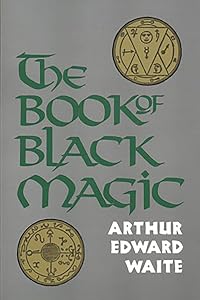
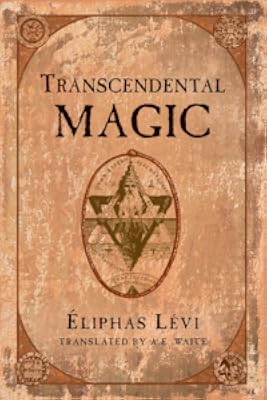








Members
- Recently Added By
Author Information

213+ Works 5,630 Members
Arthur Edward Waite was born on October 2, 1857 in Brooklyn, New York. He was a poet and scholarly mystic who wrote extensively on occult and esoteric matters, and was the co-creator of the Rider-Waite Tarot deck. Waite joined the Outer Order of the Hermetic Order of the Golden Dawn in January 1891 after being introduced by E.W. Berridge. In 1899 show more he entered the Second order of the Golden Dawn. He became a Freemason in 1901, and entered the Societas Rosicruciana in Anglia in 1902. In 1903 Waite founded the Independent and Rectified Order R. R. et A. C. Waite was a prolific author and many of his works were well received in academic circles. He wrote occult texts on subjects including divination, esotericism, Rosicrucianism, Freemasonry, and ceremonial magic, Kabbalism and alchemy; he also translated and reissued several important mystical and alchemical works. His works on the Holy Grail, influenced by his friendship with Arthur Machen, were particularly notable. A number of his volumes remain in print, including The Book of Ceremonial Magic (1911), The Holy Kabbalah (1929), A New Encyclopedia of Freemasonry (1921), and his edited translation of Eliphas Levi's 1896 Transcendental Magic, its Doctrine and Ritual (1910), having seen reprints in recent years. Waite also wrote two allegorical fantasy novels, Prince Starbeam (1889) and The Quest of the Golden Stairs (1893). (Bowker Author Biography) show less
Classifications
Statistics
- Members
- 30
- Popularity
- 927,095
- Languages
- English
- Media
- Paper, Ebook
- ISBNs
- 16
- ASINs
- 3